
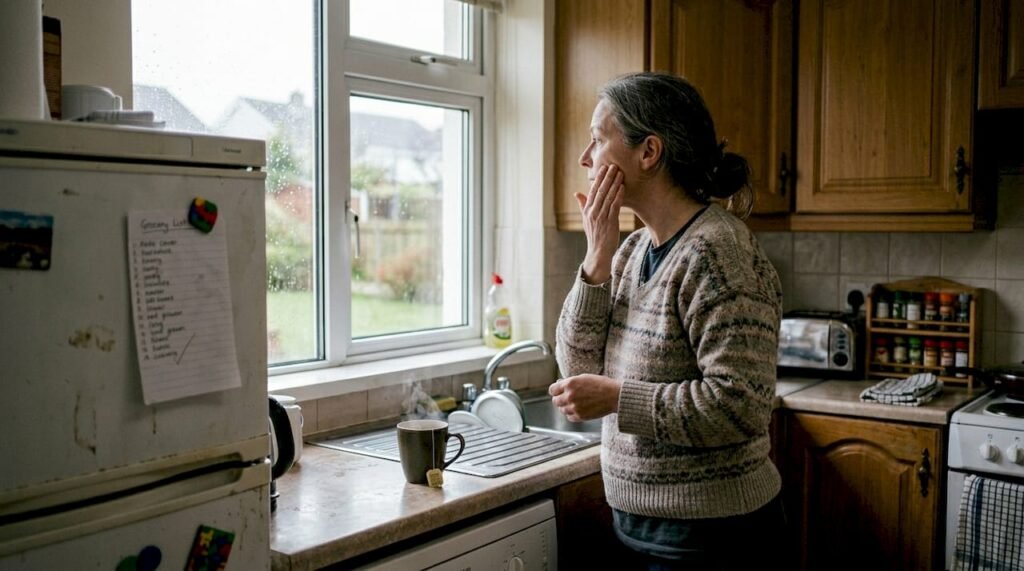
Fine lines appearing despite Ireland’s famously gray skies. Dullness creeping in even when you’ve been diligent about moisturizing. If that sounds familiar, you’re not alone. Many women over 40 in Ireland find that standard anti-aging advice doesn’t quite fit their skin’s reality, whether it’s sensitivity, rosacea, or the unique demands of a damp, overcast climate. The good news is that up to 80-90% of visible aging is driven by factors you can actually address. This guide gives you a practical, evidence-backed roadmap built specifically for Irish women who want results without harsh chemicals.
Table of Contents
- Understanding skin aging and Irish challenges
- Step 1: Daily sun defense for Irish skin
- Step 2: Nourishing your skin from within
- Step 3: Topical solutions — natural actives vs. synthetics
- Step 4: Repairing and protecting your skin barrier
- Troubleshooting: Common mistakes and expert shortcuts
- Discover natural anti-aging solutions with Miracle Gel
- Frequently asked questions
Key Takeaways
| Point | Details |
|---|---|
| Daily SPF is critical | Applying broad-spectrum SPF 30+ every day prevents up to 90% of visible aging, even on cloudy days. |
| Nutrition boosts skin resilience | Antioxidant-rich foods and hydration help maintain collagen and plumpness for lasting radiance. |
| Natural actives suit Irish skin | Gentle phytoextracts and bakuchiol address aging safely for sensitive, rosacea-prone Irish skin. |
| Barrier repair combats menopausal aging | Ceramides, vitamin C, and gentle cleansers protect and restore skin in post-menopausal years. |
| Avoid harsh actives | Introduce retinoids cautiously and prioritize natural alternatives to reduce irritation and support healthy aging. |
Understanding skin aging and Irish challenges
Skin aging isn’t one single process. It’s a combination of sun damage, environmental stress, hormonal shifts, and a gradual slowdown in your skin’s ability to repair itself. For women in Ireland, a few of these factors hit differently than they do elsewhere.
First, the sun myth. Many Irish women assume that cloudy skies mean minimal UV exposure. That’s simply not true. Photoaging causes up to 80-90% of visible skin aging, and UV rays penetrate cloud cover with ease. You’re accumulating damage on your morning commute, your lunch walk, and your drive home, every single day.
Second, menopause plays a bigger role than most people realize. Collagen loss accelerates by 30% in the first five years after menopause. That’s not a gradual fade. That’s a rapid shift that shows up as sagging, deeper lines, and thinner skin texture.
Third, Irish skin tends toward sensitivity. Rosacea rates are notably higher in Ireland and the UK compared to global averages, and many women find that popular anti-aging actives like retinol or glycolic acid cause more irritation than improvement. Finding sensitive skin safe solutions isn’t a luxury. It’s a necessity.
| Aging driver | Impact on skin | Natural solution |
|---|---|---|
| UV/photoaging | 80-90% of visible aging | Daily SPF 30+ |
| Menopause | 30% collagen loss in 5 years | Ceramides, vitamin C |
| Free radical damage | Oxidative breakdown of collagen | Antioxidant-rich diet and serums |
| Barrier dysfunction | Dryness, sensitivity, redness | Gentle cleansers, barrier repair |
| Dehydration | Fine lines, dullness | Hyaluronic acid, omega-3s |
Here’s what the research consistently shows: natural ingredients aren’t a compromise. When chosen carefully, phytoextracts, plant oils, and food-based antioxidants can match or outperform synthetics for sensitive skin, with far fewer side effects.
“The most effective anti-aging routine isn’t the most aggressive one. It’s the one your skin can tolerate consistently over years.”
With an understanding of the underlying causes, we can move into practical prevention strategies.
Step 1: Daily sun defense for Irish skin
This is the single most impactful thing you can do. Full stop. Daily broad-spectrum SPF 30+ is the most effective way to prevent photoaging, which accounts for the vast majority of wrinkles, pigmentation, and loss of elasticity you’ll see over time.

The challenge for Irish women is that SPF often feels like an afterthought, something for beach holidays. But UV-A rays, the ones that cause deep skin aging, are present year-round at consistent levels regardless of cloud cover. You need protection in January just as much as in July.
Here’s a simple daily SPF routine that works for sensitive and rosacea-prone skin:
- Cleanse gently in the morning with a low-pH, fragrance-free cleanser.
- Apply a lightweight serum with antioxidants like vitamin C or niacinamide to boost SPF effectiveness.
- Layer SPF 30+ or higher as the final step before makeup. Mineral formulas with zinc oxide are better tolerated by reactive skin.
- Reapply midday if you’re spending more than an hour outdoors, even in overcast conditions.
- Check your anti-wrinkle SPF options to find formulas that combine sun protection with active anti-aging ingredients.
Pro Tip: If you find traditional sunscreens too heavy or pore-clogging, look for SPF moisturizers with mineral filters. They sit more comfortably on Irish skin and double as your daily hydration step.
Statistic to remember: Consistent daily SPF use over 4.5 years has been shown to visibly reduce existing photoaging, not just prevent new damage. It’s never too late to start.
Step 2: Nourishing your skin from within
Beyond topical protection, nourishing skin internally supports natural resilience. What you eat directly affects how your skin produces collagen, manages inflammation, and holds onto moisture.
An antioxidant-rich diet with berries, nuts, seeds, and omega-3 fatty acids combats free radical damage and supports collagen production. For Irish women, this is especially relevant because the local diet can be low in oily fish and fresh produce during winter months.
Top nutrients for skin aging prevention:
- Vitamin C: Found in kiwi, strawberries, and bell peppers. Essential for collagen synthesis.
- Omega-3 fatty acids: Found in salmon, mackerel, walnuts, and flaxseed. Reduce inflammation and support the skin barrier.
- Zinc: Found in pumpkin seeds and legumes. Supports wound healing and skin repair.
- Vitamin E: Found in almonds and sunflower seeds. Works with vitamin C to neutralize free radicals.
- Polyphenols: Found in green tea, dark chocolate, and berries. Protect against UV-induced damage from the inside.
| Nutrient | Skin benefit | Best Irish food source |
|---|---|---|
| Omega-3s | Barrier support, reduced inflammation | Mackerel, salmon, walnuts |
| Vitamin C | Collagen synthesis | Kiwi, strawberries, broccoli |
| Zinc | Repair and healing | Pumpkin seeds, lentils |
| Polyphenols | UV protection support | Green tea, blueberries |
| Vitamin E | Antioxidant defense | Almonds, sunflower seeds |
If your diet is inconsistent, targeted anti-aging nutrition supplements can fill the gaps. Look for formulas that combine antioxidants with adaptogens for broader cellular support.
Step 3: Topical solutions — natural actives vs. synthetics
Now shift to topical solutions, comparing natural and synthetic approaches side by side. The debate between natural and synthetic ingredients is often framed as a binary choice. It doesn’t have to be.
Trans-resveratrol, a phytoextract found in grape skin, reduced wrinkles in women over 40 in a randomized controlled trial using both oral and topical application. That’s clinical-grade evidence for a plant-based ingredient. Meanwhile, oral collagen peptides and topical hyaluronic acid are well-documented for improving hydration and elasticity across multiple trials.
| Ingredient | Type | Efficacy | Sensitivity risk |
|---|---|---|---|
| Retinol | Synthetic | High for wrinkles | High, especially for rosacea |
| Bakuchiol | Natural | Comparable to retinol | Very low |
| Hyaluronic acid | Synthetic/natural | High for hydration | Very low |
| Trans-resveratrol | Natural | Proven wrinkle reduction | Low |
| Glycolic acid | Synthetic | High for texture | Moderate to high |
| Vitamin C (L-ascorbic) | Natural | High for pigmentation | Low to moderate |
“Bakuchiol delivers retinol-like results without the irritation, making it the go-to for sensitive and post-menopausal skin.”
For Irish skin, the smart approach is to start with gentle, proven naturals and only layer in synthetics if your skin tolerates them. Anti-aging serums that combine hyaluronic acid with plant actives are a strong starting point. If you want retinol-like results without the redness, bakuchiol alternatives are clinically supported and far gentler. You can also explore natural retinol alternatives that use phytoextracts to stimulate cell turnover without stripping the barrier.
For internal support, collagen-boost supplements with marine collagen peptides are worth adding to your routine, particularly after menopause when production drops sharply.
Pro Tip: Apply your active serum at night when skin is in repair mode. This maximizes absorption and reduces the chance of UV-related irritation from ingredients like vitamin C or bakuchiol.
Key naturals to look for in your products:
- Bakuchiol (retinol alternative)
- Trans-resveratrol (antioxidant and wrinkle reducer)
- Rosehip oil (vitamin A and C rich)
- Sea buckthorn (omega-7 for barrier repair)
- Green tea extract (anti-inflammatory, UV protective)
Step 4: Repairing and protecting your skin barrier
With active ingredients reviewed, focus on barrier care for sustainable, irritation-free anti-aging. Your skin barrier is the outermost layer of skin that keeps moisture in and irritants out. After menopause, this barrier becomes thinner and more permeable, which is why skin suddenly feels drier, more reactive, and more prone to redness.
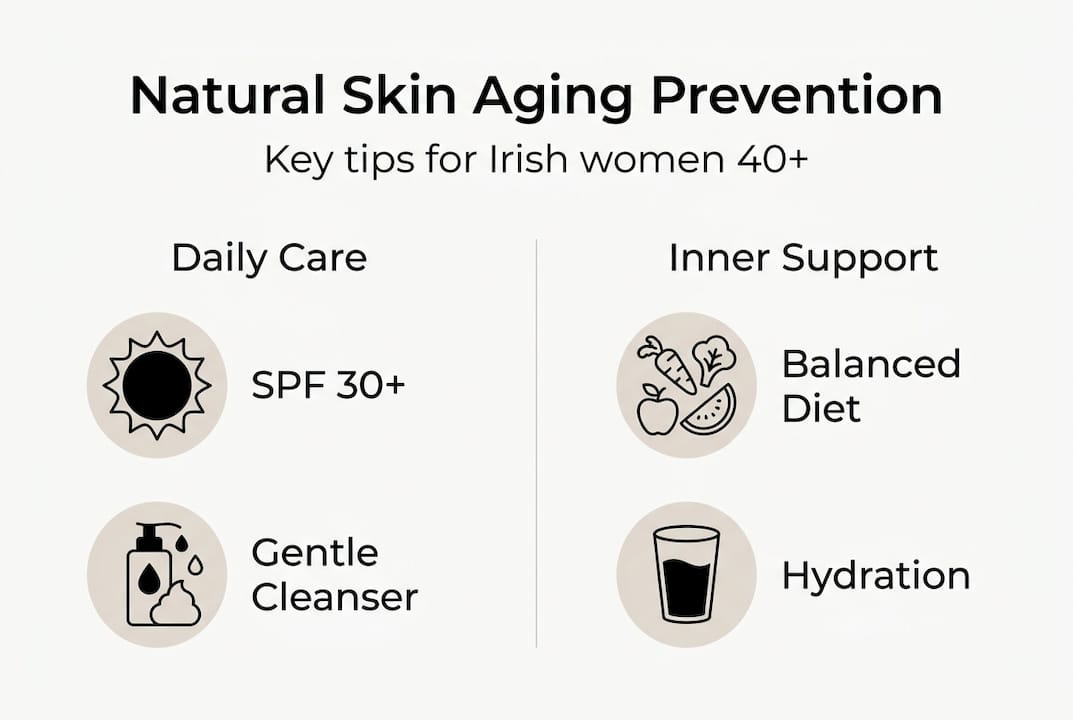
For Irish skin, the most effective barrier repair protocol combines gentle cleansing, ceramide-rich moisturizers, and targeted vitamin C for the pigmentation that often appears post-menopause.
Here’s a practical barrier repair routine:
- Cleanse once daily (evening) with a gentle cleanser that doesn’t strip natural oils. Avoid foaming formulas with sulfates.
- Apply a ceramide moisturizer immediately after cleansing while skin is still slightly damp. Ceramides are the lipids that hold your barrier together.
- Use vitamin C serum in the morning to address pigmentation and boost collagen. Start with a lower concentration (5-10%) if your skin is reactive.
- Add a firming solution with peptides or plant stem cells to support structural skin proteins.
- Explore brightening options with niacinamide or licorice root extract for uneven tone without the irritation of hydroquinone.
Pro Tip: If your skin feels tight or reactive after cleansing, that’s a sign your cleanser is too harsh. Switch to a cream or oil-based formula and watch how quickly your barrier responds.
Signs your barrier needs repair:
- Skin feels tight immediately after washing
- Redness or stinging when applying serums
- Increased sensitivity to products you previously tolerated
- Dullness that doesn’t respond to hydration alone
Troubleshooting: Common mistakes and expert shortcuts
Finally, empower yourself to troubleshoot and streamline your anti-aging routine. Even the best ingredients fail if they’re used incorrectly or combined in ways that cancel each other out.
Irish skin is prone to irritation, and introducing retinoids too quickly is one of the most common mistakes women make. Natural alternatives like bakuchiol are a much safer starting point for sensitive skin, delivering similar cell-turnover benefits without the peeling and redness.
Common mistakes to avoid:
- Skipping SPF on cloudy days. UV-A penetrates clouds. This is non-negotiable.
- Layering too many actives at once. Vitamin C and retinol used together can cause irritation. Alternate them morning and night.
- Over-exfoliating. Once or twice a week is enough. More than that strips your barrier faster than it can repair.
- Using alcohol-based toners. These feel refreshing but dehydrate skin and worsen sensitivity over time.
- Ignoring your neck and hands. These areas age just as fast as your face and are often neglected.
For busy women who want a streamlined routine, the minimum effective dose is: gentle cleanser, ceramide moisturizer, SPF in the morning, and one active serum at night. Everything else is optional. Products targeting fine lines that combine multiple actives in one formula are a smart shortcut for women who don’t want a 10-step routine.
Pro Tip: Introduce one new product at a time and wait two weeks before adding another. This makes it easy to identify what’s working and what’s causing a reaction.
Discover natural anti-aging solutions with Miracle Gel
Everything covered in this guide points to one core principle: effective anti-aging for Irish women over 40 requires gentle, proven, natural formulations that respect sensitive skin. That’s exactly what we’ve built at Miracle Gel.

Our range includes sensitive skin safe products formulated without harsh chemicals, natural retinol alternatives using clinically supported phytoextracts, and firming solutions designed to support collagen and elasticity after menopause. Founded by Shelly Maguire, a recognized skincare professional, every product is developed with Irish skin in mind. Whether you’re starting your anti-aging journey or refining an existing routine, our curated collection gives you the tools to see real results without the guesswork.
Frequently asked questions
Do I need SPF every day in Ireland if it’s cloudy?
Yes. UV rays cause up to 90% of visible skin aging and penetrate cloud cover consistently. Daily broad-spectrum SPF 30+ is essential regardless of the weather.
What are the safest anti-aging actives for Irish sensitive skin?
Bakuchiol, ceramide moisturizers, and antioxidant phytoextracts like resveratrol and green tea extract are proven safe starting points. Introduce retinoids only gradually, and consider natural retinol alternatives if your skin is reactive.
Can supplements like collagen really help prevent wrinkles?
Oral collagen peptides improve hydration and elasticity, but their effect on wrinkles is modest compared to consistent SPF use and topical actives. They work best as part of a broader routine.
How does menopause affect skin aging and what can I do?
Collagen loss accelerates by 30% in the first five years after menopause. Focus on ceramide-rich moisturizers, vitamin C for pigmentation, and barrier-supportive cleansers to counteract these changes effectively.