

Forget everything you think you know about facial oils. The idea that they leave skin greasy or clog pores has kept too many women over 40 away from one of the most effective natural tools in skincare. The truth is, specific oils work at a cellular level to reduce wrinkles, restore radiance, and support a skin barrier that naturally weakens with age. Rosehip seed oil, for example, is clinically proven to be highly effective for anti-aging and skin brightening in mature skin. This guide breaks down which oils actually deliver results and exactly how to use them.
Table of Contents
- Why natural oils matter for mature skin
- Best natural oils for anti-aging and brightening
- How to choose and use natural oils for your skin
- Common myths and mistakes with natural oils
- Discover organic anti-aging solutions for mature skin
- Frequently asked questions
Key Takeaways
| Point | Details |
|---|---|
| Targeted oils for aging | Rosehip and sea buckthorn oils deliver proven anti-aging and brightening for mature skin. |
| Safe and effective use | Apply non-comedogenic oils to damp skin with SPF, and patch test for sensitivities. |
| Empirical results matter | Clinical studies show substantial reduction in wrinkles and improvements in radiance. |
| Organic is optimal | Cold-pressed organic oils retain nutrients and minimize risk for mature and sensitive skin. |
| Myth busting | Most oils do not cause breakouts when matched to skin type and used properly. |
Why natural oils matter for mature skin
As skin matures, its lipid barrier thins and its ability to retain moisture drops significantly. Natural oils step in to fill that gap. They reinforce the skin’s lipid barrier and reduce transepidermal water loss (TEWL), which is the invisible evaporation of moisture from your skin’s surface. Less water loss means plumper, more resilient skin.
Beyond hydration, oils are packed with antioxidants that neutralize free radicals. Free radicals are unstable molecules triggered by UV exposure, pollution, and stress, and they accelerate collagen breakdown. Oils also work by inhibiting enzymes that degrade collagen, which directly supports elasticity. Brightening happens through a separate mechanism: certain oil compounds regulate melanin production, reducing the appearance of dark spots and uneven tone.
Here is what the science confirms oils can do for mature skin:
- Reduce TEWL and provide antioxidants that slow visible aging
- Inhibit collagen-degrading enzymes to preserve firmness
- Brighten skin by regulating melanin production
- Support barrier repair without harsh chemicals
One more fact worth knowing: extra virgin olive oil increases corneocyte turnover, which means it actively encourages the shedding of dull, dead skin cells to reveal fresher skin underneath.
“Not all oils cause breakouts or feel greasy. The right oil for your skin type can actually balance sebum production and leave skin feeling comfortable, not heavy.”
If you want to build organic anti-aging routines that genuinely work, understanding how oils function is the essential first step.
Best natural oils for anti-aging and brightening
Not all oils are created equal. Some are backed by strong clinical evidence, while others offer more modest benefits. Here is a breakdown of the top performers for women over 40.
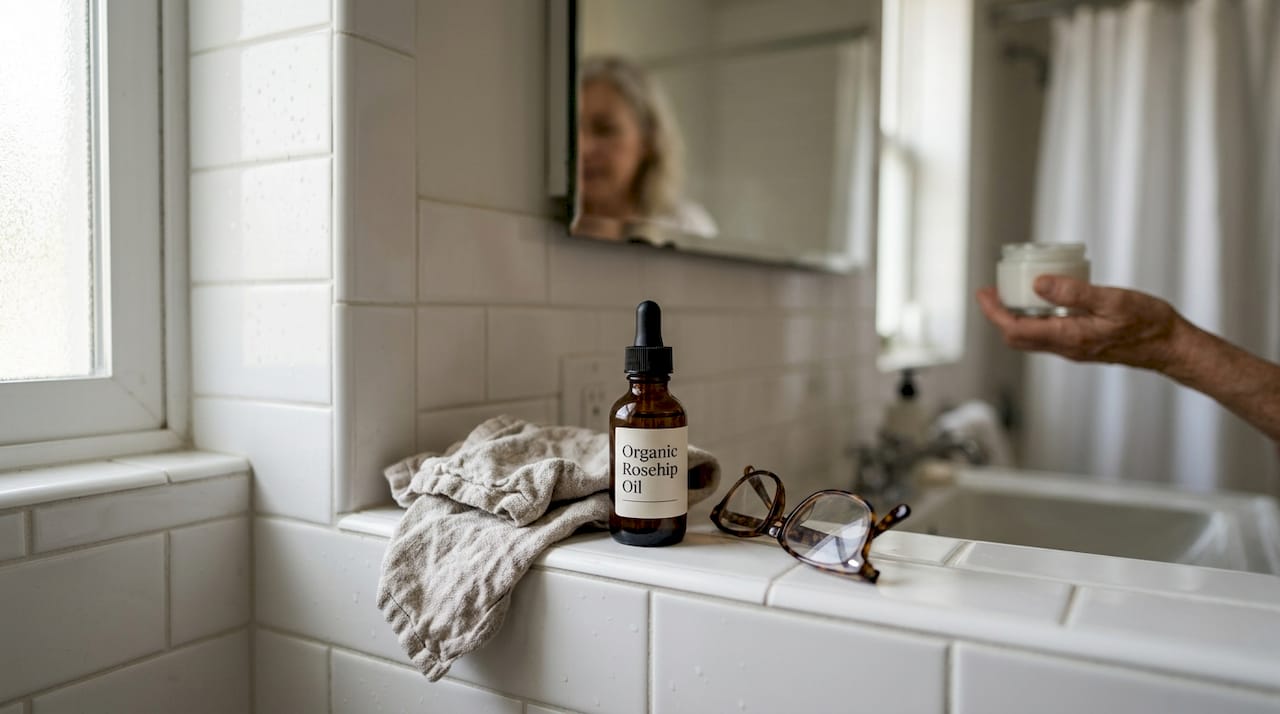
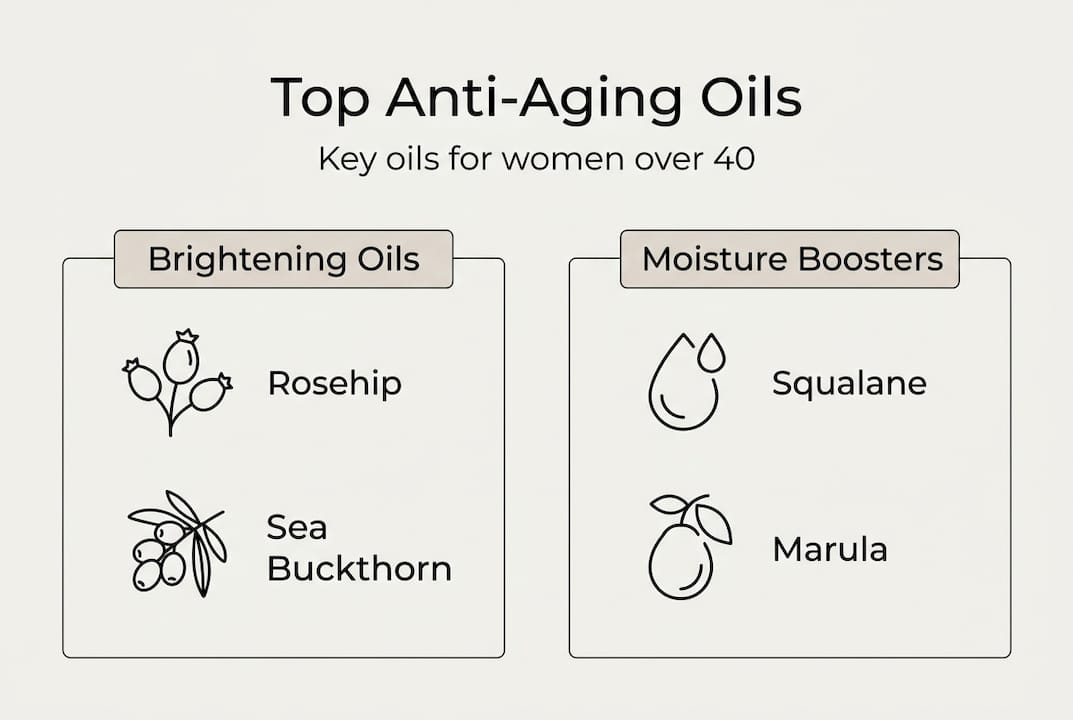
Rosehip seed oil is the standout. It reduces wrinkles and UV spots and contains 700% more antioxidants than many competing oils. It is rich in vitamin A and vitamin C precursors, making it a natural alternative to synthetic retinol for those with sensitive skin. It is one of the best brightening oils available in a natural form.
Sea buckthorn oil is a powerhouse for menopausal skin. It nourishes dry menopausal skin and measurably improves elasticity and radiance. Its deep orange color comes from carotenoids, which are potent antioxidants that unify skin tone over time.
Squalane and jojoba are the workhorses of the group. Both are lightweight and non-comedogenic, meaning they will not block pores. They mimic the skin’s own lipids, making them ideal for barrier repair without any heaviness. These are excellent retinol alternatives for those who want gentle, consistent hydration.
Marula and chia seed oils round out the list with impressive moisture retention and elasticity benefits, particularly useful for skin that feels tight or crepey.
| Oil | Key benefit | Best for | Comedogenic rating |
|---|---|---|---|
| Rosehip seed | Wrinkle reduction, brightening | All mature skin types | 1 |
| Sea buckthorn | Elasticity, radiance | Menopausal, dry skin | 1 |
| Squalane | Barrier repair, hydration | Oily, combination, sensitive | 0 |
| Jojoba | Sebum balance, moisture | All types including oily | 2 |
| Marula | Deep moisture, elasticity | Dry, mature, crepey skin | 3-4 |
| Chia seed | Omega-3 boost, plumping | Dehydrated, dull skin | 1 |
Statistic worth noting: In testing panels of 240 or more participants, rosehip seed oil consistently ranked highest for visible wrinkle reduction and tone improvement within 8 weeks of regular use. For targeted fine line solutions, it is hard to beat.
How to choose and use natural oils for your skin
Choosing the right oil starts with knowing your skin type and your primary concern. Dry or mature skin benefits most from richer oils like marula or sea buckthorn. Oily or combination skin does better with squalane or jojoba. Sensitive skin should always start with a patch test.
Here is a practical step-by-step approach to introducing oils safely:
- Patch test first. Apply a small amount to your inner wrist or behind your ear and wait 24 hours before applying to your face.
- Apply to damp skin. Oils absorb more effectively when skin is slightly moist, so apply right after cleansing while your face is still a little damp.
- Use 2-3 drops only. Cold-pressed organic oils are concentrated, and more is not better. Two to three drops is enough for your entire face.
- Use oils at night. This is when skin repair is most active. Morning use is fine for some oils, but always follow with SPF to protect against UV damage.
- Combine with SPF in the morning. Oils do not provide sun protection. Skipping SPF while using brightening oils can actually worsen dark spots.
- Choose cold-pressed, organic sources. Refined oils lose many of their active compounds during processing. Non-comedogenic options like jojoba and squalane are ideal for oily or combination skin types.
For women with sensitive skin safety as a priority, starting with squalane is a smart move. It is the most universally tolerated oil available.
Pro Tip: If you use oil-soaked cotton pads or cloths, do not leave them bunched up in a bin. Some plant oils are mildly combustible when the cloth oxidizes. Lay them flat to dry before disposing.
Common myths and mistakes with natural oils
There is a lot of noise around facial oils, and some of it is genuinely misleading. Let’s clear up the most common myths so you can use oils with confidence.
Myth: All oils clog pores. This is simply not true. Not all oils suit every skin type, but non-comedogenic oils like squalane and jojoba are specifically suited to oily and combination skin without causing congestion.
Myth: Rosehip oil will break you out. Rosehip oil has a comedogenicity rating of 0 to 2, which places it firmly in the low-risk category. Most breakouts attributed to rosehip oil are actually reactions to other ingredients in a product.
Here are the most common mistakes women make when starting with facial oils:
- Using too much product. More oil does not mean more benefit. Overloading the skin can lead to congestion and a heavy, uncomfortable feel.
- Skipping the patch test. Even gentle, natural oils can trigger reactions in sensitive or reactive skin.
- Ignoring skin compatibility. A rich oil like marula on already oily skin can tip the balance toward breakouts.
- Forgetting SPF in the morning. Some oils, particularly those high in vitamin A compounds, can increase photosensitivity.
- Buying refined oils. Refined versions strip out the very compounds that make oils effective for anti-aging.
Pro Tip: When shopping for anti-aging serums or oil-based products, look for “cold-pressed” and “organic” on the label. These two terms are your best indicators of a high-quality, nutrient-rich product.
Discover organic anti-aging solutions for mature skin
You now have the knowledge to make smart, evidence-based choices about natural oils for your skin. The next step is finding products that actually deliver on that promise.

At Miracle Gel Natural Skincare, we have curated a range of organic brightening oils and targeted treatments designed specifically for women over 40 in Ireland and the UK. Whether you are dealing with fine lines, uneven tone, or menopausal dryness, our wrinkle-targeted oils and formulations are built around natural ingredients that work. Explore the full collection of organic anti-aging products and find the right solution for your skin, without compromise.
Frequently asked questions
Can natural oils help reduce wrinkles and age spots?
Yes. Rosehip seed oil reduces wrinkles and UV spots in clinical studies, and rosehip oil benefits for mature skin are well documented when applied consistently over several weeks.
Which oil is best for menopausal dry skin?
Sea buckthorn oil and marula oil are top choices. Sea buckthorn nourishes dry menopausal skin and measurably improves both elasticity and radiance with regular use.
Will oils clog my pores or make breakouts worse?
Squalane and jojoba are lightweight and non-comedogenic, making them safe for oily and combination skin types without the risk of pore congestion.
How should natural oils be applied for best results?
Apply 2 to 3 drops to damp skin at night for maximum absorption. In the morning, always follow with SPF. Applying to damp skin and pairing with sun protection gives you the best outcome.
Are cold-pressed organic oils really better?
Yes. Cold-pressed organic oils retain far more active nutrients than refined versions and are the preferred choice for mature or sensitive skin to avoid irritation and additive overload.