
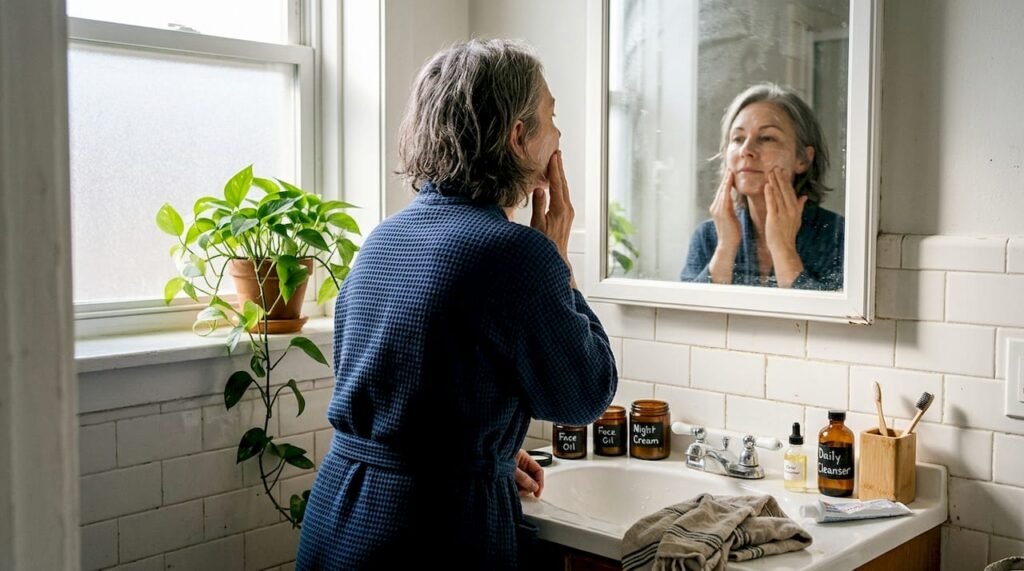
If you’ve ever tried a new serum only to wake up with red, irritated skin, you’re not alone. Mature skin after 40 reacts differently to synthetic actives, and what worked in your 30s can suddenly feel harsh, stripping, or just plain wrong. The good news is that user satisfaction rates for organic skincare exceed 90 to 96%, making natural routines a genuinely trusted choice for women navigating the changes that come with mature skin. This guide walks you through every step of building an organic skincare workflow that targets anti-aging and brightening, from choosing the right ingredients to tracking real results.
Table of Contents
- Understand the essentials of an organic skincare workflow
- What you’ll need: Ingredients and tools for success
- Step-by-step organic skincare workflow for women 40+
- Avoid common pitfalls and maximize your results
- Track your progress and adjust for lasting results
- Why organic workflows win for mature skin—beyond the hype
- Take your organic skincare routine to the next level
- Frequently asked questions
Key Takeaways
| Point | Details |
|---|---|
| Gentler for mature skin | Organic workflows reduce irritation and support anti-aging for women 40 and above. |
| Consistency is key | Daily use of natural ingredients yields visible brightness and smoother texture over time. |
| Customize for results | Adapting routines and troubleshooting common pitfalls ensures lasting benefits and confidence. |
Understand the essentials of an organic skincare workflow
A skincare workflow is more than a routine. It’s a deliberate, ordered system where each product plays a specific role and supports the next. For mature skin, this matters more than most people realize. Synthetic routines often rely on aggressive actives like retinoids, acids, and preservatives that can compromise the skin barrier over time. Organic workflows, by contrast, use plant-derived ingredients that work with your skin’s natural biology rather than against it.
The difference shows up in how your skin feels day to day. Synthetic products can deliver fast results but often cause redness, peeling, or sensitivity, especially for women over 40 whose skin barrier is naturally thinner. Organic alternatives are gentler than synthetics while still delivering meaningful anti-aging and brightening results. That’s not a compromise. That’s a smarter approach.
Here’s a quick comparison of the two approaches:
| Feature | Organic workflow | Synthetic routine |
|---|---|---|
| Irritation risk | Low | Moderate to high |
| Brightening effect | Gradual, lasting | Fast but often reactive |
| Barrier support | Strong | Can weaken over time |
| Ingredient transparency | High | Variable |
| Suited for sensitive skin | Yes | Often not |
The core product types in an effective organic workflow include:
- Gentle cleanser to remove impurities without stripping
- Hydrating toner to balance pH and prep skin
- Active serum targeting brightening or firmness
- Moisturizer to seal in hydration
- Facial oil for barrier repair and glow
- Weekly exfoliating mask to support cell turnover
- SPF to protect all that hard work
Exploring the full range of organic skincare benefits for mature skin helps you understand why each step earns its place. And if you want to see what anti-aging results workflow looks like in practice, real clinical data makes the case clearly.
What you’ll need: Ingredients and tools for success
Building your organic workflow starts with knowing which ingredients actually do the work. The natural world offers some genuinely powerful options for mature skin, and the research backs them up. Bakuchiol, plant oils, and serums are among the most popular natural anti-aging alternatives supporting mature skin health today.
Here’s a practical overview of what to include:
| Product type | Purpose | Must-have or optional |
|---|---|---|
| Cleanser | Remove makeup, pollutants | Must-have |
| Toner | Balance pH, prep skin | Must-have |
| Vitamin C serum | Brighten, protect | Must-have |
| Moisturizer | Hydrate, plump | Must-have |
| Facial oil (rosehip, argan) | Repair barrier, add glow | Must-have |
| Exfoliating mask | Boost cell turnover | Optional (weekly) |
| SPF 30+ | Prevent UV aging | Must-have |
| Jade roller or gua sha | Improve circulation | Optional |
The hero ingredients to look for on your labels:
- Bakuchiol: A plant-based retinol alternative that firms without irritation
- Rosehip oil: Rich in vitamin A and C, reduces fine lines and uneven tone
- Niacinamide: Minimizes pores, brightens, and strengthens the barrier
- Hyaluronic acid (plant-derived): Pulls moisture deep into skin layers
- Vitamin C (ascorbic acid): Fades dark spots and boosts collagen
- Green tea extract: Antioxidant protection against environmental damage
- Peptides: Signal skin to produce more collagen naturally
For a deeper look at how natural oils for anti-aging work on mature skin, the science is genuinely encouraging. You can also browse organic anti-aging serums formulated specifically for women over 40.
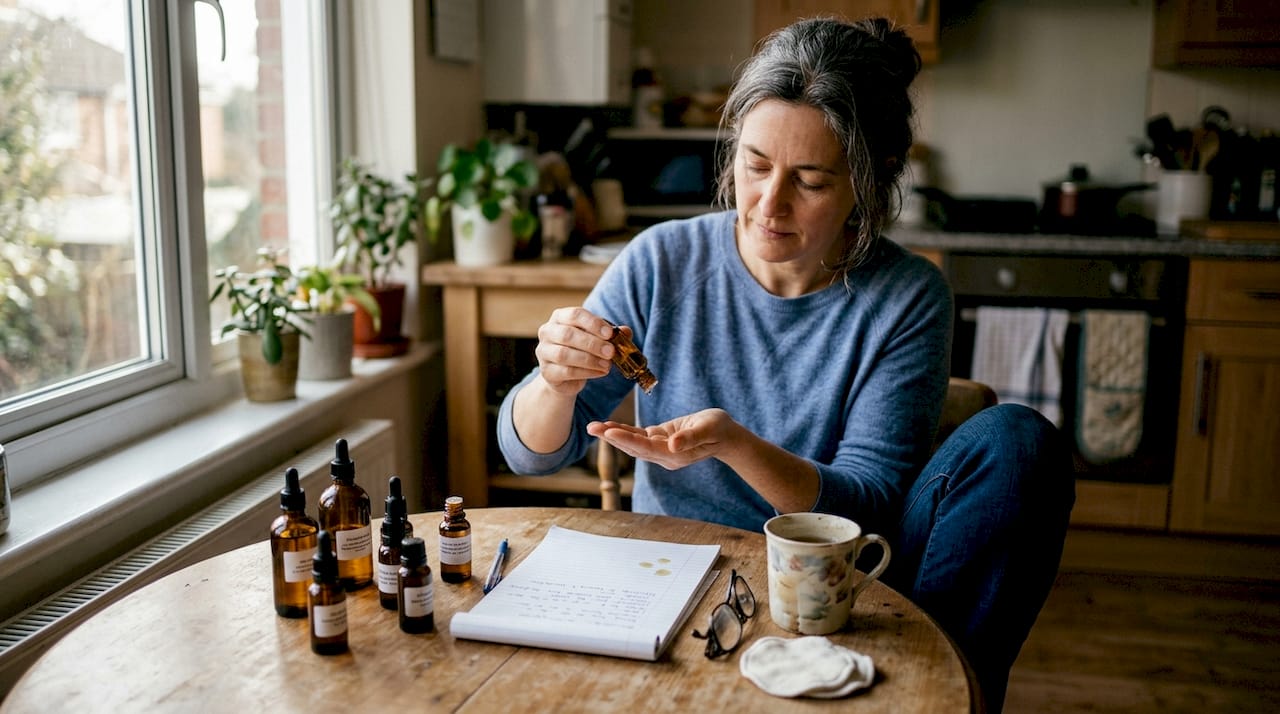
Pro Tip: Before adding any new product to your workflow, patch test it on your inner wrist for 24 hours. Rotate new actives in one at a time, not all at once, so you can identify what works and what doesn’t.
Step-by-step organic skincare workflow for women 40+
With your products ready, here’s how to put them together into a workflow that actually delivers. Consistency is the key factor. Consistent routines with organic products yield visible results and fewer side effects for mature skin over time.
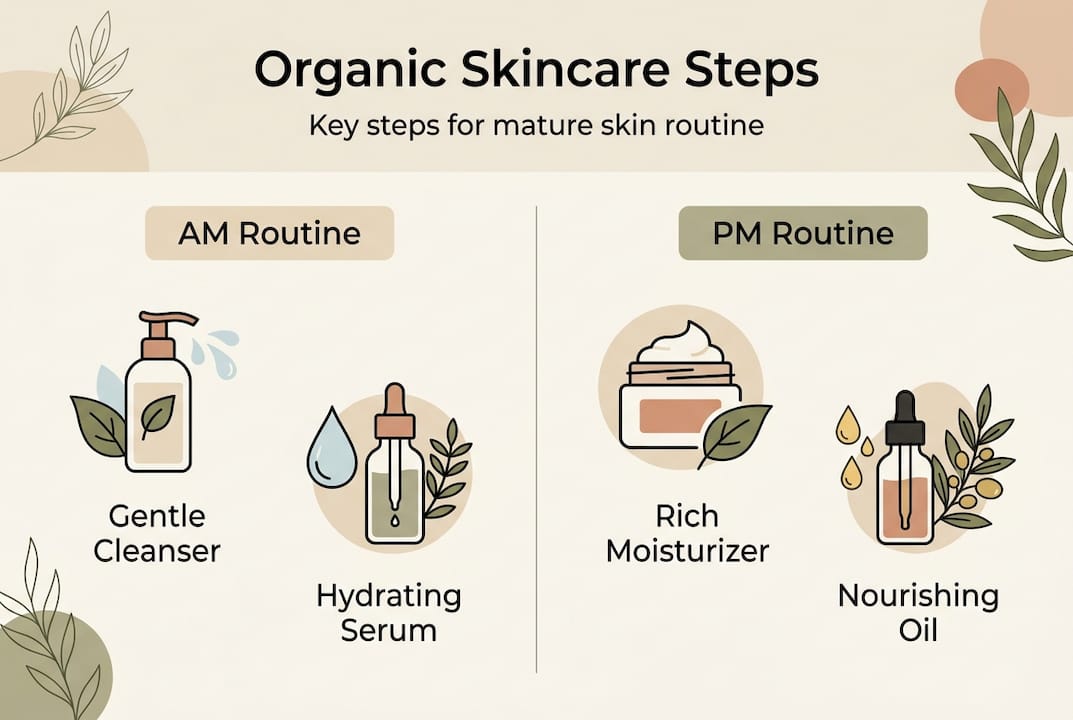
Morning routine:
- Cleanse with a gentle, sulfate-free organic cleanser. Rinse with lukewarm water.
- Tone with a hydrating, alcohol-free toner. Pat gently, don’t rub.
- Apply vitamin C serum to clean skin. Wait 60 seconds before the next step.
- Moisturize with a lightweight organic moisturizer suited to your skin type.
- Seal with SPF 30+ as your final step. Never skip this.
Evening routine:
- Double cleanse if you wore makeup or SPF. Oil cleanser first, then your regular cleanser.
- Tone as in the morning.
- Apply your active serum (bakuchiol, peptides, or niacinamide).
- Layer facial oil over your serum while skin is still slightly damp.
- Finish with a richer night moisturizer to support overnight repair.
Here’s how day and night routines compare:
| Step | Morning focus | Evening focus |
|---|---|---|
| Cleanser | Light, refreshing | Thorough, double cleanse |
| Active | Vitamin C (protect) | Bakuchiol or peptides (repair) |
| Moisturizer | Lightweight | Richer, more nourishing |
| Final step | SPF (non-negotiable) | Facial oil for barrier repair |
Once a week, swap your toner step for an enzyme or gentle AHA exfoliating mask. Leave it on for 10 minutes, then rinse. This supports cell turnover and keeps your skin looking bright. Learn more about how to prevent skin aging naturally with consistent habits, and consider gentle retinol alternatives if you want firming benefits without the irritation risk.
Pro Tip: Always apply products from thinnest to thickest consistency. Serums before oils, oils before creams. This layering order ensures each ingredient actually absorbs rather than sitting on top.
Avoid common pitfalls and maximize your results
Even a well-designed organic workflow can go sideways if a few key mistakes creep in. The most common ones are easy to fix once you know what to watch for.
Watch out for these pitfalls:
- Over-exfoliating: Using your mask more than once a week strips the barrier and causes redness
- Skipping SPF: UV damage undoes every brightening step you’ve taken
- Layering too many actives at once: Even natural ingredients can conflict when overloaded
- Not patch testing: Jumping straight into a new product is the fastest route to a reaction
- Expecting overnight results: Organic workflows build results gradually, not instantly
- Using expired products: Natural formulas have shorter shelf lives, check your dates
Irritation often stems from overuse, heavy layering, or mixing too many actives, and that applies even to organic products.
“Less is more for mature skin. One well-chosen active used consistently will outperform five competing ingredients every single time.”
If you notice bumps or redness after introducing a new product, stop using it immediately and return to your core routine for a week. Then reintroduce it at a lower frequency. If redness persists, it may simply not be the right ingredient for your skin. Browsing sensitive skin-safe products can help you find formulas specifically designed to minimize reaction risk. For ongoing tips and ingredient guidance, the organic skincare blog is a practical resource worth bookmarking.
Pro Tip: Keep a simple skincare journal for the first month. Note what you used, when, and how your skin felt the next morning. Patterns emerge quickly and save you a lot of guesswork.
Track your progress and adjust for lasting results
Once your workflow is running smoothly, tracking your skin’s response turns a good routine into a great one. You don’t need fancy tools. A weekly photo in natural light and a few notes are enough to see real change over time.
Most users report visible improvement in brightness and reduction in irritation within just a few weeks of consistent organic routines. That’s a meaningful timeline to hold in mind when you’re tempted to switch products too soon.
Signs your organic workflow is working:
- Skin feels softer and more hydrated within the first week
- Redness or sensitivity starts to calm down by week two
- Dull patches begin to brighten by weeks three to four
- Fine lines look less pronounced in morning light by week six
- Skin tone feels more even and balanced overall
- You’re using less makeup to cover up uneven areas
If you’re not seeing these signs after six weeks, it’s time to reassess. Ask yourself whether you’re being consistent, whether you’re using enough product per application, and whether your cleanser might be too stripping. Sometimes the issue isn’t the actives but the foundation steps.
When results plateau, that’s a natural signal to rotate in a new serum or upgrade your moisturizer to something richer for the season. Irish winters call for more barrier support than summer months. Revisiting the full list of less irritation benefits can remind you why staying organic through those adjustments pays off long term.
Why organic workflows win for mature skin—beyond the hype
Here’s what we’ve learned from years of working with women over 40 in Ireland: the biggest barrier to great skin isn’t finding the right product. It’s trusting that gentleness is actually a strategy, not a compromise.
There’s a persistent myth that effective skincare has to sting, peel, or feel intense to work. That belief pushes women toward synthetic actives that deliver fast, dramatic results but quietly erode the skin barrier over months and years. By the time the damage shows, it looks like aging, when it’s actually irritation.
Organic workflows flip that logic. They build the barrier while treating it. The results come slower, yes, but they hold. Customers who commit to a natural workflow for 60 to 90 days consistently report that their skin feels more resilient, not just better-looking. That resilience is the real win.
When ‘less intervention’ outperforms synthetic overuse, it’s not magic. It’s biology. Mature skin needs support, not assault. Learning how to prevent skin aging naturally is really about learning to work with your skin’s own repair systems rather than overriding them.
Take your organic skincare routine to the next level
You now have the framework. The next step is putting it into practice with products you can actually trust. At Miracle Gel, every formulation is built around the same principles you’ve read about here: gentle, effective, and designed specifically for mature skin.

Our clinical skincare for mature women range targets the exact concerns this workflow addresses, from firmness and fine lines to uneven tone and dullness. If brightening is your priority, explore our skin-brightening products formulated with vitamin C and plant actives. For those with reactive or rosacea-prone skin, our sensitive-safe skincare line is the safest starting point. Free shipping on orders over €85 makes it easy to build your full workflow in one go.
Frequently asked questions
What makes organic skincare safer for women over 40?
Organic skincare relies on plant-derived ingredients that are far less likely to trigger inflammation or barrier damage. Satisfaction rates exceed 90 to 96% for organic products among mature skin users, reflecting how well these formulas align with the needs of aging skin.
How long does it take to see results from an organic skincare workflow?
Most women notice brighter, calmer skin within two to four weeks of consistent use. Visible improvement in brightness and reduced irritation typically appear within weeks, with more significant changes in firmness and tone by week six to eight.
Can I use organic skincare with sensitive or rosacea-prone skin?
Yes, organic workflows are particularly well-suited for reactive skin types. Organics are gentler than synthetics and less likely to trigger flare-ups, though patch testing any new product is always the smart first step.
Should I avoid all synthetic ingredients in my skincare routine?
Not necessarily, but organic ingredients are the better default for mature, sensitive skin. Synthetics can be effective but often irritate over time, while organic alternatives deliver comparable results with far less risk to the skin barrier.