
TL;DR:
- Skin aging involves genetics, inflammation, hormonal changes, and external environmental factors.
- Lifestyle habits like sun protection, sleep, diet, and stress management significantly influence skin aging.
- Natural ingredients such as antioxidants, omega-3s, and collagen support healthy, youthful skin after 40.
Most women assume sun damage and gravity are the main culprits behind aging skin. The reality is far more layered. Factors like your gut microbiome, chronic low-grade inflammation, and daily food choices play a direct role in how your skin looks and behaves after 40. Genetics, inflammation, and external factors all interact to speed up visible signs of aging, yet many women have no idea how much is actually within their control. This guide breaks down the real science behind skin aging and gives you practical, natural strategies that work specifically for women in Ireland and the UK.
Table of Contents
- The main causes of skin aging explained
- How lifestyle and environment speed up aging
- Hormones, genetics, and your skin’s aging process
- Natural strategies to slow skin aging after 40
- What most anti-aging advice gets wrong
- How Miracle Gel helps you fight skin aging naturally
- Frequently asked questions
Key Takeaways
| Point | Details |
|---|---|
| Inflammation accelerates aging | Chronic inflammation damages collagen and speeds up visible signs of skin aging. |
| Lifestyle choices are powerful | Daily habits like diet, sun protection, and sleep play a major role in how your skin ages. |
| Hormones and genetics matter | Biological changes after 40 and your unique genes affect how your skin ages, but changeable factors matter too. |
| Natural solutions work | Nutrients, antioxidant-rich products, and consistent routines can noticeably slow skin aging. |
The main causes of skin aging explained
Skin aging happens through two distinct pathways, and understanding the difference changes how you approach your routine.
Intrinsic aging is the natural, biological process driven by genetics and cellular timekeeping. Your cells have a built-in limit to how many times they can divide, and collagen production slows gradually from your mid-20s onward. By the time you reach 40, this process is well underway.
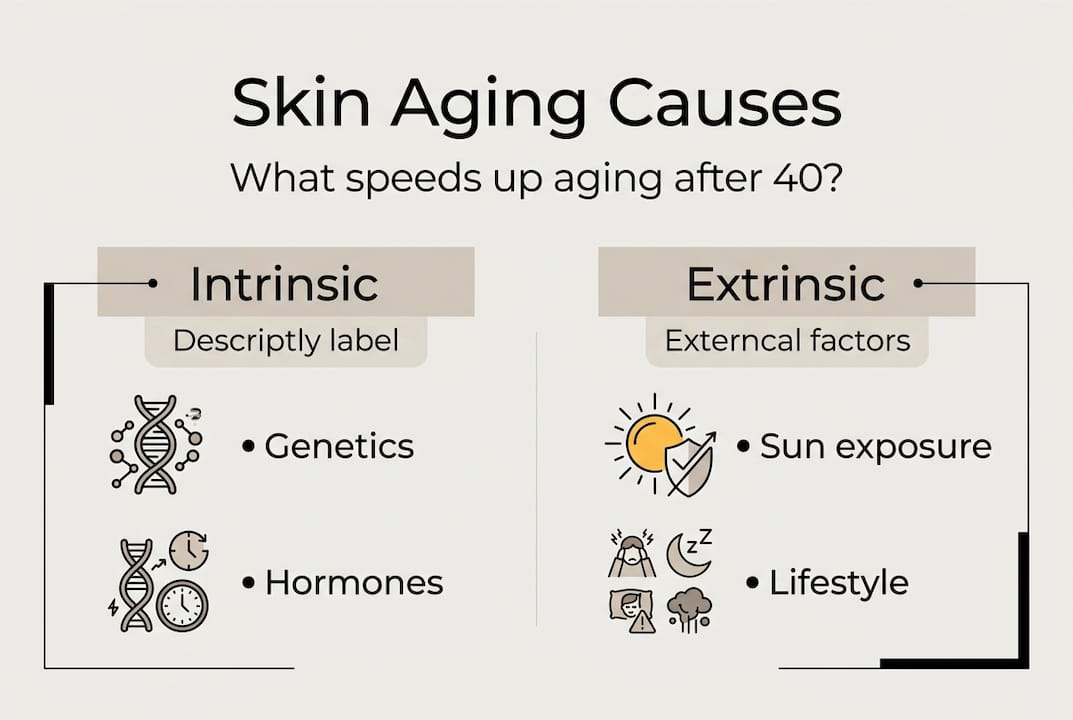
Extrinsic aging is caused by outside forces: UV radiation, pollution, smoking, poor sleep, and diet. This type of aging is largely preventable and accounts for the majority of visible skin changes most women experience.
One of the most significant and underappreciated drivers is inflammaging, a term researchers use to describe chronic, low-level inflammation that builds up over years. Inflammaging damages collagen fibers, disrupts the skin barrier, and accelerates sagging and fine lines. It is closely linked to gut health. When your gut microbiome is out of balance, inflammatory signals travel through the bloodstream and show up on your skin.
Hormone shifts add another layer. After 40, and especially around menopause, estrogen levels drop significantly. Estrogen supports collagen synthesis, skin thickness, and moisture retention. When it declines, skin becomes thinner, drier, and more prone to wrinkles. The changes can feel sudden, but they are the result of years of gradual hormonal shifts.
Here is a quick overview of the most common signs and their primary causes:
| Sign of aging | Primary cause |
|---|---|
| Wrinkles and fine lines | Collagen loss, UV exposure, inflammaging |
| Loss of firmness | Elastin breakdown, estrogen decline |
| Uneven pigmentation | UV damage, hormonal changes |
| Dryness and rough texture | Reduced oil production, barrier damage |
Key contributors to skin aging at a glance:
- Intrinsic: genetics, telomere shortening, slowed cell renewal
- Extrinsic: UV radiation, pollution, smoking, processed foods
- Hormonal: estrogen and progesterone decline around menopause
- Inflammatory: gut dysbiosis, chronic stress, poor diet
Exploring the full range of anti-aging factors and ingredients gives you a stronger foundation for building a routine that actually addresses root causes.
How lifestyle and environment speed up aging
Understanding the causes, let’s explore how daily life makes skin aging better or worse.
Not all lifestyle factors hit the same. Some are dramatic accelerators. Others create slow, cumulative damage you barely notice until one morning you look in the mirror and something has shifted.
Here is how the main culprits compare:
| Factor | Impact on skin | Reversible? |
|---|---|---|
| UV exposure | Breaks down collagen, causes pigmentation | Partially |
| Smoking | Restricts blood flow, depletes antioxidants | Partially |
| Poor sleep | Reduces cell repair, raises cortisol | Yes |
| High sugar diet | Triggers glycation, stiffens collagen | Yes |
| Pollution | Oxidative stress, barrier damage | Yes |
For women in Ireland and the UK, a few environmental realities are worth noting. The damp, overcast climate can create a false sense of security around sun protection. UV rays penetrate cloud cover and still drive photoaging year-round. Hard water, which is common across many parts of England, strips the skin’s natural oils and can worsen dryness and sensitivity over time.

Stress hormones, especially cortisol, are particularly damaging. When cortisol stays elevated, it breaks down collagen, increases inflammation, and weakens the skin barrier. Poor sleep compounds this because nighttime is when your skin does most of its repair work.
Here is what matters most, in order of impact:
- Daily sun protection, even in winter
- Quality sleep of seven to nine hours
- An anti-inflammatory, nutrient-rich diet
- Stress management through movement or mindfulness
- Avoiding smoking and excess alcohol
Pro Tip: Add more orange and yellow vegetables to your meals. Antioxidants from carrots and carotenoid-rich foods offer measurable photoprotection from the inside out. They work alongside your SPF, not instead of it.
Your natural prevention guide can walk you through a more detailed approach to building protective daily habits.
Hormones, genetics, and your skin’s aging process
Lifestyle isn’t the entire story. Your body’s own blueprint matters, too.
Estrogen is arguably the most important hormone for skin health in women. It stimulates collagen production, keeps the skin plump and hydrated, and supports the lipid barrier that locks in moisture. When estrogen declines during perimenopause and menopause, collagen levels can drop by as much as 30% in the first five years. Skin becomes noticeably thinner, drier, and slower to heal.
Genetics also play a major role in how and when these changes appear:
- Skin tone: Women with naturally darker skin tones tend to show wrinkles later because melanin offers some UV protection. However, they are more prone to post-inflammatory hyperpigmentation.
- Fair skin: More susceptible to sun damage, redness, and early fine lines, especially in UV-heavy climates.
- Genetic collagen quality: Some women naturally produce more resilient collagen, which delays visible sagging.
- Family history: If your mother aged slowly, you likely have genetic advantages working in your favor.
Hormone replacement therapy (HRT) is a topic many women in their 40s and 50s ask about. Research suggests it can help restore skin thickness and moisture retention, but the picture changes with age.
“HRT may reverse some age-related skin changes, but carries increased health risks for women over 60 and should be considered carefully with a medical professional.”
The practical takeaway is this: knowing your genetic tendencies helps you be proactive. If you have fair, sun-sensitive skin, daily SPF is non-negotiable. If you have a family history of hyperpigmentation, you can prioritize brightening and barrier-supporting ingredients early. A holistic anti-aging approach works with your biology instead of against it.
Natural strategies to slow skin aging after 40
Now that you know the causes, here’s how you can take control, naturally.
The best news? Many of the most effective anti-aging strategies are accessible, affordable, and genuinely enjoyable to maintain. Antioxidants, omega-3s, collagen peptides, bakuchiol, and the Mediterranean diet consistently appear in research as powerful, natural tools for slowing visible aging.
Here are the key actives and nutrients to know:
- Vitamin C: Boosts collagen synthesis and brightens uneven skin tone
- Vitamin E: Works alongside vitamin C to neutralize oxidative damage
- Carotenoids: Found in orange and red vegetables, these reduce UV-related damage from within
- Omega-3 fatty acids: Found in oily fish and flaxseed, they reduce inflammation and strengthen the skin barrier
- Collagen peptides: Oral supplements that support the body’s own collagen production
- Bakuchiol: A plant-based retinol alternative that improves fine lines without the irritation of synthetic retinoids
On the lifestyle side, the Mediterranean diet stands out clearly in the research. It is rich in olive oil, vegetables, legumes, and fish, all of which deliver skin-supporting nutrients while keeping inflammation low.
Sleep and stress reduction matter just as much as products. Prioritizing seven to nine hours of sleep gives your skin the repair window it needs. Even ten minutes of daily breathwork or walking significantly lowers cortisol, which directly reduces inflammaging.
Pro Tip: Skincare routines that support your skin’s microbiome, using gentle, pH-balanced cleansers and probiotic-infused products, can dramatically reduce the chronic low-level inflammation driving premature aging. Your skin barrier and your gut health are more connected than most people realize.
Look into best natural moisturizers and targeted anti-aging tips for women 40+ to find products and routines aligned with these principles.
What most anti-aging advice gets wrong
Having covered strategies you can use, it is worth rethinking some of the classic anti-aging advice.
Here is what we see again and again: women invest in expensive serums and clinical treatments while completely ignoring the daily habits that drive the most visible results. A €200 serum applied to an inflamed, nutrient-depleted skin barrier will always underperform compared to a simple, consistent routine backed by good sleep, an anti-inflammatory diet, and genuine stress management.
The gut health connection is almost never discussed in mainstream beauty media, yet it is one of the most powerful levers you have. When your gut microbiome is healthy and diverse, systemic inflammation stays low and your skin reflects that calm.
Patience is another thing the industry rarely rewards. Sustainable routines, maintained for months and years, protect your skin better than constantly switching products chasing the latest trend. Your skin adapts. It responds to consistency.
For more perspectives like this, visit our more skincare insights where we regularly share evidence-backed, no-nonsense guidance for women over 40.
How Miracle Gel helps you fight skin aging naturally
If you are ready to take action, Miracle Gel offers support for every stage of your natural skincare journey.
At Miracle Gel Natural Skincare, everything we create is built around the same principles covered in this article: targeting inflammation, supporting your skin barrier, and using ingredients your skin actually recognizes. Our comprehensive holistic routines are designed specifically for women over 40 who want results without harsh chemicals. Our natural moisturizer guide helps you find the right daily hydration for your skin type and concerns. And our organic skincare workflow gives you a step-by-step framework for building a routine that works. Explore, learn, and start taking control of how your skin ages, on your terms.
Frequently asked questions
What role does inflammation play in skin aging?
Low-grade, chronic inflammation known as inflammaging damages collagen and accelerates wrinkles and sagging over time. It is closely linked to gut microbiome imbalance and poor diet.
Is sun exposure still a problem in the UK and Ireland climate?
Yes, UV rays cause skin damage even on cloudy, rainy days, so daily SPF is essential for anti-aging. Even antioxidant-rich foods like carrots can support photoprotection from within.
Can hormone replacement therapy reverse aging signs?
HRT may help restore skin thickness and moisture before age 60, but carries increased health risks for older women and should only be considered with medical guidance.
What are the best natural ingredients to slow aging?
Antioxidants, omega-3s, collagen peptides, bakuchiol, and daily SPF are all effective when used consistently as part of a broader anti-inflammatory lifestyle.