
TL;DR:
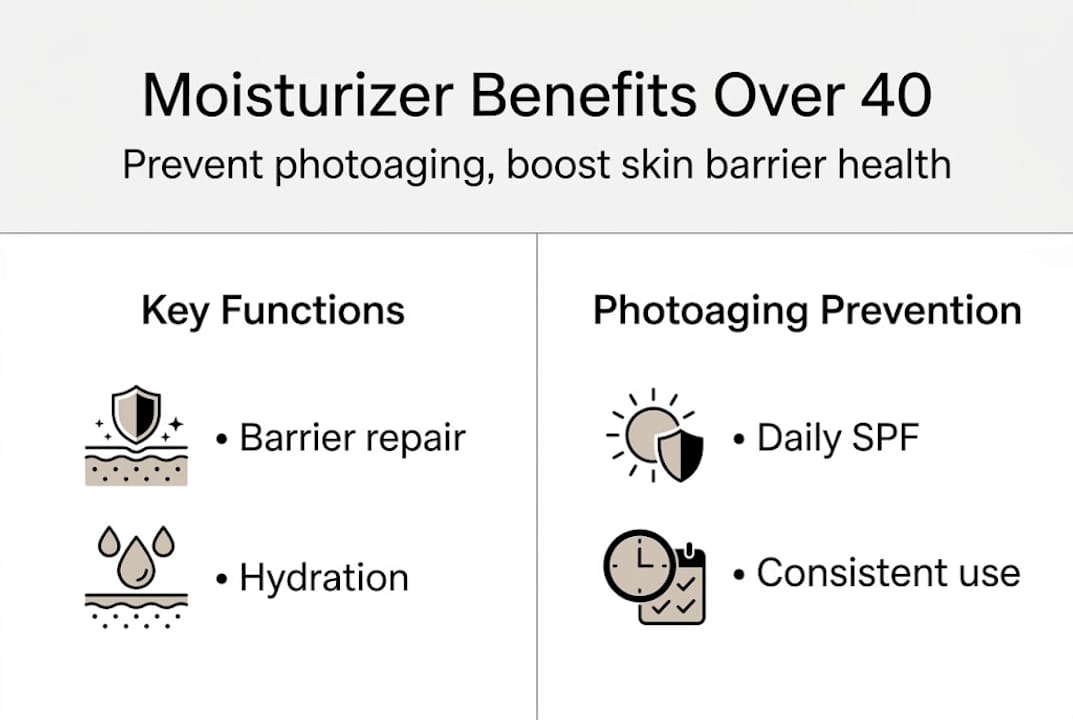
- Consistent use of SPF moisturizers prevents 80-90% of photoaging and supports skin barrier repair.
- Moisturizers with ingredients like niacinamide and vitamin C improve tone and brightness in mature skin.
- Understanding ingredient roles and applying products correctly enhances anti-aging results over 40.
Most women over 40 assume that real anti-aging results require serums, peels, or expensive treatments. But the product sitting on your nightstand right now may be doing more than you think. SPF moisturizers prevent 80-90% of photoaging when used consistently, and the right formula can also reduce visible lines, even skin tone, and restore your skin’s protective barrier. If you’re a woman over 40 navigating a maze of ingredients, claims, and product overload, this article will help you cut through the noise and actually understand what your moisturizer can do for you.
Table of Contents
- Why moisturizers matter after 40
- Types of moisturizers: humectants, emollients, occlusives
- Natural vs. synthetic actives: what’s best for mature skin?
- Moisturizer application for maximum results
- What most people miss: Real results are about consistency, not miracle ingredients
- Find natural, high-performance moisturizers for mature skin
- Frequently asked questions
Key Takeaways
| Point | Details |
|---|---|
| Moisturizers prevent aging | Regular use especially with SPF stops up to 90% of photoaging, making moisturizers a cornerstone in anti-aging routines. |
| Choose ingredients for sensitivity | Plant-based actives work well for mature and reactive skin, minimizing irritation while matching synthetic performance. |
| Humectant, emollient, occlusive balance | Combining these three types maximizes hydration, softness, and protection for women over 40. |
| Consistency beats complexity | Results depend on sticking with daily routines rather than chasing new products or actives. |
| Barrier repair is crucial | Focus on formulas that rebuild and maintain the skin barrier, especially during sensitivity or seasonal changes. |
Why moisturizers matter after 40
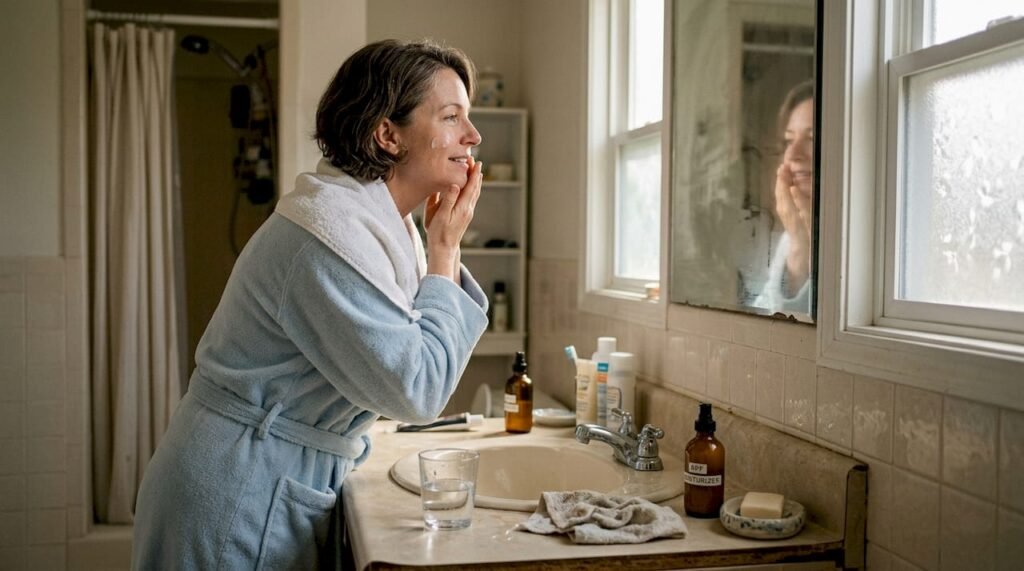
After 40, your skin changes in ways that go far beyond a few extra lines. Estrogen levels drop, collagen production slows, and your skin loses moisture much faster than it did in your 30s. The result? Skin that looks dull, feels tight, and shows fine lines more easily. A well-chosen moisturizer does not just feel good. It actively supports your skin through these changes.
One of the biggest roles moisturizers play is barrier repair. Your skin barrier is like a protective wall made of skin cells and lipids. When it weakens, moisture escapes and irritants get in. Mature skin is especially vulnerable to this. Using a moisturizer consistently helps seal that barrier, keeping skin resilient and calm.
Beyond hydration, moisturizers with the right actives can genuinely improve tone and brightness. Ingredients like niacinamide and vitamin C target uneven pigmentation, which becomes more common after 40 due to sun exposure and hormonal shifts. Pairing these actives with a good base moisturizer gives you hydration and visible brightening in a single step.
Then there is photoaging prevention. Sun damage is the number one cause of visible aging, and SPF moisturizers are your first line of defense. Daily use prevents 80-90% of photoaging, making your morning moisturizer with SPF one of the most powerful anti-aging tools available.
Here is what a good moisturizer can do for mature skin:
- Reduce water loss to prevent that tight, dry feeling
- Support collagen structure when fortified with peptides or vitamin C
- Even out tone with niacinamide or plant-based brighteners
- Block UV damage when formulated with SPF
- Calm inflammation with soothing botanicals like aloe or centella
“The right moisturizer is not an add-on to your anti-aging routine. It is the foundation of it.”
This is especially true for women in Ireland and the UK, where lower sun exposure year-round means many skip SPF. That is a costly mistake. Even indirect and diffuse light causes cumulative damage over time. Understanding natural moisturizers for mature skin gives you a head start in choosing formulas that actually deliver on these benefits.
Types of moisturizers: humectants, emollients, occlusives
Not all moisturizers work the same way. The reason some feel lightweight while others feel rich and protective comes down to three main ingredient categories: humectants, emollients, and occlusives. Most good moisturizers combine all three, but understanding each helps you choose the right balance for your skin.
Humectants draw water into the skin from the surrounding environment and from deeper skin layers. Think of them like a sponge pulling moisture toward the surface. Common humectants include glycerin, hyaluronic acid, and urea. They are excellent for plumping skin and reducing the look of fine lines temporarily.
Emollients work differently. They fill the microscopic gaps between skin cells, giving skin a softer, smoother feel. Ingredients like jojoba oil and squalane are classic emollients. For mature skin that has lost suppleness, emollients are particularly valuable because they restore that soft texture without feeling greasy.
Occlusives are the heaviest hitters. They form a physical layer on top of the skin that physically blocks water from evaporating. Occlusives like plant oils and shea can reduce transepidermal water loss (TEWL) by up to 98%. For women with very dry or reactive skin, an occlusive-rich formula is a game changer, especially in colder months.
| Type | How it works | Key examples | Best for |
|---|---|---|---|
| Humectant | Draws water to skin | Glycerin, hyaluronic acid, urea | Dehydrated, dull skin |
| Emollient | Fills gaps between skin cells | Jojoba oil, squalane, shea butter | Rough, uneven texture |
| Occlusive | Locks moisture in | Shea butter, plant waxes, petrolatum | Very dry or reactive skin |
Here is how to think about layering these for mature skin:
- Start with a humectant-rich serum or toner to draw moisture in
- Follow with an emollient moisturizer to smooth and soften
- Finish with a richer, occlusive layer at night if your skin tends to feel dry by morning
- In summer or humid months, you can skip the occlusive layer entirely
Understanding these basics helps when reading labels. If a moisturizer lists glycerin and hyaluronic acid near the top, it leans humectant. If shea butter dominates, it is more occlusive. For a deeper look at moisturizer basics, it is worth knowing how these work on your specific skin type before committing to a product. And for a full body approach, natural body care benefits from the same ingredient logic applied to thicker-skinned areas like elbows and knees.
Natural vs. synthetic actives: what’s best for mature skin?
Here is where things get genuinely interesting, and sometimes confusing. The skincare world is split between fans of synthetic actives like retinol and vitamin C, and advocates for plant-based alternatives. For women over 40 with sensitive or reactive skin, the choice matters.
Synthetic actives like retinol are clinically proven to stimulate collagen and speed cell turnover. Vitamin C in its pure form (ascorbic acid) is a strong antioxidant and brightener. But both can cause irritation, redness, and peeling, especially on mature skin that already has a compromised barrier. Many women in Ireland and the UK report that retinol causes more problems than it solves when used daily.
Plant-based actives are gaining serious traction for good reason. Bakuchiol matches retinol’s performance for sensitive and mature skin with significantly less irritation risk. It stimulates collagen, reduces fine lines, and even helps with pigmentation. Other plant actives like rosehip oil, sea buckthorn, and green tea extract offer antioxidant and brightening benefits that suit reactive skin well.
| Active | Type | Strength | Irritation risk | Best for |
|---|---|---|---|---|
| Retinol | Synthetic | High | High | Resilient, non-reactive skin |
| Vitamin C (ascorbic acid) | Synthetic | High | Moderate to high | Oily or less sensitive skin |
| Bakuchiol | Natural | Moderate to high | Low | Sensitive, mature skin |
| Rosehip oil | Natural | Moderate | Low | Dry, dull, or reactive skin |
| Niacinamide | Synthetic/natural hybrid | Moderate | Very low | Almost all skin types |
Pro Tip: If your skin is reactive or you have noticed increased sensitivity since turning 40, start with bakuchiol or niacinamide before trying retinol. You can always add stronger actives later once your barrier is in better shape.
The hybrid approach, using a plant-based active alongside a gentle synthetic like niacinamide, gives you the best of both worlds. Explore brightening actives and the ultimate guide to natural moisturizers to see how these ingredients work together in real formulations.
Moisturizer application for maximum results
Even the best moisturizer underperforms if you are applying it incorrectly. The good news is that a few simple adjustments to your routine can make a noticeable difference, without buying a single new product.
Here is a practical application sequence for morning:
- Cleanse gently. Harsh cleansers strip the barrier before your moisturizer even has a chance.
- Apply any water-based serum first, such as hyaluronic acid or a vitamin C serum.
- Press your moisturizer into slightly damp skin. This helps humectants pull in extra moisture.
- Finish with an SPF of at least 30, applied generously over the moisturizer.
For your evening routine, swap SPF for a richer, occlusive-leaning moisturizer. Night time is when your skin does most of its repair work, so a barrier-supporting formula helps the most.
Consistent moisturizer use reduces wrinkles by up to 75% in clinical trials for mature skin. That number comes from trials focused on daily, consistent use, not occasional application. Frequency matters enormously.
Common mistakes women over 40 make with moisturizers:
- Applying to completely dry skin, which reduces humectant effectiveness
- Using too little product, meaning the skin does not get adequate coverage
- Skipping SPF in the morning because it feels like an extra step
- Layering too many actives at once, which triggers irritation and defeats the purpose
Pro Tip: If your skin is reactive right now, strip your routine back to just a gentle cleanser, a barrier-focused moisturizer, and SPF. Healing the barrier first makes everything else work better. For full guidance on steps for glowing skin and holistic anti-aging routines, you will find routines mapped out by skin type and concern.
Patch testing is non-negotiable with any new product. Apply a small amount behind your ear or on your inner arm for three to four days before using it on your face. Mature skin reacts more slowly than younger skin, so give it time before drawing conclusions.
What most people miss: Real results are about consistency, not miracle ingredients
Here is something we have learned working with women over 40 who have tried everything: the women who see the most visible improvement are rarely the ones with the most elaborate routines. They are the ones who have picked a simple, well-chosen set of products and used them every single day without fail.
The skincare industry benefits when you believe results come from chasing the newest active. But a consistent natural skincare regimen built around genuine barrier repair, daily SPF, and steady hydration will outperform any occasional use of a trendy ingredient every single time.
We see it repeatedly. Women who simplify, focusing on a gentle cleanser, a solid moisturizer, and SPF, report more stable, radiant skin than those rotating through five different actives each week. Less product clutter also means less irritation, which means your barrier stays intact and your skin actually looks younger. Complexity is not sophistication. It is often just noise.
Find natural, high-performance moisturizers for mature skin
You now have a clear picture of what moisturizers can realistically achieve after 40, how the ingredient categories work, and how to apply them for genuine results. The next step is finding products that deliver on all of this without relying on harsh chemicals or overwhelming your skin.

At Miracle Gel Natural Skincare, we have curated formulations specifically for mature and sensitive skin, with natural actives like bakuchiol, plant-based humectants, and barrier-supporting oils. Whether you are starting fresh or refining an existing routine, explore our natural moisturizers guide and anti-aging serum options, or browse our full natural skincare regimen to build a routine that actually works for your skin.
Frequently asked questions
Can moisturizers really reduce wrinkles for women over 40?
Yes. Clinical trials show up to 75% wrinkle reduction with consistent use of evidence-backed moisturizers on mature skin, though results depend on daily application rather than occasional use.
Are natural ingredients better for sensitive, mature skin?
For most women over 40 with reactive skin, yes. Plant actives like bakuchiol match synthetic retinol in performance while causing significantly less irritation, making them a smarter starting point for sensitive skin.
How does an SPF moisturizer help prevent aging?
SPF moisturizers block the UV rays that cause the majority of visible skin aging. Used daily, they prevent 80-90% of photoaging, making them the single most impactful anti-aging product in any routine.
What are the most important application tips for mature skin?
Apply moisturizer to slightly damp skin, layer SPF over it in the morning, and if your skin is reactive, prioritize barrier repair before introducing any new actives to your routine.