
TL;DR:
- Mature skin in Ireland and the UK requires barrier support and gentle, evidence-backed ingredients.
- Natural anti-aging options like bakuchiol, pomegranate, and omega-3s are effective and well-studied.
- A consistent routine with SPF, barrier repair, and healthy diet optimizes skin aging in challenging climates.
Finding truly effective natural skincare when you’re over 40 and living in Ireland or the UK is harder than it looks. Generic “go natural” advice rarely accounts for rosacea-prone complexions, menopausal skin changes, or the relentless damp and cloud cover that defines life here. The reality is that up to 90% of visible aging is preventable with the right daily approach, yet most mainstream guides skip the details that actually matter for your skin. This article cuts through the noise with evidence-backed guidance, ingredient-level specifics, and a practical routine designed around the real conditions you face every day.
Table of Contents
- How to choose natural skincare for mature, sensitive skin
- Top natural anti-aging ingredients: Evidence and options
- Step-by-step daily natural skincare routine for 40+
- How to supercharge natural skincare results with diet and lifestyle
- Why most natural skincare advice misses the mark for Irish and UK women 40+
- Explore expert-crafted natural skincare for radiant, age-defying results
- Frequently asked questions
Key Takeaways
| Point | Details |
|---|---|
| Prioritize gentle actives | Bakuchiol and botanicals offer wrinkle and brightening power without irritation. |
| Daily mineral SPF is essential | Use SPF 30+ every day to prevent nearly all visible aging—even in cloudy Ireland. |
| Support skin from within | An antioxidant-rich diet amplifies the effects of natural topical products. |
| Patch-test new products | Mature, sensitive skin benefits from fragrance-free, clinically-backed formulas. |
How to choose natural skincare for mature, sensitive skin
Ordinary skincare advice often treats “over 40” as a single category. It isn’t. Your skin in 2026 is dealing with a specific combination of hormonal shifts, climate exposure, and cumulative UV damage that requires a much more targeted lens.
The first thing to understand is that mature skin in Ireland and the UK faces a higher-than-average risk of rosacea and chronic dryness. This is not a minor detail. Rosacea affects an estimated 10% of the population in Northern Europe, and for women going through perimenopause or menopause, skin barrier function drops significantly. That means inflammatory triggers like synthetic fragrance, alcohol-heavy toners, and coarse physical exfoliants can push your skin into a reactive spiral that’s hard to calm down.
For Irish skincare benefits to actually deliver, the product has to pass a few non-negotiable checkboxes:
- Fragrance-free formulation to avoid sensitizing already reactive skin
- Ceramide and omega-3 content to repair and reinforce the skin’s lipid barrier
- Gentle exfoliation only using lactic acid, enzymes, or fermented actives rather than walnut shell or microbeads
- Bakuchiol instead of retinol for anti-aging without redness, flaking, or sun sensitivity
- Clinically tested ingredients from brands that can show you published data, not just marketing claims
- Minimal ingredient lists that are easy to patch-test and trace if a reaction occurs
For preventing skin aging naturally, especially for rosacea-prone skin, the priority is always barrier repair first and anti-aging actives second. You cannot address pigmentation or fine lines effectively if your barrier is compromised. Think of your skin barrier as a dam: if it has cracks, everything leaks out, including moisture and your results.
Pro Tip: Before adding any new botanical to your routine, apply it to the inside of your elbow for three consecutive days. Botanicals are complex molecules and can trigger reactions even in products labeled “natural” or “organic.” Patch-testing is your first line of defense.
Brands with clinical backing and transparent ingredient sourcing are worth paying more for. Efficacy on mature, sensitive skin is not a marketing angle; it’s a measurable outcome. Demand the data.
Top natural anti-aging ingredients: Evidence and options
With your criteria in mind, let’s explore the standout natural ingredients that truly make a difference.
The biggest shift in natural anti-aging over the last five years has been the rise of bakuchiol as retinol alternative. Derived from the babchi plant, bakuchiol matches retinol’s results for wrinkle depth and pigmentation improvement, delivering a 20% fine line reduction in just 12 weeks, without the irritation, scaling, or photosensitivity that makes standard retinol so problematic for mature, menopausal skin. That is a meaningful clinical outcome, not a wellness trend.
Beyond bakuchiol, several botanicals have earned their place through genuine research. Pomegranate extract is rich in ellagic acid, a powerful antioxidant that inhibits melanin production and supports collagen synthesis. Orange peel extract supplies vitamin C in a form stable enough to survive formulation. Astragalus, a traditional herb now studied in non-toxic skincare, has been shown to protect telomeres, the protective caps on your DNA that shorten with age and stress.
A published clinical trial on botanical nutricosmetics found that a combination of pomegranate, orange, and complementary botanicals reduced forehead wrinkle volume by 23.3% and cut melanin levels by 13.9% at 12 weeks, while the placebo group actually worsened. That gap is significant.
Here is how the leading anti-aging skincare ingredients stack up:
| Ingredient | Primary benefit | Evidence level | Best for |
|---|---|---|---|
| Bakuchiol | Wrinkle reduction, pigmentation | Clinical RCT | Sensitive, menopausal skin |
| Pomegranate extract | Brightening, antioxidant | Clinical trial | Uneven tone, dullness |
| Astragalus | Telomere protection, anti-aging | Systematic review | Long-term skin longevity |
| Omega-3 fatty acids | Barrier repair, inflammation | Multiple studies | Rosacea, dryness |
| Vitamin C (stable) | Collagen, brightness | Well established | All mature skin types |
- Bakuchiol works best in serums applied at night
- Pomegranate pairs well with vitamin C in morning formulas
- Astragalus is most effective as a standardized extract, not a raw powder
- Omega-3s are as valuable in diet as they are in topical products
Pro Tip: Combining a topical bakuchiol serum with an oral nutricosmetic containing pomegranate and omega-3s creates a dual-action approach that tackles both surface skin and deeper cellular aging at the same time. Internal and external work together far better than either does alone.
Step-by-step daily natural skincare routine for 40+
Knowing the powerhouse ingredients, it is time to put them into a skin-brightening daily practice.
A good routine for mature, sensitive skin in Ireland or the UK does not need to be complicated. It needs to be consistent, barrier-focused, and SPF-protected. Here is a practical framework:
Morning routine:
- Gentle cream cleanser with no sulfates or fragrance. Removes overnight buildup without stripping lipids.
- Vitamin C serum using a stable form like ascorbyl glucoside. Apply to slightly damp skin for better absorption.
- Ceramide moisturizer with shea or squalane to lock in hydration. Menopausal skin needs richer lipids than you needed in your 30s.
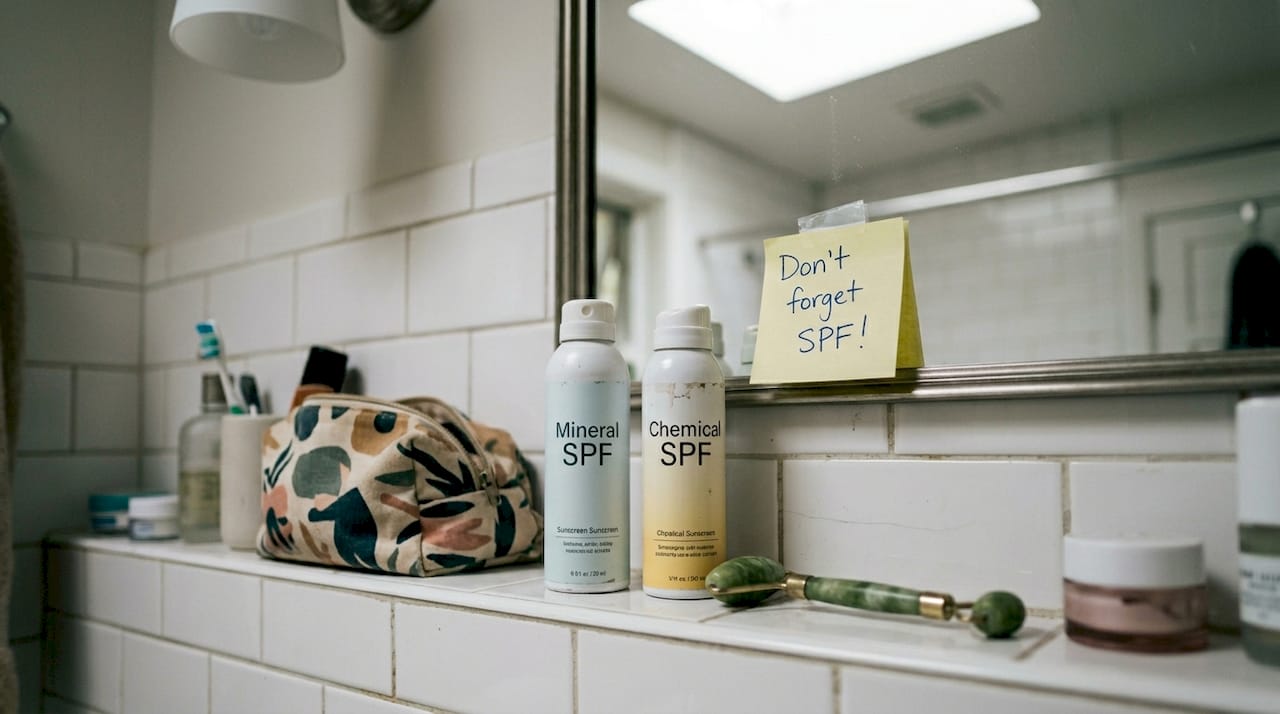
- Mineral SPF 30 or higher. Non-negotiable. Daily SPF 30+ prevents up to 90% of visible aging, even on overcast days in Dublin or Manchester.
Evening routine:
- Oil-based or micellar cleanser to dissolve SPF and pollution residue fully.
- Gentle enzyme exfoliation two to three nights per week using papaya or lactic acid from beet fermentation. Skip the gritty scrubs.
- Bakuchiol serum. Apply after cleansing and before moisturizer.
- Rich overnight cream with squalane, omega-3s, or ceramides to support your natural skincare regimen and reinforce barrier repair while you sleep.
The mineral versus chemical sunscreen debate matters more than people realize for this audience:
| Feature | Mineral SPF (zinc oxide) | Chemical SPF |
|---|---|---|
| Sensitivity risk | Very low | Moderate to high |
| Rosacea-safe | Yes | Often no |
| Starts working | Immediately | 20 minutes after application |
| White cast | Possible (tinted options help) | None |
| Recommended for menopausal skin | Yes | Use with caution |
For eco-friendly anti-aging steps that are also gentle, mineral formulas are consistently the better choice. Tinted mineral SPF products have largely solved the white cast issue that used to put people off.
How to supercharge natural skincare results with diet and lifestyle
Your skincare is only half the picture. Let’s see how diet and lifestyle close the gap for radiant, resilient skin.
Topical ingredients can only do so much if your diet is working against them. Antioxidant-rich foods like berries, citrus, nuts, flaxseed, and oily fish actively support collagen production, strengthen your skin barrier, and reduce the oxidative stress that accelerates aging in damp, UV-exposed northern climates.
Here is your food-first checklist for brighter, firmer skin:
- Blueberries and strawberries for anthocyanins that neutralize free radicals
- Mackerel, salmon, and sardines for omega-3 fatty acids that reduce skin inflammation
- Walnuts and flaxseeds for plant-based omega-3s and zinc
- Citrus fruits and bell peppers for vitamin C to drive collagen synthesis
- Green tea for EGCG, a polyphenol linked to UV damage reduction
- Dark leafy greens for lutein and zeaxanthin, which protect skin from blue light damage
On the lifestyle side, sleep is your most underrated skincare tool. Cortisol spikes from poor sleep break down collagen faster than almost anything else. Even three nights of disrupted sleep can increase transepidermal water loss, meaning your skin literally dries out faster. Aim for seven to eight hours consistently.
Hydration matters too, but it is less about drinking eight glasses of water and more about reducing dehydrating habits: alcohol, excess caffeine, and indoor central heating all accelerate moisture loss in mature skin.
Ingredients like astragalus are now appearing in clinically studied oral supplements precisely because of their telomere-protecting and antioxidant mechanisms. The science is there. What is not reliable is the wave of social media “natural remedies” that have no published safety or efficacy data.
Pro Tip: When evaluating a nutricosmetic or supplement, look for published peer-reviewed studies and clinical anti-aging results specific to the ingredient dose used in the product. A brand that cites real research is a brand worth trusting.
Why most natural skincare advice misses the mark for Irish and UK women 40+
Here is something that rarely gets said plainly: most natural skincare guides are written for a generalized, idealized skin type that does not reflect the reality of women aging in Ireland or the UK.
They assume mild climates. They assume skin that tolerates essential oils and aggressive botanical blends. They assume that “natural” automatically means gentle. None of those assumptions hold for our audience.
The honest truth is that some botanicals are more irritating than synthetic alternatives. Citrus essential oils are photosensitizing. Lavender can trigger contact dermatitis. Witch hazel strips barrier lipids. These are not rare reactions; they are common in rosacea-prone, hormonally changing skin.
What works long-term for women over 40 in this part of the world is a combination of ingredient transparency, published clinical data, and formulas built for barrier support in high-humidity, low-UV environments. Generic advice does not deliver that. Our skincare insights blog consistently returns to this point because it matters more than any trending ingredient.
Skepticism is not negativity. It is the most powerful skincare tool you have. Demand clinical studies. Ask which skin types were tested. That is how you separate what genuinely works from what just sounds good.
Explore expert-crafted natural skincare for radiant, age-defying results
If this article has shifted how you think about natural skincare ingredients and routines, the next step is finding products that actually meet the standard we have been describing.
At Miracle Gel Natural Skincare, every formulation is built around clinical evidence, barrier-first principles, and the specific needs of sensitive, menopausal skin in Irish and UK climates. Whether you are starting with our natural anti-aging collection, exploring targeted anti-aging serums, or looking for a full routine built around proven skin actives, you will find products formulated to deliver results you can see and measure. No guesswork. No compromises on safety.
Frequently asked questions
What natural ingredient is best for reducing wrinkles on sensitive skin?
Bakuchiol is the strongest clinically proven option, delivering a 20% fine line reduction in 12 weeks without the redness or peeling that makes standard retinol unsuitable for sensitive skin.
Is sunscreen necessary for mature skin in cloudy Irish or UK weather?
Absolutely. Mineral SPF 30+ blocks 90% of visible aging even on overcast days, and UV rays penetrate cloud cover consistently throughout the year in both countries.
How can diet support brighter, firmer skin after 40?
Antioxidant-rich foods including berries, oily fish, and citrus directly enhance your topical skincare by reducing internal oxidative stress and supporting collagen production from within.
Are all natural ingredients safe for sensitive or rosacea-prone skin?
No. Many botanicals, including essential oils and citrus extracts, are common irritants. For rosacea-prone skin, prioritize fragrance-free, barrier-repairing formulas with ceramides and omega-3s, and always patch-test before committing to a new product.