
TL;DR:
- Ethical beauty goes beyond natural ingredients, encompassing how products are made, sourced, and tested. It involves respecting animal welfare, caring for the environment, ensuring fair labor practices, and maintaining transparency across supply chains. Women over 40 should evaluate both certifications and efficacy separately to build a routine that aligns with their values and supports skin health.
Most women over 40 searching for better skincare have encountered the phrase “ethical beauty” and assumed it simply means buying products made with natural or organic ingredients. That assumption is understandable, but it misses most of the picture. Understanding what is ethical beauty means going far deeper than an ingredient list — it means examining how a product is made, who made it, whether animals were harmed, and whether the brand’s environmental footprint holds up to scrutiny. This guide will give you a clear, practical framework so you can make beauty choices that align with your values and still deliver the anti-aging results your skin deserves.
Table of Contents
- What ethical beauty really means: beyond buzzwords
- How ethical beauty differs from clean and sustainable beauty
- Third-party certifications: your trust signals in ethical beauty
- Balancing ethical beauty with anti-aging efficacy: the two-lane approach
- Practical tips for ethical beauty shopping after 40
- Why ethical beauty requires a new mindset for women 40 and beyond
- Explore natural, ethical skincare solutions for radiant skin over 40
- Frequently asked questions
Key Takeaways
| Point | Details |
|---|---|
| Ethical beauty defined | Ethical beauty involves multiple dimensions including animal welfare, environmental care, and social responsibility beyond marketing buzzwords. |
| Certification matters | Trust third-party certifications like Leaping Bunny to verify cruelty-free and ethical claims rather than relying on labels alone. |
| Values plus efficacy | For effective anti-aging, evaluate ethical standards and scientific backing separately to choose personalized, results-driven products. |
| Avoid greenwashing | Look beyond labels and packaging; verify brand transparency and consistent standards with independent audits. |
| Shop smart after 40 | Use certifications, ingredient knowledge, and consistent routines to align ethical beauty with your anti-aging skincare goals. |
What ethical beauty really means: beyond buzzwords
Ethical beauty is not a single checkbox. It is a multi-dimensional approach to how beauty products are created, sourced, and sold. As ethical beauty practices are defined in sustainability literature, they denote a dedication to minimizing adverse ecological and societal consequences and reflect a conscientious consumption model. That phrase is worth unpacking.
Think about what goes into a single moisturizer before it reaches your bathroom shelf. Someone harvested the ingredients. A facility processed them. Animals may or may not have been involved in testing. Workers were employed at various points in the supply chain. Packaging was manufactured. Each step carries an ethical weight that the term “natural” or “clean” simply does not address.
The definition of ethical beauty, when taken seriously, covers four distinct pillars:
- Animal welfare. No animal testing at any stage, from raw ingredient sourcing to finished product. This goes beyond the brand itself to every supplier in the chain.
- Environmental responsibility. Sustainable ingredient sourcing, minimal waste, biodegradable or recycled packaging, and carbon-conscious logistics.
- Fair labor. Workers at every level of the supply chain are paid fairly and work in safe conditions. This is the pillar most brands quietly ignore.
- Corporate transparency. A brand that publishes its sourcing policies, audit results, and ingredient origins rather than hiding behind vague claims.
Women over 40 who have been navigating clean beauty for any length of time often recognize that a product can be formulated with entirely safe ingredients and still fail every one of these pillars. That distinction matters enormously.
How ethical beauty differs from clean and sustainable beauty
The beauty industry has a language problem. “Clean,” “natural,” “green,” “sustainable,” and “ethical” are often used interchangeably on packaging, but they describe genuinely different things. Understanding the real differences between these terms protects you from being misled.
Here is a direct comparison:
| Term | Primary focus | Covers animal welfare? | Covers fair labor? | Legal definition? |
|---|---|---|---|---|
| Clean beauty | Ingredient safety | No | No | No |
| Sustainable beauty | Environmental impact | Rarely | Sometimes | No |
| Ethical beauty | All of the above | Yes | Yes | No |
As Ethos points out, clean and sustainable beauty lack standardized legal definitions, which means any brand can use these terms without independent verification. Ethical beauty has the same definitional gap at the legal level, but it is the only category that genuinely attempts to cover all the bases simultaneously.
Sustainable skincare, for example, might feature a brand with beautifully recyclable packaging but that still contracts ingredient testing to a third-party lab that uses animal models. Clean beauty might exclude parabens and sulfates but source its botanical ingredients from farms with exploitative labor practices. These are not hypothetical scenarios. They happen regularly in the industry.
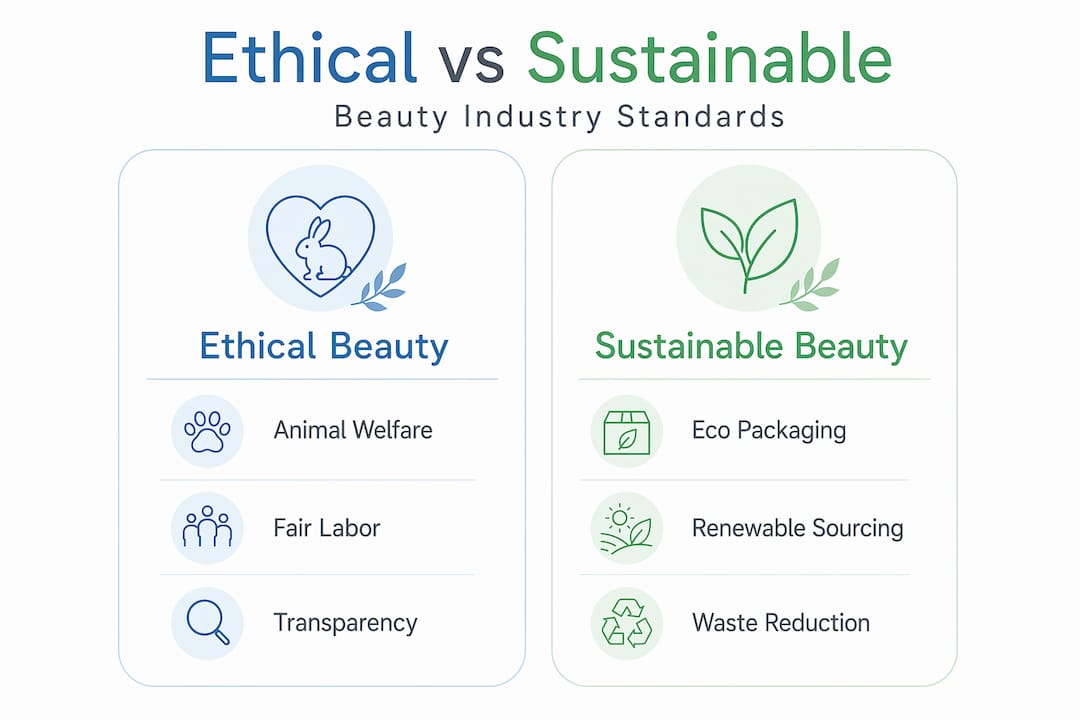
What sets ethical beauty apart is its scope. The other terms are useful, but they are narrow. If you want to explore sustainable skincare insights as part of your broader ethical choices, those practices absolutely belong in the conversation. But sustainable alone is not enough.
Here is what to look for when assessing ethical beauty products:
- Multiple certifications covering different pillars, not just one logo
- A published supplier code of conduct or sourcing policy
- Country of origin disclosure for key ingredients
- A clear commitment to no animal testing at supplier level, not just brand level
Pro Tip: If a brand only mentions “cruelty-free” in its marketing but displays no third-party certification seal, verify the claim directly on a certification database before purchasing.
Third-party certifications: your trust signals in ethical beauty
Self-applied labels are marketing. Certifications are accountability. When a brand displays a recognized third-party certification seal, it means an external body has verified specific claims against defined standards. This distinction is critical when you are spending real money on premium skincare.
Here are the certifications that carry genuine weight:
- Leaping Bunny. The gold standard for cruelty-free cosmetics globally. It covers the brand and every ingredient supplier.
- COSMOS Organic / COSMOS Natural. A European-originated but globally recognized certification for organic and natural ingredient standards.
- USDA Organic. Verifies agricultural ingredient origins in the US market.
- Fairtrade. Addresses fair labor and fair compensation for farmers and producers.
- B Corp Certification. Evaluates the entire business, from governance to environmental impact to worker treatment.
Leaping Bunny certification requires cruelty-free standards that go well beyond legal minimums. The program mandates fixed cut-off dates (meaning no pre-existing animal-tested ingredients grandfathered in), ongoing supplier monitoring, and independent audits. That rigor is what makes it trustworthy.
The same source makes clear that third-party certification is the only way ethical consumers can substantiate brand claims, since there is no legal framework that makes self-applied labels enforceable.
“A single certification tells you one part of the story. Real ethical beauty products earn multiple certifications because they are doing the work across multiple dimensions.”
To evaluate any product you are considering, work through this sequence:
- Identify which certifications appear on the packaging or the brand’s website.
- Cross-reference each certification on the certifying body’s official database.
- Check whether certifications cover only the brand or also its ingredient suppliers.
- Verify when the certification was last renewed, since standards can shift with reformulations.
- Note which pillars are not covered and decide whether that gap is acceptable for you.
The certification landscape can feel overwhelming at first, but once you learn what each seal actually verifies, the process becomes intuitive and fast.
Pro Tip: The Leaping Bunny website has a live brand search tool. Before buying any new brand, a 30-second check there tells you more than reading the entire label.
Balancing ethical beauty with anti-aging efficacy: the two-lane approach
Here is the mistake many women make when they first commit to ethical beauty: they assume that if a product has the right certifications, it will work. These are two separate questions. Treat them that way.
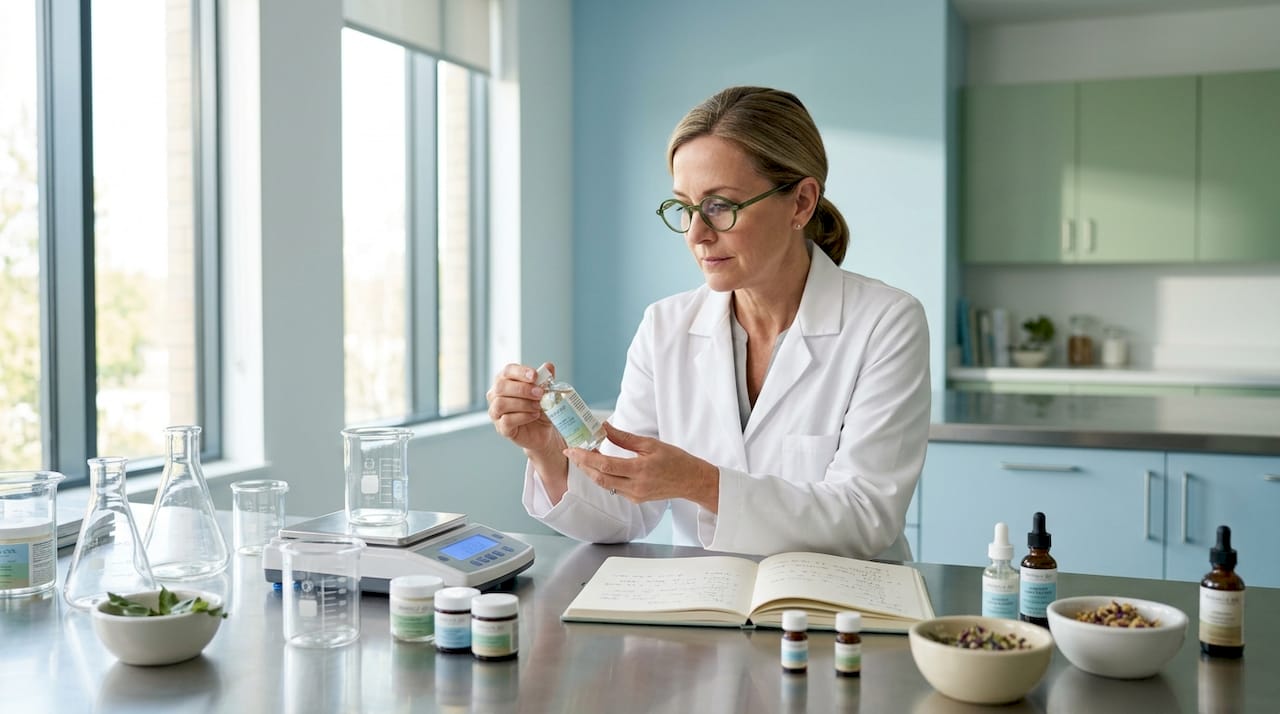
Think of it as two parallel lanes. In one lane, you evaluate ethical standards. In the other, you evaluate scientific effectiveness. A product needs to meet your bar in both lanes before it earns a place in your routine. Neither lane overrides the other.
Consumer trends data confirms that women increasingly want both values alignment and scientifically backed efficacy in their beauty products, with this pattern especially pronounced in anti-aging formulas. The market has heard that demand, and formulations have improved considerably.
To evaluate anti-aging efficacy in ethical products, use this approach:
- Look for clinically tested ingredients. Retinol alternatives like bakuchiol, peptides, vitamin C (ascorbic acid), hyaluronic acid, and niacinamide all have published clinical evidence behind them. A product should name its active ingredients clearly.
- Check concentration levels. An ingredient listed at the bottom of a long ingredient list may be present in such small amounts that it provides no real benefit. Brands that are genuinely transparent will share or publish their formulation philosophy.
- Scan for clinical study references. Many premium ethical brands will link to third-party studies or publish internal efficacy testing results.
- Read real customer reviews with age-specific filtering. Testimonials from women over 40 with similar skin concerns, dryness, loss of firmness, or uneven tone, carry more weight than general reviews.
- Give any product at least 6 weeks. Meaningful skin changes from anti-aging actives take time. Committing to that timeline also allows you to track real results rather than react to initial texture differences.
Good anti-aging skincare can absolutely come from ethical brands. The science does not care about a brand’s ethics. But you have to do the evaluation legwork rather than assuming one implies the other.
Pro Tip: If a brand publishes a “before and after” without disclosing the study size, duration, or measurement method, treat those claims with caution. Real clinical evidence specifies exactly how results were measured.
Practical tips for ethical beauty shopping after 40
Knowing the theory is only useful if you can act on it at the shelf (or the checkout page). Here is how to build ethical beauty habits that are actually sustainable for your routine.
- Start with certifications, not packaging. Beautiful branding is not evidence of ethics. Look past the aesthetics and check for certification logos immediately.
- Read ingredient lists with intent. Knowing the difference between fragrance (which can hide irritants) and parfum naturel or specific named botanicals tells you a great deal about a brand’s transparency.
- Verify claims at source. If a brand claims “sustainably sourced,” ask where. A brand with real practices will tell you. If they cannot, that is telling.
- Watch for greenwashing signals. Vague language like “eco-conscious,” “natural-inspired,” or “earth-friendly” without certification is a red flag.
- Track your skin’s response systematically. Keep a simple note on your phone with the date you started a product, your skin condition at baseline, and observations every two weeks. This makes it easy to tell whether a product is working regardless of its claims.
- Use third-party verification tools. Apps like Think Dirty or retailer clean beauty programs can help filter products before you read every label from scratch.
Consistent supplier monitoring is something ethical brands practice internally, and it is something you should mirror externally. A product that was certified two years ago may have changed its formulation since then, so re-checking before you repurchase is worth the two minutes it takes.
When building your organic skincare workflow, apply the same rigor to every new addition. A single unethical product in an otherwise ethical routine is still a compromise.
Pro Tip: Build a personal “approved brands” shortlist after verifying each brand once. Rechecking from that list is far faster than evaluating from scratch every time you shop.
Why ethical beauty requires a new mindset for women 40 and beyond
Here is the honest truth most beauty content will not tell you: ethical beauty is harder than it looks, and it is also more rewarding than you expect.
Women over 40 are often told to approach their skincare with urgency, to focus on firming, brightening, and turning back time. That framing treats your skin as a problem to be solved. Ethical beauty quietly rejects that framing. It asks you to think about your skin, your health, and your choices as part of something larger. That shift in perspective is not soft thinking. It is actually the more sophisticated approach.
Choosing natural skincare with age-defying focus for your 40s and beyond means you are building a regimen that respects your skin’s changing needs rather than fighting them with aggressive chemistry. It means you are choosing brands that will not expose you to unnecessary sensitizers as your skin barrier becomes more delicate with age. And it means your purchases are not quietly funding practices you would never knowingly support.
The uncomfortable truth about the ethical beauty space is that greenwashing has gotten sophisticated. Brands no longer just slap “natural” on a label. They commission aesthetic sustainability campaigns, partner with environmental charities, and write values statements that read beautifully and mean almost nothing. Women who have been around long enough to remember when “SPF” was a radical marketing claim are, frankly, better equipped to cut through that noise than younger consumers who have grown up with it.
Embracing ethical beauty at 40+ is not about perfectionism. You will not always find a product that checks every box. The goal is to raise your floor: to stop accepting vague claims as evidence, to demand transparency as a baseline, and to hold brands to a standard that reflects what you actually care about. That is a different mindset from “I will buy the clean version.” It is quieter, more permanent, and more powerful.
Explore natural, ethical skincare solutions for radiant skin over 40
Ready to turn these insights into a real routine? At Miracle Gel Natural Skincare, every product is formulated around the principles you have been reading about: transparent ingredients, a commitment to ethical sourcing, and clinically proven results designed for women over 40. Our radiant, age-defying skincare range is built specifically for skin that is changing and deserves products that work with it, not against it.
From anti-aging serums to cleansers and moisturizers, each product in our range is selected for both its ethical credentials and its measurable effectiveness. If you are building a routine that reflects your values and delivers real results, our practical anti-aging skincare guide is the natural next step. Browse the full collection and find the products that fit exactly where you are in your skin journey.
Frequently asked questions
What is ethical beauty, and how is it different from clean beauty?
Ethical beauty involves making conscious choices that minimize harm to animals, people, and the environment across the entire supply chain, while clean beauty focuses mostly on ingredient safety and lacks standardized legal definitions. Clean beauty is one part of ethical beauty, not a substitute for it.
How do third-party certifications help identify truly ethical beauty products?
They replace self-applied brand claims with independently verified standards. Leaping Bunny certification, for example, verifies cruelty-free compliance with supplier audits and fixed cut-off dates, giving you accountability that a brand’s own marketing simply cannot provide.
Can ethical beauty products be effective for anti-aging skin care?
Yes, but you need to evaluate ethics and efficacy separately rather than assuming one guarantees the other. Consumer trends research confirms growing demand for products that meet both criteria, and the best ethical brands now publish clinical evidence alongside their certifications.
What are practical tips for shopping ethical beauty products after age 40?
Check for recognized third-party certifications first, read ingredient lists critically beyond surface-level buzzwords, verify supplier transparency through the brand’s website or direct inquiry, and demand consistent ethical standards including ongoing supplier monitoring, especially for products you use every day in your anti-aging routine.