
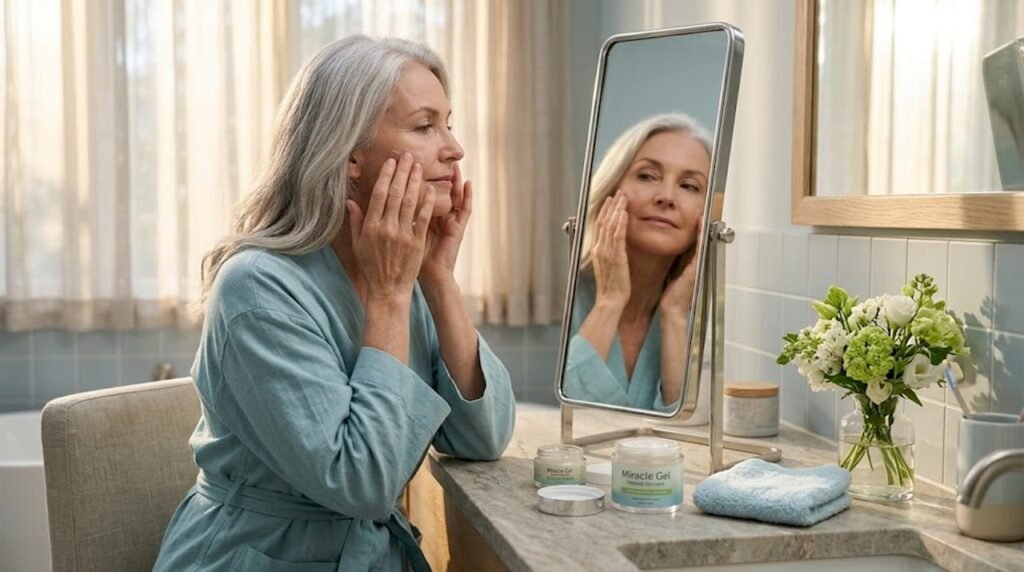
TL;DR:
- Proper skin hydration involves topical products that support moisture retention and barrier repair, especially after age 35. Drinking water alone does not directly hydrate the skin’s outer layers; instead, combining humectants, barrier-supporting ingredients, and correct application techniques enhances skin elasticity, reduces fine lines, and improves overall appearance. Building a consistent, science-backed routine centered on hydration significantly accelerates visible anti-aging results.
Drinking eight glasses of water a day is good for your health, but it will not give you the plump, radiant skin you’re hoping for. The role of hydration in skincare goes far deeper than what’s in your glass. After 35, your skin’s natural ability to hold onto moisture declines significantly, and that shift shows up as fine lines, dullness, and a texture that feels rougher than it used to. What you apply topically, and how you apply it, matters far more than most people realize. This article breaks down the science, the strategy, and the specific ingredients that make the real difference.
Table of Contents
- Key Takeaways
- The role of hydration in skincare and your skin’s biology
- How hydration powers your skin’s core functions
- Building a hydrated skin routine that actually works
- Hydration myths that are costing you results
- My honest take on hydration and mature skin
- Hydration-first skincare from Miraclegelnaturalskincare
- FAQ
Key Takeaways
| Point | Details |
|---|---|
| Topical hydration beats water intake | Drinking water supports overall health but does not directly hydrate the skin’s outer layers. |
| Hydration and moisture are different | Hydration adds water to skin cells; moisture seals it in with oils and lipids. You need both. |
| Mature skin loses hydration faster | After 35, natural hyaluronic acid and ceramide levels drop, making a consistent routine non-negotiable. |
| Ingredient layering matters | Apply hyaluronic acid on damp skin first, then seal with a moisturizer to prevent water evaporation. |
| Key ingredients have measurable results | Niacinamide, vitamin C, and hyaluronic acid each address specific hydration and aging concerns with clinical backing. |
The role of hydration in skincare and your skin’s biology
Your skin is made up of roughly 64% water, but that water is not evenly distributed. The deeper dermal layers hold the most, while the outermost layer, the stratum corneum, relies on a delicate balance of water-binding molecules and protective lipids to stay functional. When that balance tips, your skin stops performing the way it should.
There is a distinction worth knowing: hydration and moisture are not the same thing. Hydration refers to the water content inside skin cells. Moisture refers to the oil and lipid barrier that prevents water from escaping through the surface. You need both working together. A skin that is hydrated but unprotected will lose that water quickly through a process called transepidermal water loss (TEWL). A skin that is moisturized but dehydrated will feel coated and temporarily comfortable but still look dull and tight.
After 35, this system starts working against you in measurable ways:
- Natural hyaluronic acid production in the dermis slows, reducing the skin’s water-holding capacity
- Ceramide levels decline, weakening the lipid barrier and increasing TEWL
- Cell turnover slows, meaning dehydrated surface cells linger longer and amplify dullness
- Collagen fibers become less flexible without adequate hydration, accelerating the appearance of fine lines
The visible consequences are not subtle. Dehydrated skin loses elasticity, creases more easily, and develops a crepey texture that no amount of foundation covers convincingly. When you understand why hydration matters for mature skin at this biological level, treating it becomes far less guesswork.
Pro Tip: Pinch the skin gently on the back of your hand and release it. If it snaps back immediately, your hydration levels are reasonable. If it holds the pinch shape for a second or two, your skin is telling you it needs more water, not more oil.
How hydration powers your skin’s core functions
Hydration is not just about appearance. It is the operating system your skin runs on. Without adequate water content in the dermal and epidermal layers, several critical biological processes slow down or fail entirely.
Collagen production is one of the clearest examples. Collagen fibers require a well-hydrated environment to synthesize and stay supple. Vitamin C at concentrations of 10-20% boosts collagen production by 1.4x, and that process depends on skin that is already adequately hydrated to absorb and use the ingredient effectively. Dry, compromised skin cannot capitalize on even the best actives.
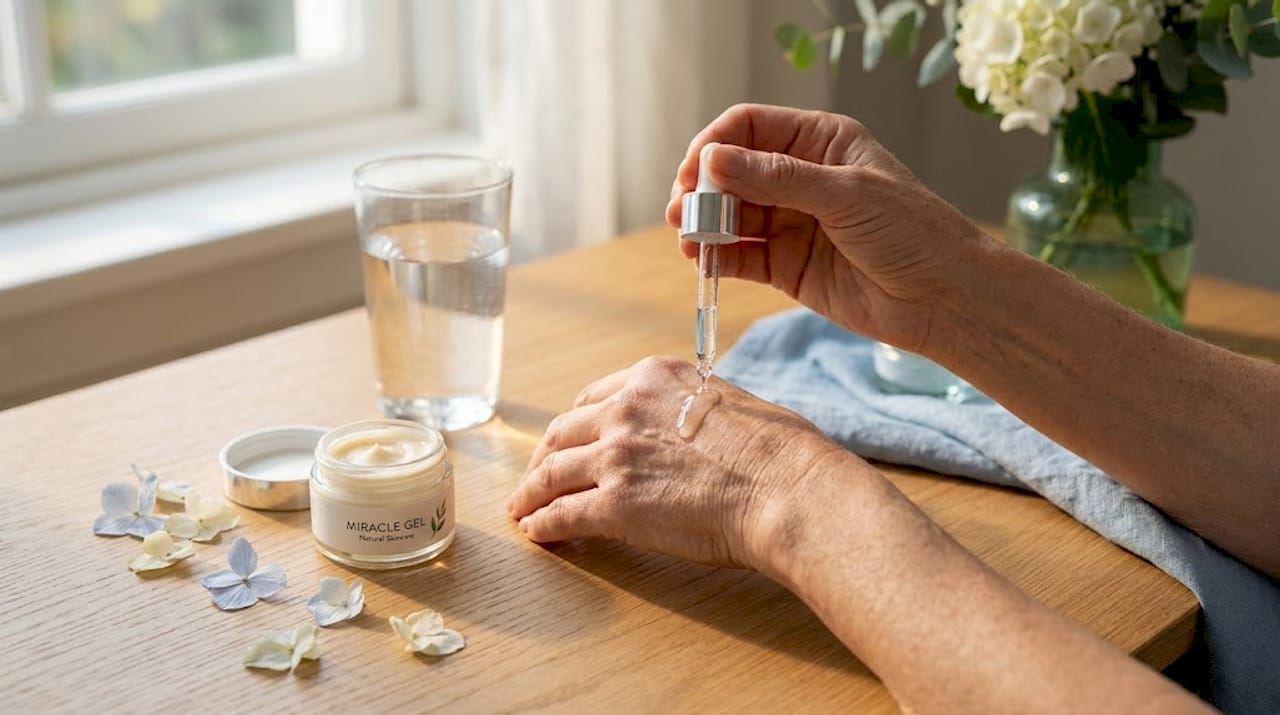
The skin barrier is another area where hydration has a direct and measurable impact. Niacinamide at 5-10% concentrations drives a 50% increase in ceramide production, which directly reduces water loss through the skin surface. More ceramides mean a tighter barrier, less moisture escaping, and skin that stays plumper between applications.
The table below shows how three key hydration ingredients support different but interconnected skin functions:
| Ingredient | Primary function | Measurable benefit |
|---|---|---|
| Hyaluronic acid (low molecular weight) | Draws water into skin cells | 30% improvement in elasticity after 8 weeks |
| Niacinamide (5-10%) | Increases ceramide production | 50% reduction in transepidermal water loss |
| Vitamin C (10-20%) | Supports collagen synthesis | 1.4x boost in collagen production |
There is also a recovery dimension worth paying attention to. Hydrated skin recovers faster and responds better to treatments like chemical peels or microneedling. If you are investing in professional skin treatments, your skin’s hydration status on the day of treatment, and in the weeks before, directly affects how much benefit you get from those procedures.
“Hydration is prioritized as the base of all advanced skin treatments and is essential for visible improvements, especially in mature skin.” — Yano Skincare
Understanding the science of skin moisture and barrier function makes every product decision you take more intentional and more effective.
Building a hydrated skin routine that actually works
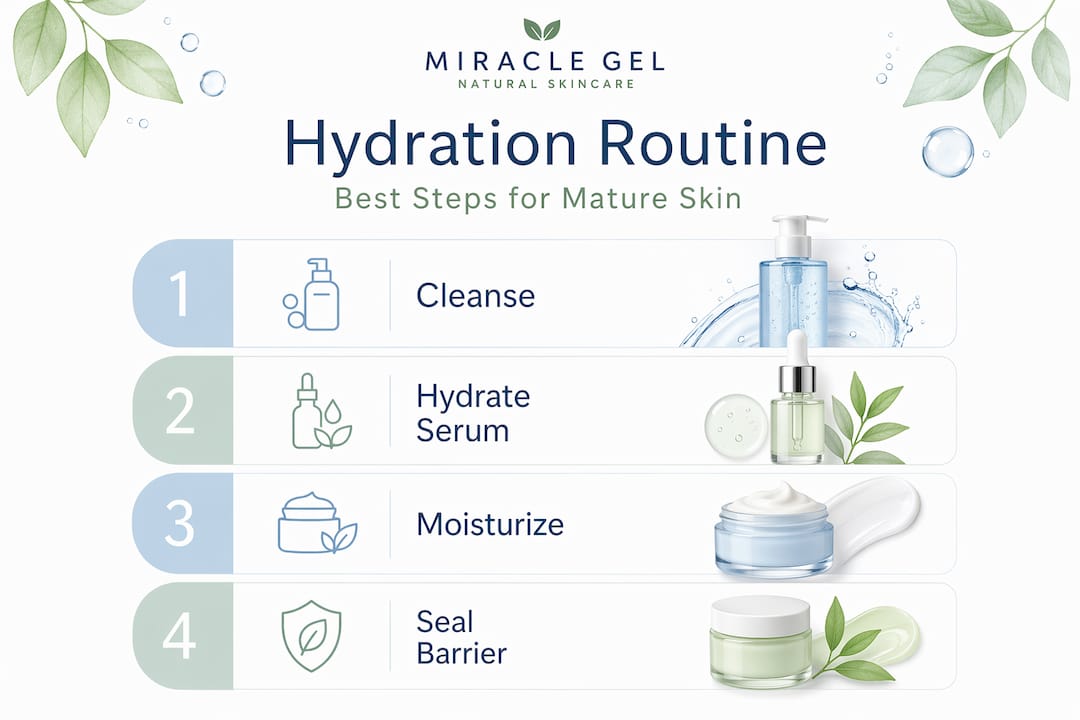
Knowing the science is one thing. Translating it into a daily routine is where most people get tripped up. The good news is that the most effective hydration strategies are not complicated. They just need to be applied in the right order, with the right products, at the right time.
Here is a practical sequence that makes a real difference for mature skin:
- Cleanse gently. Harsh, foaming cleansers strip the skin’s natural oils and disrupt the barrier before you even start. Use a low-pH, cream-based, or oil cleanser that cleans without over-stripping.
- Apply on damp skin. Applying serums to damp skin significantly boosts the absorption and effectiveness of humectants like hyaluronic acid. Pat your face dry to about 70% and apply immediately.
- Layer humectants first. Hyaluronic acid serum goes on before anything else. It pulls water into the skin cells from the surface moisture and the air. If your skin feels tight after applying it, your environment is too dry. Add a few drops of water to your palms before applying or use a facial mist underneath.
- Add actives in the middle. Vitamin C and niacinamide sit between your hydrating serum and your moisturizer. Both support hydration indirectly, vitamin C by building collagen structure and niacinamide by reinforcing the barrier.
- Seal with a moisturizer. Humectants combined with barrier-supporting ingredients lock moisture in and prevent evaporation. Without this final step, the water you just drew into your skin will escape.
- Apply SPF in the morning. UV exposure degrades collagen and disrupts the barrier, undoing hydration work faster than anything else. This step is non-negotiable.
Texture matters more than most people account for. In summer or humid climates, a gel-based moisturizer provides enough occlusion without feeling heavy. In winter or dry indoor environments, a richer cream with ceramides and shea butter is more appropriate. Your skin does not need the same thing year-round.
Pro Tip: If you want to see faster results from your anti-aging serums, apply your hyaluronic acid while your face is still slightly damp from toning or misting. The difference in plumpness and absorption is noticeable within a week.
Common mistakes that quietly undermine your routine include exfoliating too frequently (which strips the barrier), layering too many actives without a hydrating base, and skipping moisturizer on oily skin days. All three decisions slow down your skin’s ability to stay hydrated.
Hydration myths that are costing you results
There are several widely repeated ideas about hydration that sound logical but actually work against your skin, especially after 35.
The most persistent myth is that drinking more water equals better skin. Internal water intake supports systemic hydration and nutrient transport, but it does not directly reach the epidermis or dermis in meaningful quantities. Topical skincare with barrier repair is simply more effective for skin hydration than water intake alone. Drinking water is healthy, but it is not a skincare strategy.
Another myth: if your skin is oily, you do not need hydration. This is actually the opposite of what the science shows. Dehydrated skin can overproduce sebum as a compensatory response, which means oily skin is sometimes a sign of dehydration, not excess water content. Stripping that oil without replacing hydration makes the problem worse and can trigger more breakouts.
A few other myths worth clearing up:
- “My moisturizer is enough.” A moisturizer without a humectant underneath it is sealing in an already dry surface. Hydration requires a humectant (hyaluronic acid, glycerin) before the occlusive layer goes on.
- “I only need to hydrate in winter.” Air conditioning in summer is just as dehydrating as indoor heating in winter. Skin loses water year-round in climate-controlled environments.
- “Hydrated skin and glowing skin are the same thing.” Hydration creates the foundation for radiance, but dead cell buildup still dulls the surface. Gentle exfoliation combined with solid hydration gives you the glow.
One underappreciated benefit of consistent hydration is how it transforms makeup application. Dehydrated skin amplifies the appearance of fine lines and causes foundation to cling and crease. Properly hydrated skin creates a smooth, plump surface where makeup sits evenly and lasts longer. For anyone who has noticed that foundation sits differently on some days, hydration levels are usually the variable that changed.
My honest take on hydration and mature skin
I have worked with mature skin long enough to say this plainly: hydration is not a nice-to-have. It is the step that determines whether everything else in your routine actually works.
What I see repeatedly is people investing in excellent serums and treatments but skipping or skimping on the hydration layer underneath. They wonder why their vitamin C serum is not doing more, or why their skin still looks tired despite consistent effort. The answer is almost always the foundation.
One thing I have learned that most articles will not tell you: the order of operations matters more than the price of your products. A mid-range hyaluronic acid serum applied correctly on damp skin will outperform a premium serum applied to dry skin every single time. The technique is the differentiator.
I also think people underestimate how much cumulative dehydration ages them. One dehydrated week does not do visible damage. But months of inconsistent hydration, barrier disruption, and missed moisturizer steps add up to the exact signs of aging that feel like they appeared overnight. You can explore the impact on elasticity and aging in research focused on women over 40, and the findings are hard to ignore.
The most practical advice I can give you: before you add another active or try another treatment, spend three weeks doing nothing but optimizing your hydration routine. The transformation in your baseline skin quality will clarify everything else.
— Barbara
Hydration-first skincare from Miraclegelnaturalskincare
If you are ready to build a routine around the principles covered in this article, Miraclegelnaturalskincare has formulated specifically for the needs of skin after 40.
The Miraclegelnaturalskincare range of age-defying natural skincare for 40+ includes products built around proven hydration ingredients like hyaluronic acid, niacinamide, and vitamin C, combined in formulations that work together rather than competing. The 2 Minute Miracle Gel, powered by the Tri-Moisture Cryo Complex™, is designed to deliver visible hydration fast without harsh chemicals or artificial fillers. For anyone who wants a clear starting point, the complete anti-aging serum collection is a practical place to begin, with products matched to mature skin’s specific requirements. Natural ingredients. Real results. No guesswork.
FAQ
What is the role of hydration in skincare after 35?
Hydration maintains skin elasticity, supports collagen production, and strengthens the barrier that prevents water loss. After 35, natural hyaluronic acid and ceramide levels decline, making topical hydration more important than ever.
Does drinking water improve skin hydration?
Drinking water supports overall health but does not directly hydrate the epidermis or dermis. Topical hydrating products with humectants and barrier-repair ingredients are significantly more effective for skin hydration.
Can oily skin be dehydrated?
Yes. Dehydrated skin frequently overproduces sebum as a compensatory response, which can make skin appear oilier. Lightweight, targeted hydration helps restore balance rather than stripping the skin further.
What hydration ingredients work best for mature skin?
Low-molecular-weight hyaluronic acid, niacinamide (5-10%), and vitamin C (10-20%) are the most clinically supported options. Together they hydrate, strengthen the barrier, and support collagen structure.
How does hydration affect the appearance of fine lines?
Well-hydrated skin plumps the cells that fine lines sit on top of, reducing their depth and visibility. Consistent topical hydration over 8 weeks has been shown to improve skin elasticity by up to 30%.