
TL;DR:
- Transitioning to natural skincare after 30 involves a gradual process, prioritizing certified organic, fragrance-free products to rebuild skin health. Understanding marketing terms like natural, organic, and eco-friendly helps avoid greenwashing, while a step-by-step routine focusing on cleanser, moisturizer, active treatments, and sunscreen ensures effective adaptation. Patience, consistent monitoring, and choosing fewer, transparent products support sustainable, healthy skin in 2026 and beyond.
You’ve probably stared at your bathroom shelf and wondered whether all those synthetic ingredients are actually helping your skin or slowly working against it. If you’re over 30 and figuring out how to transition to natural skincare in 2026, you’re not alone. Thousands of people in the same stage of life are questioning conventional routines and looking for something gentler, more transparent, and genuinely effective. This guide walks you through exactly what that shift looks like: which terms actually mean something, how to avoid common mistakes, and what a realistic, step-by-step transition looks like for real skin.
Table of Contents
- Key takeaways
- How to transition to natural skincare in 2026: what the terms actually mean
- Preparing your skin and your shelf for the switch
- The step-by-step transition process
- Maintaining your routine and monitoring results
- My honest take after years working with natural skincare clients
- Why Miraclegelnaturalskincare makes this transition easier
- FAQ
Key takeaways
| Point | Details |
|---|---|
| Start gradual, not all at once | Swap one product at a time to let your skin adapt and identify what works. |
| Certifications cut through noise | Look for USDA Organic or equivalent certifications to avoid misleading greenwashing claims. |
| Fragrance-free is non-negotiable | Removing synthetic fragrances is one of the fastest ways to calm sensitive, reactive skin. |
| Simplicity outperforms complexity | Fewer products with better ingredients consistently beat complicated multi-step routines. |
| Sunscreen is always part of the plan | Some natural active ingredients increase UV sensitivity, so SPF 30+ is a daily must. |
How to transition to natural skincare in 2026: what the terms actually mean
Before you swap a single product, you need to understand what you’re buying. The words “natural,” “organic,” “clean,” and “eco-friendly” are not interchangeable, and brands know that most shoppers treat them as if they are.
Here’s a quick breakdown:
- Natural: Derived from plant, mineral, or animal sources. No regulatory definition exists in most countries, which means any brand can use it freely.
- Organic: Refers to how ingredients were grown, specifically without synthetic pesticides or fertilizers. USDA organic standards are considered the gold standard for trustworthy labeling.
- Clean: A marketing term with no standard definition. It usually implies free from a brand’s own list of excluded ingredients.
- Eco-friendly: Focuses more on packaging and environmental impact than on ingredient sourcing.
The gap between “natural” and “certified organic” is enormous. Organic certification involves documented input records, maps of growing areas, and annual inspections to verify that a product meets published standards. A product labeled “natural” has no such verification requirement.
Greenwashing is the practice of using environmental or health language to imply a product is safer or cleaner than it actually is. Watch for phrases like “nature-inspired,” “botanical blend,” or “plant-based formula” on products that still contain parabens, sulfates, and synthetic fragrances.
One 2026 trend worth knowing: the market is shifting toward fragrance-free, barrier-supportive formulas. Minimalist routines with five or fewer products are now where the evidence and the demand both point. That simplicity is not a compromise. It’s the direction dermatological thinking has been moving for years.
| Label | Regulatory backing | What it guarantees |
|---|---|---|
| USDA Organic | Yes | No synthetic pesticides; verified annually |
| Natural | No | Nothing specific |
| Clean | No | Brand-defined exclusion list only |
| Eco-friendly | Partial | Packaging claims; not ingredient-based |
Preparing your skin and your shelf for the switch
Most people make the same mistake: they throw out everything at once and replace it with a dozen new natural products. The result is chaos. You have no idea what’s working, what’s causing a reaction, or what your skin actually needs.
A smarter approach starts with an honest assessment of what you’re currently using and why.
- Know your skin type. Oily, dry, combination, sensitive, or mature each respond differently to natural formulations. Switching to a new cleanser or moisturizer without understanding your baseline makes it impossible to read your skin’s response.
- Audit your current products. List everything you use regularly. Note which products have the most synthetic fragrances, sulfates, or alcohol, because those are your priority swaps.
- Set realistic expectations. Your skin has been functioning within a specific chemical environment for years. A transition period of four to eight weeks before your skin stabilizes is normal, not a sign that natural products don’t work.
- Remove fragrance first. Synthetic fragrances are a leading cause of long-term skin irritation and barrier damage. Cutting them out is often the single fastest improvement you can make, even before switching to fully natural products.
- Plan for one swap at a time. Wait two to three weeks between each product change. This timeline tells you whether a product agrees with your skin before you introduce the next variable.
Pro Tip: Before your first swap, take a few photos of your skin in natural light. You’ll have a genuine baseline to compare against in six weeks rather than relying on memory.
The urge to overhaul everything overnight is real, especially when you’re motivated. Resist it. A gradual organic transition is significantly more sustainable and far less likely to leave you frustrated and reverting to your old routine.
The step-by-step transition process
This is where the plan becomes practical. Think of your routine as four layers: cleanse, treat, moisturize, protect. Swap in that order, and you’ll keep disruption to a minimum.
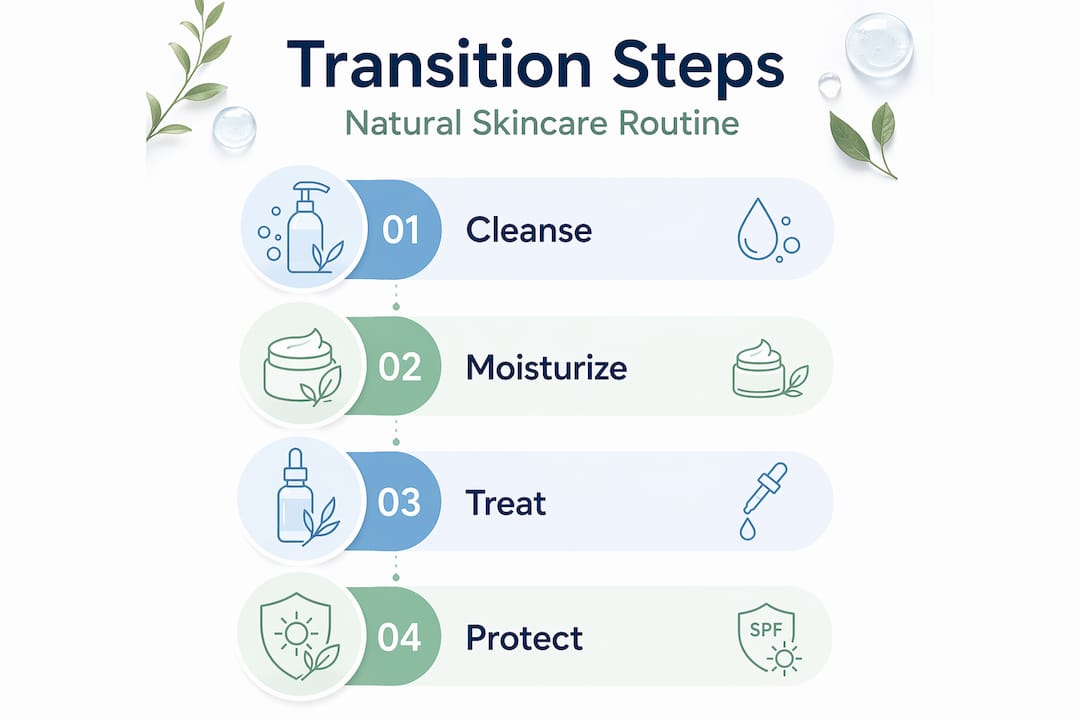
Step 1: Start with your cleanser. Your cleanser is the most forgiving product to swap because it doesn’t stay on your skin long. Look for a sulfate-free, fragrance-free formula with simple plant-derived surfactants. A natural cleansing guide designed for women over 40 is a useful starting point if you’re not sure where to begin.
Step 2: Replace your moisturizer. After two to three weeks with a new cleanser, add a natural moisturizer. For 30-plus skin, look for humectants like hyaluronic acid and emollients from plant oils such as jojoba or rosehip. These reinforce your barrier rather than stripping it.
Step 3: Introduce a serum or active treatment. This is where 2026 ingredients get interesting. PDRN (polydeoxyribonucleotide) is one of the standout actives this year, stimulating skin renewal and supporting collagen production in a way that’s particularly relevant for mature skin. It represents a meaningful step forward: science-backed efficacy in a natural-compatible formulation.
Step 4: Swap your sunscreen. This swap is critical and often underrated. SPF 30+ daily is non-negotiable, especially when you’re using regenerative actives that can increase UV sensitivity. Mineral sunscreens with zinc oxide are the go-to natural option in 2026.
| Routine layer | Swap priority | What to look for |
|---|---|---|
| Cleanser | First | Sulfate-free, fragrance-free, plant-based |
| Moisturizer | Second | Hyaluronic acid, jojoba, rosehip oil |
| Serum / active | Third | PDRN, vitamin C, certified organic actives |
| Sunscreen | Fourth | Zinc oxide mineral SPF 30+ |
Lifestyle factors matter here too. Vitamins like magnesium and vitamin C support skin barrier health from the inside, which accelerates what your new topical routine is trying to do on the outside. Skin improvement is not purely topical.
Pro Tip: If you experience a breakout or increased dryness in the first two weeks after a swap, don’t panic and don’t quit. Give your skin a full three weeks before deciding whether a product suits you. Most initial reactions are adjustment, not rejection.
The goal of your best natural skincare routine is not to replicate the quantity of your old routine using natural labels. It’s to simplify. Simple routines with fewer products reduce skin stimuli and consistently produce better barrier function than complicated multi-step stacks.
Maintaining your routine and monitoring results
Getting through the initial transition is one thing. Building a routine you’ll still be using six months from now is another. Here’s what separates people who sustain natural skincare from those who drift back to their old habits.
- Track your skin weekly. Use the photos you took at the start. Look for texture changes, dryness, breakouts, or brightness shifts. Skin changes slowly, and you’ll miss the progress without documentation.
- Resist the urge to add products too quickly. Wait at least four weeks before introducing any new active ingredient after your initial routine is stable. Your skin needs time to reflect what’s actually working.
- Choose eco-friendly skincare products with transparent ingredient lists. If a brand won’t tell you exactly what’s in a product and why, move on. Transparency is a baseline in 2026, not a premium feature.
- Review your routine seasonally. Winter skin needs more emollients. Summer skin often benefits from lighter hydration. Natural formulas tend to respond well to seasonal adjustments because they work with your skin rather than overriding it.
- Stay informed. The Miraclegelnaturalskincare blog covers ingredient science and formulation updates worth bookmarking. The 2026 landscape is moving fast, particularly around PDRN and barrier science.
One thing that catches people off guard: the absence of certain sensations. Conventional products often create a tightening sensation after cleansing or a thick, occlusive feeling from moisturizers that contain silicones. When those are gone, the product can feel like it’s not working. It is. Your skin is just not being artificially coated anymore. Give yourself time to recalibrate your instincts alongside your routine.
My honest take after years working with natural skincare clients
I’ve seen people dump hundreds of dollars into natural skincare and come back two months later more frustrated than when they started. Almost every time, the problem isn’t the products. It’s the approach.
When someone over 30 starts this transition, they usually underestimate two things. First, how much synthetic fragrance has been masking underlying skin issues. The irritation, redness, and uneven texture they thought was “just their skin” often clears significantly once fragrances are removed. Second, how deeply they’ve been conditioned to equate complexity with effectiveness. A seven-product natural routine is not automatically better than three well-chosen products. It’s usually worse.
What I’ve learned is that patience is doing the work. You cannot rush your skin’s adaptation, and trying to speed it up by adding more products is the most common way to derail the whole process.
I also push back on anyone who assumes that natural means gentle to the point of being ineffective. Some of the most potent actives available in 2026 come from natural or biocompatible sources. The science has caught up. What hasn’t caught up is the habit of over-buying and over-applying that most of us built during years of conventional skincare marketing.
My honest advice: choose fewer products, verify certifications, and give your skin the same patience you’d give any real change worth making.
— Barbara
Why Miraclegelnaturalskincare makes this transition easier
Making the switch to natural skincare sounds straightforward until you’re standing in front of a hundred options and unsure which ones are genuinely clean. Miraclegelnaturalskincare was built specifically to remove that friction.
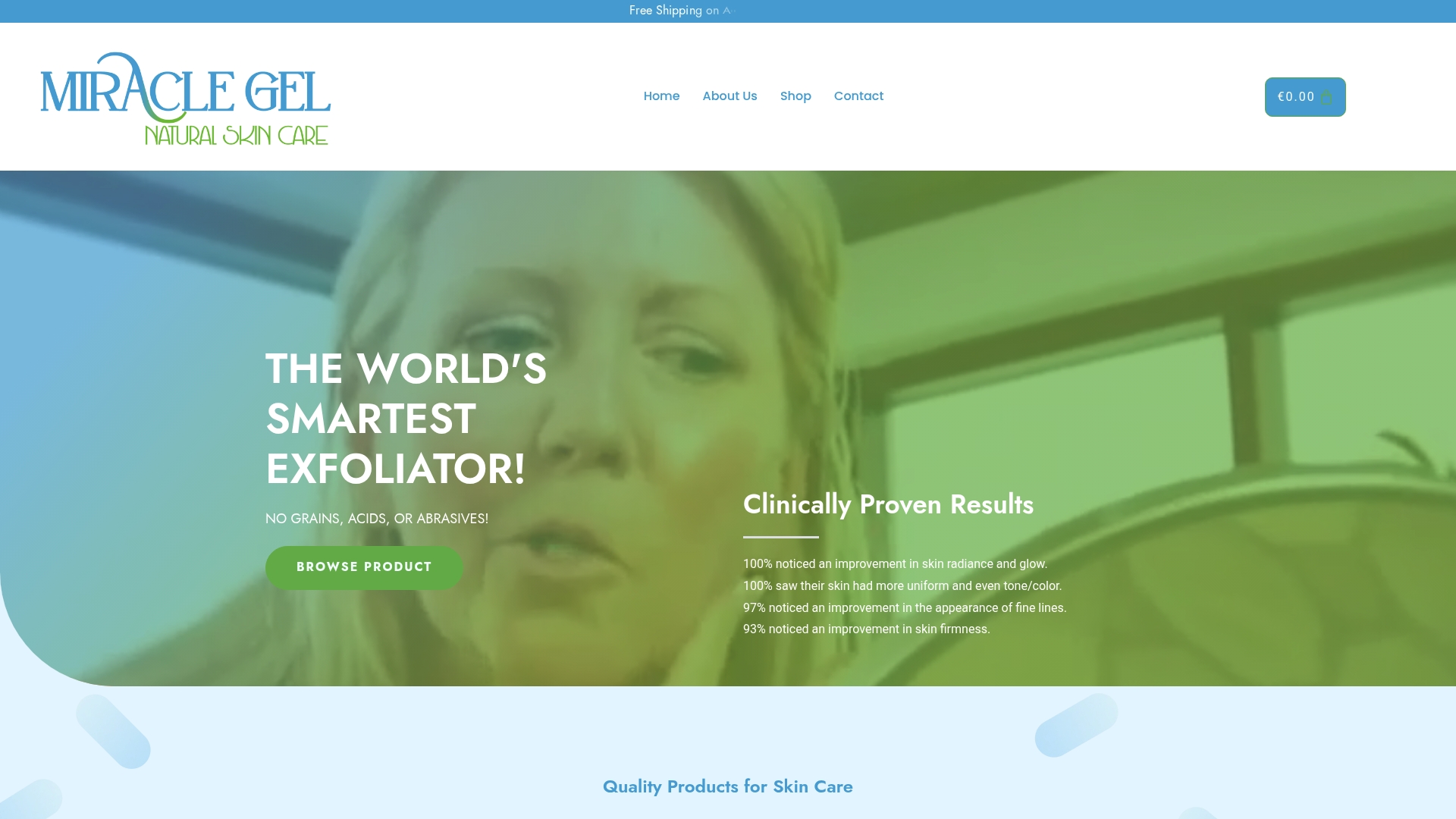
The product range at Miraclegelnaturalskincare is designed with 40-plus skin in mind: fragrance-free formulations, ingredient transparency, and clinically supported actives like the Tri-Moisture Cryo Complex™ in the 2 Minute Miracle Gel. For women looking for age-defying natural skincare without a complicated routine, the curated selection covers every step of the transition process from cleanser to serum. The brand’s founder, Shelly Maguire, has built her reputation on exactly this kind of no-compromise, results-driven approach to natural beauty. If you’re ready to move from overwhelm to a clear, effective plan, the anti-aging tips and product guidance on the site give you a concrete place to start.
FAQ
What does “transitioning to organic products” actually mean?
Transitioning to organic products means gradually replacing your current conventional skincare with formulations that use certified organically grown ingredients and exclude synthetic chemicals. The key word is gradually: swapping one product at a time over several weeks produces the best results.
How long does a natural skincare transition take?
Most people need four to eight weeks for their skin to stabilize after each product swap. A full transition covering cleanser, moisturizer, serum, and sunscreen typically takes three to four months when done correctly.
Can natural skincare be as effective as conventional products?
Yes. Ingredients like PDRN, vitamin C, and hyaluronic acid from natural or biocompatible sources are clinically supported for anti-aging and barrier repair, particularly for skin over 30.
How do I avoid greenwashing when choosing eco-friendly skincare products?
Look for third-party certifications like USDA Organic rather than relying on brand language like “natural” or “clean,” which have no regulatory definition and no verification requirement.
Do I need sunscreen with a natural skincare routine?
Absolutely. Some natural actives, including regenerative ingredients like PDRN, increase UV sensitivity. Daily SPF 30+ with a mineral zinc oxide formula is the recommended standard throughout and after your transition.