

TL;DR:
- Exfoliation removes dead skin cells to improve radiance and skin texture, especially after age 30.
- Using the correct method and frequency for your skin type prevents irritation and long-term damage.
Exfoliation is the deliberate removal of dead skin cells through physical or chemical methods to reveal smoother, more radiant skin underneath. The step by step exfoliation process matters more after 30 because skin cell turnover slows with age, leaving dull, uneven texture on the surface. Done correctly, exfoliation improves product absorption, brightens tone, and supports a healthy skin barrier. Done incorrectly, it causes redness, sensitivity, and long-term damage. This guide gives you a skin-type-sensitive, expert-backed routine you can follow safely and confidently.
What types of exfoliation work best for your skin type?
Two main categories define the best exfoliation methods: physical and chemical. Physical exfoliation uses tools or textured products to manually lift dead cells from the surface. Chemical exfoliation uses acids or enzymes to dissolve the bonds holding dead cells together. Each approach suits different skin types, and choosing the wrong one is the most common mistake people over 30 make.
Physical exfoliation
Physical exfoliants include scrubs, exfoliating mitts, soft brushes, and konjac sponges. They work immediately and give a satisfying clean feeling. The risk is real, though. Physical exfoliants can damage the skin barrier if applied too aggressively or if the particles are too coarse. Micro-tears in the skin surface lead to inflammation and breakouts, which is the opposite of what you want.
Chemical exfoliation
Chemical exfoliants like glycolic acid, lactic acid, salicylic acid, and fruit enzymes work below the surface. AHAs and BHAs break the bonds between dead skin cells to smooth and brighten without any scrubbing. Lactic acid is gentler than glycolic acid and suits dry or sensitive skin well. Salicylic acid is oil-soluble, making it the go-to for oily and acne-prone skin. Enzyme exfoliants from papaya or pineapple are the mildest option and work well for reactive skin types.
Exfoliation frequency by skin type:
| Skin type | Recommended frequency | Best method |
|---|---|---|
| Normal | 2–3 times per week | Physical or chemical |
| Oily / acne-prone | 2–3 times per week | BHAs (salicylic acid) |
| Dry | 1–2 times per week | Gentle AHAs (lactic acid) |
| Sensitive | 1–2 times per week | Enzyme exfoliants |
| Mature (30+) | 1–2 times per week | Mild chemical exfoliants |
Frequency guidelines confirm that normal and oily skin tolerates 2–3 sessions per week, while dry and sensitive skin does better at 1–2. These are upper limits, not targets. Start at the lower end and increase only if your skin responds well.
Skin tone also matters. Aggressive exfoliation on darker skin tones can trigger post-inflammatory hyperpigmentation, leaving dark spots that take months to fade. Gentler chemical methods are the safer choice for deeper complexions.
Pro Tip: Always patch test a new exfoliant on your inner arm for 24 hours before applying it to your face. This one step prevents most adverse reactions.
What tools and products do you need for safe exfoliation?
The right tools make the process effective. The wrong ones cause damage. For physical exfoliation, choose soft options: a konjac sponge, a fine-grain sugar scrub, or a gentle silicone cleansing brush. Avoid walnut shell scrubs or any product with jagged, irregular particles. These create micro-tears even when used gently.
For chemical exfoliation, the product’s pH and concentration determine how effective and how safe it is. Glycolic acid at 5–10% works well for normal to oily skin. Lactic acid at 5–8% suits dry and mature skin. Salicylic acid at 0.5–2% targets oily and congested skin. Enzyme exfoliants have no standard concentration because they work differently, but look for papain (papaya) or bromelain (pineapple) as active ingredients.
Tools and products at a glance:
| Product / Tool | Type | Best for |
|---|---|---|
| Konjac sponge | Physical | Sensitive, mature skin |
| Fine-grain sugar scrub | Physical | Normal, dry skin |
| Glycolic acid toner | Chemical (AHA) | Normal, oily skin |
| Lactic acid serum | Chemical (AHA) | Dry, mature skin |
| Salicylic acid cleanser | Chemical (BHA) | Oily, acne-prone skin |
| Enzyme mask | Chemical (enzyme) | Reactive, sensitive skin |
Post-exfoliation products are just as important as the exfoliant itself. You need a gentle, fragrance-free moisturizer to restore hydration immediately after. You also need a broad-spectrum SPF 30 or higher every morning, because freshly exfoliated skin is more vulnerable to UV damage. Skipping sunscreen after exfoliating is one of the fastest ways to undo the results. For guidance on avoiding harsh chemicals in your product lineup, check what ingredients to watch for before you buy.
Pro Tip: Store chemical exfoliants away from direct sunlight and heat. Degraded acids lose effectiveness and can become unpredictably irritating.
How to exfoliate skin safely: the full step by step process
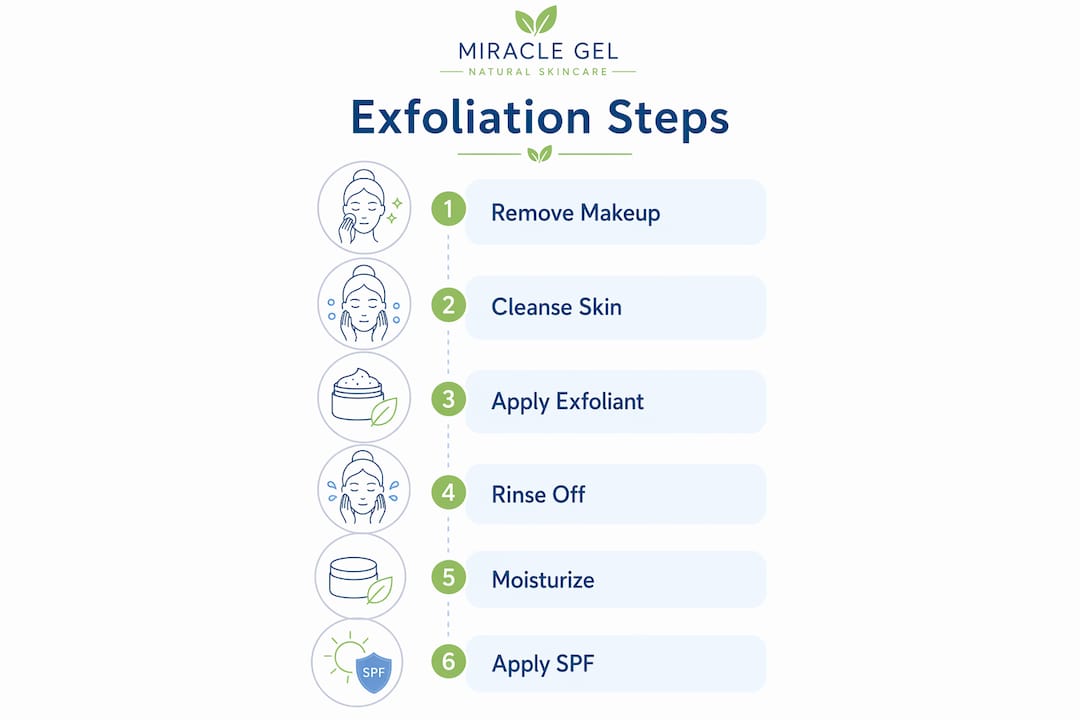
A proper facial exfoliation routine follows a clear sequence. Skipping steps or changing the order reduces results and raises the risk of irritation.
Step 1: Remove makeup and SPF completely.
Use a dedicated makeup remover or cleansing oil first. Chemical exfoliants cannot penetrate through a layer of sunscreen or foundation.
Step 2: Cleanse your skin.
Cleanse before you exfoliate so the exfoliant works directly on skin cells, not surface debris. Use a gentle, sulfate-free cleanser suited to your skin type. Pat dry with a clean towel.
Step 3: Apply your exfoliant.
For physical exfoliants, apply a small amount to damp skin. Use gentle circular motions for about 30 seconds, then rinse with lukewarm water. Never scrub hard. The product does the work, not the pressure. For chemical exfoliants, apply a thin, even layer to dry or slightly damp skin. Follow the product’s timing instructions, typically 1–5 minutes for rinse-off formulas, or leave-on for toners and serums.
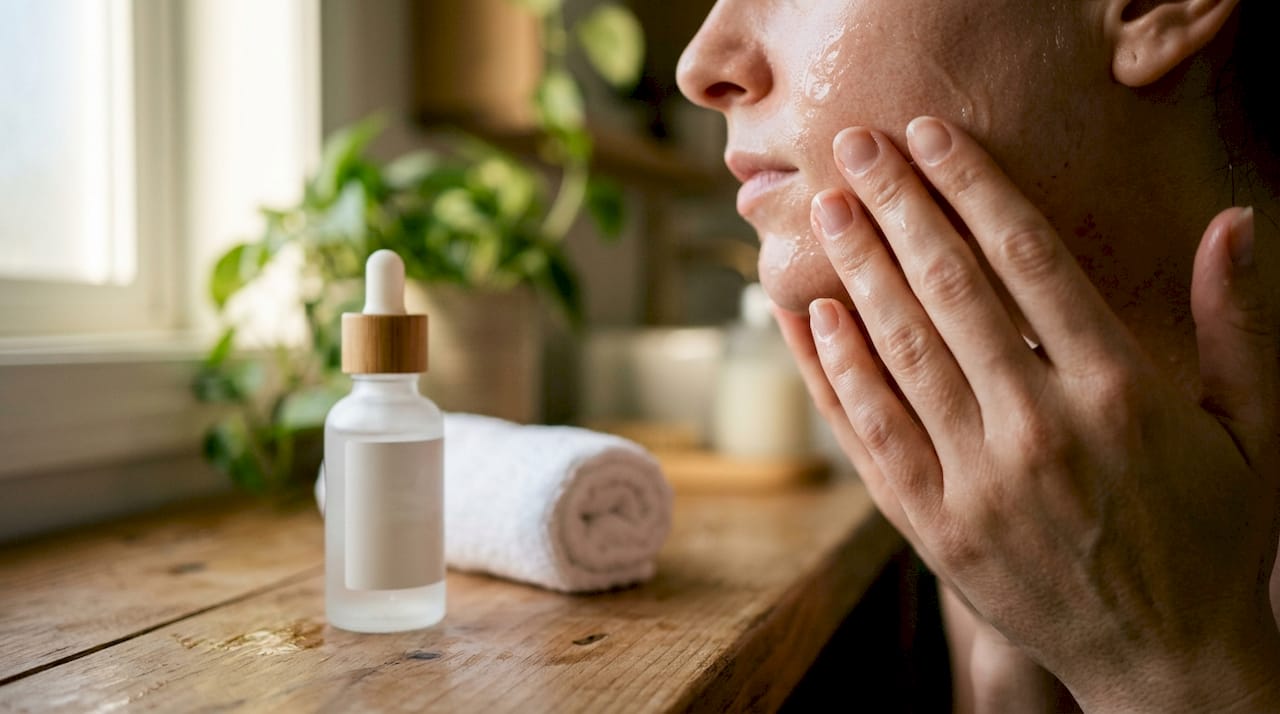
Step 4: Rinse thoroughly.
Use lukewarm water, never hot. Hot water strips the skin barrier and amplifies post-exfoliation sensitivity. Pat skin dry gently. Do not rub.
Step 5: Apply a hydrating serum or moisturizer immediately.
Freshly exfoliated skin absorbs active ingredients faster. This is the best moment to apply a hydrating serum or a barrier-supporting moisturizer. For tips on hydrating after exfoliation, a barrier-first approach works best for mature skin.
Step 6: Apply SPF in the morning.
If you exfoliate in the morning, apply broad-spectrum sunscreen as your final step. If you exfoliate at night, apply it the following morning without fail.
Signs you are over-exfoliating: persistent redness, tightness, flaking, increased breakouts, or a shiny, waxy skin texture. These are signals to stop and let your skin recover for at least one week before resuming.
Pro Tip: Exfoliating before shaving reduces ingrown hairs and gives a closer result. Apply your exfoliant first, rinse, then shave on clean, smooth skin.
How do you integrate exfoliation into a full skincare routine?
Exfoliation fits between cleansing and treatment in a multi-step routine. It is not a daily step for most people. Most people should limit exfoliation to three times per week at most, and only use daily formulas if the product is specifically designed for daily use at a very low concentration.
The goal of exfoliation is to assist the skin’s natural turnover, not to force it. Over-exfoliating disrupts the skin barrier, causes redness, and can worsen breakouts. Consistency at a lower frequency beats intensity every time.
Key rules for layering exfoliation within your routine:
- Do not use a chemical exfoliant on the same night as a retinoid. Both increase cell turnover and combining them causes irritation. Alternate nights instead.
- Do not layer multiple acids in one session. One exfoliant per session is enough.
- In winter, reduce frequency by one session per week. Cold weather and indoor heating already stress the skin barrier.
- In summer, stick to lower-concentration formulas and be strict about daily SPF.
- After any exfoliation session, prioritize hydration. Ceramides, hyaluronic acid, and niacinamide all support barrier recovery.
For mature skin specifically, the focus shifts from aggressive renewal to gentle, consistent support. A multi-step skincare routine built around exfoliation, hydration, and barrier care delivers the most visible improvement over time. Skin after 40 benefits from lactic acid over glycolic acid because it exfoliates and hydrates simultaneously. Adjust your routine every season and whenever your skin gives you feedback through dryness, sensitivity, or breakouts.
Key Takeaways
A safe, consistent exfoliation routine tailored to your skin type is the most reliable way to improve texture, radiance, and product absorption after 30.
| Point | Details |
|---|---|
| Choose the right method | Chemical exfoliants suit most skin types over 30; physical scrubs require a light touch. |
| Follow frequency limits | Exfoliate 1–2 times per week for dry or sensitive skin; 2–3 times for normal or oily skin. |
| Always cleanse first | Cleansing before exfoliating lets the exfoliant work on skin cells, not surface debris. |
| Moisturize and use SPF | Apply hydration immediately after and sunscreen every morning to protect freshly exfoliated skin. |
| Watch for over-exfoliation | Redness, tightness, or a waxy texture means your barrier needs rest, not more exfoliation. |
What I’ve learned after years of watching people over-exfoliate
The most common mistake I see is treating exfoliation as the hero of a skincare routine. It is not. Exfoliation supports the routine; it does not replace cleansing, hydration, or sun protection. People who get the best results are the ones who exfoliate least often but most consistently.
The myth that more exfoliation means faster results is genuinely damaging. I have seen people strip their skin barrier so thoroughly that it takes three months to recover. The skin becomes reactive, red, and suddenly sensitive to products it tolerated for years. That is not a skin type change. That is barrier damage, and it is entirely preventable.
My honest advice: start with one session per week, use a lactic acid product at a low concentration, and give it four weeks before you judge the results. Your skin will tell you when it wants more. Tightness, dryness, and redness are not signs of the product working. They are signs to slow down. The best skin exfoliation guide is the one you actually follow without damaging your skin in the process.
— Barbara
Natural skincare from Miraclegelnaturalskincare for skin after 30
Miraclegelnaturalskincare formulates products specifically for the needs of skin over 30, where the balance between renewal and protection matters most. The 2 Minute Miracle Gel, built around the Tri-Moisture Cryo Complex™, supports hydration and barrier function right after exfoliation, when skin is most receptive to active ingredients.

Miraclegelnaturalskincare’s range includes gentle cleansers, barrier-supporting moisturizers, and brightening serums designed to work alongside a regular exfoliation routine without irritating mature skin. Every formula prioritizes natural ingredients over harsh chemicals. For a full look at natural skincare for 40+ skin, the Miraclegelnaturalskincare collection gives you a practical starting point for building a routine that delivers visible results.
FAQ
What is the correct order for the exfoliation steps?
Cleanse first, then exfoliate, then apply serum and moisturizer, then SPF in the morning. Skipping the cleansing step means the exfoliant works on surface debris instead of skin cells.
How often should you exfoliate if you have sensitive skin?
Sensitive skin tolerates exfoliation 1–2 times per week at most, using enzyme exfoliants or low-concentration lactic acid. Daily exfoliation on sensitive skin causes barrier damage.
Can you use a physical scrub and a chemical exfoliant together?
No. Using both in the same session over-exfoliates the skin and increases the risk of irritation and redness. Choose one method per session and alternate on different days if you use both types.
When is the best time of day to exfoliate?
Evening is generally better for exfoliation because freshly exfoliated skin is more sensitive to UV light. If you exfoliate in the morning, apply a broad-spectrum SPF 30 or higher immediately after moisturizing.
What are the signs that you are exfoliating too much?
Persistent redness, tightness, a shiny or waxy skin texture, and increased breakouts all signal barrier damage from over-exfoliation. Stop exfoliating for at least one week and focus on hydration and barrier repair before resuming.