
TL;DR:
- Collagen is the body’s most abundant protein, crucial for skin firmness, elasticity, and joint health. Collagen production declines starting in the 20s, leading to visible aging signs, but external factors like UV radiation and smoking accelerate this process. Clinical research shows that consistent intake of hydrolyzed collagen peptides improves skin elasticity and hydration, especially when combined with lifestyle protections like sun avoidance and vitamin C intake.
Collagen is defined as the body’s most abundant structural protein, making up roughly one-third of total body protein and serving as the primary scaffold for skin firmness, elasticity, and joint integrity. The role of collagen in aging is direct and measurable: as collagen production declines, skin loses its structure, wrinkles deepen, and joints stiffen. That decline begins earlier than most people expect, and external factors accelerate it significantly. Understanding the biology behind this process, and what the latest clinical research says about slowing it, gives you a real foundation for smarter skincare and wellness decisions.
How does collagen change as you age?
Collagen synthesis begins to decline in your 20s. By the time most people notice visible changes in their skin, the loss has been accumulating for years. The extracellular matrix (ECM), the structural network that collagen supports in the dermis, gradually thins and fragments. The result is the papery texture, fine lines, and reduced bounce that characterize aging skin and collagen loss.

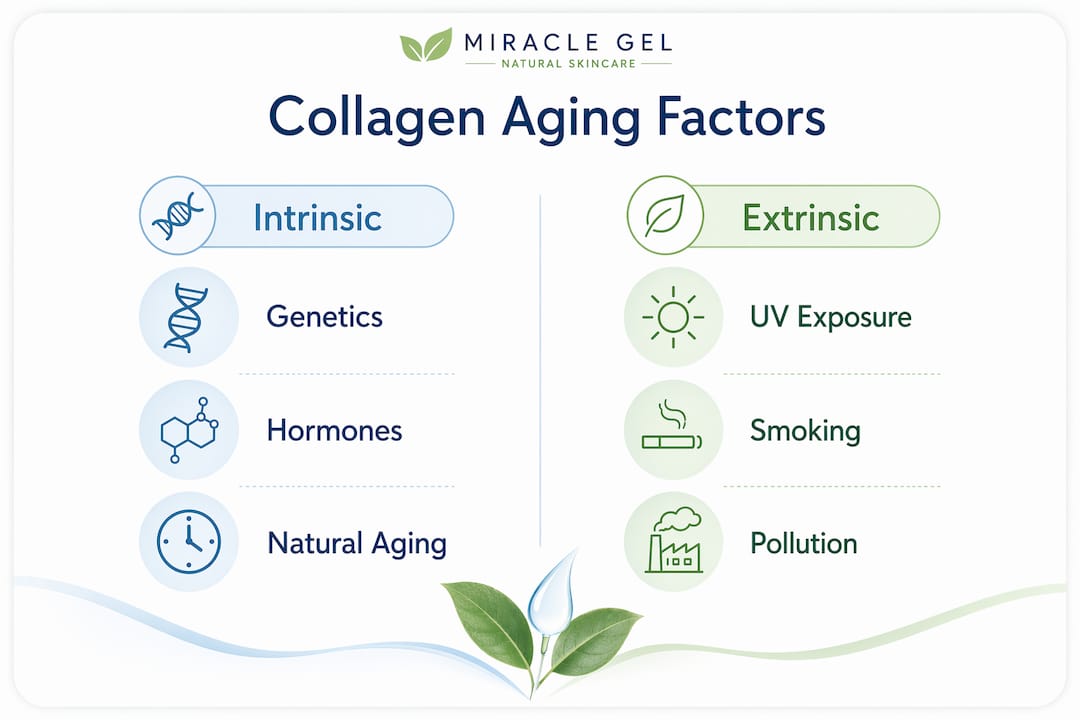
Two distinct processes drive this decline. Intrinsic aging is biological and inevitable. It reflects your genetics, hormonal shifts, and the natural slowdown of fibroblast activity over time. Extrinsic aging is driven by environment and lifestyle, and it is largely preventable.
UV radiation is the most damaging extrinsic factor. It activates matrix metalloproteinase-1 (MMP-1), an enzyme that directly fragments dermal collagen. Smoking and air pollution trigger similar enzymatic pathways, compounding the damage. Collagen crosslinking, a process where collagen fibers bind abnormally due to glycation and oxidative stress, also reduces the quality and flexibility of remaining collagen.
| Factor | Type | Effect on collagen |
|---|---|---|
| Genetic aging | Intrinsic | Slows fibroblast activity and collagen synthesis |
| Hormonal decline | Intrinsic | Reduces collagen density, especially post-menopause |
| UV radiation | Extrinsic | Activates MMP-1, fragments dermal collagen |
| Smoking | Extrinsic | Triggers oxidative stress, accelerates ECM breakdown |
| Air pollution | Extrinsic | Promotes inflammatory cytokines, degrades collagen |
| Poor nutrition | Extrinsic | Limits cofactors needed for collagen synthesis |
The key takeaway from this table is that extrinsic factors are modifiable. You cannot stop intrinsic aging, but you can significantly slow the extrinsic damage that compounds it.
What does clinical research say about collagen supplementation?
The clinical evidence for oral collagen supplementation is now substantial. An analysis of 16 systematic reviews and 113 randomized controlled trials (RCTs) involving nearly 8,000 participants confirmed consistent benefits for skin elasticity, hydration, and osteoarthritis pain. That scale of evidence places collagen supplementation well above the threshold of anecdotal support.
A 2026 RCT specifically examined daily 10 g collagen peptides supplementation over 12 weeks in middle-aged women. Wrinkle count decreased significantly (p < 0.0002) and wrinkle length also improved (p < 0.0424) compared to controls. These are statistically meaningful results, not marginal trends.
The form of collagen matters. Clinical trials consistently use hydrolyzed bioactive collagen peptides (BCP), typically dosed between 2.5 g and 10 g daily, rather than gelatin or bone broth. Hydrolysis breaks collagen into smaller peptides that the gut can absorb and that circulate systemically to influence collagen metabolism.
Pro Tip: Look for supplements labeled “hydrolyzed collagen peptides” or “bioactive collagen peptides” with a stated dose of at least 2.5 g per serving. Products that list only “collagen” without specifying hydrolysis or molecular weight are unlikely to match the results seen in clinical trials.
Topical collagen products work differently, and the distinction matters. Intact collagen molecules are too large to penetrate the dermis and rebuild structural collagen. Topical creams function primarily as surface moisturizers. They improve texture and reduce transepidermal water loss, but they do not trigger the systemic collagen synthesis that oral peptides do.
One more critical point: intermittent supplementation shows no measurable benefits. Consistent daily use is required because fibroblast stimulation and ECM remodeling are slow, metabolic processes. Collagen is not a short-term fix.
How do collagen peptides work at the cellular level?
The anti-aging effects of collagen peptides go well beyond simply providing raw material for new collagen fibers. At the cellular level, collagen peptides remove reactive oxygen species and suppress inflammatory cytokines including TNF-α and IL-6. This antioxidant and anti-inflammatory activity protects existing collagen from enzymatic degradation.
Collagen peptides also activate lysosomes and mitochondria within skin fibroblasts. Lysosomes clear damaged cellular components, and mitochondria supply the energy needed for active collagen synthesis. Both organelles become less efficient with age, so stimulating them directly supports skin regeneration at a fundamental level.
The systemic effects extend further. Bioactive collagen peptides increase TGF-β and Klotho proteins, two markers associated with healthy aging. TGF-β promotes ECM deposition and fibroblast proliferation. Klotho is linked to reduced fibrosis and slower cellular aging. These are not cosmetic effects. They reflect genuine shifts in the body’s regenerative biology.
Key molecular pathways activated by collagen peptides:
- Antioxidant defense: Neutralizes reactive oxygen species that degrade collagen fibers
- Anti-inflammatory signaling: Suppresses TNF-α and IL-6, reducing chronic low-grade inflammation in aging skin
- Lysosomal activation: Clears damaged proteins and cellular debris in fibroblasts
- Mitochondrial support: Restores energy production capacity needed for ECM synthesis
- TGF-β upregulation: Stimulates fibroblast activity and new collagen deposition
- Klotho expression: Supports antioxidative defense and slows cellular aging markers
Pro Tip: Vitamin C is a required cofactor for collagen synthesis. Taking your collagen supplement alongside a vitamin C source, whether a supplement or a glass of orange juice, supports the enzymatic reactions that convert collagen precursors into stable fibers.
How can you support collagen health through lifestyle and skincare?
Environmental protection is the single most effective strategy for slowing collagen loss. Daily broad-spectrum SPF 30 or higher sunscreen reduces UV-driven MMP-1 activation. Protective clothing, hats, and shade during peak sun hours add meaningful cumulative protection over years and decades.
Smoking cessation is non-negotiable for collagen health. Smoking accelerates ECM breakdown through multiple pathways simultaneously, including oxidative stress, reduced blood flow to the dermis, and direct activation of collagen-degrading enzymes. No supplement compensates for active smoking.
Nutrition plays a direct supporting role. Vitamins C and E are proven antioxidants that protect collagen from oxidative damage and support its synthesis. Vitamin C is particularly critical because it is a required cofactor for the enzymes that stabilize collagen’s triple-helix structure. Without adequate vitamin C, newly synthesized collagen is structurally weak.
For adults looking to build a complete approach, the following practices work together:
- Apply broad-spectrum SPF daily, year-round, regardless of cloud cover
- Quit smoking and minimize exposure to secondhand smoke and air pollution
- Eat a diet rich in vitamin C (citrus, bell peppers, strawberries) and vitamin E (nuts, seeds, olive oil)
- Choose hydrolyzed collagen peptide supplements with a clinically relevant dose (2.5 g–10 g daily)
- Use topical skincare that supports the skin barrier and hydration, understanding that topical collagen works at the surface level
- Consider dermatological procedures such as microneedling or laser treatments, which stimulate fibroblast activity through controlled injury
For a deeper look at which natural ingredients complement collagen support, the guide on natural anti-aging ingredients for women over 40 breaks down the most effective options. Adults starting in their 30s can also benefit from the skin renewal tips tailored to that decade, when prevention is most powerful.
The supplement market requires caution. The collagen supplement industry has a documented history of inaccurate labeling and contamination. Seek products that reference the specific hydrolyzed collagen peptide form used in published clinical trials, and prioritize brands with third-party testing verification.
Key Takeaways
Collagen decline is biologically inevitable but significantly modifiable through consistent daily habits, evidence-based supplementation, and targeted skincare.
| Point | Details |
|---|---|
| Decline starts in your 20s | Collagen synthesis slows early; visible effects accumulate over decades without intervention. |
| Extrinsic factors are controllable | UV radiation, smoking, and pollution accelerate collagen loss and are largely preventable. |
| Oral peptides outperform topical collagen | Hydrolyzed collagen peptides work systemically; topical collagen only moisturizes the surface. |
| Daily dosing is required | Intermittent supplementation shows no measurable benefit; consistent daily use drives ECM remodeling. |
| Lifestyle and supplements work together | Sun protection, vitamins C and E, and quality hydrolyzed peptides form the most effective combined approach. |
What I’ve learned after years of watching the collagen conversation evolve
The collagen conversation has matured significantly, and that is a good thing. When I first started paying close attention to the research, collagen supplements were largely dismissed as expensive urine. The 2026 meta-analysis covering nearly 8,000 participants changed that narrative definitively. The evidence is now strong enough that dismissing oral collagen peptides entirely is no longer a defensible position.
That said, I want to be direct about what the research actually shows. Collagen supplements are not a shortcut. The people who see real results are the ones taking a clinically relevant dose every single day for months, not the ones who remember to take it three times a week. Consistency is the variable that separates results from disappointment.
What I find most underappreciated is the cellular mechanism story. Most people think of collagen peptides as simply providing building blocks. The reality is more interesting. These peptides activate lysosomes, support mitochondrial function, and shift systemic inflammatory markers. That is a meaningful biological effect, not a marketing claim.
My honest advice is to treat collagen support as a long-term habit, not a product trial. Combine daily SPF, a diet rich in vitamins C and E, a quality hydrolyzed peptide supplement, and a topical routine that supports your skin barrier. None of these alone will reverse aging. Together, practiced consistently over years, they give your skin the best biological conditions to age well. Patience and consistency matter more than any single product.
— Barbara
Natural skincare for adults who take aging seriously
Miraclegelnaturalskincare is built around the idea that effective anti-aging skincare does not require harsh chemicals or complicated routines. The brand’s formulations, including the 2 Minute Miracle Gel with its Tri-Moisture Cryo Complex™, are designed to support skin hydration and surface renewal with natural ingredients that work with your skin’s biology.

For adults 40 and above who want a complete natural skincare approach, the age-defying skincare collection at Miraclegelnaturalskincare brings together cleansers, moisturizers, eye serums, and body products formulated for mature skin. Each product is selected with natural efficacy in mind, making it straightforward to build a daily routine that complements the lifestyle habits and supplementation strategies covered here.
FAQ
What is the role of collagen in aging skin?
Collagen maintains skin firmness, elasticity, and hydration by forming the structural scaffold of the dermis. As collagen production declines with age, skin thins, wrinkles deepen, and elasticity decreases.
When does collagen production start to decline?
Collagen synthesis begins declining in your 20s. The loss is gradual but cumulative, and visible changes typically become noticeable in the 30s and 40s as the ECM thins and fragments.
Do collagen supplements actually work for aging skin?
Yes, when taken consistently. An analysis of 113 RCTs with nearly 8,000 participants confirmed that daily collagen supplementation improves skin elasticity, hydration, and reduces wrinkles. Hydrolyzed collagen peptides at doses of 2.5 g–10 g daily are the forms used in clinical trials.
Is topical collagen as effective as oral collagen?
Topical collagen does not penetrate the dermis to rebuild structural collagen. It functions as a surface moisturizer. Oral hydrolyzed collagen peptides work systemically and produce measurable changes in skin structure that topical forms cannot replicate.
What lifestyle habits best protect collagen as you age?
Daily broad-spectrum sunscreen, smoking cessation, and adequate intake of vitamins C and E are the most evidence-backed strategies for slowing collagen degradation. These habits address the primary extrinsic drivers of collagen loss.