

TL;DR:
- Biodynamic skincare uses botanicals from farms that follow self-sustaining, soil-focused methods and lunar cycles. It produces ingredients richer in antioxidants and phytochemicals, supporting healthier skin without synthetic additives. The certification from Demeter ensures genuine biodynamic practices, emphasizing whole-plant integrity and ecological farming principles.
Biodynamic skincare is defined as a farm-to-face practice that uses botanicals grown through biodynamic farming methods to nourish and protect skin naturally. It goes further than standard organic skincare by treating the farm as a closed, self-sustaining ecosystem governed by soil health, microbial vitality, and lunar planting cycles. The philosophy draws from anthroposophy, a spiritual science developed by Rudolf Steiner in the early 20th century. Demeter International certifies farms and products that meet these standards, making it the most recognized credential in the biodynamic beauty space. If you’ve been curious about what is biodynamic skincare and whether it belongs in your routine, the answer starts in the soil.
How does biodynamic farming shape ingredient quality?
Biodynamic farming produces ingredients that are measurably richer in beneficial plant compounds. Crops grown biodynamically contain higher levels of phenolics, flavonoids, and antioxidants compared to conventionally farmed plants. That difference matters for your skin because antioxidants are the primary defense against environmental damage, oxidative stress, and premature aging.

The method treats the farm as one living organism. Farmers use biodynamic preparations, including cow horn manure compost, to feed soil microbial activity rather than applying synthetic fertilizers. Demeter certification standards require lunar and planetary cycle planting alongside these preparations, creating a farming rhythm that is both ecological and philosophical. Higher microbial activity in the soil directly supports stronger, more resilient plants, and those plants carry richer phytochemical profiles into finished skincare products.
There is a practical trade-off. Biodynamic farming often yields slightly less crop volume than conventional methods, but the phytochemical content and ingredient safety profile improve. That is why biodynamic skincare products tend to cost more. You are paying for quality per plant, not quantity per acre.
Key markers of biodynamic ingredient sourcing include:
- Demeter certification on the product label or brand website
- Whole-plant extracts listed rather than isolated synthetic actives
- Named farm origins or supply chain transparency statements
- Formulations free from petrochemical preservatives and synthetic fragrance
- Seasonal or limited-batch production tied to harvest cycles
Pro Tip: When evaluating a biodynamic product, look for the Demeter seal rather than relying on the word “biodynamic” alone. The term is not legally protected in most markets, so the certification is your only reliable verification.
What is the philosophy behind biodynamic skincare formulations?
Biodynamic skincare formulations are built on anthroposophy, which views plants, humans, and the earth as interconnected systems. That philosophy shapes every formulation decision, from which plant parts are used to how extracts are processed. The goal is not to isolate one powerful molecule. The goal is to preserve the full spectrum of compounds the plant naturally produces.
Whole-plant preparations retain synergistic cofactors that isolated actives lose during refinement. A whole-plant rose hip extract, for example, delivers vitamin C alongside carotenoids, tocopherols, and fatty acids that work together. A synthetic vitamin C serum delivers only ascorbic acid. The biodynamic version works more slowly but supports the skin’s natural barrier rather than forcing a rapid chemical response.
The sensory experience is also part of the design. Biodynamic products typically use botanical waxes, plant oils, and essential oils that give them a distinct texture and scent. Consumers choose biodynamic products for the ritual as much as the result. Applying a biodynamic face oil becomes a mindful act, not just a skincare step.
The core formulation principles commonly applied in biodynamic skincare are:
- Whole-plant integrity: use the full botanical, not a fraction of it
- Minimal processing: cold-press or gentle infusion to preserve phytochemicals
- Soil-to-skin traceability: know where every ingredient was grown
- Seasonal formulation: align production with natural harvest rhythms
- Synergistic blending: combine botanicals for complementary, not competing, effects
Pro Tip: Apply biodynamic facial oils to slightly damp skin. The water helps the plant lipids absorb more effectively and extends the sensory experience of the ritual.
Biodynamic vs. organic skincare: what are the real differences?
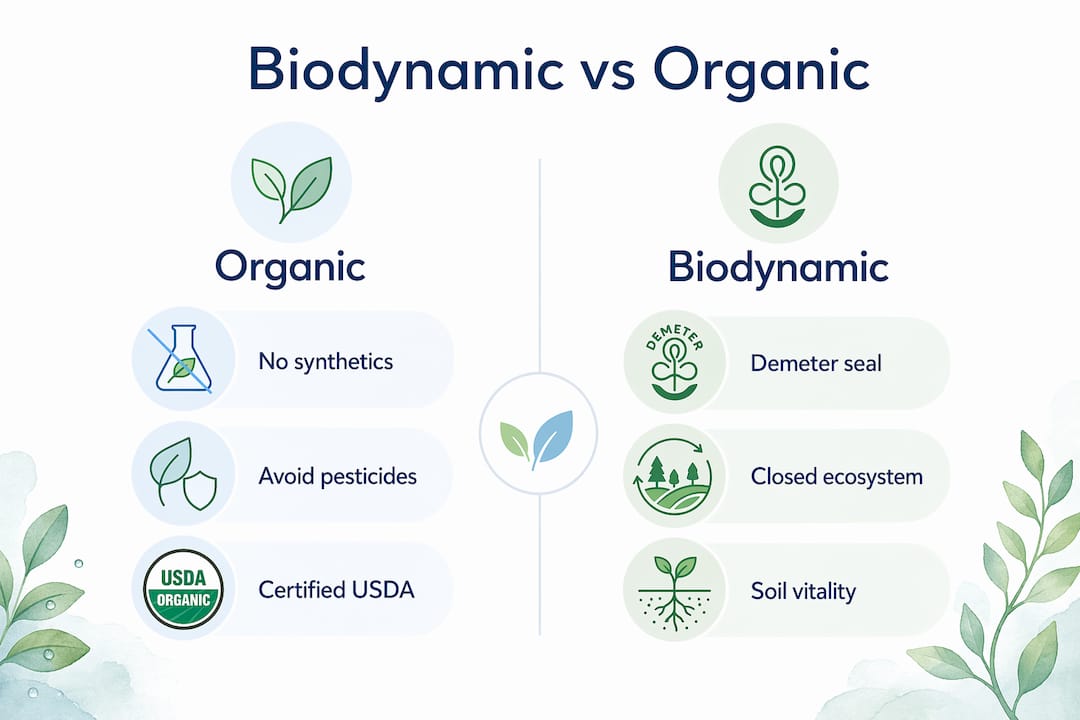
Organic skincare and biodynamic skincare share a commitment to avoiding synthetic pesticides and chemicals. The differences show up in farming philosophy, certification rigor, and formulation depth. Organic certification requires that ingredients are grown without synthetic inputs, but it does not mandate how the farm operates as a system. Biodynamic certification through Demeter goes further by requiring the farm to function as a self-sustaining ecosystem with no external inputs.
| Criteria | Organic skincare | Biodynamic skincare |
|---|---|---|
| Farming standard | No synthetic pesticides or fertilizers | Closed ecosystem, biodynamic preparations required |
| Certification body | USDA Organic, COSMOS, Soil Association | Demeter International |
| Lunar cycle planting | Not required | Required under Demeter standards |
| Whole-plant formulation | Common but not mandated | Central to the philosophy |
| Synthetic preservatives | Restricted but some allowed | Typically excluded |
| Environmental impact | Lower than conventional | Lower than organic in most metrics |
The practical difference for your skin is subtle but real. Organic products deliver cleaner ingredients. Biodynamic products deliver cleaner ingredients with a higher antioxidant and flavonoid profile, because the farming method actively builds soil vitality rather than simply avoiding harm. Whole-plant oils and infusions in biodynamic products preserve synergistic cofactors that most organic isolates discard.
For readers who want to go deeper on differences in certification standards, understanding what each label actually requires is the fastest way to shop with confidence.
Who benefits most from biodynamic skincare?
Biodynamic skincare is best suited for sensitive, mature, and dry skin types. Oil-based whole-plant formulations soothe the skin barrier without triggering the reactivity that stronger actives like retinol or high-dose acids can cause. People with rosacea, eczema-prone skin, or post-procedure sensitivity often find biodynamic products the gentlest option available.
The ideal biodynamic skincare consumer also tends to be ethically motivated. If ethical beauty practices and supply chain transparency matter to you, biodynamic products deliver a level of traceability that most skincare categories cannot match. The Demeter certification audits the entire chain from soil to shelf.
There are real limitations to know before you commit. Biodynamic products generally carry lower concentrations of high-potency isolated actives, which means they are not the fastest path to correcting deep wrinkles, hyperpigmentation, or acne scarring. They work gradually, supporting skin harmony over weeks and months rather than delivering visible change in days.
Practical ways to incorporate biodynamic skincare into your routine:
- Start with a biodynamic facial oil or moisturizer as your evening step
- Use a biodynamic cleanser to reduce daily chemical load on sensitive skin
- Layer a biodynamic serum under a targeted active if you want both approaches
- Check essential oil content if you have known sensitivities, as many biodynamic products use undiluted botanicals
- Treat the application as a ritual: slow down, breathe, and let the sensory experience be part of the benefit
Natural ingredients for youthful skin work best when applied consistently. Biodynamic skincare rewards patience more than most categories.
What does science actually say about biodynamic skincare claims?
The science behind biodynamic skincare is strongest where it overlaps with soil ecology and plant biochemistry. Soil microbial vitality directly influences the phytochemical richness of harvested plants, and biodynamic farming methods measurably improve microbial activity compared to conventional agriculture. That is the scientific foundation that justifies the premium on biodynamic ingredients.
The lunar and cosmic planting cycles are a different matter. Timing plantings according to lunar and planetary cycles is a concept from anthroposophy, not empirical agronomy. No peer-reviewed study has established moon-phase planting as a primary driver of crop quality. Brands that lead with lunar timing as a scientific claim are leaning on philosophy, not data.
“The most defensible benefits of biodynamic skincare come from soil science and whole-plant processing. The spiritual elements, including lunar cycles and cosmic rhythms, are meaningful to many consumers as a framework for intentional living, but they are not the mechanism behind the antioxidant-rich ingredient profiles. Separating these two layers helps you evaluate products honestly.”
Pro Tip: Ask brands for third-party soil or ingredient testing data. Legitimate biodynamic producers can point to Demeter audit records or phytochemical analysis reports. If a brand only cites philosophy, the product may not deliver the ingredient quality the label implies.
Key Takeaways
Biodynamic skincare delivers its strongest benefits through soil-driven ingredient richness and whole-plant formulation, not through spiritual farming rituals alone.
| Point | Details |
|---|---|
| Demeter certification matters | Look for the Demeter seal to verify genuine biodynamic standards beyond marketing claims. |
| Richer phytochemical profile | Biodynamic crops contain higher antioxidants and flavonoids than conventionally farmed plants. |
| Best for sensitive and mature skin | Whole-plant formulations support the skin barrier gently without aggressive actives. |
| Slower results, longer harmony | Biodynamic products build skin health over time rather than delivering rapid clinical correction. |
| Philosophy plus ecology | Lunar cycle planting is spiritual; soil microbial vitality is the science-backed benefit. |
Why I think biodynamic skincare deserves more credit than it gets
Most skincare conversations reward speed. Retinol works in weeks. Acids resurface in days. Biodynamic skincare asks you to think in seasons, and that is exactly why it gets dismissed by people who want fast results.
What I’ve found after years of watching skincare trends come and go is that the people who stick with biodynamic products are the ones who stop chasing corrections and start supporting their skin’s actual function. The holistic skincare approach that biodynamic products represent is not a compromise. It is a different goal entirely.
The ritual element is real, and I don’t think it should be minimized. When you apply a product that smells like a living plant and comes from a farm you can trace, something shifts in how you relate to your skin. That is not pseudoscience. That is the psychology of intentional self-care, and it has measurable effects on stress and consistency.
My honest advice: use biodynamic products where gentleness and ethics matter most, and pair them with a targeted active if you have a specific correction goal. The two approaches are not mutually exclusive. Weleda’s Skin Food, which has been in continuous production for over 100 years, proves that biodynamic formulations can be both principled and genuinely effective over the long term. That kind of staying power is not an accident.
— Barbara
Natural skincare at Miraclegelnaturalskincare for skin that thrives
Miraclegelnaturalskincare curates natural skincare formulations built around the same principles that make biodynamic beauty compelling: clean ingredients, ethical sourcing, and real results for skin over 40. The 2-Minute Miracle Gel uses the Tri-Moisture Cryo Complex™ to deliver visible results quickly while keeping the formulation gentle enough for sensitive skin.

For readers who want a full routine built on natural, age-defying ingredients, the radiant skin collection for 40+ at Miraclegelnaturalskincare brings together cleansers, moisturizers, and serums that work with your skin’s natural biology. Founder Shelly Maguire has built the brand around the belief that effective skincare does not require harsh chemistry. Free shipping applies on orders over €85 within Ireland.
FAQ
What is biodynamic skincare in simple terms?
Biodynamic skincare uses ingredients grown through biodynamic farming, a method that treats the farm as a closed ecosystem and prioritizes soil health, lunar planting cycles, and whole-plant harvesting. The result is botanicals with higher antioxidant and flavonoid content than conventionally farmed plants.
How is biodynamic skincare different from organic skincare?
Organic skincare avoids synthetic inputs. Biodynamic skincare goes further by requiring Demeter certification, closed-ecosystem farming, and whole-plant formulation principles rooted in anthroposophy.
Is biodynamic skincare good for sensitive skin?
Biodynamic skincare is well suited for sensitive, dry, and mature skin because its oil-based, whole-plant formulations support the skin barrier without the irritation risk of high-potency isolated actives like retinol or strong acids.
Does the lunar cycle planting in biodynamic farming actually work?
Lunar cycle planting is a philosophical concept from anthroposophy and is not validated by peer-reviewed agronomy. The measurable benefits of biodynamic farming come from soil microbial vitality and phytochemical richness, not from moon-phase timing.
What does Demeter certification mean on a skincare product?
Demeter certification confirms that the ingredients were grown on a biodynamic farm audited for closed-ecosystem practices, biodynamic preparations, and compliance with standards that exceed organic requirements. It is the most reliable verification of a genuine biodynamic product.