

A well-built gentle face cleansing workflow removes impurities, preserves your skin barrier, and sets up every product you apply afterward to actually work. The correct order starts with makeup removal if needed, moves to a gentle cleanser, rinses with lukewarm water, and finishes with moisturizer and sunscreen. Skip any step or rush through it, and you undermine the whole routine.
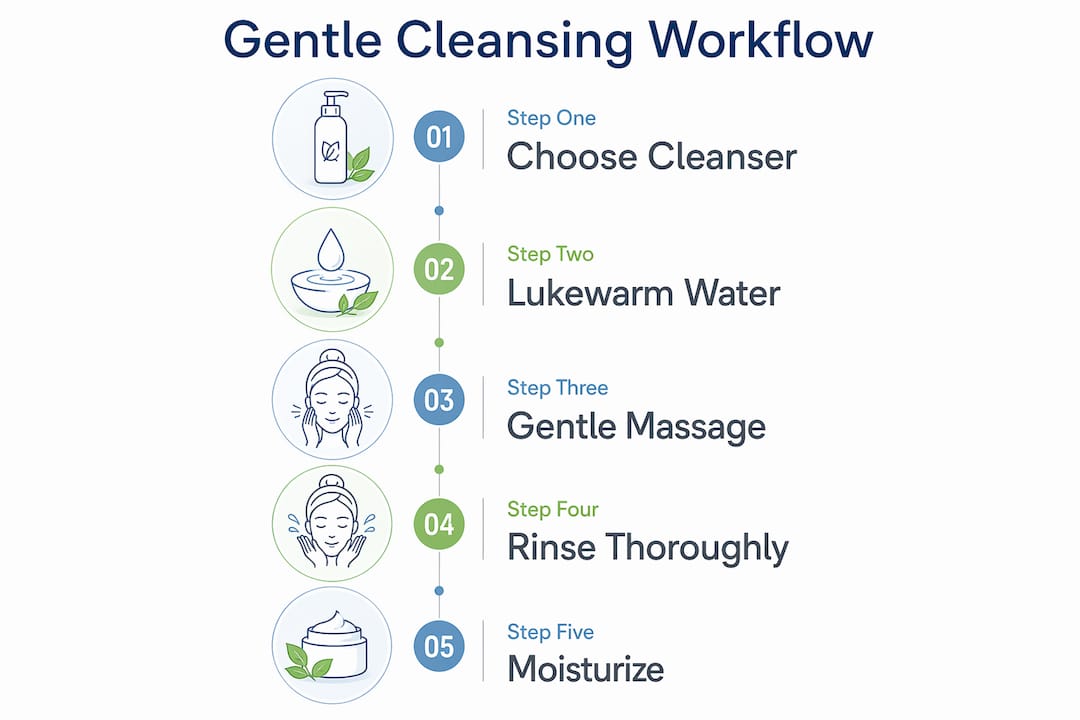
Here is the full step-by-step process:
- Remove makeup and sunscreen first. Use a micellar water or oil-based cleanser on dry skin to dissolve SPF and foundation before any water touches your face.
- Apply your gentle cleanser. Work a small amount between your fingertips and massage it onto damp skin using soft, circular motions for 30–60 seconds.
- Rinse with lukewarm water. Splash gently until all residue is gone. No hot water, no cold water.
- Pat dry. Press a clean, soft cloth against your skin. Never rub.
- Apply moisturizer while skin is still slightly damp. This locks in hydration before the surface dries out.
- Add sunscreen in the morning. Apply it as the final step after moisturizer to protect against UV damage.
That squeaky-clean feeling after washing? It means your barrier lipids are gone. A well-formulated cleanser leaves skin comfortable, not tight.
How to choose the right cleanser for your skin type
The cleanser you pick shapes everything that follows. Using the wrong formula, even a gentle one, can leave skin stripped, congested, or reactive before you apply a single treatment.
Cleanser types and their best matches:
- Cream or milk cleanser: Dry, mature, or sensitive skin. Hydrates while it cleans and rarely disrupts the acid mantle.
- Gel cleanser: Oily or combination skin. Removes excess sebum without leaving a film, though high-foam versions can over-strip.
- Micellar water: All skin types, especially sensitive. Works as a first-cleanse step or a standalone rinse on low-makeup days.
- Oil-based cleanser or balm: Heavy sunscreen or full-coverage makeup wearers. Applied to dry skin, it dissolves oil-based products before a second water-based cleanse.
- Non-foaming, low-pH formula: Reactive or barrier-impaired skin. Keeps the skin’s natural acid mantle intact.
Ingredients to look for: ceramides and hyaluronic acid support the barrier and retain moisture. Glycerin draws water into the skin. These are the workhorses of a genuinely gentle formula.
Ingredients to avoid: Sodium lauryl sulfate (SLS) is the most common culprit for stripping. Synthetic fragrance ranks close behind as a leading cause of cleanser-related irritation. Alcohol-heavy formulas and daily exfoliating acids also push sensitive skin toward chronic reactivity.
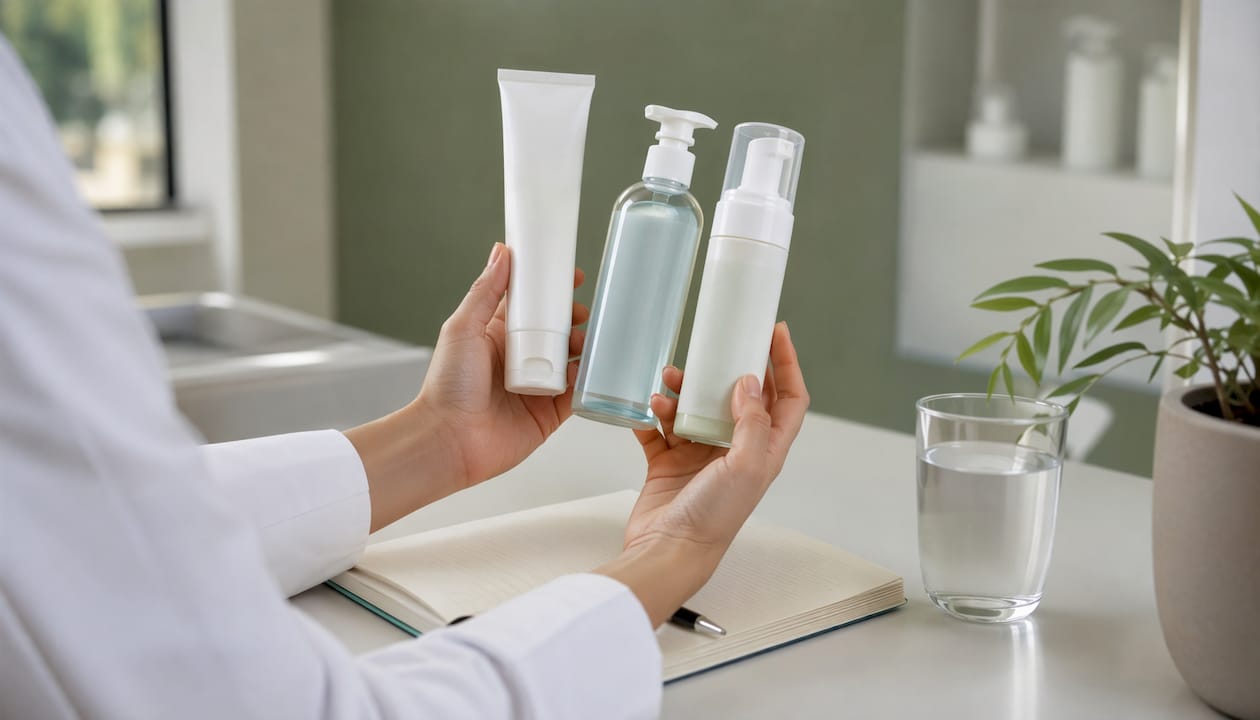
A pH-balanced cleanser, ideally between 4.5 and 6.5, matches the skin’s natural acidity and reduces the risk of disruption. If you have sensitive skin, fragrance-free formulas are the simplest way to cut unnecessary irritants from your routine.
Pro Tip: If your skin feels tight five minutes after washing, the cleanser is too harsh for your barrier, regardless of how “gentle” the label claims it is.
What water temperature and cleansing frequency actually do to your skin
Hot water feels thorough. It is not. Hot water strips the lipids that hold your barrier together, triggering inflammation and accelerating moisture loss. Cold water, on the other hand, does not emulsify oils effectively, so buildup stays on the skin. Lukewarm water is the only temperature that cleans without causing damage.

Cleansing frequency matters just as much as technique. For most people, twice daily works well: a light cleanse in the morning and a more thorough one at night. But that is not a fixed rule.
Guidelines by skin type:
- Dry or sensitive skin: Morning rinse with water only, or a very mild hydrating cleanser. Full cleanse at night.
- Oily or acne-prone skin: Gentle cleanser morning and night. A mild rinse after heavy sweating is fine.
- Mature or barrier-impaired skin: Once daily, in the evening, is often enough. Morning water rinse only.
- All skin types: Never cleanse more than twice daily with a full cleanser. Over-cleansing triggers excess oil production as the skin tries to compensate.
Signs you are cleansing too often include persistent tightness, flaking around the nose or mouth, stinging when you apply products that never bothered you before, and sudden breakouts with no other explanation. When those appear, reduce frequency before changing anything else.
Common mistakes to skip:
- Scrubbing with rough washcloths. Friction causes micro-tears and chronic low-grade inflammation.
- Rinsing incompletely. Residue left on the skin clogs pores and interferes with serums.
- Chasing a “deep clean” feeling. That sensation means the barrier is compromised, not that the skin is healthier.
Post-cleansing care: how to moisturize and protect properly
Cleansing opens the door. What you do in the next 60 seconds determines whether your skin recovers or stays depleted. Applying moisturizer to damp skin improves absorption and helps restore hydration before the surface dries.
Moisturizer by skin type:
- Dry or mature skin: Rich creams with ceramides, squalane, or shea butter rebuild the barrier and hold moisture overnight.
- Oily or combination skin: Lightweight gels or fluid lotions hydrate without adding congestion.
- Sensitive skin: Fragrance-free, minimal-ingredient formulas reduce the risk of reactivity. Look for gentle moisturizer options that prioritize barrier repair over active ingredients.
If you use a serum, apply it between cleansing and moisturizer. Thinner, water-based formulas absorb first; the moisturizer seals everything in. Getting the layering order right means your actives actually reach the skin instead of sitting on top of a cream barrier.
Sunscreen is the final morning step, applied after moisturizer. UV exposure is one of the primary drivers of barrier breakdown and visible aging, so skipping it undermines every other step in the routine. A broad-spectrum SPF 30 or higher, applied generously, is the standard recommendation.
A few things worth building into your routine:
- Change your pillowcase regularly. Clean skin deserves a clean surface.
- Reassess your cleanser seasonally. A gel that works in summer may strip skin in winter.
- If a new active treatment (retinoid, exfoliating acid, vitamin C) enters your routine, make the cleanser gentler, not stronger, to compensate.
Miraclegelnaturalskincare formulates its products around these exact principles: natural ingredients, barrier-supportive actives, and no unnecessary irritants. If you are building or refining a routine for mature or sensitive skin, the natural skincare range is a practical starting point.

Key Takeaways
A consistent, gentle face cleansing workflow protects the skin barrier, improves product absorption, and prevents the irritation cycle that harsh routines create.
| Point | Details |
|---|---|
| Follow the correct order | Start with makeup removal, then cleanser, then moisturizer, then sunscreen in the morning. |
| Match cleanser to skin type | Cream formulas suit dry or mature skin; gels work for oily skin; fragrance-free options protect sensitive skin. |
| Use lukewarm water only | Hot water strips barrier lipids; cold water fails to remove oils effectively. |
| Apply moisturizer on damp skin | Damp application improves absorption and locks in hydration before the surface dries. |
| Limit cleansing to twice daily | Over-cleansing disrupts the barrier and triggers excess oil production as a rebound response. |