
TL;DR:
- A simple, gentle skincare routine focused on barrier repair is the most effective approach in 2026.
- Consistently applying a minimal routine over 12 weeks supports long-term skin health and resilience.
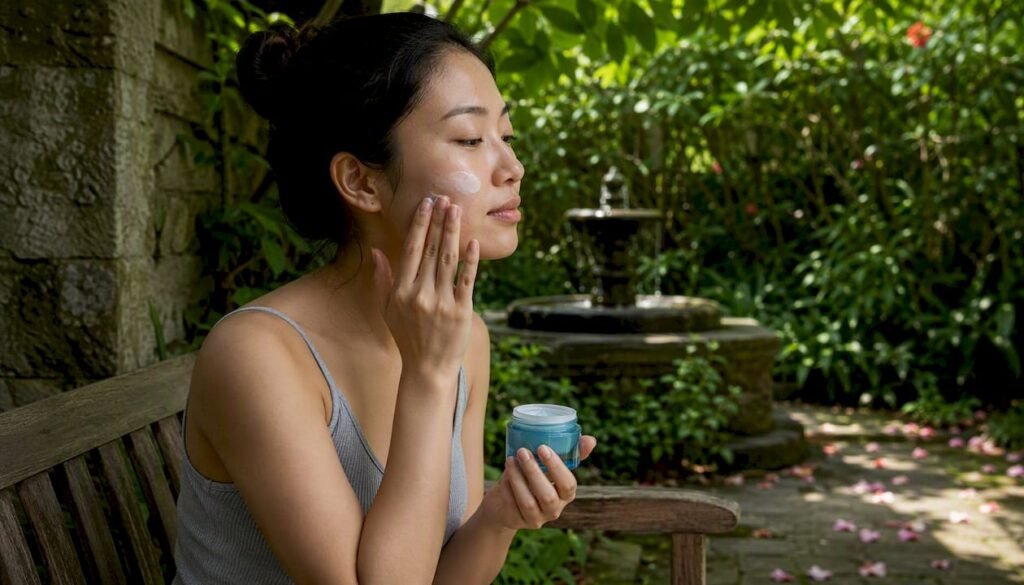
The single most effective gentle skincare routine in 2026 is also the simplest: four steps in the morning, three at night, built around barrier repair rather than aggressive treatment. Follow this consistently for several weeks and your skin will respond better to any active you introduce later.
Your starter routine, right now:
- AM: Gentle pH-balanced cleanser → antioxidant serum (vitamin C, optional) → barrier moisturizer with ceramides or beta-glucan → broad-spectrum SPF 30+
- PM: Gentle cleanse → single active treatment (retinoid or AHA, not both) → barrier-repair moisturizer
- Weekly: Patch test any new product on your inner forearm for 3–5 days before applying it to your face
- 12-week rule: If your barrier is compromised (tight, red, reactive skin), pause all actives for 8–12 weeks and rebuild with cleanser, moisturizer, and SPF only
- Starter pick: Miraclegelnaturalskincare’s 2 Minute Miracle Gel fits the PM repair step for most skin types, delivering barrier-supporting hydration through its Tri-Moisture Cryo Complex™ without harsh actives.
That is the whole framework. Everything below explains why it works and how to adapt it to your skin.
Table of Contents
- Why gentle routines are the smart play in 2026
- What are the five steps every gentle routine needs?
- Which ingredients should you prioritize in 2026?
- How do you introduce actives safely without damaging your barrier?
- Sample AM/PM routines by skin type
- How do you pick genuinely gentle products?
- How to switch or simplify your routine safely
- Why Miracle Gel’s approach fits the 2026 routine
- Key Takeaways
- The case for restraint in 2026
- Miraclegelnaturalskincare’s gentle starter for 2026 routines
Why gentle routines are the smart play in 2026
The industry has made a clean break from the maximalist era. Dermatologists and trend analysts in 2026 are unified around what they call “skin longevity”: the idea that consistent, low-irritation care over years outperforms any aggressive short-term treatment cycle. Fewer products, better chosen, applied with patience.
Minimalist routines and barrier repair rank among the top skincare priorities for 2026, with industry voices pointing to chronic low-level inflammation — from over-exfoliation, constant product swapping, and stacked actives — as the quiet wrecker of long-term skin health. Debbie Thomas, founder of skincare label Cellis, put it plainly: “Calming and strengthening isn’t optional, it becomes the foundation of a good skincare routine.”
The numbers back the shift. Search interest in beta-glucan and barrier-support ingredients rose 51% year-over-year as of mid-2026, signaling that consumers are actively seeking gentler, smarter formulations rather than the next high-strength acid. That kind of search momentum reflects a real behavioral change, not a passing trend.
Practically, this matters because a healthy barrier absorbs actives more efficiently, reacts less to environmental stress, and ages more slowly. The longevity beauty category is now one of the fastest-growing segments in skincare, with brands investing in science-led formulations designed to support skin function over time. Building daily skincare habits around that principle is the most future-proof approach you can take.
What are the five steps every gentle routine needs?
The five-step framework works because it mirrors how skin actually functions: clean the surface, treat a specific concern, support renewal, lock in hydration, then defend against UV damage. Deviate from the order and you reduce efficacy; add extra steps without a clear reason and you raise irritation risk.
Step 1: Cleanse. A gentle pH-balanced cleanser removes debris without stripping the acid mantle. Cream or lotion formulas suit dry and sensitive skin; low-foaming gels work for oily types. Avoid sulfate-heavy formulas that leave skin feeling squeaky — that tightness is barrier disruption, not cleanliness.
Step 2: Correct. This is your single active treatment: vitamin C in the morning for antioxidant defense, or a retinoid/AHA at night for cell turnover. One active per routine, not both at once. Evidence-first minimalism recommends a 3–5 product core precisely because stacking multiple actives increases irritation without a proportional benefit.
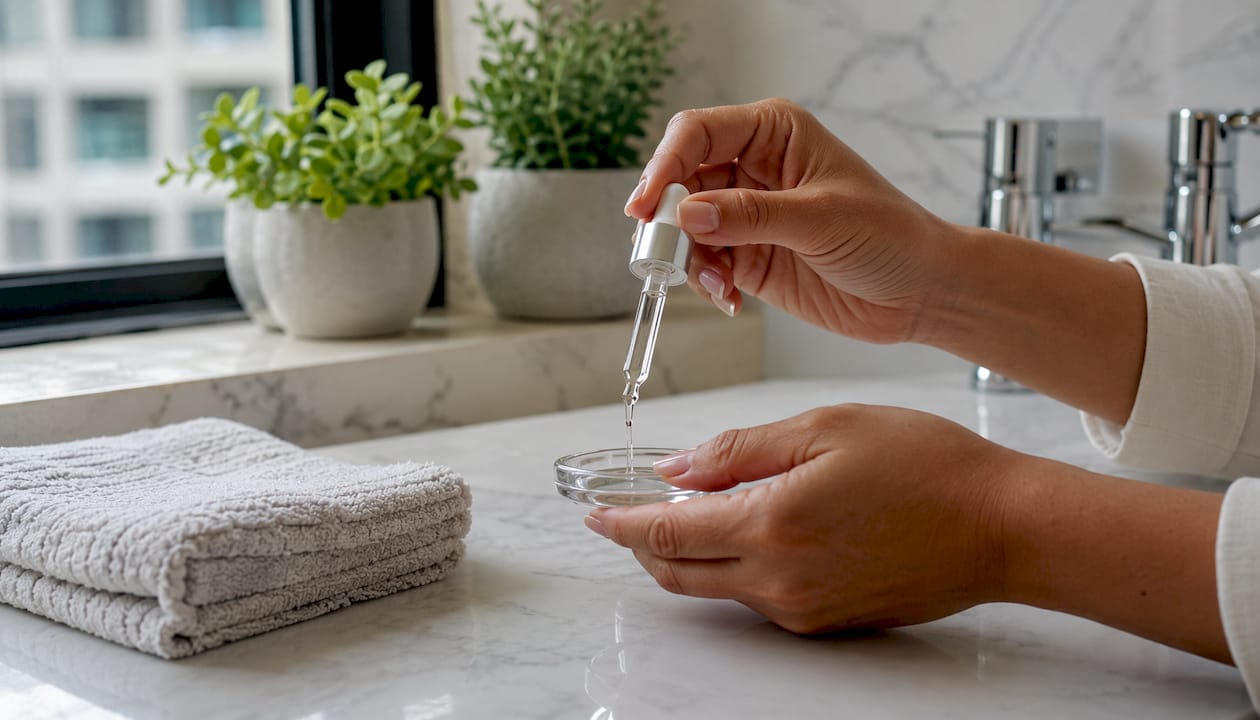
Step 3: Renew. A hydrating serum or essence containing sodium hyaluronate, panthenol, or beta-glucan applied to slightly damp skin. This step primes the barrier for the moisturizer that follows and is where most of the barrier-repair work happens.
Step 4: Hydrate. A moisturizer with ceramides, squalane, or peptides seals the layers below and prevents overnight or daytime water loss. Lighter lotion in the morning; richer cream at night.
Step 5: Protect (AM only). Broad-spectrum SPF 30+ applied as the final, undisturbed layer every morning. Multi-functional SPF formats like sticks and powders are making midday reapplication far more practical in 2026.
Layering rules that actually matter:
- Wait roughly 60 seconds between layers so each product settles before the next goes on
- Press products in with flat palms; rubbing creates friction and mechanical irritation
- Apply from thinnest to thickest consistency, always
- If skin feels tight after cleansing, your cleanser is too stripping — swap it before adjusting anything else
Pro Tip: Multi-functional products cut steps without cutting results. A moisturizer that combines ceramides, peptides, and a humectant replaces three separate products and reduces the total number of ingredients your skin encounters daily.
Which ingredients should you prioritize in 2026?
The best gentle skincare for sensitive skin in 2026 is built around a short list of well-researched, low-irritation ingredients. Each one earns its place for a specific reason.
Priority ingredients:
- Beta-glucan: A polysaccharide derived from oats or yeast that calms inflammation, supports the skin microbiome, and signals barrier repair. Search interest in beta-glucan surged 51% year-over-year, making it the standout 2026 ingredient for sensitive and compromised skin.
- Ceramides: Lipids that make up roughly 50% of the skin barrier’s structure. Depleted ceramides are the most common cause of reactive, dry skin; replenishing them is the fastest route to stability.
- Panthenol (vitamin B5): Draws moisture into the skin and accelerates barrier repair. Exceptionally well-tolerated, even on post-procedure skin.
- Peptides: Short amino acid chains that signal collagen and elastin production over time. Peptides are increasingly recognized for long-term skin health and are a staple in 2026 anti-aging formulations.
- Glycerin: The most studied humectant in cosmetic science. Pulls water from the environment into the skin and works synergistically with ceramides.
- Squalane: A plant-derived lipid that mimics the skin’s own sebum. Non-comedogenic, stable, and effective for all skin types including oily.
- Ectoin: A stress-protection molecule originally found in extremophile bacteria. Shields skin from UV-induced and pollution-related damage without irritation.
Ingredients to avoid in a gentle daily routine:
- Synthetic fragrance and fragrance masking agents (listed as “parfum” or “fragrance”) — the leading cause of contact dermatitis in skincare
- High-strength AHAs (above 10%) in everyday products; reserve these for weekly use at most
- Unnecessary essential oils (eucalyptus, peppermint, citrus oils) — these feel active but frequently sensitize skin over time
- Alcohol denat. as a primary ingredient in toners or serums
For choosing gentle moisturizers specifically, look for ceramides and panthenol in the top half of the ingredient list. If fragrance appears anywhere, put it back on the shelf.
How do you introduce actives safely without damaging your barrier?
Experts advise a strict 8–12 week pause on actives for skin with a compromised barrier, using only a gentle cleanser, barrier moisturizer, and daily SPF during recovery. Pushing actives onto a damaged barrier does not accelerate results; it deepens the damage.
Once your barrier is stable, introduce one active at a time using this sequence:
- Weeks 1–2: Use the active once per week only, always at night, on completely dry skin after cleansing.
- Weeks 3–4: If no redness, peeling, or stinging, increase to twice per week.
- Weeks 5–8: Increase to every other night if tolerated. Most people find this is their long-term sweet spot.
- Week 12: Evaluate results. Most active treatments require three full skin cell turnover cycles — roughly 12 weeks — before visible changes appear. Swapping products before that point is the top cause of routine failure.
- Ongoing: Keep vitamin C in the morning and your retinoid or AHA at night. Never layer them in the same session.
Safe pairings:
- AM: vitamin C (antioxidant defense) + SPF
- PM: retinoid OR AHA/BHA (not both) + barrier moisturizer
Stacking multiple competing actives — retinoid plus AHA plus vitamin C in the same routine — is one of the most common causes of barrier compromise. Pick the one active that addresses your primary concern and run it for 12 weeks before adding anything else. Dermatologists in 2026 consistently recommend targeting a single concern rather than treating everything at once.
Pro Tip: Store retinoids and vitamin C in opaque, airtight packaging away from direct light. Both degrade quickly when exposed to air and UV. A product that has oxidized (vitamin C turns orange-brown; retinoids develop a sharp smell) is no longer effective and may irritate skin.
Sample AM/PM routines by skin type
These routines follow the five-step framework above. Product roles are listed by function; swap in your preferred products that match the ingredient criteria from the previous section.
Sensitive skin
AM: Fragrance-free cream cleanser → barrier moisturizer (ceramides + panthenol) → mineral SPF 30+
PM: Same cream cleanser → 2 Minute Miracle Gel (barrier repair and hydration treatment) → richer ceramide cream if needed
A three-step routine for sensitive skin — cleanser, barrier moisturizer, SPF — is clinically supported as the lowest-irritation approach. Add an active only after two weeks of zero reactivity.
Dry skin
AM: Cream or oil cleanser → hydrating serum (glycerin + sodium hyaluronate) → ceramide-rich moisturizer → SPF 30+
PM: Oil cleanser → gentle water-based cleanser → 2 Minute Miracle Gel → rich occlusive cream
Oily and acne-prone skin
AM: Low-foaming gel cleanser → niacinamide serum (5%) → lightweight squalane moisturizer → SPF 30+ (gel or fluid formula)
PM: Gel cleanser → retinol 0.2–0.5% (2–3 nights per week, building slowly) → oil-free barrier moisturizer
Mature skin (40+)
AM: Gentle cream cleanser → vitamin C serum (10–15%) → peptide moisturizer → SPF 30+
PM: Cream or oil cleanser → retinoid (start at 0.2%, increase over 12 weeks) → 2 Minute Miracle Gel → richer overnight cream
For mature skin, the 2 Minute Miracle Gel fits the PM renew step particularly well. Its Tri-Moisture Cryo Complex™ delivers multi-layer hydration without the occlusive heaviness that can clog pores on skin that is already producing less sebum.
Barrier-repair / post-procedure skin
AM: Micellar water or gentle rinse → barrier moisturizer (ceramides + ectoin) → mineral SPF 50
PM: Gentle rinse → 2 Minute Miracle Gel → thick ceramide cream or petrolatum-based balm
“The best results are coming from ‘less but better’ routines you can actually stick to. Swapping products regularly won’t help. It’s about simplifying home routines so the skin behaves — using fewer products, but making them count.” — Debbie Thomas, founder, Cellis
How do you pick genuinely gentle products?
Marketing language in skincare is almost entirely unregulated. “Dermatologist-tested” means one dermatologist looked at it once. “Clinically proven” without a published study means nothing. Here is what to actually check.
Label checklist for gentle products:
- Ceramides, beta-glucan, panthenol, or glycerin appear in the top half of the ingredient list
- No “fragrance,” “parfum,” or essential oils listed as standalone ingredients
- No alcohol denat. as a primary ingredient
- Actives (if present) have a stated concentration or a clear product category (e.g., “0.3% retinol”)
- Short-to-medium ingredient list; 15–25 ingredients is a reasonable range for a moisturizer
Red flags to walk away from:
- “Clinical strength” with no published data or stated active percentage
- Before/after photos with no study details, sample size, or timeframe
- Multiple high-strength actives in one product marketed for daily use
- “Fragrance-free” on the front label but “parfum” buried in the ingredient list
To confirm tolerability, patch test on the inner forearm for 3–5 days before applying any new product to your face. The AAD recommends this as the standard method for detecting delayed irritant or allergic reactions. A single-day spot test misses most delayed reactions entirely.
For ethical and transparent sourcing, look for brands that publish full ingredient lists with sourcing notes and avoid vague “proprietary blend” language that hides what you are actually putting on your skin.
How to switch or simplify your routine safely
Changing too many products at once is the fastest way to lose track of what is helping and what is causing a reaction. The rule is simple: one new product at a time, minimum four weeks between introductions.
Swap schedule:
- Week 1: Introduce the new cleanser only. Use everything else as normal.
- Week 2–3: If no reaction, add the new moisturizer. Hold the cleanser steady.
- Week 4–6: If skin is stable, introduce the new active (following the titration plan above).
- Week 7–12: Evaluate the full routine. Take a photo on day 1 and every two weeks in the same lighting.
- Any point: If redness, burning, or new breakouts appear, remove the most recently added product and wait one week before trying again.
Patch testing procedure (AAD standard):
- Apply a small amount of the new product to your inner forearm or behind one ear.
- Leave it on for 24 hours without washing.
- Check for redness, itching, or swelling. If none, repeat for 3–5 days total.
- If no reaction after 5 days, do a small-area test on your jaw or neck for 2–3 days.
- Only then apply to your full face.
Pro Tip: Keep a simple symptom log: date, product introduced, and a 1–5 skin-feel rating each morning. A photo taken in natural light every two weeks is more reliable than daily mirror checks for tracking real progress.
Why Miracle Gel’s approach fits the 2026 routine
Miraclegelnaturalskincare was built around the same principle that 2026 dermatology is now endorsing: fewer, better-formulated products that work with the skin barrier rather than against it. The brand’s focus on natural, multi-functional formulas means each product is designed to cover multiple routine steps without stacking unnecessary ingredients.
2 Minute Miracle Gel is the brand’s flagship treatment. It delivers rapid hydration and barrier support through the Tri-Moisture Cryo Complex™, making it a practical fit for the PM renew and hydrate steps in any of the sample routines above. It suits sensitive, dry, mature, and post-procedure skin profiles particularly well because it avoids the high-strength actives that trigger reactivity. Miraclegelnaturalskincare positions it as a gentle starter for anyone rebuilding a damaged barrier or simplifying an overloaded routine.
The brand also offers a range of sensitive-skin-safe products including cleansers, eye serums, and peptide formulas, all formulated without harsh chemicals and aligned with the barrier-first philosophy outlined throughout this article. Founder Shelly Maguire’s background as a recognized industry professional is reflected in the formulation approach: efficacy without aggression.
For readers who want to explore the full product range, Miraclegelnaturalskincare’s anti-aging serum collection covers the correct and renew steps of the five-step routine with targeted, gentle formulas.
Key Takeaways
A barrier-first, minimalist routine with one well-chosen active, run consistently for 12 weeks, delivers better long-term results than any maximalist stack.
| Point | Details |
|---|---|
| Start with four steps | AM: cleanser, moisturizer, SPF. PM: cleanser, single active, moisturizer. |
| Respect the 12-week rule | Pause all actives for 8–12 weeks on a damaged barrier; evaluate any new active after 12 weeks. |
| Prioritize beta-glucan and ceramides | Search interest in barrier-support ingredients rose 51% year-over-year; these are the 2026 standard. |
| Patch test every new product | Apply to the inner forearm for 3–5 days before using on your face (AAD standard). |
| Miraclegelnaturalskincare 2 Minute Miracle Gel | A barrier-supporting PM treatment that fits the renew step for sensitive, dry, mature, and post-procedure skin. |
The case for restraint in 2026
There is a version of skincare advice that treats every new ingredient as a reason to rebuild your entire routine. It is exhausting, expensive, and — based on everything the research actually shows — counterproductive. The skin does not reward novelty. It rewards consistency.
What strikes me most about the 2026 shift toward barrier-first minimalism is that it is not new science. Dermatologists have known for decades that a compromised barrier is the root cause of most common skin complaints: sensitivity, breakouts, accelerated aging, uneven tone. What changed is that consumers are finally hearing it clearly, partly because the evidence against maximalist routines has become impossible to ignore.
The practical implication is this: if your skin is reactive, the answer is almost never a new active. It is fewer products, applied more carefully, for longer. The 12-week commitment feels slow until you realize that most people who “tried retinol and it didn’t work” used it for three weeks, got frustrated, and quit before a single full cell turnover cycle completed.
Gentle does not mean ineffective. It means you are working with your skin’s biology instead of overriding it. That distinction is what separates a routine that holds up for years from one that keeps you cycling through products every month.
Miraclegelnaturalskincare’s gentle starter for 2026 routines
If you want a ready-made starting point that already follows the barrier-first framework, Miraclegelnaturalskincare has built exactly that. The 2 Minute Miracle Gel anchors the PM repair step, and the brand’s cleanser and moisturizer range covers the remaining steps with fragrance-free, multi-functional formulas designed for skin that needs results without irritation.
The 2 Minute Miracle Gel’s Tri-Moisture Cryo Complex™ delivers the kind of layered hydration that ceramide-and-peptide routines aim for, in a single product that takes two minutes to work. For women over 40 rebuilding a barrier or simplifying an overloaded routine, it removes the guesswork from the PM renew step entirely.
Browse the full natural skincare range for 40+ to find the cleanser, treatment, and moisturizer that match your skin type. Every product is formulated to the barrier-first standard this article recommends, and the sensitive-skin-safe collection is a practical starting point if your skin is currently reactive.