
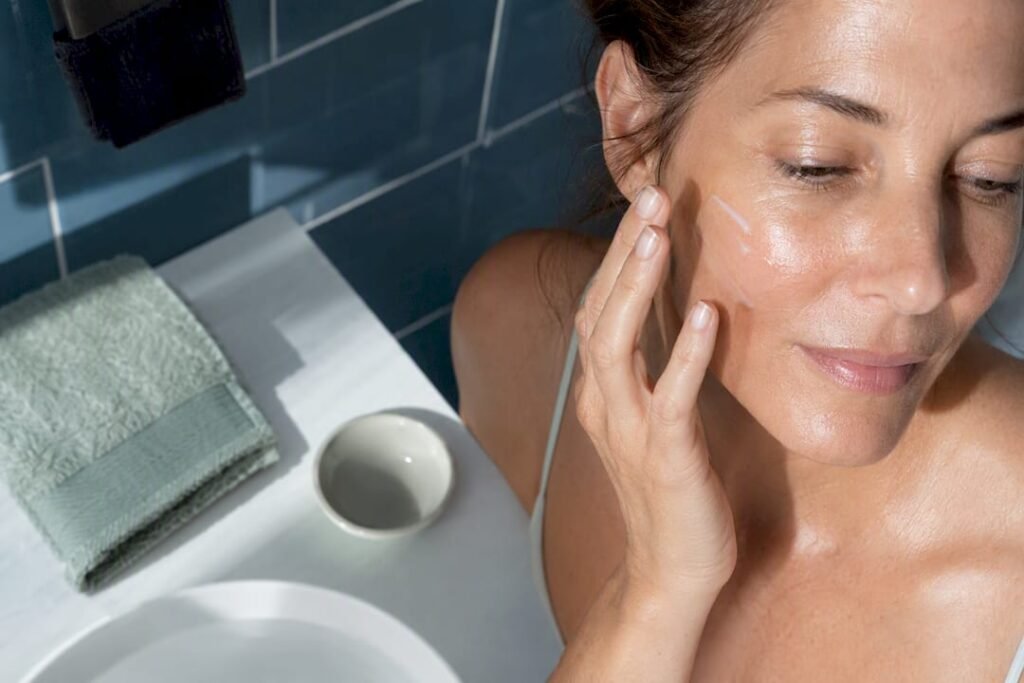
The safest, evidence-backed way to brighten dull skin without acids is to rebuild your skin barrier, add non-acid actives like niacinamide and antioxidants, protect against sun exposure, and use gentle physical techniques such as short facial massage. This combination works with your skin rather than stripping it. Expect gradual improvement over 4 to 12 weeks, and stop any method that causes stinging, redness, or new dark spots.
TL;DR:
- Rebuilding your skin barrier and reducing inflammation are the fastest ways to improve dullness, with visible results appearing within 4 to 12 weeks.
- Non-acid ingredients like niacinamide help improve tone, hydration, and barrier function, with extensive clinical evidence supporting their effectiveness.
- Gentle physical methods such as light facial massage and enzymatic masks can remove dead skin cells without risking irritation or hyperpigmentation.
- Consistent use of barrier-supporting moisturizers, niacinamide, and broad-spectrum sunscreen is more effective for brightness than aggressive exfoliation or bleaching agents.
- Lifestyle factors like sleep, diet, and avoiding smoking or excess alcohol significantly support topical treatments and overall skin radiance.
Table of Contents
- Why your skin looks dull: reversible causes to target
- Acid-free ingredients that actually brighten skin
- Gentle exfoliation and circulation techniques that skip acids
- A simple acid-free daily and weekly routine to brighten skin
- Lifestyle and internal supports that boost topical brightening
- How Miracle Gel’s approach fits an acid-free routine
- What actually moves the needle on dull skin
- Try these Miracle Gel products as your acid-free brightening steps
- Sources
- FAQ
Why your skin looks dull: reversible causes to target
Dull skin rarely has one cause. It usually results from a handful of overlapping problems, each of which responds to different fixes.
A compromised barrier is often the biggest culprit. When your skin loses water through a damaged outer layer, it reflects light unevenly and looks flat instead of luminous. Dead skin cells that build up faster than they shed also create a rough, light-scattering surface that reads as dullness even when your underlying skin is healthy. Add in inflammation from sun exposure, pollution, or irritation, and you get the uneven tone and sallow cast that make skin look tired.
Lifestyle factors compound all of this. Poor sleep, a diet low in produce, and smoking each interfere with the processes your skin needs to renew itself and maintain even color.
The factors worth targeting first include:
- Barrier damage: dehydrated, compromised skin scatters light instead of reflecting it evenly.
- Cell turnover slowdown: a buildup of dead cells creates a rough, dull-looking surface.
- Chronic low-grade inflammation: sun exposure and irritation drive uneven pigmentation over time.
- Sleep and diet gaps: these limit the raw materials your skin needs for repair and renewal.
Fixing the barrier and reducing inflammation tends to produce the fastest visible change, which is why an acid-free routine built around hydration and niacinamide makes sense as a starting point.
Acid-free ingredients that actually brighten skin
You do not need acids to get a brighter complexion. A handful of well-studied, non-acid ingredients do the job by working on hydration, pigment transfer, and barrier repair instead of exfoliating chemically.
Niacinamide is the standout. Research shows it reduces hyperpigmentation by slowing the transfer of pigment-containing melanosomes to skin cells, while separately increasing ceramide biosynthesis that strengthens the skin’s outer barrier. A more recent peer-reviewed study found that niacinamide changes the structure of the stratum corneum itself, improving water uptake and keratin filament spacing without acting as a keratolytic agent, meaning it plumps and smooths without dissolving anything. A broader review of the clinical literature backs this up, describing niacinamide as a multi-tasking ingredient that improves tone, hydration, and inflammation at the same time.

Niacinamide has one of the largest bodies of clinical evidence among non-acid brightening ingredients, which is why it appears in most acid-free formulations aimed at uneven tone.
Beyond niacinamide, a few other ingredients round out an effective toolkit:
- Lipid-soluble vitamin C derivatives (such as tetrahexyldecyl ascorbate) offer antioxidant protection without the irritation some people get from pure ascorbic acid.
- Ceramides and barrier lipids restore the skin’s ability to hold moisture, which improves how light reflects off the surface and makes skin look less flat.
- Hyaluronic acid and other humectants plump the skin immediately by drawing in water, giving a same-day boost in radiance while slower-acting ingredients work underneath.
- Green tea and other plant antioxidants help calm the low-grade inflammation that dulls tone over time.
If you are introducing niacinamide or a vitamin C derivative for the first time, patch-test on your inner arm for 48 hours before applying it to your face, and start with a lower concentration a few times a week before using it daily.
Gentle exfoliation and circulation techniques that skip acids
Removing dead surface cells still matters for brightness, but you can do it mechanically and gently instead of with chemical acids.
- Use a soft washcloth or konjac sponge in light circular motions for about 30 seconds while cleansing, which lifts dead cells without abrasion.
- Try an enzymatic mask containing papain or bromelain once a week; these break down surface proteins gently and tend to suit sensitive skin better than physical grains.
- Add a short facial massage, working in small circles from the center of your face outward for 30 to 60 seconds per area, which increases blood flow and produces a visible glow almost immediately.
- Watch for over-exfoliation signs, including tightness, redness, or new dark patches, and stop the mechanical or enzyme method if any appear.
The American Academy of Dermatology recommends exfoliating no more than once or twice a week, using motions as light as caressing a flower petal. That guidance matters most for deeper skin tones, where aggressive scrubbing is more likely to trigger post-inflammatory hyperpigmentation rather than the brightness you are after.
Pro Tip: Do your facial massage over a thin layer of moisturizer or serum so your fingers glide instead of tugging at the skin.
If irritation, breakouts, or dark spots persist after a few weeks of gentle care, that is a sign to check in with a dermatologist rather than exfoliating harder.
A simple acid-free daily and weekly routine to brighten skin
Consistency matters more than complexity here. A basic morning and evening routine, plus one or two weekly extras, covers everything the science supports.
Morning:
- Cleanse gently with a non-foaming, non-stripping cleanser.
- Apply a niacinamide or antioxidant serum while skin is still damp.
- Layer a moisturizer containing ceramides and humectants such as hyaluronic acid.
- Finish with broad-spectrum SPF, tinted if you want extra protection from visible light.
Evening:
- Cleanse again to remove sunscreen and daily buildup.
- Apply niacinamide serum or a peptide-based serum.
- Seal with a richer moisturizer suited to your skin’s dryness level.
Weekly additions:
- One gentle mechanical exfoliation or enzyme mask session.
- One to two short facial massage sessions, layered over serum or moisturizer.
Apply products from thinnest to thickest consistency, and always patch-test a new serum or mask for 48 hours before working it into your routine. Our guide to gentle exfoliant alternatives walks through texture and timing in more detail if you want a deeper look at that step.
Most people notice a subjective glow within the first couple of weeks as hydration improves, since plumper, better-hydrated skin reflects light more evenly almost right away. The deeper changes from niacinamide, like more even tone, tend to take 4 to 12 weeks of consistent use to show clearly.
Lifestyle and internal supports that boost topical brightening
Topical care only goes so far without support from the inside. Skin renewal depends on nutrients, sleep, and circulation just as much as on what you put on your face.
- Eat foods rich in vitamins A, C, and E and healthy fats, which supply the raw materials your skin needs for cell turnover and repair; our piece on topical nutrients your skin needs covers this pairing in more depth.
- Prioritize sleep and manage stress, since both affect circulation and the hormones that influence skin tone.
- Limit smoking and heavy alcohol use, which restrict blood flow to the skin and accelerate the breakdown of collagen that keeps skin looking plump.
- Apply sunscreen generously and reapply through the day; a tinted formula with iron oxides adds protection against visible light, which standard SPF alone does not fully cover, as detailed in our guide to preventing summer hyperpigmentation.
None of this replaces a good topical routine, but skipping it undercuts even the best serum.
How Miracle Gel’s approach fits an acid-free routine
Miracle Gel Natural Skincare builds its lineup around the same barrier-first principle this routine follows: gentle, natural formulations instead of acids or abrasives. The 2 Minute Miracle Gel is positioned as a quick-acting daily treatment, the 2 Minute Miracle Moisturizer supplies the hydration and barrier support niacinamide research points to, and the 2 Minute Miracle Peptide+ Serum and Ice Elements 2 Minute Miracle Eye Serum extend that approach to firming and the eye area.
The brand states its products were developed by Shelly Maguire, a recognized figure in the skincare industry, with customer testimonials cited as supporting evidence. For anyone specifically trying to avoid acids, a formulation strategy centered on barrier repair and non-acid actives, rather than exfoliating chemistry, lines up directly with what the dermatology research in this article supports.
What actually moves the needle on dull skin
Most advice on brightening skin overcomplicates the problem by chasing new ingredients before fixing the basics. The research is fairly consistent: a compromised barrier and chronic dehydration cause more visible dullness than a lack of exfoliation ever does. Yet exfoliation gets most of the marketing attention because it produces an instant, satisfying sensation of smoothness.

I think the bigger mistake is treating brightness as something you scrub for instead of something you build. Niacinamide earns its reputation because it works on pigment transfer and barrier structure at the same time, not because it is trendy. Sunscreen and sleep get far less credit than they deserve, even though skipping either undoes a lot of what a good serum does.
If you take one thing from this: fix hydration and barrier function before you add anything else. Everything else, from enzyme masks to massage, works better once that foundation is in place, and most of the frustration people feel with dull skin comes from skipping straight to the fun part.
— Barbara
Try these Miracle Gel products as your acid-free brightening steps
If you would rather not build this routine from scratch, the lineup maps onto each step without adding a single acid. A gel can work well as a quick daily treatment layer, a moisturizer may cover the ceramide and humectant hydration this routine calls for, and a peptide serum adds a barrier-supporting evening step. An eye serum targets the thinner, often duller skin around the eyes specifically.

A few ways to start:
- Patch-test one product for 48 hours before adding it to your full routine.
- Pair the gel and moisturizer first, then add the peptide serum once your skin adjusts.
- Save the eye serum for mornings when puffiness or dullness around the eyes is most noticeable.
You can browse the full lineup, including current pricing, on the Miracle Gel shop page.
Sources
- How to safely exfoliate at home | American Academy of Dermatology
- Nicotinamide increases biosynthesis of ceramides as well as other stratum corneum lipids to improve the epidermal permeability barrier. | PubMed
- Niacinamide effects on stratum corneum structure and hydration | PMC
- Niacinamide: a review on dermal delivery strategies and clinical evidence | Springer Nature
FAQ
How can I naturally brighten my dull skin?
Focus on rebuilding your skin barrier with ceramide-rich moisturizers, add a niacinamide serum for pigment and hydration support, and protect your skin daily with broad-spectrum sunscreen. Gentle physical techniques, like a soft washcloth or short facial massage, help remove dead surface cells without irritation.
What can I use to brighten my skin without bleaching?
Niacinamide is the best-studied non-bleaching option, since it works by reducing pigment transfer between skin cells rather than lightening skin chemically. Combining it with consistent sunscreen use and barrier-supporting moisturizers addresses uneven tone without any bleaching agents.
What do Koreans use for skin brightening?
Korean skincare routines commonly emphasize layered hydration, gentle cleansing, and consistent sunscreen use rather than aggressive exfoliation or bleaching agents. Niacinamide and other non-acid brighteners are widely used within that hydration-first approach.
Why does my face look so dull and lifeless?
Dull skin is usually a mix of a weakened barrier, dehydration, and a buildup of dead surface cells that scatter light unevenly. Sun damage, poor sleep, and smoking can all make these effects worse over time.
How long does it take to see results from an acid-free brightening routine?
Hydration-related glow can appear within the first couple of weeks, since better-hydrated skin reflects light more evenly right away. Deeper changes in tone from ingredients like niacinamide typically take 4 to 12 weeks of consistent use.