

TL;DR:
- Using organic cleansers effectively involves using lukewarm water and a dime-sized amount to gently massage for 30 to 60 seconds. Double cleansing is best on evenings with makeup or heavy sunscreen, while a simple rinse suffices in the morning. Proper technique and choosing formulas suited to your skin type help maintain skin health over 30.
Organic cleansing is defined as the practice of removing dirt, oil, and impurities from skin using plant-based, sustainably sourced ingredients that leave no harmful residue. Knowing how to use organic cleansers effectively means wetting your face with lukewarm water, applying a dime-sized amount, and massaging gently for 30–60 seconds without stripping your skin’s natural oils. For anyone over 30, this matters more than it did a decade ago. Skin after 30 produces less oil, recovers more slowly from irritation, and loses moisture faster. Getting the technique right protects your skin barrier and keeps your complexion healthy and balanced.
How to use organic cleansers effectively: tools and conditions
The right conditions make or break your cleansing results. Water temperature is the first variable to control. Lukewarm water opens pores gently without triggering the inflammation that hot water causes. Hot water strips the skin’s natural lipid layer, which leads directly to dryness and tightness after washing.

Product amount matters just as much as temperature. Using too much cleanser damages the skin’s natural moisture barrier and causes irritation. A dime-sized amount is the correct dose for most organic cleansers, including cream, gel, and oil-based formulas.
Choosing the right cleanser type for your skin is the third condition. The table below matches the most common organic cleanser formats to skin types.
| Cleanser type | Best for | Key benefit |
|---|---|---|
| Cream cleanser | Dry and mature skin | Adds moisture while cleansing |
| Gel cleanser | Oily and combination skin | Removes excess sebum without heaviness |
| Oil-based cleanser | All types, especially for makeup removal | Dissolves oil-based impurities effectively |
| Milk cleanser | Sensitive and reactive skin | Cleanses with minimal disruption to barrier |
Your tools should be just as gentle as your product. Use clean fingertips rather than a washcloth or brush for daily cleansing. Abrasive tools cause micro-tears in skin that is already losing collagen after 30.
Pro Tip: Fill your sink with lukewarm water before you start. Splashing from a running tap often runs too hot or too cold and makes it harder to control the temperature consistently.
How do you apply organic cleansers step by step?
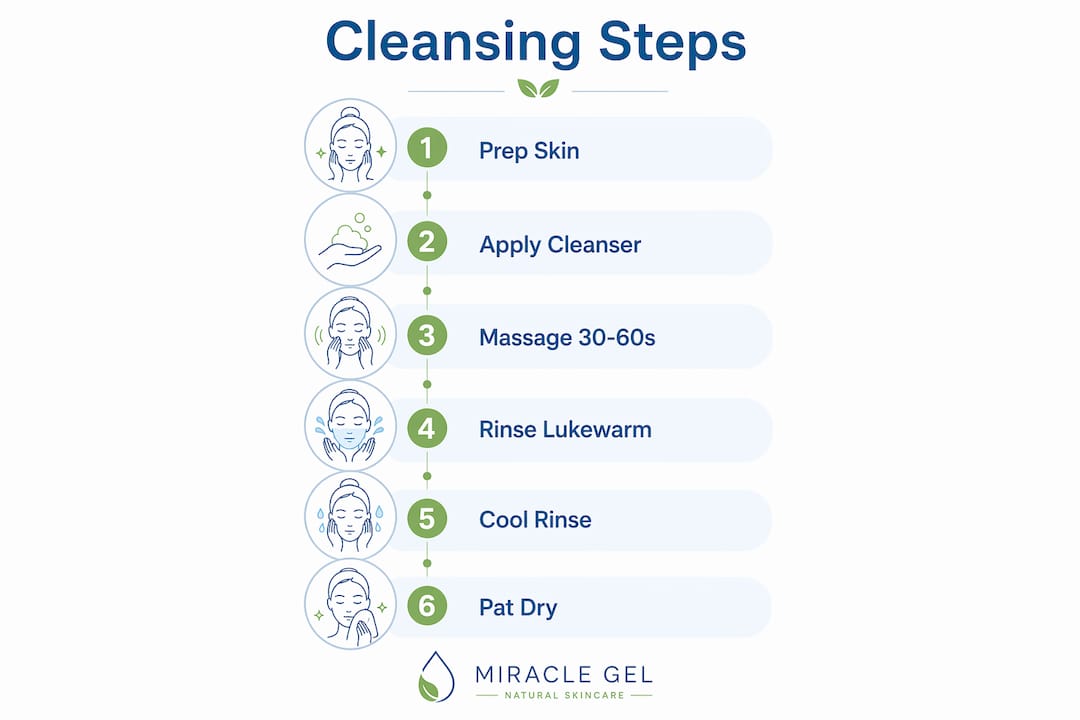
A consistent, ordered technique delivers results that random cleansing never will. Gentle circular motions during cleansing enhance surfactant action without damaging skin. Follow these six steps every time.
Wet your face with lukewarm water. Spend 10–15 seconds wetting your skin fully. This softens the surface and prepares pores to receive the cleanser.
Dispense a dime-sized amount of cleanser onto your fingertips. Rub your hands together briefly to activate the formula before it touches your face.
Massage in gentle circular motions for 30–60 seconds. Plant-based surfactants need this contact time to break down impurities effectively. Work from the center of your face outward, covering your forehead, nose, cheeks, and chin.
Rinse with cool water. Cool water after cleansing helps close pores and lock in hydration. Switch from lukewarm to cool for the final rinse only.
Pat dry with a soft, clean towel. Never rub. Rubbing pulls at skin that is already more fragile after 30 and disrupts the barrier you just protected.
Apply toner and moisturizer immediately. Organic toner and moisturizer applied right after cleansing restore hydration and reinforce the skin barrier before it loses moisture to the air.
This six-step process takes under two minutes. The payoff is skin that stays balanced rather than swinging between oily and dry throughout the day. For a more detailed walkthrough tailored to mature skin, the natural face cleansing guide at Miraclegelnaturalskincare covers application nuances for women over 40.
Pro Tip: Set a 45-second timer on your phone for the massage step. Most people stop at 10–15 seconds without realizing it, which is not long enough for plant-based surfactants to do their job.
When and how should you double cleanse with organic products?
Double cleansing is defined as a two-step method: an oil-based cleanser first, followed by a water-based organic cleanser. The oil-based step dissolves sunscreen, makeup, and sebum. The water-based step removes what remains. Together, they deliver a thorough clean that a single product cannot match.
Double cleansing works best strategically, not as a daily default for everyone. Use it on evenings when you have worn SPF, foundation, or heavy makeup. On bare-skin days, a single gentle cleanse is enough.
Morning cleansing deserves its own rule. Over-cleansing in the morning strips the oils your skin rebuilt overnight. For most people over 30, a simple rinse with lukewarm water or a light milk cleanser is the better morning choice. Save the full cleanse for the evening reset.
“The evening double cleanse is the real reset. The morning cleanse is just maintenance, and for many people over 30, less is genuinely more.”
Watch for warning signs that you are cleansing too often. Tightness, flaking, or redness after washing all signal that your skin barrier is under stress.
- Use double cleansing in the evening only, not morning and night
- Start with an oil-based organic cleanser, then follow with a gel or cream formula
- If your skin feels tight after double cleansing, switch the second step to a milk cleanser
- Sensitive skin types should double cleanse no more than three times per week
- Dry skin over 30 may need to skip double cleansing entirely and use a single cream cleanser nightly
Pro Tip: Apply your oil cleanser to dry skin, not wet. Oil and water repel each other, so a dry application lets the cleanser bind directly to makeup and SPF for a cleaner removal.
Understanding how this fits into a full regimen is easier with a structured plan. Miraclegelnaturalskincare’s guide to building an organic skincare workflow shows how cleansing connects to every other step.
What mistakes should you avoid when using organic cleansers?
The most common cleansing mistakes are easy to fix once you know what to look for. Each one undermines the benefits of even the best organic cleanser.
- Using too much product. Excess cleanser does not clean better. It over-strips the skin and wastes product. Stick to a dime-sized amount every time.
- Washing with hot water. Hot water feels satisfying but removes the lipid layer that keeps skin soft and protected. Lukewarm is the correct temperature for the wash; cool is correct for the rinse.
- Skipping moisturizer after cleansing. Cleansing opens the skin temporarily. Without a moisturizer applied within 60 seconds, that moisture evaporates. This is especially damaging for skin over 30.
- Scrubbing instead of massaging. Scrubbing creates friction that breaks down collagen over time. Circular, gentle pressure is all that plant-based surfactants need to work.
- Choosing the wrong cleanser for your skin type. A gel cleanser on dry skin will leave it feeling stripped. A cream cleanser on oily skin may clog pores. Matching formula to skin type is not optional.
- Ignoring seasonal changes. Skin needs more moisture in winter and lighter cleansing in summer. Adapting your cleanser choice with the season prevents the dryness and breakouts that come with temperature shifts.
Protecting your skin barrier function is the thread connecting every mistake on this list. Every error above either strips the barrier or prevents it from recovering.
How do you select the best organic cleanser for your skin type?
The best organic cleanser for your skin is the one that cleans without disrupting your barrier. Three criteria narrow the field quickly: skin type, ingredient quality, and pH balance.
Skin type first. Dry skin needs cream or milk formulas with humectant ingredients like aloe vera. Oily skin benefits from gel formulas with green tea antioxidants that regulate sebum. Combination skin does well with a gentle gel used only on the T-zone. Sensitive skin needs fragrance-free milk or cream cleansers with chamomile to calm reactivity.
Ingredients to seek out. Organic cleansers made with aloe vera, chamomile, and green tea antioxidants cleanse without harmful residues and actively support skin health. These plant-based ingredients are well-tolerated by most skin types, including mature skin that reacts to synthetic compounds.
Ingredients to avoid. Synthetic fragrances and alcohols cause irritation, especially for sensitive or aging skin. Sulfates, which are common in conventional cleansers, strip the skin’s acid mantle and raise its pH above the healthy range of 4.5–5.5.
pH balance matters. A cleanser with a pH above 7 disrupts the acid mantle and leaves skin vulnerable to bacteria and moisture loss. Look for cleansers labeled pH-balanced or formulated for sensitive skin, which typically signals a lower, skin-compatible pH.
| Skin concern | Recommended cleanser type | Key ingredients to look for |
|---|---|---|
| Dryness and flaking | Cream or milk cleanser | Aloe vera, hyaluronic acid |
| Excess oil and shine | Gel cleanser | Green tea, willow bark |
| Redness and sensitivity | Fragrance-free milk cleanser | Chamomile, oat extract |
| Dullness and uneven tone | Gentle exfoliating gel | Fruit enzymes, vitamin C |
Pro Tip: Look for organic certification logos such as COSMOS Organic or USDA Organic on the label. These certifications verify that at least 95% of the ingredients are organically sourced, which removes the guesswork from reading ingredient lists.
For guidance on avoiding problematic ingredients across your full routine, Miraclegelnaturalskincare’s resource on avoiding harsh chemicals is worth bookmarking.
Key Takeaways
Using organic cleansers effectively requires the right water temperature, a dime-sized product amount, 30–60 seconds of gentle circular massage, and immediate follow-up with a moisturizer to protect the skin barrier.
| Point | Details |
|---|---|
| Massage duration matters | Spend 30–60 seconds cleansing to give plant-based surfactants time to work. |
| Match cleanser to skin type | Cream for dry skin, gel for oily skin, milk for sensitive skin. |
| Cool water closes pores | Finish every cleanse with a cool water rinse to lock in hydration. |
| Double cleanse strategically | Reserve double cleansing for evenings after heavy SPF or makeup use. |
| Moisturize within 60 seconds | Apply toner and moisturizer immediately after patting dry to seal in moisture. |
What I have learned from years of watching skin respond to organic cleansing
The single biggest mistake I see people over 30 make is treating cleansing as a quick, throwaway step. They spend serious money on serums and moisturizers, then rush through a 10-second wash with whatever cleanser is nearby. The cleanser sets the condition for everything that follows. If you strip your barrier at the start, no serum can fully compensate.
What I have found after years of paying close attention to how skin responds: consistency beats intensity every time. Switching cleansers every few weeks because you are chasing a faster result is the surest way to keep your skin reactive and unbalanced. Give a well-matched organic cleanser at least four weeks before you judge it.
The other thing I have come to believe firmly is that less is more for skin over 30. One thorough evening cleanse, done correctly with the right technique, outperforms twice-daily aggressive washing. Skin that is not over-cleansed holds moisture better, looks calmer, and responds more visibly to the good ingredients you apply afterward. Esthetician training programs, such as those offered at AVI Career Training, now emphasize barrier support and prejuvenation as core principles. That shift reflects what skin science has confirmed: protecting what you have is more effective than trying to repair damage after the fact.
Listen to your skin after cleansing. Tightness means you stripped it. Residue means you did not rinse fully. Balanced, comfortable skin with no sensation after washing is the goal. That feedback loop is more reliable than any product claim.
— Barbara
Organic cleansers and skincare from Miraclegelnaturalskincare for skin over 30
Miraclegelnaturalskincare formulates its cleansers specifically for skin that needs gentle, effective care without harsh chemicals. Every product in the organic cleanser collection uses plant-based ingredients designed to cleanse without disrupting the moisture barrier, which is exactly what skin over 30 needs.

The range pairs cleansers with complementary moisturizers and serums, so you can build a full routine around ingredients that work together. Founder Shelly Maguire’s background in professional skincare shapes every formulation, with a focus on visible results from natural ingredients. For a complete regimen built around organic cleansing, the natural skincare regimen guide at Miraclegelnaturalskincare shows how each step connects for radiant, youthful skin at 40 and beyond.
FAQ
How long should I massage an organic cleanser onto my face?
Massage your organic cleanser for 30–60 seconds using gentle circular motions. Plant-based surfactants need this contact time to break down oil and impurities without harsh chemicals.
Can I use an organic cleanser twice a day?
Most people over 30 do better with one full cleanse in the evening and a simple lukewarm water rinse in the morning. Over-cleansing strips natural oils that mature skin needs to stay balanced.
What water temperature is best for organic cleansing?
Use lukewarm water to wash and cool water to rinse. Lukewarm water opens pores gently, while a cool final rinse helps close pores and lock in hydration.
How do I know if my organic cleanser is right for my skin type?
Your skin should feel comfortable and balanced after cleansing, with no tightness, oiliness, or residue. Tightness signals the formula is too stripping; persistent oiliness suggests it is not cleansing deeply enough.
Is double cleansing necessary every night?
Double cleansing is most useful on evenings when you have worn SPF or makeup. On bare-skin days, a single gentle organic cleanser is sufficient and less likely to cause over-cleansing.