
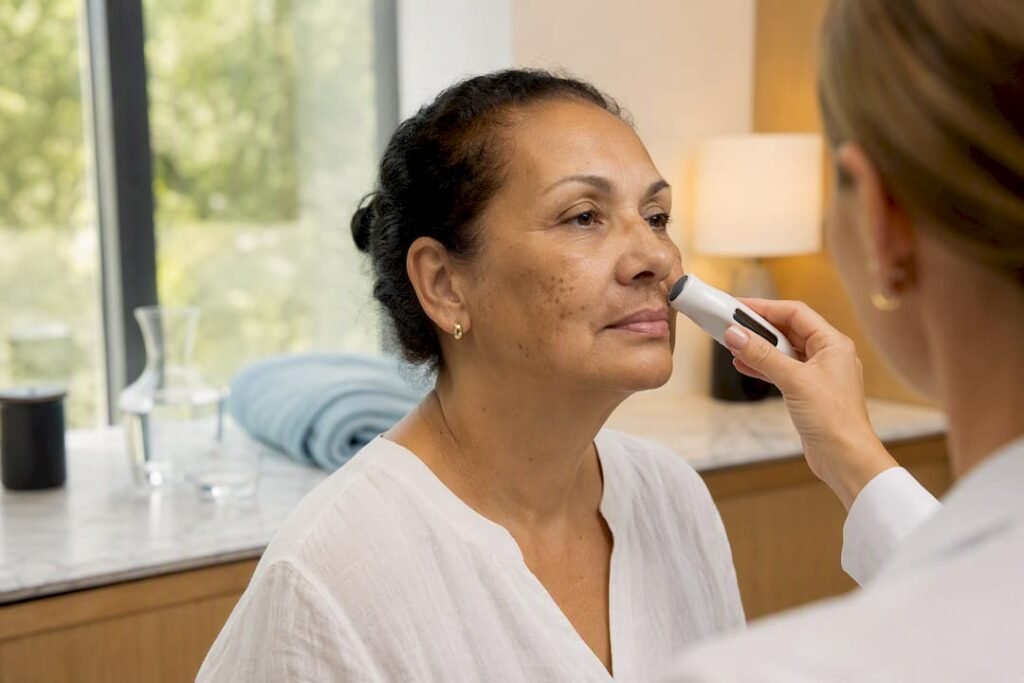
Upper lip hyperpigmentation, often called a “melasma mustache,” is a buildup of excess melanin driven mainly by sun exposure, hormones, and irritation. The first move is strict daily mineral sunscreen and a pause on waxing or plucking the area. If the patch spreads fast, changes shape, or bleeds, skip the home routine and see a dermatologist.
TL;DR:
- Proper sun protection is crucial, with daily broad-spectrum SPF 30 to 50 using mineral filters and tinted sunscreens to block visible light.
- Topical ingredients like azelaic acid, retinoids, vitamin C, and niacinamide are effective, but hydroquinone requires supervised short-term use to prevent rebound darkening.
- Chemical peels and laser treatments are options after 8 to 12 weeks of consistent topical care, but overly aggressive procedures can worsen pigmentation, especially in darker skin tones.
- Avoid waxing, plucking, or threading, as micro-injuries can trigger increased melanin production and deepen discoloration.
- Long-term management involves daily sun protection, gentle routines, and monitoring for recurrence, as melasma on the upper lip tends to resurface with sun exposure and hormonal changes.
Table of Contents
- What Causes Upper Lip Hyperpigmentation?
- How Do Dermatologists Diagnose Lip Pigmentation?
- Which Topical Treatments Actually Work?
- Are Chemical Peels or Laser Treatments Worth It?
- Preventing Recurrence With Daily Sun Protection
- Building a Safe At Home Routine
- Managing Expectations for Long-Term Care
- A Gentle Way to Maintain Results Between Treatments
- Where to Learn More
- Sources
What Causes Upper Lip Hyperpigmentation?
The skin above your lip is thin, gets more cumulative sun exposure than you’d think (talking, eating, and squinting all put it in the line of fire), and carries a dense population of melanocytes that react strongly to hormonal shifts. That combination is why this specific patch of skin darkens faster than, say, your forearm.
The pigmentation known as melasma shows up on the upper lip in 64% of people who have facial melasma at all, and it hits hardest in women over 35 with Fitzpatrick skin types IV and V. The usual triggers include:
- UV and visible light exposure, even through car windows or on cloudy days
- Pregnancy, oral contraceptives, or other hormonal shifts
- Thyroid conditions and certain medications with photosensitizing effects
- Post-inflammatory triggers from waxing, plucking, or threading
- Genetics and naturally higher baseline melanin activity
Not every dark patch above the lip is melasma. Post-inflammatory hyperpigmentation (PIH) follows an injury like a burn, breakout, or aggressive wax job and tends to fade on its own over months. Acanthosis nigricans looks more velvety than flat and often signals an insulin issue rather than a pigment one. Perioral dermatitis brings redness and small bumps, not just discoloration. Telling these apart matters because the fix for one can worsen another.
How Do Dermatologists Diagnose Lip Pigmentation?
A dermatologist typically works through three steps before recommending anything:
- History first. Questions about pregnancy, hormonal medications, topical steroid use, and recent hair removal habits often reveal the trigger before a single test is run.
- Visual and dermoscopic exam. Symmetry, color depth, and border pattern help separate melasma from other causes of perioral pigmentation, sometimes with a dermoscope for a closer look at pigment distribution.
- Referral if needed. Unusual or asymmetric presentations may get referred for biopsy or specialist review.
See a professional promptly if the patch spreads rapidly, changes shape or color, bleeds, ulcerates, or shows no improvement after three months of consistent, gentle care. Those aren’t signs of stubborn melasma. They’re signs you need a different diagnosis.
Which Topical Treatments Actually Work?
Four ingredients carry the real evidence behind them, and each plays a different role in a routine:
- Azelaic acid calms inflammation while slowing pigment overproduction, gentle enough for daily use.
- Retinoids speed up cell turnover so pigmented cells shed faster, best introduced at night and a few times a week at first.
- Vitamin C brightens and adds antioxidant protection against the UV damage that feeds pigmentation in the first place.
- Niacinamide strengthens the skin barrier and pairs well with almost anything else in the routine.
Hydroquinone deserves a separate note. It’s genuinely effective, but clinical guidance recommends short, supervised cycles of roughly two to four weeks rather than open-ended daily use, since prolonged unsupervised use raises the risk of rebound darkening.
Consistency matters more than intensity here. Most people see visible fading within 8 to 12 weeks of daily use, but only when sunscreen is part of the routine every single day. Skip the SPF and the actives are fighting a losing battle against new pigment forming as fast as the old fades.
Pro Tip: Patch-test any new active on your inner forearm for three nights before bringing it near your lip. The upper lip’s thin skin reacts faster and harder to irritation than most other facial zones, and irritation itself can trigger more pigment.

Are Chemical Peels or Laser Treatments Worth It?
Procedures make sense when topical care has been given a fair trial (usually 8 to 12 weeks) and the pigment still isn’t budging, or when a dermatologist suspects deeper, dermal pigment that creams can’t reach.
Two options come up most often:
- Superficial chemical peels, typically run over 4 to 6 sessions spaced weeks apart, using mild acids that resurface without deep injury.
- Low fluence Q-switched Nd:YAG or gentle fractional laser, usually 6 to 8 sessions, with settings adjusted individually for skin tone.
Here’s the catch nobody mentions enough: the very treatments meant to fade pigment can trigger more of it. Overly aggressive settings or rushed protocols raise the risk of post-inflammatory hyperpigmentation, especially in medium to deep skin tones. Clinicians managing darker phototypes often deliberately reduce energy per session and add more sessions overall, trading speed for safety. That tradeoff is worth asking about directly before booking anything.
Preventing Recurrence With Daily Sun Protection
Sunscreen isn’t a side note here. It’s the single habit that determines whether months of fading progress hold or unravel.
- Use broad-spectrum SPF 30 to 50 daily, choosing mineral filters like zinc oxide or titanium dioxide over chemical ones when your skin is reactive.
- Reapply after eating, drinking, or sweating, since the upper lip gets wiped and rubbed more than almost any other facial area.
- Choose tinted mineral sunscreen with iron oxide, which blocks visible light (the kind that regular SPF often misses) and camouflages the patch while it fades.
- Wear a wide brim hat rated UPF 50+ during peak sun hours, roughly 10 a.m. to 4 p.m.
Practitioners consistently report that even minor, repeated sun exposure can undo months of careful treatment. Sunscreen isn’t the boring part of the routine. It’s the part doing the heaviest lifting.
Building a Safe At Home Routine
Start simple and layer slowly. A basic sequence looks like this:
- Cleanse with a gentle, non-foaming cleanser that won’t strip the skin around your mouth.
- Apply one active ingredient at a time for the first two weeks, watching for redness or flaking before adding a second.
- Moisturize immediately after actives to support the skin barrier, since a compromised barrier makes pigmentation worse, not better.
- Finish every morning with mineral sunscreen, no exceptions.
Skip waxing, plucking, or threading on a pigmented upper lip. The micro-injury from hair removal triggers melanocyte activity and can deepen the exact discoloration you’re trying to fade. Trimming or depilatory options are gentler alternatives if hair removal is necessary. Steer clear of at-home peel kits and daily harsh scrubs, too. They rack up microtears fast, and unsupervised DIY laser devices bought online carry real risk of burns and worse pigmentation, not less.
Pro Tip: If you introduce a new active and see any stinging, tightness, or redness that lasts more than an hour, stop using it and let your skin recover for a few days before trying again at a lower frequency.
Managing Expectations for Long-Term Care
Melasma above the lip rarely disappears for good. It’s a chronic condition that tends to resurface with sun exposure or hormonal shifts long after it first faded, so the goal is management, not a cure.
Expect incremental gains over months, not overnight change, and treat sunscreen as permanent, not seasonal. Combining a dermatologist’s guidance with a consistent at-home routine for sensitive, mature skin tends to hold results far longer than any single treatment alone.
— Barbara
A Gentle Way to Maintain Results Between Treatments
Maintenance is where most routines quietly fail. Once the peel or laser series ends, or the hydroquinone cycle wraps up, skin still needs daily support that won’t reignite irritation. Formulas can be designed to use plant-derived brightening ingredients and barrier-first hydration instead of harsh actives that can backfire on already-sensitive upper lip skin.

The brand’s brightening product line is worth a look if you want something gentle to run alongside your dermatologist’s plan, and the Tri-Moisture Cryo Complex supports the barrier repair that pigment-prone skin needs between active treatments. Patch-test anything new for a few nights, introduce it gradually, and loop in a dermatologist first if your pigmentation is severe or spreading. From there, browse the full product range to build a routine that fits your skin’s actual tolerance, not just what worked for someone else.
Where to Learn More
The Cleveland Clinic’s melasma mustache overview covers causes and prevention in plain language. The 2026 Medscape guideline on melanin hyperpigmentation details treatment timelines and safety limits. The Pigment International review explains how clinicians tell perioral pigment conditions apart.

This article is general information, not a substitute for advice from a qualified doctor. Consult a qualified healthcare professional about your own circumstances before acting on anything here.
Sources
- Melasma mustache: Causes and treatment — Cleveland Clinic
- Management of melanin hyperpigmentation disorders — Medscape guideline (2026)
- Perioral pigmentation — Pigment International