
TL;DR:
- Active ingredients in skincare directly change skin appearance and function, requiring effective concentrations.
- Retinol, niacinamide, vitamin C, peptides, and sunscreen are key science-backed actives for mature skin.
- Building routines gradually, using sun protection, and combining actives like niacinamide with retinol optimize results.
If you’ve ever stood in a skincare aisle feeling overwhelmed by a wall of serums promising “clinically proven” results, you’re not alone. Most women over 40 are told to use “active ingredients” but get little guidance on which ones actually work, which ones are safe for mature skin, and how to combine them without causing irritation. The truth is, the right actives don’t just slow visible aging, they can meaningfully brighten, firm, and smooth your skin in a matter of weeks. This article breaks it all down clearly, so you can make confident, informed choices every time.
Table of Contents
- What are active ingredients in skincare?
- Top evidence-based actives for anti-aging and brightening
- How natural and synthetic actives compare
- How to use actives: real-world application and synergy
- Why most women 40+ get actives wrong, and how to fix it
- Natural skincare solutions for radiant, youthful skin at 40+
- Frequently asked questions
Key Takeaways
| Point | Details |
|---|---|
| Actives drive results | Active ingredients like retinol, niacinamide, and vitamin C directly target aging signs and brighten skin. |
| Natural vs. synthetic | Natural actives are gentle but slower, while synthetics deliver faster results though more risk of irritation. |
| Synergy matters | Combining actives like retinol and niacinamide boosts benefits and minimizes side effects. |
| Sunscreen is critical | Daily sunscreen use protects skin from photoaging and enhances all active-driven routines. |
| Tailored routines | Choosing actives based on your skin’s needs gives the best long-term anti-aging and brightening outcomes. |
What are active ingredients in skincare?
The term “active ingredient” gets thrown around constantly, but it has a very specific meaning. An active ingredient is any compound in a skincare product that directly changes how your skin looks, feels, or functions. Think of it this way: actives do the actual work, while other ingredients in a formula help deliver, stabilize, or smooth the product onto your skin.
A moisturizing cream, for example, contains both actives and support ingredients. The glycerin or shea butter softens and hydrates your skin. But if that same cream contains niacinamide or retinol, those are your actives. They trigger biological changes in your skin cells, stimulating collagen, reducing pigment, or speeding up cell renewal.
Here’s what makes actives different from everything else in a formula:
- They interact with your skin biology. Actives like retinol bind to skin cell receptors and change how those cells behave.
- They require specific concentrations. Too little and you get no effect. Too much and you risk irritation.
- They often require clinical testing. Reputable brands validate actives through real trials before making claims.
- They can have contraindications. Some actives aren’t safe during pregnancy, for very sensitive skin, or when combined with certain medications.
Support ingredients, by contrast, include emollients (skin softeners), humectants (moisture attractors), preservatives, and texture agents. They’re not passive, they matter enormously for product performance, but they don’t change your skin the way actives do.
“The skin is the body’s largest organ, and what you apply to it matters—but only when the active compounds are present in effective concentrations and the right delivery system.” This is why ingredient lists and formulation quality both matter enormously when choosing a product.
Understanding skin actives for fine lines helps you cut through marketing noise and focus on what actually delivers results for mature skin. For women over 40, actives take on extra significance because skin biology changes significantly after this point. Collagen production slows, cell turnover decreases, pigmentation becomes uneven, and the skin barrier becomes thinner and more reactive. The right actives address each of these concerns precisely. According to evidence from dermatology, retinol promotes cell turnover and collagen production while visibly reducing fine lines and wrinkles, making it one of the most validated anti-aging compounds available without a prescription.
Knowing what actives are is the first step. The next is knowing which ones are actually worth your money.
Top evidence-based actives for anti-aging and brightening
With a clear definition in place, let’s look at the actives that are backed by science for anti-aging and brightening results. These aren’t trend-driven picks. Each one has years of peer-reviewed research behind it.
The five actives worth knowing
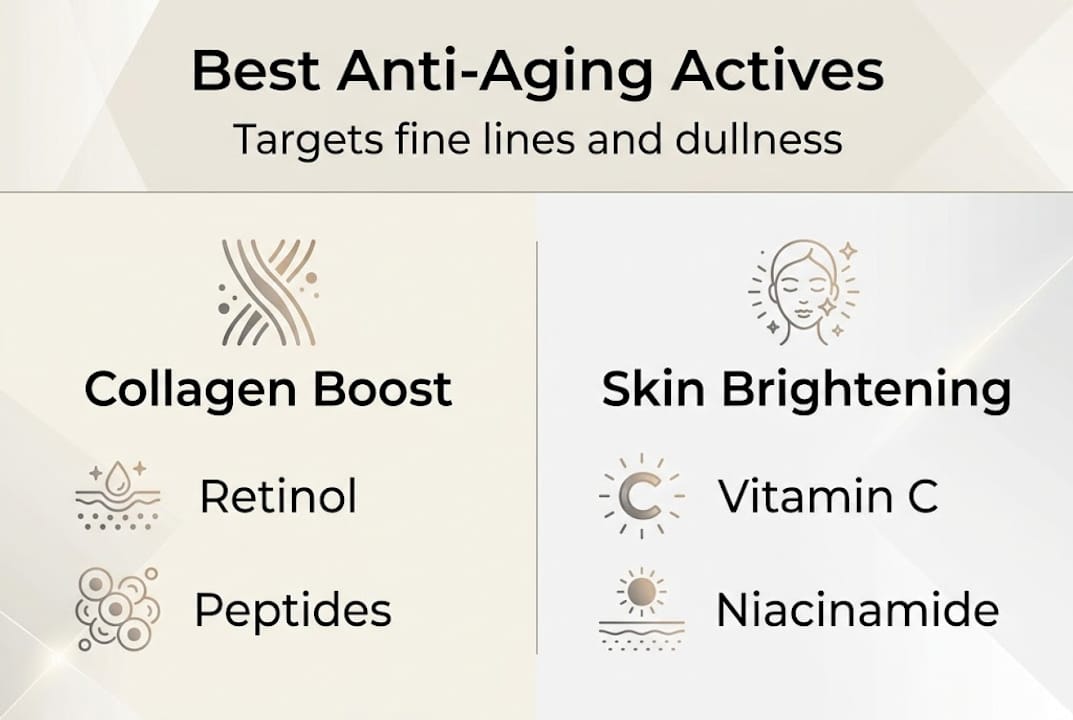
Retinol. The gold standard for anti-aging. Retinol is a vitamin A derivative that accelerates cell turnover, stimulates collagen synthesis, and reduces the appearance of fine lines and wrinkles. It’s one of the most studied topical compounds in dermatology. Results are typically visible within 8 to 12 weeks of consistent use.
Niacinamide (Vitamin B3). This multi-tasking active brightens skin and reduces hyperpigmentation, strengthens the skin barrier, and calms inflammation. It works on multiple pathways simultaneously, making it especially effective for mature skin dealing with both dullness and sensitivity. It’s also one of the most well-tolerated actives available.
Vitamin C. A potent antioxidant, vitamin C evens skin tone and boosts collagen while neutralizing free radicals that accelerate aging. It’s particularly powerful when used in the morning because it provides an additional layer of protection against UV-related oxidative damage. L-ascorbic acid is the most bioavailable form, though it can be unstable and requires careful formulation.
Peptides. Short chains of amino acids, peptides signal collagen production and improve skin firmness and elasticity over time. They’re gentle enough for daily use and pair beautifully with other actives. Women who find retinol too harsh often see excellent firming results from well-formulated firming skincare with peptides instead.
Sunscreen. Yes, sunscreen counts as an active. Daily broad-spectrum SPF protects against photoaging, which is the number one cause of premature wrinkling, dark spots, and loss of elasticity. Without it, every other active you use becomes less effective because UV damage keeps undermining your results.
Quick comparison: What each active targets
| Active | Primary benefit | Best for | Visible results |
|---|---|---|---|
| Retinol | Cell turnover, collagen | Wrinkles, texture | 8 to 12 weeks |
| Niacinamide | Brightening, barrier | Pigmentation, redness | 4 to 8 weeks |
| Vitamin C | Antioxidant, even tone | Dullness, dark spots | 6 to 10 weeks |
| Peptides | Firmness, elasticity | Sagging, fine lines | 8 to 16 weeks |
| Sunscreen | UV protection | Photoaging prevention | Ongoing |
Pro Tip: If you’re new to actives, start with niacinamide. It delivers visible brightening benefits while supporting your skin barrier, which makes it easier to introduce stronger actives like retinol later without irritation.
Exploring natural brightening actives can also reveal gentler alternatives that offer real results, particularly if your skin is reactive or you prefer plant-based options.
How natural and synthetic actives compare
After learning what works, it’s important to understand how naturally derived actives and synthetic ones compare, especially for sensitive, mature skin. This distinction matters more than most women realize.
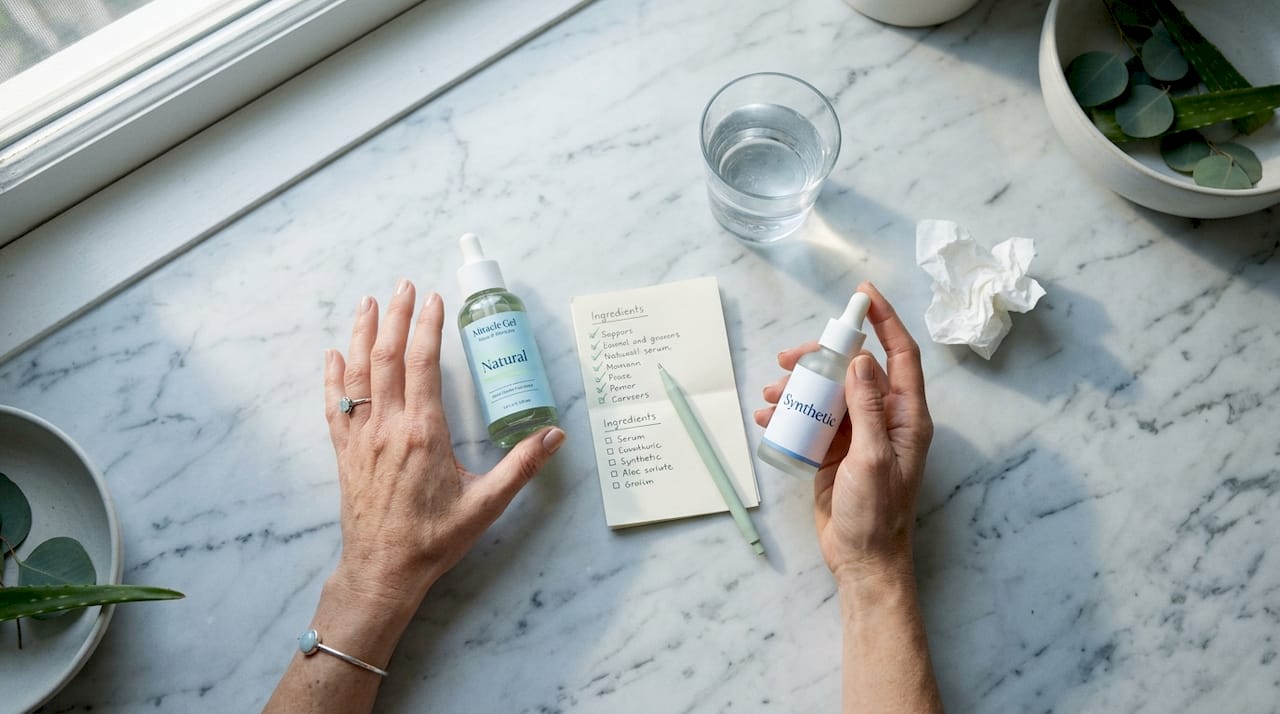
Synthetic actives like retinol and ascorbic acid (vitamin C) are laboratory produced, which gives manufacturers precise control over concentration and purity. This consistency is one of their greatest strengths. The clinical evidence behind synthetic actives is extensive because they’ve been studied in controlled trials for decades. However, they come with real tradeoffs.
Synthetic actives: strengths and limitations
- Higher potency and faster results
- Extensively studied with clinical backing
- Precise, consistent concentrations
- Higher risk of irritation, redness, and peeling, especially for sensitive or mature skin
- Some are not recommended during pregnancy (retinol, in particular)
- Stability can be a challenge (vitamin C oxidizes quickly when exposed to air and light)
Natural actives, such as rosehip oil (which contains natural retinoids), bakuchiol (a plant-based retinol alternative), turmeric, licorice root extract, and plant-derived peptides, work through similar biological pathways but typically more gently. According to dermatologists, synthetic retinoids dominate evidence-based recommendations, with retinoids appearing in nearly 97% of top skincare ingredient lists. Yet niacinamide remains a uniquely versatile and gentle option for barrier-compromised mature skin.
Natural actives: strengths and limitations
- Gentler on sensitive and reactive skin
- Lower irritation risk
- Generally considered safe during pregnancy
- Work more slowly and may be less potent at equivalent concentrations
- Clinical evidence is growing but still less robust than for synthetics
- Quality varies depending on source, extraction method, and formulation
Pro Tip: You don’t have to choose one or the other. The most effective mature skin routines often combine the reliability of a low-dose synthetic (like 0.025% retinol) with the barrier-supporting power of a natural active (like niacinamide or bakuchiol). This hybrid approach maximizes results while keeping irritation to a minimum.
Considering organic skincare for lower irritation is a genuinely smart strategy for women whose skin has become more reactive with age, and it doesn’t mean sacrificing results.
How to use actives: real-world application and synergy
Knowing the differences between actives leads naturally to how you can combine, layer, and apply them for optimal and safe results. This is where many women stumble.
The most common mistake is adding too many actives at once. Your skin needs time to adapt, and flooding it with multiple strong actives simultaneously often results in redness, peeling, and a compromised barrier. Instead, think of building your routine the way you’d train for a marathon: start slow, build gradually, and let your skin tell you when it’s ready for more.
A practical layering routine for women 40+
- Cleanse first. Always start with a clean, dry face before applying actives. Actives penetrate more effectively and more evenly on clean skin.
- Apply the thinnest consistency first. Actives in water-based serums should go on before heavier moisturizers or oils.
- Use niacinamide as your base active. Apply your niacinamide serum first. It preps and strengthens your skin barrier, creating a safer environment for stronger actives to follow.
- Introduce retinol slowly, at night. Start with two nights per week at a low concentration (0.025% to 0.05%). Research shows that 5% niacinamide reduces hyperpigmentation in a dose-responsive way, while retinol at concentrations between 0.05% and 0.1% smooths wrinkles over 3 to 12 months of consistent use.
- Apply SPF every single morning. No exceptions. Retinol increases photosensitivity, and UV exposure undoes the collagen-building work your actives are doing overnight.
- Moisturize generously. Lock in your actives with a nourishing moisturizer to prevent transepidermal water loss (moisture escaping through the skin).
Combining niacinamide with retinol isn’t just convenient, it’s genuinely synergistic. Research confirms that niacinamide buffers retinol irritation while enhancing brightening and collagen production through complementary biological pathways. In other words, they make each other work better.
Real-world timelines matter too. Most women expect overnight results and give up before actives have a real chance to work. The evidence points to visible improvements in brightening and firmness appearing within 4 to 12 weeks of consistent use. Patience isn’t passive here, it’s part of the strategy. Discovering fast natural anti-aging results requires consistency, not just the right products.
If you’re not sure where to start, exploring structured age-defying skincare routines designed specifically for women over 40 can save you months of trial and error and protect your skin from unnecessary irritation.
Why most women 40+ get actives wrong, and how to fix it
Let’s step back and challenge how most women approach actives so you can focus less on trends and more on lasting results.
The single biggest mistake we see is overloading the skin. Women hear about a new “miracle active” and add it straight into an already busy routine. Within weeks, their skin is red, peeling, and more sensitive than before. They assume the active didn’t work and move on to the next trend. The active often did work, but the skin had no chance to adapt.
The second mistake is skipping sunscreen. If you’re spending money on retinol and vitamin C but not protecting against UV damage every morning, you’re essentially running a race on a treadmill. UV radiation is the primary driver of visible aging for women over 40, and no active can outpace unprotected sun exposure.
The third mistake is underestimating niacinamide. Most people think of it as a brightening serum and nothing more. But niacinamide is actually a foundation active. It fortifies your skin barrier, reduces inflammation, and creates the conditions your skin needs to tolerate stronger actives safely. The synergistic effect of niacinamide and retinol is one of the most meaningful and underused combinations in anti-aging skincare.
The fix is simpler than most marketing suggests: choose actives based on your skin’s actual needs, not on what’s trending. Build your routine slowly. Protect it every morning. And trust clinically proven skincare choices over hype. Skin that is nurtured consistently always outperforms skin that is shocked into submission with too many actives at once.
Natural skincare solutions for radiant, youthful skin at 40+
At Miracle Gel Natural Skincare, every product in our range is formulated specifically for women over 40 who want real results without compromising on ingredient quality or skin comfort.
Our collection includes brightening treatments, firming serums, and gentle anti-aging solutions built around the actives discussed in this article, including niacinamide, plant peptides, and natural vitamin C sources. Our hero product, the 2 Minute Miracle Gel, delivers visible hydration and radiance through our exclusive Tri-Moisture Cryo Complex™, so your skin feels and looks transformed even on the days when you don’t have time for a full routine. Explore our full anti-aging skincare range and find the formulations your skin has been waiting for.
Frequently asked questions
What is the difference between an active and a supporting ingredient?
Actives directly change your skin’s appearance or function (like retinol or niacinamide), while supporting ingredients help with texture, delivery, or comfort without triggering biological change in the skin.
How long does it take for actives to show visible results?
Most actives show noticeable brightening and firming effects within 4 to 12 weeks, with visible improvements benchmarked at this range in clinical studies of niacinamide and retinol.
Can I use retinol and niacinamide together?
Yes, and you should. Niacinamide buffers retinol irritation while enhancing brightening and collagen production through complementary pathways, making this combination one of the most effective in mature skin routines.
Are natural actives less effective than synthetics?
Natural actives are gentler and safer for sensitive skin, but synthetics like retinol tend to work faster and have more robust clinical backing, though they also carry a higher irritation risk.
How important is sunscreen in an active-driven routine?
Sunscreen is essential every single day for women 40+ using actives. Daily SPF prevents photoaging and protects against the UV-induced wrinkles and dark spots that actives work so hard to address.