
TL;DR:
- Gentle exfoliation removes only dead skin cells, supporting natural shedding without damaging the skin barrier.
- For women over 40, it improves brightness, texture, and reduces hyperpigmentation safely.
- Regular, low-concentration exfoliants paired with moisturizer and SPF ensure healthy, glowing mature skin.
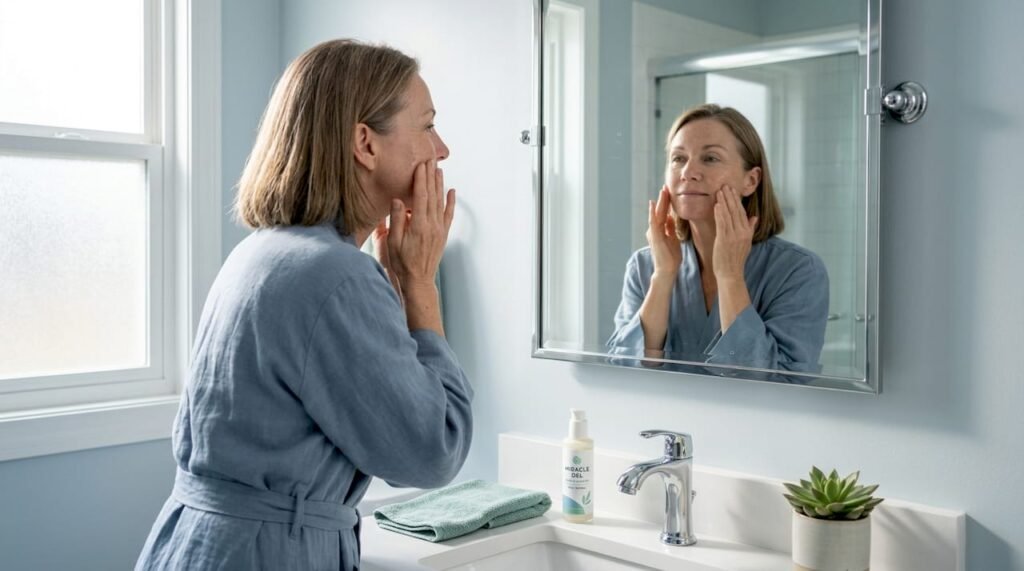
Most women over 40 have been told at some point that they need to exfoliate more aggressively to combat dullness and uneven texture. The reality is quite the opposite. Mature skin needs a lighter, smarter approach — one that respects how the skin barrier changes with age. Stripping away too much, too fast, can leave your skin red, reactive, and actually older-looking. This article breaks down what gentle exfoliation really means, why it is the right choice for skin in its 40s and beyond, and how to put it into practice in a way that builds visible brightness over time without the irritation.
Table of Contents
- What is gentle exfoliation?
- Why mature skin needs gentle exfoliation
- Types of gentle exfoliants and how they work
- How to safely add gentle exfoliation to your routine
- Our take: Gentle exfoliation, done right, unlocks mature skin glow
- Next steps for radiant, age-defying skin
- Frequently asked questions
Key Takeaways
| Point | Details |
|---|---|
| Gentle methods protect mature skin | Gentle exfoliation avoids barrier damage, making it safe and effective for women over 40. |
| Boosts brightness and anti-aging | Regular gentle exfoliation accelerates skin renewal, reducing dullness and signs of aging. |
| Enzymes and PHAs preferred | Natural enzyme and PHA exfoliants meet the needs of sensitive skin in the UK and Ireland. |
| Pair exfoliation with moisturizers | Combining gentle exfoliation and moisturizer enhances radiance and reduces irritation risk. |
| Practical steps prevent mistakes | Applying best practices and avoiding overuse ensures optimal results for mature skin. |
What is gentle exfoliation?
Gentle exfoliation is not just a softer version of scrubbing your face. It is a fundamentally different approach to how you refresh the skin’s surface. The goal is precise: remove only the dead, accumulated cells sitting on top of the outermost skin layer, the stratum corneum, without disturbing the living tissue below it.
According to research on exfoliation methods, gentle exfoliation is the controlled removal of dead surface skin cells from the stratum corneum using mild methods that minimize skin barrier disruption, such as low-concentration AHAs like 10% glycolic acid, PHAs, BHAs, or enzymatic exfoliants. This contrasts sharply with aggressive physical scrubs or deep chemical peels that penetrate the viable epidermis or even the dermis beneath it.
Think of it this way. Your skin naturally sheds about 30,000 to 40,000 dead cells every hour in a process called desquamation. When that process slows down, as it inevitably does with age and hormonal shifts, cells pile up on the surface and create the dull, uneven texture so many women over 40 recognize in the mirror. Gentle exfoliation simply gives that natural shedding process a nudge, rather than bulldozing through layers of skin that are still doing their job.
Here is a clear comparison of gentle versus harsh exfoliation methods:
| Feature | Gentle exfoliation | Harsh exfoliation |
|---|---|---|
| Target layer | Stratum corneum only | Epidermis and/or dermis |
| Common methods | Low AHAs, PHAs, enzymes | Walnut scrubs, strong peels |
| Barrier impact | Minimal | Significant disruption |
| Redness/irritation risk | Low | High, especially 40+ |
| Recommended frequency | 1 to 3 times per week | Rarely appropriate for mature skin |
| Recovery time | None | Days to weeks |
The key insight here is that gentle exfoliation works with your skin biology, not against it. It mimics and supports desquamation rather than overriding it. For women over 40, whose skin barrier is already producing less natural oil and has a slower cell turnover rate, this distinction is not just a preference — it is essential for skin health.
You can explore more context on how this fits into a broader approach by reading our skincare blog insights or our full guide on steps for glowing skin after 40. Both resources offer evidence-grounded detail on building a routine that actually works for mature skin.
Why mature skin needs gentle exfoliation
After 40, your skin is dealing with a combination of changes that make the wrong kind of exfoliation genuinely risky. Estrogen levels decline, which means less sebum (natural oil) production, thinner skin, and a weaker barrier. Collagen production slows by roughly 1% per year after the age of 25, and cell turnover drops from a roughly 28-day cycle to closer to 45 to 60 days. Dead cells linger longer on the surface, creating visible dullness, clogged pores, and uneven texture.
This is where gentle exfoliation becomes one of the most powerful tools in your routine, but only if applied correctly. Research on anti-aging mature skin care recommends prioritizing barrier preservation in women over 40, pairing gentle exfoliation with moisturizers, and favoring enzyme or PHA-based options that boost anti-aging brightness by accelerating turnover without the irritation risks that are significantly higher in mature skin. UK and Irish women in particular often gravitate toward natural enzyme and PHA formulations from trusted brands.
Here are the core benefits gentle exfoliation delivers for skin over 40:
- Improved brightness. Clearing dead cell buildup instantly reflects more light and evens out skin tone without any bleaching or harsh intervention.
- Better product absorption. Moisturizers, serums, and anti-aging treatments work more efficiently on a freshly exfoliated surface because there is no dead cell layer blocking penetration.
- Smoother texture. Regular, gentle exfoliation softens the appearance of fine lines by reducing surface irregularity.
- Reduced hyperpigmentation. Accumulated sun damage and age spots fade faster when surface cell turnover is consistently supported.
- Fewer breakouts. Even mature skin can experience congestion. Keeping the surface clear reduces clogged pores without triggering dryness or inflammation.
“The barrier is everything for mature skin. The moment you compromise it with over-exfoliation or harsh acids, you trigger inflammation that accelerates the very aging you’re trying to prevent.”
Pro Tip: If your skin feels tight, looks red, or stings after exfoliation, those are not signs that the product is “working.” They are signals of barrier damage. Step back, increase moisturizer use, and reduce exfoliation frequency immediately.
Visiting our guide on fast natural anti-aging results will show you how these principles translate into a clinical, product-backed context. And if ingredient safety is a concern, our breakdown of non-toxic skincare for women over 40 covers what to look for and what to avoid.
Types of gentle exfoliants and how they work
Understanding the options available helps you pick the right tool for your skin’s specific needs. Not all gentle exfoliants work the same way, and the differences matter when you are managing sensitivity alongside the desire for real results.
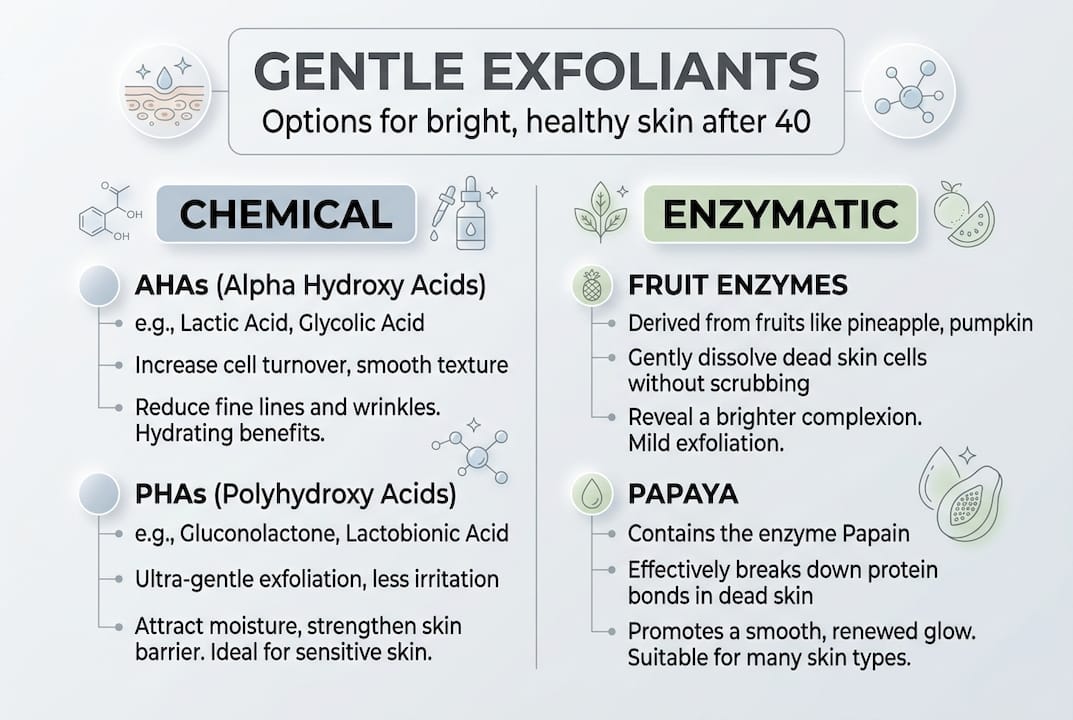
As established by exfoliation research, low-concentration AHAs like 10% glycolic acid, alongside PHAs, BHAs, and enzymatic exfoliants, remove dead skin cells without disturbing skin barrier function, making them the preferred approach for mature and sensitive skin types.
| Exfoliant type | Source | Best for | Concentration | Frequency |
|---|---|---|---|---|
| AHAs (glycolic, lactic) | Sugar cane, milk | Dullness, fine lines | 5 to 10% | 2 to 3x per week |
| PHAs (gluconolactone) | Lab synthesized | Rosacea, sensitive skin | 5 to 15% | Daily to every other day |
| BHAs (salicylic acid) | Willow bark | Congestion, oily patches | 0.5 to 2% | 2x per week |
| Enzymes (papain, bromelain) | Papaya, pineapple | Sensitive, reactive skin | Varies | 1 to 2x per week |
Here is how each type behaves on mature skin:
- AHAs work on the surface by loosening the bonds between dead skin cells, making them easier to shed. Lactic acid is particularly well suited to mature skin because it also draws moisture into the skin while exfoliating, a dual action that glycolic acid does not offer as strongly.
- PHAs (polyhydroxy acids) are larger molecules than AHAs, which means they penetrate more slowly and gently. This makes them far less likely to cause stinging or redness, and they are often recommended for women with sensitive or compromised skin. They also provide antioxidant benefits alongside exfoliation.
- BHAs are oil-soluble, meaning they can move into the pore lining where AHAs cannot reach. For women 40+ who still experience hormonal breakouts or visible pores, BHAs offer targeted congestion clearing without surface aggression.
- Enzymatic exfoliants are the most passive option. They work by digesting the protein bonds that hold dead cells together, rather than chemically dissolving them. The result is a very mild exfoliation that suits even reactive skin and can often be used more frequently than acid-based options.
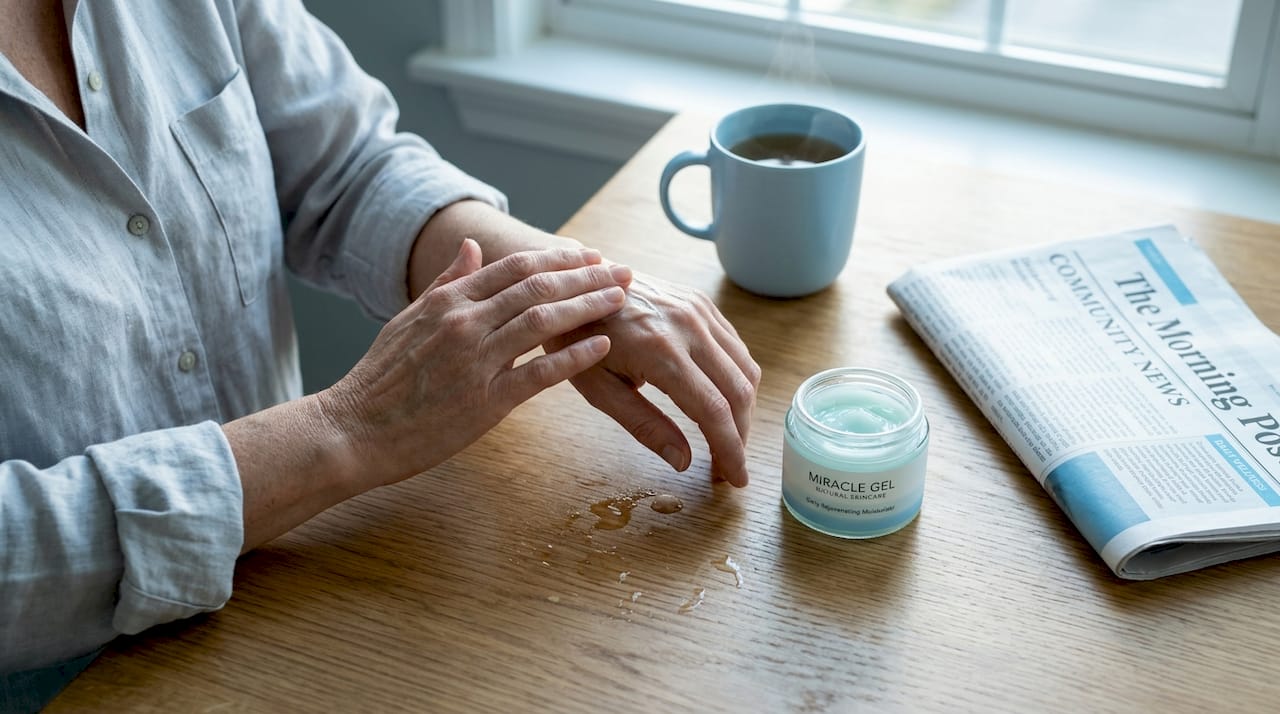
Pairing any of these with a quality moisturizer is critical, as hydration supports barrier recovery between exfoliation sessions. You can also explore our organic skincare workflow for a structured routine that integrates exfoliation cleanly and safely.
How to safely add gentle exfoliation to your routine
Knowing the science is one thing. Translating it into a routine that you actually use consistently, without skin setbacks, is the practical challenge. Here is a step-by-step approach designed specifically for women over 40.
1. Start with a patch test.
Before applying any new exfoliant to your full face, apply a small amount to your inner wrist or jawline. Wait 24 to 48 hours. If there is no reaction, the product is safe to introduce gradually.
2. Begin with one session per week.
Even if your skin feels tough, starting at once a week allows your barrier to adjust. After two to three weeks with no irritation, you can move to twice weekly if your skin responds well.
3. Choose evening application.
AHAs and BHAs can increase photosensitivity temporarily. Exfoliating at night gives your skin hours to recover before sun exposure, and it pairs naturally with your overnight moisturizer.
4. Apply to clean, dry skin.
Using an exfoliant on damp skin can intensify the effect and increase irritation risk for sensitive mature skin. Pat your face fully dry before applying a chemical exfoliant.
5. Follow immediately with moisturizer.
Research confirms that exfoliation paired with moisturizers boosts anti-aging brightness by accelerating turnover without the irritation risks that are higher in mature skin. Do not skip this step. Apply moisturizer within one to two minutes of your exfoliant while the skin is still slightly tacky.
6. Use SPF every morning.
This is non-negotiable when exfoliating regularly. Fresh skin cells are more vulnerable to UV damage, and sun protection directly supports the brightness results you are working toward.
7. Listen to your skin week by week.
Seasons change, hormones fluctuate, and stress affects skin sensitivity. Some weeks you might exfoliate twice; others, once is enough. Skin-led frequency is always smarter than a rigid schedule.
Pro Tip: If you are using a retinol or vitamin C serum in your routine, avoid applying them on the same night as your exfoliant. Combining active ingredients without proper spacing is one of the most common causes of mature skin irritation.
Common mistakes to avoid include using physical scrubs on mature skin even occasionally, layering multiple acids in the same routine, and ignoring early warning signs like tightness or flakiness. Also, overusing a single exfoliant because it worked well initially is a recipe for gradual barrier erosion. Consistency at a sustainable frequency beats intensity every time.
Our full natural skincare regimen for radiant skin over 40 offers a structured approach if you want to see how exfoliation fits alongside other steps. For more on why natural formulations matter, our piece on organic skincare benefits for mature skin covers the ingredient-level detail. If your skin is particularly reactive, our curated sensitive skin safe products list is a practical starting point.
Our take: Gentle exfoliation, done right, unlocks mature skin glow
The skincare industry has a persistent habit of presenting exfoliation as a problem-solving emergency measure. Strip away the dead skin, reveal the new. Faster, stronger, more dramatic. For women in their 20s with resilient, oil-rich skin, this framing might be forgivable. For women over 40, it is genuinely misleading and sometimes harmful.
What we have seen, through years of working with mature skin and natural formulations, is that the women who achieve the most consistent, visible glow are not the ones using the strongest exfoliants. They are the ones who have committed to gentle, regular, moisturizer-supported exfoliation as a long-term habit. Not a quick fix. A practice.
The skin’s capacity to regenerate does not disappear after 40. It slows. And that means the job of a good exfoliation routine is to support that slower process, not override it with aggressive chemistry. Bright, even, healthy skin at 50 and 60 is absolutely achievable, but it is built gradually, with products that respect the barrier rather than wear it down.
Our approach at Miracle Gel centers on exactly this philosophy, and you can see how it translates into real outcomes through our evidence-backed glowing skin guidance for women over 40.
Next steps for radiant, age-defying skin
If this article has shifted your thinking about how you approach exfoliation, the next step is finding products that match the principles behind it.
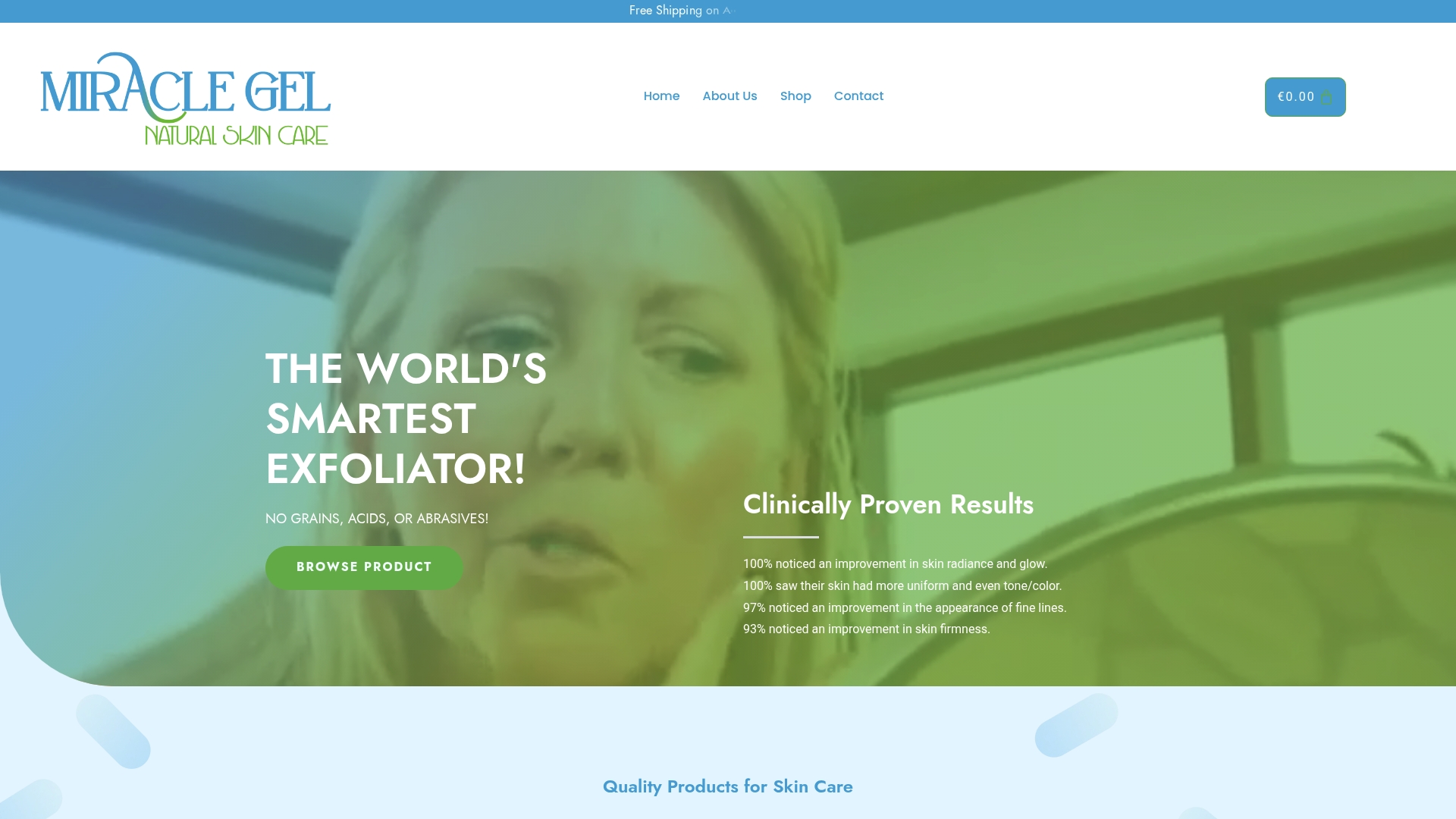
At Miracle Gel, our formulations are built specifically for women over 40 who want visible results without the risks that come with harsh chemistry. Our exfoliating gel for radiant skin works in just two minutes, combining gentle exfoliation with deep hydration so your barrier stays intact throughout the process. Pair it with our deep hydration moisturizer for the kind of plump, luminous finish that older skincare routines rarely deliver. For the full picture on how our philosophy translates into a complete regimen, visit our guide to natural age-defying beauty for women over 40.
Frequently asked questions
Can gentle exfoliation improve skin brightness for women over 40?
Yes, gentle exfoliation accelerates turnover and reduces the dead cell buildup that causes dullness, delivering visible brightness without the irritation risks associated with more aggressive methods on mature skin.
What are the safest exfoliants for sensitive mature skin?
Enzymatic exfoliants and PHAs tend to be the safest options for reactive skin over 40, since PHAs and enzymatic methods minimize skin barrier disruption far more effectively than AHAs or physical scrubs.
How often should women over 40 exfoliate gently?
Most women over 40 benefit from exfoliating one to three times per week, though frequency should be guided by how the skin responds, since gentle exfoliation targets only the stratum corneum and works best when used consistently rather than intensively.
Is it necessary to follow gentle exfoliation with a moisturizer?
Absolutely. Applying moisturizer directly after exfoliating helps seal and support barrier function, and pairing exfoliation with moisturizers is specifically recommended to boost anti-aging brightness while keeping irritation risk low for mature skin.