
TL;DR:
- Women over 40 face aging signs due to hormonal shifts and slower cell turnover. Natural ingredients like aloe vera, vitamin C, hyaluronic acid, and niacinamide effectively hydrate, brighten, and improve skin elasticity. Consistent, properly layered routines and patience are essential for visible results over several weeks.
You follow a routine. You drink water. You sleep. And yet, your skin still looks tired, dull, and somehow older than you feel inside. After 40, this frustration is real and incredibly common. Hormonal shifts, slower cell turnover, and a weakening skin barrier all work against you quietly. The good news? A targeted approach using evidence-backed natural ingredients can genuinely restore radiance and fight the visible signs of aging. This guide walks you through the best ingredients, how to use them in the right order, and what to realistically expect when you commit to a natural glow routine built for mature skin.
Table of Contents
- Essential natural ingredients for radiant skin after 40
- Step-by-step: Crafting your natural glow routine
- Troubleshooting: Avoiding irritation and maximizing natural results
- What to expect: Measuring progress and adjusting your approach
- Why ‘natural’ works differently for women over 40
- Discover proven natural skincare for radiant, ageless skin
- Frequently asked questions
Key Takeaways
| Point | Details |
|---|---|
| Choose proven naturals | Aloe vera, plant-based vitamin C, hyaluronic acid, and niacinamide are top choices for glowing, mature skin. |
| Layer for best results | Apply water-based serums before oils to maximize absorption and hydration. |
| Consistency delivers glow | Natural ingredients provide visible improvement within weeks but require daily, long-term use. |
| Adapt to sensitivity | Go slow with strong antioxidants and always patch test, especially on sensitive or menopausal skin. |
Essential natural ingredients for radiant skin after 40
Not all natural ingredients are created equal. For women over 40, the goal is to address hydration loss, fading elasticity, uneven skin tone, and a compromised barrier, all at once. The right ingredients do exactly that, without the harshness that strips already-sensitive mature skin.
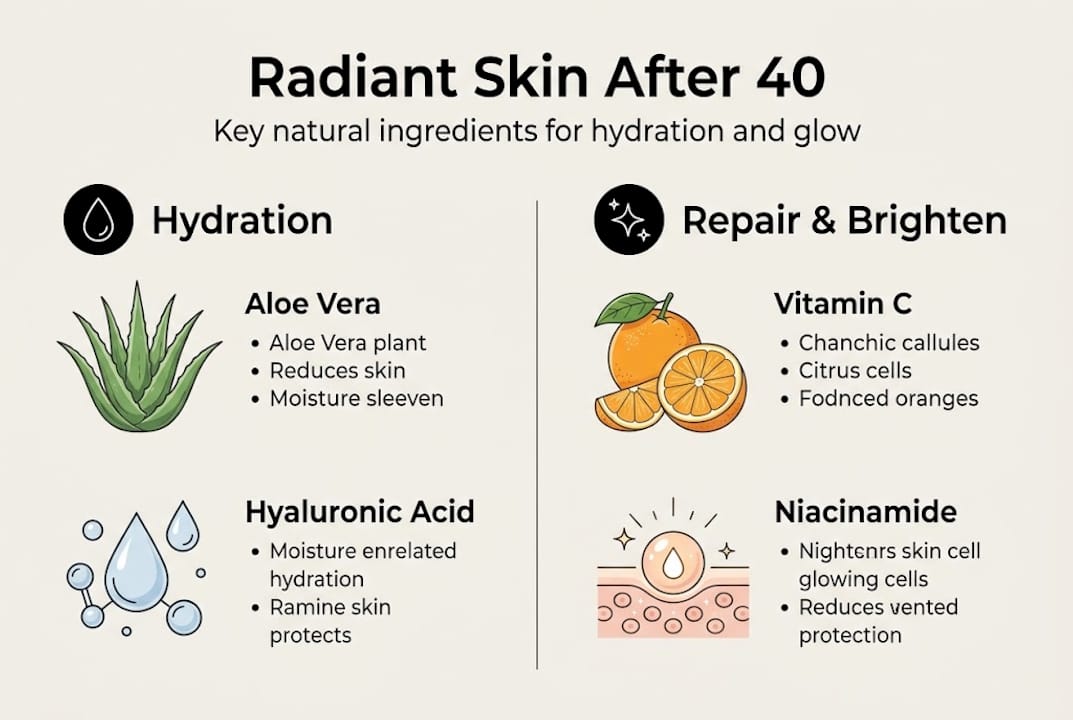
Aloe vera is one of the most underrated powerhouses in natural skincare. Its polysaccharides, vitamins, and sterols soothe, hydrate, and stimulate collagen synthesis, making it ideal for sensitive mature skin that reacts easily to stronger actives.
Vitamin C from plant sources like rosehip or sea buckthorn brightens, boosts collagen, and protects against free radicals. Unlike synthetic ascorbic acid, these plant-derived forms tend to be gentler and easier to tolerate daily.
Hyaluronic acid attracts moisture from the environment into the skin, delivering instant plumping. Niacinamide (vitamin B3) tackles pigmentation, pores, and elasticity simultaneously. Together, these four form the backbone of any effective natural anti-aging routine.
| Ingredient | Main benefit | Best form | Concentration | Skin type |
|---|---|---|---|---|
| Aloe vera | Hydration, collagen support | Gel or serum | 70%+ | All, especially sensitive |
| Vitamin C (rosehip) | Brightening, antioxidant | Oil or serum | 10-20% | Normal to dry |
| Hyaluronic acid | Deep moisture, plumping | Serum | 1-2% | All |
| Niacinamide | Pigmentation, elasticity | Serum or cream | 5% | All, especially sensitive |
Quick facts:
- Aloe vera: Best for calming redness and boosting moisture retention
- Rosehip oil: Rich in natural vitamin C and fatty acids for glow and repair
- Hyaluronic acid: Works best applied to damp skin to lock in moisture
- Niacinamide: Pairs well with almost every other ingredient in your routine
For women navigating menopause-related dryness, explore natural oils for mature skin and how they pair with humectants for barrier repair. You can also find a deeper breakdown in our natural moisturizers for women over 40 guide.
Pro Tip: Layer a hyaluronic acid serum on damp skin, then seal it with a natural oil like rosehip or marula. This combination mimics the skin’s own moisture-locking system and is especially effective for menopausal dryness.
Step-by-step: Crafting your natural glow routine
Knowing which ingredients to use is only half the battle. How and when you apply them determines whether they actually work. A well-structured routine does not need to be complicated. It needs to be consistent.
Before you start: Always patch test any new product on your inner arm for 24 to 48 hours. When reading labels, look for short ingredient lists, recognizable plant names, and avoid anything with synthetic fragrance or alcohol near the top of the list.
Morning routine:
- Cleanse with a gentle, sulfate-free natural cleanser
- Apply a hydrating toner (look for aloe vera or rose water)
- Apply niacinamide serum to even tone and support elasticity
- Follow with hyaluronic acid serum on slightly damp skin
- Seal with a lightweight natural moisturizer suited to your skin type
- Finish with SPF 30 or higher (non-negotiable, even in winter)
Evening routine:
- Double cleanse if you wore SPF or makeup
- Apply vitamin C serum (rosehip oil works beautifully here)
- Follow with hyaluronic acid if skin feels tight
- Use a richer natural oil or night cream to repair overnight
Weekly additions: Add a gentle enzyme exfoliant once or twice a week to support cell turnover. This is where vitamin C really shines, helping to reveal brighter skin underneath.
| Application method | Ease of use | Absorption speed | Best use case |
|---|---|---|---|
| Serum | Easy | Fast | Targeted treatment (niacinamide, vitamin C) |
| Oil | Moderate | Slow | Overnight repair, barrier support |
| Cream | Very easy | Medium | Daily moisture, sensitive skin |
For natural body care essentials that complement your facial routine, and more anti-aging tips for women over 40, we have dedicated guides to help you build a complete approach.
Naturally sourced hyaluronic acid binds up to 1000 times its weight in water, making it one of the most effective tools for plumping and improving firmness, especially during menopause.
Pro Tip: Always apply water-based serums before oils or creams. Lighter molecules need direct contact with skin to absorb properly. If you apply oil first, you create a barrier that blocks everything else.
Troubleshooting: Avoiding irritation and maximizing natural results
Even gentle natural ingredients can cause reactions if introduced too quickly or combined incorrectly. Mature skin is often more reactive than it was in your 30s, partly due to a thinner, more permeable barrier.
Vitamin C, even in plant-derived forms, can cause tingling or mild redness on sensitive skin, especially at higher concentrations. If that happens, it is a sign to scale back, not give up entirely. Start with rosehip oil (a gentler source) before moving to a dedicated vitamin C serum.
Niacinamide at 5% is one of the best-tolerated actives for sensitive mature skin. It reduces pigmentation, boosts elasticity, and rarely causes irritation, making it a smart first active to introduce.
Warning signs to watch for:
- Persistent stinging or burning more than 5 minutes after application
- Redness that does not fade within an hour
- Peeling or flaking in areas you did not exfoliate
- Breakouts appearing in unusual areas
- Itching or swelling around the eyes or mouth
If any of these appear, stop using the new product immediately. Return to your basic routine for a week, then reintroduce one ingredient at a time at a lower frequency.
“The real advantage of botanical actives over synthetics is not just gentleness. It is their ability to support the skin’s own repair mechanisms over time, rather than forcing a rapid response that mature skin often cannot sustain.”
For a broader look at how to approach your skin holistically, our guide on holistic anti-aging for women 40+ covers lifestyle factors that amplify your ingredient results. If you are curious about how plant-based actives compare to stronger options, the botanical actives vs retinol breakdown is worth reading.
Patience is not a passive strategy. It is an active choice to let your skin adapt and respond at its own pace.
What to expect: Measuring progress and adjusting your approach
One of the biggest mistakes women make with natural skincare is quitting too soon. Visible results follow a timeline that is predictable once you know what to look for.
Realistic expectations by timeframe:
- Days 1 to 7: Improved hydration, skin feels softer and more comfortable
- Weeks 2 to 4: Subtle brightness, less dullness, more even tone starting to show
- Weeks 8 to 12: Noticeable reduction in fine lines, firmer texture, more consistent glow
Clinical research confirms this: 10% vitamin C or 5% niacinamide improve wrinkles and brightness after 12 weeks, particularly on mature skin. That is three months of consistent use before the full picture emerges.
How to track your progress:
- Take a photo in natural light, same angle, same time of day, once a week
- Note how your skin feels in the morning before applying anything
- Track texture changes (rough patches, dry areas, pore appearance)
- Mark any breakouts, reactions, or improvements in a simple notes app
- Review your photos monthly, not daily, to see real change
| Symptom | Likely cause | Adjustment to try |
|---|---|---|
| Persistent dryness | Barrier not repaired | Add a natural oil at night |
| Dullness not improving | Cell turnover too slow | Add a weekly enzyme exfoliant |
| Redness or stinging | Ingredient sensitivity | Reduce frequency, lower concentration |
| Uneven tone worsening | Skipping SPF | Apply SPF every morning without fail |
Menopause adds another layer of variability. Estrogen fluctuations affect how your skin retains moisture and responds to actives. If your skin seems to change week to week, that is normal. Adjust your routine seasonally and consult a dermatologist if changes feel sudden or severe. For more guidance on what proven results for skin over 40 actually look like, we have real before-and-after data worth reviewing.
Why ‘natural’ works differently for women over 40
There is a persistent myth that natural skincare is the slow, ineffective option and that only aggressive synthetics deliver real anti-aging results. We disagree, and the evidence backs us up.
Mature skin, especially during and after menopause, is more reactive, thinner, and more prone to barrier disruption. Aggressive actives like high-dose retinol can cause the very inflammation they are meant to fight. Botanicals are safer long-term for sensitive, menopausal skin and better suited for sustained use without the cycle of irritation and recovery.
What we have seen, both in the research and in real customer experiences, is that combining humectants like hyaluronic acid with nourishing plant oils creates a synergy that synthetics rarely replicate. It supports the skin barrier from two directions at once. Explore retinol alternatives for sensitive skin if you want to see how botanical options stack up in practice.
“The lasting beauty of plant-based skincare is its ability to build resilience as well as radiance. It does not just mask the signs of aging. It works with your skin to slow them.”
Consistency with natural ingredients is not settling for less. It is choosing a smarter, more sustainable path for skin that has earned gentler care.
Discover proven natural skincare for radiant, ageless skin
You now have the knowledge. The next step is finding the right products to bring this routine to life. At Miracle Gel Natural Skincare, every formulation is built around the same principles you have read here: science-backed natural ingredients, gentle enough for sensitive mature skin, effective enough to deliver visible results.

Our organic skincare workflow guide helps you map out exactly which products belong at each step of your routine. The natural moisturizer guide narrows down the best options for your specific skin type. And if you are ready to add a targeted treatment, browse our anti-aging serums for mature skin to find a serum that fits where you are right now. Free shipping on orders over €85 makes it easy to try more than one.
Frequently asked questions
What is the safest way to introduce new natural ingredients to my routine?
Start with a patch test on your inner arm, then use the ingredient once or twice weekly before increasing frequency. Niacinamide at 5% is one of the best starting points for sensitive mature skin due to its strong tolerability record.
How long until I see results from natural anti-aging ingredients?
Hydration improves within days, but brightness and reduced wrinkles typically take 4 to 12 weeks of consistent use. Research shows vitamin C and niacinamide deliver measurable improvements in wrinkles and brightness after 12 weeks.
Can natural ingredients replace retinol for mature skin?
Botanical alternatives work more gently and are better suited to sensitive or menopausal skin for long-term use. Botanicals are safer long-term but retinol remains stronger for faster, more dramatic results if your skin can tolerate it.
Are natural skincare ingredients suitable for menopausal skin?
Yes, ingredients like hyaluronic acid and niacinamide are particularly well-suited to the dryness and sensitivity that come with menopause. Hyaluronic acid improves firmness and moisture levels in formulations specifically designed for menopausal skin changes.