
TL;DR:
- As cell turnover slows after age 40, dead skin accumulates, causing dullness, roughness, and poor product absorption. Exfoliation, especially chemical or enzymatic, helps remove this buildup, improving radiance and texture while supporting healthy renewal; over-exfoliating can damage fragile mature skin. A routine of once to twice weekly gentle exfoliation, combined with proper hydration and barrier support, optimizes skin health and youthful glow.
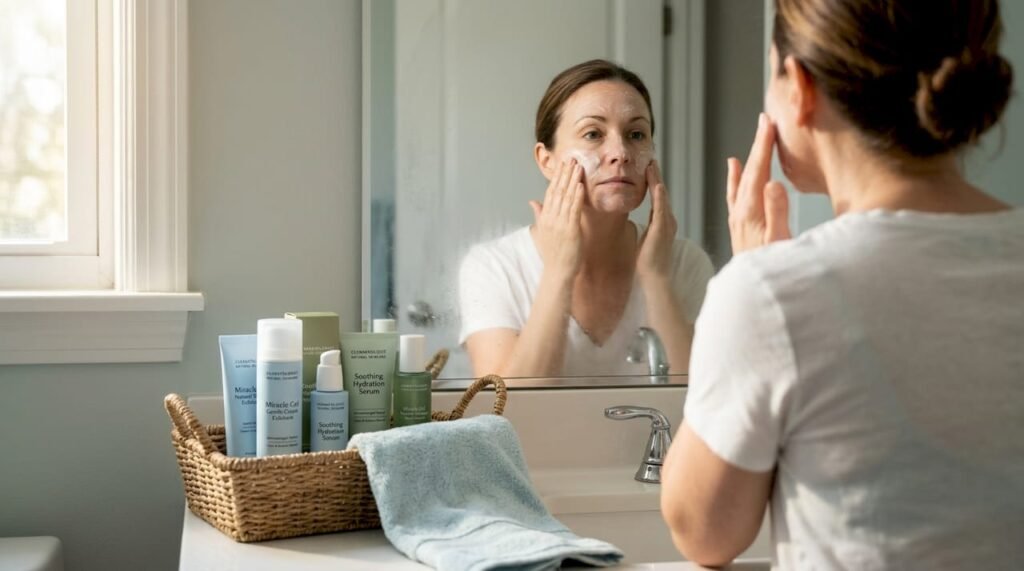
Moisturizer alone won’t save your glow after 40. The reason your skin looks duller, feels rougher, and seems to absorb less of that expensive serum you just bought comes down to one biological shift: cell turnover slows from roughly 28 days in your twenties to 40 to 60 days once you’re past 40. Dead cells pile up on the surface. Radiance dims. Texture suffers. Exfoliation is the one step that directly addresses this shift, and if you’re not doing it strategically, you’re leaving real results on the table.
Table of Contents
- How cell turnover changes after 40 and why it matters
- The science behind exfoliation: Types and what works for mature skin
- How (and how often) to exfoliate for radiant skin over 40
- Natural vs. synthetic exfoliation: What does the evidence say?
- What most skincare advice misses about exfoliation after 40
- Discover radiant, age-defying skin with our natural exfoliation essentials
- Frequently asked questions
Key Takeaways
| Point | Details |
|---|---|
| Cell turnover slows after 40 | Slower cell renewal makes regular exfoliation crucial for a glowing, youthful complexion. |
| Gentle exfoliation is best | Chemical or enzymatic exfoliators are safer and more effective for mature, sensitive skin. |
| Natural options can work | Gentle natural methods like yoghurt masks or muslin cloth are effective, if used correctly. |
| Hydrate after exfoliating | Always follow exfoliation with a nourishing moisturizer or serum for best results. |
| Less is more | Once or twice weekly exfoliation maintains skin health without causing irritation. |
How cell turnover changes after 40 and why it matters
Your skin is always renewing itself. New cells form deep in the dermis, travel upward, and eventually shed from the surface. When you’re young, that process runs on a tight schedule. As you age, the schedule stretches.
| Age range | Average cell turnover cycle |
|---|---|
| Teens to 20s | 21 to 28 days |
| 30s | 28 to 35 days |
| 40s and above | 40 to 60+ days |
That extended timeline has real consequences. Dead cells that used to shed naturally now accumulate on the surface of your skin, forming a subtle but persistent barrier. The effects show up in several ways:
- Dullness: Light scatters unevenly across a rough, uneven surface, stealing the luminosity you used to take for granted.
- Rough texture: Fingers that once glided over your face now detect bumps, dry patches, and uneven terrain.
- Uneven skin tone: Accumulated dead cells make dark spots and post-inflammatory marks look more prominent.
- Poor product absorption: Serums and moisturizers sit on top of that dead cell layer rather than penetrating where they actually work.
“When cell turnover slows to 40 to 60 days, your skin essentially needs a helping hand to shed what it can no longer shed efficiently on its own. That helping hand is exfoliation.”
Understanding natural skin renewal after 40 reframes how you think about your entire routine. Exfoliation isn’t an occasional treat. It’s foundational maintenance for mature skin.
The science behind exfoliation: Types and what works for mature skin
Exfoliation means removing dead skin cells from the surface layer. But here’s where it differs from cleansing: a cleanser lifts away makeup, oil, and environmental debris. An exfoliator specifically breaks down or dislodges the cellular bonds holding dead cells in place. These are two separate jobs.
There are three main categories of exfoliation, and they are not equally suited to mature skin.
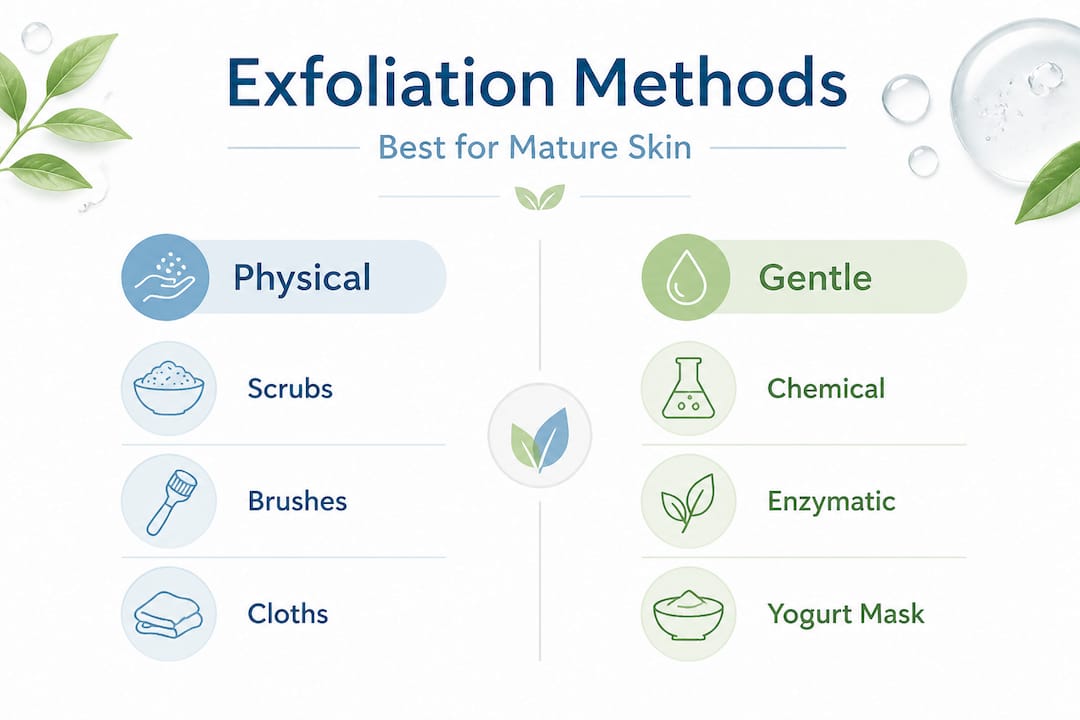
1. Physical exfoliation uses abrasive particles or textures (think scrubs, brushes, or rough cloths) to mechanically lift dead cells. It works fast and feels satisfying, but it carries real risk for skin over 40. The friction can cause micro-tears, which trigger inflammation and actually accelerate collagen breakdown over time. Not ideal.
2. Chemical exfoliation uses acids to dissolve the bonds between dead cells. Alpha hydroxy acids (AHAs) like glycolic acid and lactic acid are water-soluble and work on the skin surface, making them excellent for targeting dullness and uneven tone. Beta hydroxy acids (BHAs), primarily salicylic acid, are oil-soluble and work deeper in pores. Both are highly effective for mature skin when used correctly.
3. Enzymatic exfoliation uses natural fruit enzymes, typically from papaya (papain) or pineapple (bromelain), to gently digest dead skin proteins. This is the gentlest category and a strong choice for sensitive mature skin.
| Exfoliation type | Best for | Risk level for 40+ skin |
|---|---|---|
| Physical scrubs | Oily, resilient skin | Higher: micro-tear risk |
| Chemical (AHA/BHA) | Most skin types, anti-aging | Low to moderate with proper use |
| Enzymatic (fruit acids) | Sensitive, reactive skin | Low: very gentle |
Chemical and enzymatic exfoliation are strongly preferred over physical methods for mature skin precisely because they avoid the micro-tear risk. For gentle cleansing methods that pair well with these approaches, look for formulas that respect your skin barrier rather than stripping it.
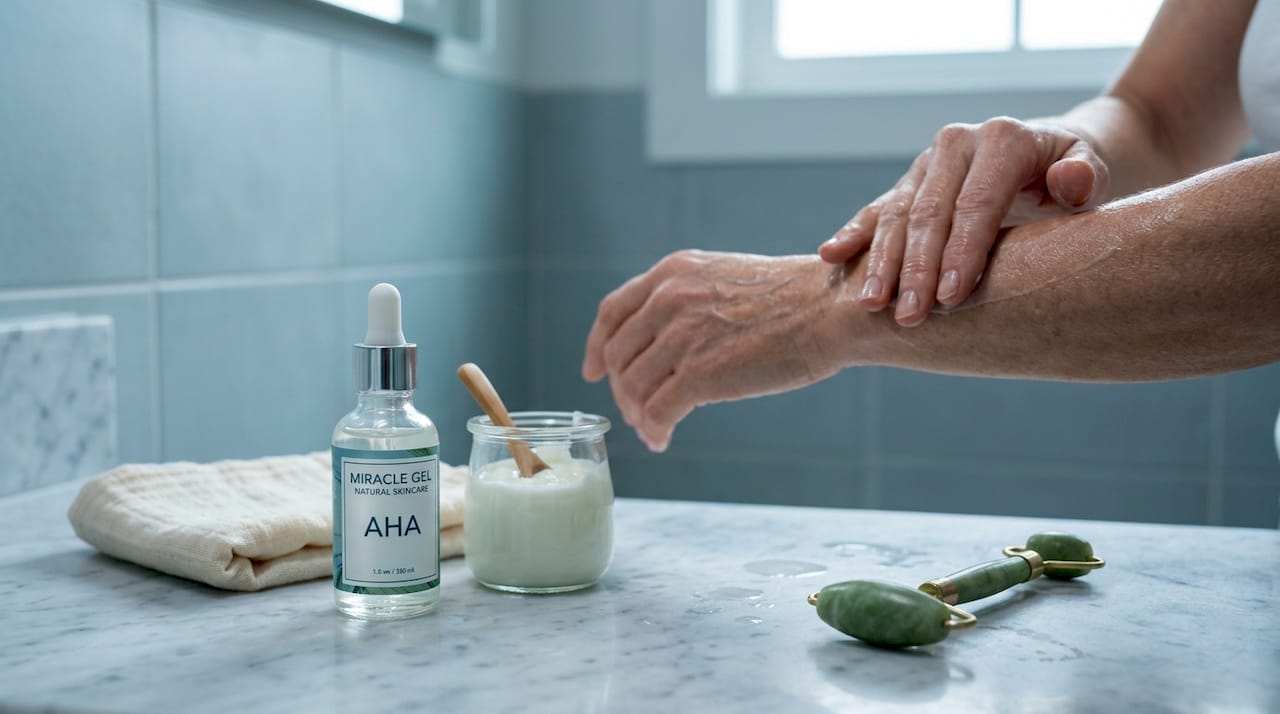
Natural options like plain yogurt (which contains lactic acid naturally) or a soft muslin cloth dampened with warm water can work beautifully as beginner exfoliation tools. They’re accessible, low-cost, and surprisingly effective when used correctly. That said, they require the same precautions: gentle pressure, limited frequency, and always moisturize afterward.
Pro Tip: Whatever method you choose, follow immediately with a moisturizer or serum containing hyaluronic acid or ceramides. Exfoliation temporarily increases transepidermal water loss (TEWL), which means your skin loses moisture faster right after you exfoliate. Hydrating immediately locks in the benefit and protects the skin barrier. Pairing exfoliation with natural ingredients for glow maximizes the brightening payoff.
How (and how often) to exfoliate for radiant skin over 40
Frequency is everything. Exfoliating too little gives you minimal results. Exfoliating too often creates a damaged barrier, increased sensitivity, and inflammation that actually speeds up the appearance of aging. The sweet spot for most women over 40 is one to two times per week, with careful attention to how your skin responds.
Here’s a practical step-by-step routine:
- Cleanse first. Start with a gentle, pH-balanced cleanser to remove surface debris. You want the exfoliator working on dead cells, not makeup residue.
- Apply your exfoliator. Use a thin, even layer. With chemical exfoliators, leave on for the time specified (typically one to five minutes for rinse-off formulas). With enzymatic options, a ten-minute application is standard.
- Rinse gently with lukewarm water. Avoid hot water, which can further compromise the skin barrier post-exfoliation. Pat dry with a clean, soft cloth.
- Apply hydrating serum or moisturizer immediately. Look for hyaluronic acid, ceramides, or peptides. Don’t wait for your skin to “dry out” first.
- Apply SPF in the morning. Freshly exfoliated skin is more sensitive to UV radiation. Sunscreen is non-negotiable.
For a natural, at-home option, the yogurt lactic acid mask is genuinely effective: apply plain, unsweetened yogurt to clean skin for ten minutes, then rinse. The naturally occurring lactic acid gently loosens dead cell bonds, leaving skin noticeably softer and brighter with zero harsh ingredients.
Signs you’re over-exfoliating:
- Persistent redness or a “raw” feeling that doesn’t resolve in a few hours
- Skin that stings or burns when you apply your usual moisturizer
- Increased sensitivity to products you’ve used without issue before
- Dryness or flakiness that gets worse despite added moisturizer
- A tight, shiny appearance that looks polished but doesn’t feel comfortable
If you recognize two or more of these signs, pull back to once per week (or pause entirely for seven to ten days) and focus on rebuilding your moisture barrier. The goal is renewal, not damage.
Pro Tip: Less is absolutely more when it comes to exfoliation after 40. A gentle, consistent once-weekly routine will outperform aggressive daily scrubbing every single time. Incorporating these habits alongside body exfoliation tips for 40+ means you’re taking a full-body approach to renewed, more youthful-looking skin. For a broader framework, explore these anti-aging tips for mature skin that put exfoliation in context alongside other powerful practices.
Also consider seasonal adjustments. In winter, when skin is naturally drier and more reactive, you may find once a week is your limit. In summer, when cell turnover can be slightly more active due to warmth and humidity, twice weekly may feel perfectly comfortable. Listen to your skin rather than following a rigid schedule.
Natural vs. synthetic exfoliation: What does the evidence say?
The marketing world loves to draw a hard line between “natural” and “synthetic,” but the science is more nuanced. What matters for your skin isn’t whether an ingredient was derived from a lab or a fruit. What matters is whether it works safely and consistently.
Here’s what the evidence actually supports:
AHAs, particularly glycolic acid and lactic acid, have decades of published research behind them. They effectively stimulate collagen production, accelerate cell turnover, and improve the appearance of fine lines, dark spots, and uneven texture. These are well-established findings, not marketing claims.
Natural enzymatic exfoliators, like papaya enzyme (papain) and pineapple enzyme (bromelain), show genuine promise in available research. They’re effective at gently breaking down dead skin protein. However, head-to-head clinical trials directly comparing natural enzymatic exfoliators with synthetic AHAs in mature skin populations are limited. The biological plausibility is strong, but the comparison data is thin.
This doesn’t mean natural options are inferior. It means you should be thoughtful rather than dogmatic about your choices.
“Natural doesn’t automatically mean safer. Synthetic doesn’t automatically mean harsh. The concentration, formulation, and frequency of use matter far more than the origin of the ingredient.”
When choosing your exfoliation product, consider these factors:
- Your skin’s sensitivity level. If you flush easily or react to new products, start with enzymatic formulas or very low-concentration AHAs.
- The ingredient concentration. A 5% glycolic acid product behaves very differently from a 20% one. Beginners should start low.
- Formulation compatibility. Avoid layering multiple active acids at once, especially when you’re new to chemical exfoliation.
- Your personal values. If natural, organic, and cruelty-free formulas matter to you, there are excellent options that don’t require compromise.
- Consistency over intensity. A gentle product used regularly will always outperform an aggressive one used sporadically.
Understanding the science behind skin renewal gives you the foundation to evaluate these claims clearly rather than being swayed by packaging or buzzwords.
What most skincare advice misses about exfoliation after 40
Here’s something the beauty industry rarely addresses directly: most exfoliation advice is written for skin that isn’t yours.
The standard “exfoliate two or three times a week” guidance assumes a baseline of resilient, oily or combination skin that produces plenty of natural oil and bounces back quickly from active treatments. That’s a reasonable starting point for a 25-year-old. For women over 40, it’s often too aggressive.
After 40, the skin barrier itself becomes less efficient. Your ceramide levels drop. Oil production decreases. The support structure beneath the surface, largely collagen and elastin, thins and loses elasticity. These are well-documented physiological changes, and they mean your skin has significantly less capacity to recover from stress, including the deliberate stress of exfoliation.
The real mistake isn’t skipping exfoliation. It’s treating exfoliation as an isolated step rather than one part of a synchronized system. Cell turnover slows to 40 to 60 days after 40, and that single fact should reshape not just how often you exfoliate, but how you build every other step around it.
Hydration must come before and after. Barrier-supporting ingredients (ceramides, squalane, niacinamide) matter more, not less, the more active your exfoliation practice becomes. Retinoids and AHAs should not be used on the same nights if you’re beginning your routine, because layering strong actives on mature, barrier-compromised skin amplifies sensitivity rather than amplifying results.
Another overlooked factor: lifestyle changes. Poor sleep, high stress, alcohol, and a diet low in antioxidants all slow the skin’s recovery capacity. When those factors are present, your skin needs gentler exfoliation, not more intense treatment.
The women who see the most dramatic results from exfoliation after 40 are not the ones using the strongest acids. They’re the ones who’ve built a tailored skincare routine for 40+ that treats exfoliation as one intelligent piece of a larger system, adapts with the seasons, and respects the fundamentally changed biology of mature skin.
Discover radiant, age-defying skin with our natural exfoliation essentials
If this article has made one thing clear, it’s that exfoliation after 40 works best when it’s grounded in the right approach, the right ingredients, and a routine designed specifically for your skin’s needs right now.

At Miracle Gel Natural Skincare, we’ve built our products precisely around this reality. The 2-Minute Miracle Gel is a standout example: a fast-acting, gentle formula that delivers visible brightening and smoothing results without the harshness that mature skin simply doesn’t need. Pair it with a skincare regimen for 40+ built around natural, clinically supported ingredients, and you have a genuinely effective approach to age-defiant skin. Explore our full collection of natural skincare tips and product guidance tailored to women over 40, and take the next step toward luminous, healthier-looking skin that reflects how you actually feel.
Frequently asked questions
How often should women over 40 exfoliate their face?
Start with once or twice a week, monitoring your skin’s response carefully, and never increase frequency if you notice redness, tightness, or increased sensitivity.
Why is chemical exfoliation better than scrubs for mature skin?
Chemical exfoliators dissolve dead cell bonds without abrasion, making them far less likely to cause micro-tears or inflammation in the thinner, more delicate skin that comes with age.
Are there natural exfoliation methods suitable for sensitive skin over 40?
Yes, a 10-minute yogurt mask or a soft muslin cloth dampened with warm water both deliver gentle, effective exfoliation without the irritation risk of scrubs or high-concentration acids.
Can over-exfoliation damage mature skin?
Absolutely: exfoliating too often strips the barrier, leading to redness, stinging, and dryness that becomes harder to reverse on already-compromised mature skin.