
TL;DR:
- “Clean beauty” lacks a legal definition and relies on brand self-regulation and marketing claims.
- Effective anti-aging and brightening for women over 40 depend on proven ingredients like vitamin C, retinoids, and niacinamide.
- Focus on ingredient potency and routine consistency rather than labels to achieve visible skin results.
Walk into any pharmacy or scroll through any beauty website and you’ll find the word “clean” plastered across dozens of products. But here’s the thing: no regulatory body in the UK or Ireland has legally defined what “clean beauty” actually means. UK cosmetics regulations cover safety and labeling, but the “clean” label itself is entirely driven by marketing. For women over 40 who want real anti-aging and skin-brightening results, that gap between promise and proof matters enormously.
Table of Contents
- What does clean beauty really mean?
- Clean beauty vs. conventional: What’s the difference for mature skin?
- Choosing ingredients for anti-aging and brightening after 40
- Making clean beauty work for you: Practical tips and routines
- Our take: Why ‘clean beauty’ only matters when it delivers results
- Explore clinically proven natural solutions for radiant skin at 40+
- Frequently asked questions
Key Takeaways
| Point | Details |
|---|---|
| Clean beauty lacks a legal standard | In the UK and EU, cosmetic safety is regulated, but no formal ‘clean’ definition exists. |
| Focus on evidence-backed actives | Effective anti-aging and brightening comes from proven ingredients like vitamin C and retinoids. |
| Gentler formulas help mature skin | Clean beauty can suit sensitive skin, but some lines lack strong actives for maximum results. |
| Check ingredient lists, not just labels | Don’t rely solely on marketing terms—read ingredients for efficacy and tolerability. |
What does clean beauty really mean?
Let’s be honest about where the confusion starts. The term “clean beauty” sounds reassuring, like buying organic produce or choosing a natural cleaning product. But when it comes to skincare, the word carries no standardized, legal weight. UK cosmetics safety regulations require that every product sold is safe and accurately labeled, but no single authority determines what earns the “clean” badge.
This means two brands can both call themselves “clean” while operating from completely different ingredient philosophies. One might ban a list of 50 synthetic ingredients. Another might ban 1,500. A third might focus purely on eco-sourcing or biodegradable packaging and call that “clean.” Without a consistent standard, you’re essentially trusting each brand’s own definition.
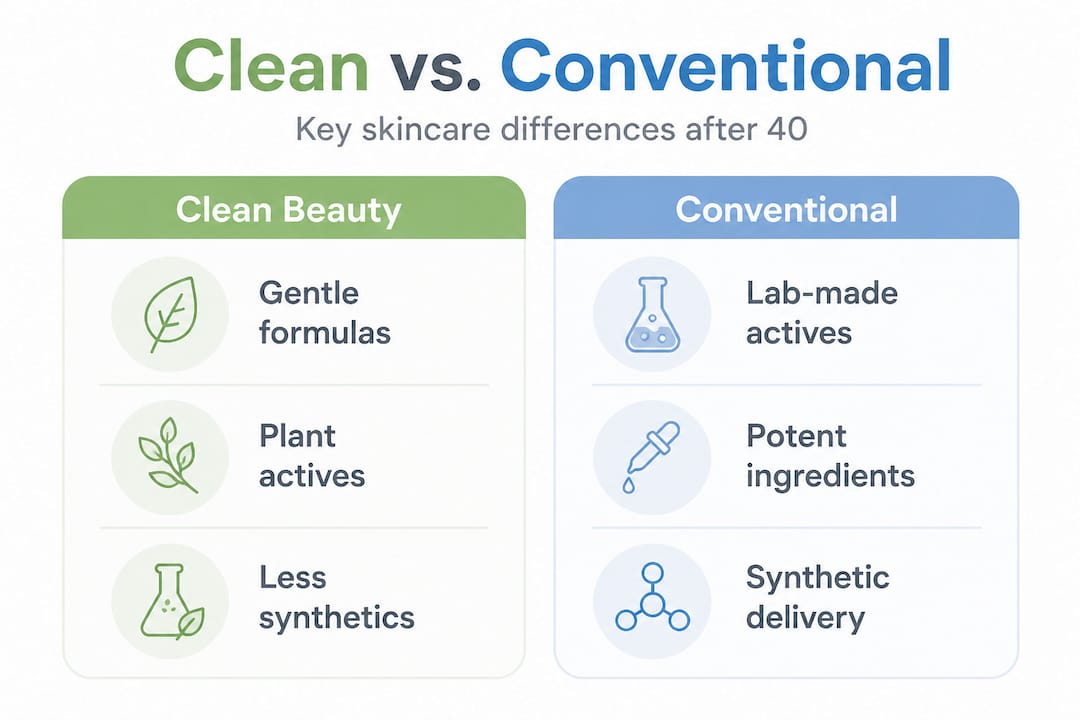
Here’s a breakdown that clarifies the landscape:
| Category | What it means | Is it legally defined? |
|---|---|---|
| Safe/compliant cosmetics | Passes regulatory safety assessment | Yes (UK & EU law) |
| Natural beauty | Majority plant-derived ingredients | No standard definition |
| Organic beauty | Certified organic ingredients used | Partially (via certifiers like COSMOS) |
| Clean beauty | Free from “controversial” ingredients | No legal definition |
| Eco/sustainable beauty | Low environmental impact claims | No single standard |
“Clean, natural, and eco-style claims are still vulnerable to misinterpretation and require evidence and context from brands.”
What this means in practice: a brand calling itself clean must still back that claim with evidence, but that evidence is self-defined. For women pursuing radiant age-defying beauty after 40, this is exactly why you can’t outsource your decisions to a label. You need to know what’s actually inside the bottle.
The common approaches brands use to define “clean” include:
- Maintaining a public ingredient blacklist (often 100 to 2,700 ingredients avoided)
- Prioritizing plant-derived or naturally occurring ingredients
- Excluding synthetic fragrances, parabens, sulfates, or phthalates
- Publishing full ingredient transparency, including sourcing information
- Seeking third-party certifications like ECOCERT or COSMOS Natural
None of these approaches are wrong. But they’re different, and that difference directly affects whether a product delivers the results you’re after.
Clean beauty vs. conventional: What’s the difference for mature skin?
Now that we understand what “clean” does and doesn’t mean, let’s look at how clean and conventional approaches compare when it comes to the specific challenges mature skin faces: fine lines, uneven tone, loss of firmness, and dullness.
Conventional skincare has traditionally prioritized potency. That means using synthetic compounds, lab-created delivery systems, and high concentrations of actives that have decades of clinical backing. Think prescription-strength retinoids, high-dose vitamin C serums, or AHA formulations that resurface skin aggressively but effectively.
Clean beauty often works differently. Effective clean routines pair evidence-based actives with gentler formulation choices, though some truly “clean” lines may omit high-potency actives altogether. That’s the trade-off worth understanding.
Here’s a direct comparison across the factors that matter most for skin over 40:
| Factor | Clean beauty approach | Conventional approach |
|---|---|---|
| Retinoids | Plant-based alternatives (bakuchiol) or low-dose | Prescription retinoids or high-potency retinol |
| Vitamin C | L-ascorbic acid or stabilized derivatives | Often high-concentration, lower pH formulas |
| Fragrance | Avoids synthetic; may use essential oils | May include synthetic fragrance blends |
| Preservatives | Prefers natural preservatives (e.g., radish root ferment) | May use parabens or other synthetic options |
| Formulation | Often simpler, shorter ingredient lists | May use complex delivery systems |
| Efficacy data | Varies widely by brand | Often more standardized clinical testing |
A numbered comparison for how to approach this:
- Identify your primary skin concern: fine lines, dullness, dark spots, or loss of firmness.
- Research which actives address that concern, regardless of whether the product is labeled “clean.”
- Assess whether the brand provides evidence for the “clean” claims they make.
- Check for both best anti-aging actives and formulation choices that suit your skin sensitivity.
- Test before committing, especially if your skin has become more reactive since your 40s.
Pro Tip: Bakuchiol (a plant-derived retinol alternative) is increasingly backed by clinical studies showing real improvement in fine lines and skin elasticity, making it a legitimate option for those who find traditional retinoids too irritating. Look for it as a featured active, not just a trace ingredient.
For women who want proven natural brightening, the good news is that many clean formulations now include robust actives that genuinely perform. The challenge is sorting the effective ones from those that trade on the label alone.
Choosing ingredients for anti-aging and brightening after 40
Here’s where things get genuinely useful. Whether you go fully clean, partly clean, or simply ingredient-focused, certain compounds have enough research behind them to earn a place in your routine. And the evidence matters far more than the label.
The core actives to look for:
- Vitamin C (L-ascorbic acid or derivatives like ascorbyl glucoside): Brightens uneven skin tone, boosts collagen, and neutralizes free radicals. It’s one of the most well-studied actives for natural skin brightening and anti-aging combined.
- Niacinamide (vitamin B3): Reduces the appearance of pores, improves skin barrier function, fades dark spots, and calms redness. Exceptionally well-tolerated and compatible with most other actives.
- Retinoids (retinol, retinal, or plant-based alternatives): Speed up cell turnover, reduce the appearance of fine lines, and improve skin texture. One of the most evidence-backed anti-aging ingredients available.
- Peptides: Signal proteins that support collagen and elastin production. Often found in cleaner formulations because they’re lab-created but not considered controversial.
- Hyaluronic acid: Draws moisture into the skin and plumps fine lines. Works as a hydration base that supports all other actives.
- Alpha-arbutin or kojic acid: Natural-origin brightening agents that inhibit melanin production, particularly useful for age spots and uneven tone.
Evidence-backed clean routines still rely on these same actives, vitamin C, niacinamide, and retinoids, paired with gentler formulation choices.
After 40, the skin’s natural cell turnover slows significantly. Estrogen decline also means reduced collagen production, thinner skin, and more visible dryness. That’s why the combination of brightening and plumping actives works so well together. You’re addressing multiple layers of change at once.

A critical point worth emphasizing: Some clean beauty lines skip retinoids entirely, either because sourcing is difficult or because they’re prioritizing a certain ingredient philosophy. If your product doesn’t contain a meaningful retinoid or its plant-based equivalent, you’re missing one of the most powerful anti-aging tools available. Always check the ingredient list, not just the marketing.
Pro Tip: When evaluating a new product, find the active ingredient you’re after and note where it appears in the ingredient list. Ingredients are listed in descending order of concentration. If vitamin C or niacinamide appears near the bottom after a long list of emollients, you’re likely getting a trace amount, not a therapeutic dose. For steps for glowing skin that actually deliver results, concentration matters as much as inclusion.
Making clean beauty work for you: Practical tips and routines
Understanding ingredients is only part of the picture. The way you layer and apply them, along with the consistency of your routine, determines whether you’ll see a real difference in your skin.
A practical, evidence-backed routine for women 40+ focused on anti-aging and brightening:
- Morning cleanse: Use a gentle, sulfate-free cleanser. Avoid anything that strips your skin’s natural oils, as mature skin produces less sebum and needs every bit of its barrier intact.
- Vitamin C serum: Apply to clean, dry skin. Give it 60 to 90 seconds to absorb before moving on. This is your primary brightening step and your defense against daily UV-related oxidative stress.
- Niacinamide moisturizer: Layer a moisturizer containing niacinamide to address tone, barrier support, and hydration simultaneously. This works beautifully on skin that’s sensitive or prone to redness.
- SPF 30 or higher: Non-negotiable. UV exposure is the single biggest driver of visible skin aging, including the dark spots and uneven tone that many women notice increasing after 40.
- Evening cleanse: Double cleanse if you wear SPF and makeup. A micellar water or cleansing oil followed by a gentle foaming cleanser is effective and non-stripping.
- Retinoid or bakuchiol treatment: Apply every second or third night to begin with, and build frequency as your skin adjusts. This is your long-game anti-aging step.
- Overnight moisturizer or facial oil: Lock in active ingredients and support overnight repair. Look for ceramides, squalane, or rosehip oil for clean formulations that genuinely nourish.
Consumers targeting anti-aging and brightening get far better results when they focus on specific actives and their skin’s tolerability rather than relying only on “clean” labeling.
Common pitfalls women 40+ encounter with clean beauty routines:
- Assuming “natural” means non-irritating. Essential oils, for example, are natural and can be highly reactive on sensitive skin.
- Skipping patch testing. New actives, even in gentle formulations, should always be tested on a small area first.
- Layering too many new products at once. Introduce one new product every two to three weeks so you can identify any reactions accurately.
- Overlooking the neck and décolletage. These areas show aging as prominently as your face and deserve the same care.
A radiant youthful skin regimen built on these principles consistently outperforms one built purely on label appeal. The organic skincare benefits for mature skin are real, but only when paired with actives that have evidence behind them.
Pro Tip: If you’re introducing retinol for the first time after 40, sandwich it between two layers of moisturizer (moisturize, apply retinol, then apply a light layer of moisturizer on top). This buffering technique reduces irritation significantly while still allowing the retinol to work over time.
Our take: Why ‘clean beauty’ only matters when it delivers results
We’ve watched the clean beauty conversation evolve over many years, and here’s the honest truth: the label is not the point. The results are the point.
Women over 40 are often sold an idea, that switching to “clean” skincare will automatically improve their skin. But a beautifully packaged clean serum with a short, plant-derived ingredient list does nothing for fine lines if it doesn’t contain an active that actually addresses cell turnover or collagen production.
The real question to ask isn’t “Is this clean?” It’s “Does this work for my skin, and do I understand why?”
At Miracle Gel, we believe deeply in formulating with natural and organic ingredients. But we equally believe in evidence. Founder Shelly Maguire built this brand on the principle that your skin deserves both: formulations that are free from harsh, unnecessary chemicals and that are genuinely effective at delivering visible results. Those goals aren’t in conflict. They’re complementary, when the right actives are chosen with care.
What concerns us about the broader clean beauty movement is the way marketing can substitute for performance. Consumers focusing on actives and tolerability rather than labels alone see meaningfully better outcomes. That’s not a marketing line. That’s what the evidence consistently shows.
Our recommendation: let “clean” be a starting filter, not the finish line. Use it to eliminate products with ingredients you genuinely want to avoid. Then look deeper at the skin actives results the formulation can realistically deliver. That combination gives you the best of both worlds: cleaner chemistry and actual improvement in the skin you’re in.
Explore clinically proven natural solutions for radiant skin at 40+
Ready to turn knowledge into action? At Miracle Gel, we’ve built our entire range around the idea that natural and effective are not trade-offs. Every formula is designed with mature skin in mind, pairing clean ingredients with proven actives for real, visible brightening and anti-aging results.
Explore our proven skincare results and discover products that have been developed with the specific needs of women over 40 at their core. Whether you’re looking for top anti-aging tips to guide your next routine or ready to try one of our anti-aging serums, you’ll find formulations that work as hard as the marketing says they do. Free shipping on orders over €85 across Ireland makes it even easier to start your clean, effective skincare journey today.
Frequently asked questions
Is clean beauty regulated in the UK or Ireland?
Cosmetic safety is regulated for both safety and accurate labeling, but “clean beauty” as a term has no legal definition. Brands must provide evidence for their claims, but there’s no single standard that defines what qualifies as “clean.”
Do clean beauty products help with anti-aging?
Many clean products include evidence-backed actives like vitamin C or retinoids that genuinely support anti-aging, but some lines may skip potent ingredients in favor of a gentler, shorter formula.
What ingredients should I look for in clean beauty after 40?
Prioritize vitamin C, niacinamide, and retinoids (or plant-based alternatives like bakuchiol) for anti-aging and brightening results; clean routines rely on these actives paired with gentler formulation choices to suit sensitive mature skin.
How do I know if a clean beauty product is effective?
Effectiveness depends on which actives are present, at what concentration, and how your individual skin tolerates them. Focus on actives and tolerability, not just the “clean” label, and always check the full ingredient list before buying.