
TL;DR:
- As we age beyond 40, skin barrier integrity declines due to reduced NMF, lipids, and increased water loss. Effective moisturizers combine humectants, occlusives, and emollients to rebuild and protect this barrier, not just hydrate the surface. Clinical studies confirm that using such targeted formulas leads to measurable improvements in dryness, hydration, and barrier resilience.
If you’ve ever thought moisturizing was just about stopping that tight, uncomfortable feeling after washing your face, you’re far from alone. But the truth runs much deeper. As we age, especially after 40, skin barrier integrity becomes the real driver of how skin looks, feels, and protects itself. This article breaks down exactly what changes in your skin barrier after 40, what moisturizers actually do at a biological level, and how to choose natural options that deliver measurable, real-world results rather than just a pleasant texture.
Table of Contents
- How aging changes your skin barrier
- How moisturizers work: The real barrier science
- Evidence: What the science and studies truly show
- Not all moisturizers are equal: Comparing natural options
- Our take: What most people miss about moisturizing after 40
- Next steps: Find your evidence-based, natural moisturizer
- Frequently asked questions
Key Takeaways
| Point | Details |
|---|---|
| Skin barrier weakens with age | Aging reduces your skin’s natural hydration and barrier strength, making moisturizing more important after 40. |
| Moisturizers work beyond hydration | Effective products repair and reinforce the barrier, reducing water loss and protecting skin from damage. |
| Clinical improvements are measurable | Consistent use of good moisturizer can dramatically cut dryness and boost hydration in studies. |
| Choose proven natural formulas | Not all products labeled ‘natural’ work the same—look for scientific backing and smart formulations. |
| Barrier-focused routine yields best results | Prioritizing both humectants and lipids in your regimen helps mature skin look and feel younger. |
How aging changes your skin barrier
Your skin barrier is your body’s first line of defense. Think of it like a brick wall: the skin cells are the bricks, and a mixture of natural fats and proteins act as the mortar holding everything together. Over time, the mortar weakens.
The science is specific here. Aging reduces NMF and lipid content, increases transepidermal water loss (TEWL), and shifts the skin’s surface pH and microbiome in ways that make skin drier, more fragile, and slower to repair itself. NMF stands for Natural Moisturizing Factor, the collection of water-attracting molecules your skin naturally produces. Think of NMF as your skin’s built-in sponge. When that sponge shrinks, moisture evaporates faster.
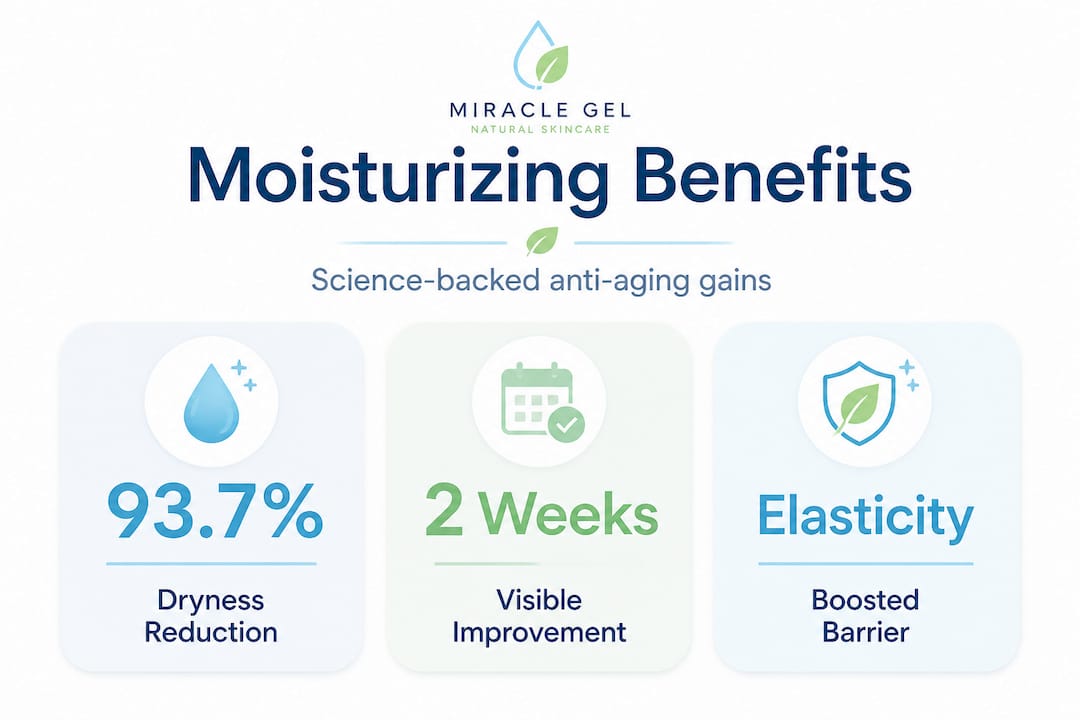
TEWL is the measurement of how much water passively escapes through your skin into the surrounding air. Healthy, intact skin loses very little. Damaged or aged skin can lose significantly more, and that ongoing water loss is what leads to the tight, rough, sometimes flaky texture so many women over 40 recognize.
| Skin change with age | What it means practically |
|---|---|
| Reduced NMF | Skin holds less water naturally |
| Lower lipid production | Protective fats between cells diminish |
| Increased TEWL | More water escapes, faster dehydration |
| Altered surface pH | Skin becomes more vulnerable to irritation |
| Slower cell turnover | Dull, uneven tone and texture |
Hormonal changes accelerate all of this. Menopause brings a significant drop in estrogen, which directly reduces skin thickness, collagen production, and sebum levels. Photoaging and mature skin adds yet another layer, because years of UV exposure degrade collagen and lipid structures beyond what chronological aging does alone.
What most standard skincare messaging misses is this: telling women to “stay hydrated” or “drink more water” skips the real issue entirely. Applying water to the skin and having a barrier that can actually hold that water are two completely different things. Barrier repair is the goal, not just surface hydration.
The real anti-aging goal isn’t adding moisture. It’s building a barrier that holds onto the moisture your skin already produces.
Learning more about the organic skincare benefits that specifically support aging skin helps frame this conversation correctly.
How moisturizers work: The real barrier science
Once you understand the aging barrier, the next step is learning how moisturizers actually rebuild and protect it. Not all moisturizers are doing the same job. The ingredients inside them fall into three main categories, and each one works differently.
Moisturizer ingredients are classified as humectants, occlusives, and emollients. The most effective formulas combine all three, because they work together, not in isolation.
Humectants draw water into the skin from the surrounding environment or the deeper layers beneath. Common examples include hyaluronic acid, glycerin, and aloe vera. Hyaluronic acid can hold up to 1,000 times its weight in water, making it a powerhouse ingredient for immediate plumping and softness.
Occlusives form a physical layer on top of the skin that slows water evaporation. Natural options include shea butter, plant-based waxes, and certain plant oils. They are especially important for women with severely compromised barriers.
Emollients fill in the gaps between skin cells, smoothing texture and supporting barrier structure. Squalane, jojoba oil, and plant ceramides are popular emollient ingredients in natural formulations.
The real magic happens when these three types are formulated together intelligently. A humectant without an occlusive can actually draw water out of the skin on dry days. An occlusive without an emollient may sit heavily and not support actual barrier repair. Knowing what moisturizers do at this level helps you read ingredient labels with real confidence.
| Ingredient type | Example ingredients | Primary function |
|---|---|---|
| Humectant | Hyaluronic acid, glycerin | Attracts and binds water |
| Occlusive | Shea butter, plant waxes | Seals moisture in |
| Emollient | Squalane, jojoba oil | Smooths and fills barrier gaps |
| Lipid/ceramide | Plant ceramides, fatty acids | Reinforces barrier structure |
Pro Tip: Look for moisturizers that list both a humectant (like glycerin or hyaluronic acid) and a lipid-rich emollient (like squalane or shea butter) within the first five ingredients. That combination signals a formula designed for real barrier repair, not just surface comfort.
For women interested in the full range of plant-based ingredients proven to support mature skin, going deeper into ingredient research pays off enormously.
Evidence: What the science and studies truly show
Understanding the mechanism is key, but what do the real-world studies actually prove about moisturizing and aging skin?
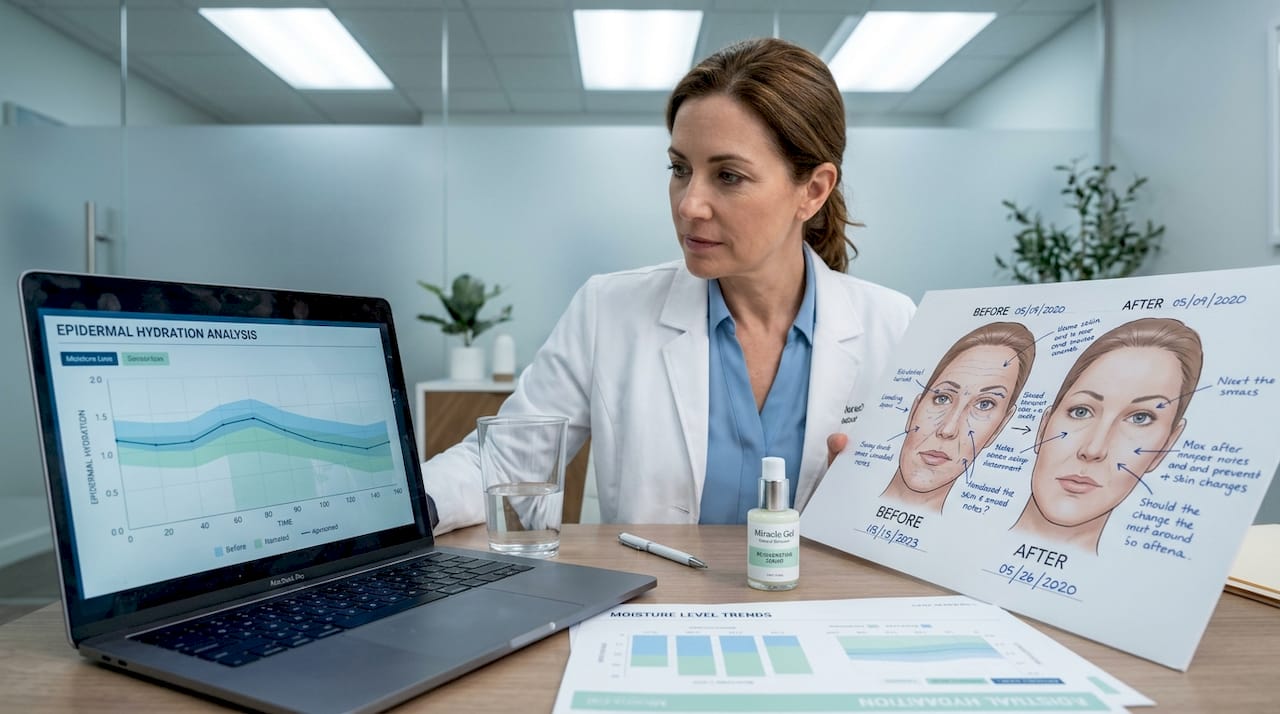
The clinical evidence is strong and getting stronger. In one well-designed study, a 4-week regimen reduced facial dryness by up to 93.7% and increased measured skin hydration by 72.5% in women aged 36 to 65. Those are not minor improvements. Nearly eliminating visible dryness in under a month from a consistent moisturizing routine is a meaningful, measurable outcome.
Beyond dryness and hydration scores, consistent moisturizing also supports elasticity and barrier resilience over time. Skin that is properly moisturized is physically more resistant to micro-tears, irritation from environmental aggressors, and the kind of barrier breakdown that accelerates the appearance of fine lines.
| Outcome measured | Improvement seen | Study timeframe |
|---|---|---|
| Facial dryness | Up to 93.7% reduction | 4 weeks |
| Skin hydration | Up to 72.5% increase | 4 weeks |
| TEWL | Measurably reduced | Consistent use |
| Skin barrier resilience | Improved with lipid-rich formulas | 4 to 8 weeks |
The ceramide research adds important nuance. While ceramide moisturizers may improve dermatitis, the evidence varies depending on which outcome is measured and how. SCORAD scores (a clinical rating of skin irritation and dryness severity) and TEWL measurements don’t always move in parallel. This matters because it means choosing a moisturizer based solely on one claimed benefit can be misleading.
When choosing natural moisturizers, look for products that reference both TEWL and hydration outcomes rather than just texture or feel claims.
Pro Tip: A moisturizer that only claims to “feel hydrating” is not the same as one tested for reduced TEWL. Ask for clinical data or look for products that specifically reference instrument measurement nuance to ensure the benefits are real and lasting.
The bottom line from the evidence: consistent use of a well-formulated moisturizer measurably improves the key markers of skin health for women over 40. This isn’t marketing language. It’s what controlled studies show.
Not all moisturizers are equal: Comparing natural options
Even within natural and recommended options, performance differs. The word “natural” on a label tells you almost nothing about how well a product will actually perform for your barrier.
Research confirms that meaningful variability exists between moisturizer products in TEWL and hydration performance, even among frequently recommended options. Two products with similar ingredient lists and price points can produce noticeably different results in clinical measurements.
Why does this happen? Formulation science matters as much as ingredient selection. The concentration of active ingredients, the order they appear in a formula, the delivery base, and the pH of the final product all influence how well those ingredients penetrate and function. A moisturizer containing ceramides at too low a concentration, or in a base that doesn’t support penetration, may not deliver meaningful barrier repair.
Natural skincare aligns with barrier biology when the formulation is sound, but simply choosing a product because it says “organic” or “natural” on the front isn’t enough. What you actually need is a formulation that:
- Contains proven humectants at effective concentrations
- Includes barrier-supportive lipids such as ceramides, fatty acids, or plant oils
- Is free from fragrance, alcohol, and other known barrier disruptors
- Has been tested for real outcomes, not just subjective feel
| Product feature | What it signals | What to watch for |
|---|---|---|
| Ceramides listed high in formula | Effective barrier support | Low-listed ceramides may underdeliver |
| Fragrance-free formulation | Lower irritation risk | “Natural fragrance” can still irritate |
| Clinical outcome data cited | Evidence-based claims | “Feel good” claims only: weak signal |
| Lightweight gel texture | Good for oily or combo skin | May lack occlusives for dry skin |
For a well-researched recommended product guide specifically designed for dry and mature skin, filtering by formulation quality rather than marketing claims leads to much better outcomes.
Understanding related self-care routines also helps put skincare in the broader context of daily skin health practices.
Our take: What most people miss about moisturizing after 40
Here’s the part we don’t see talked about nearly enough, and it matters more than any single product choice.
The entire conversation around moisturizing for women over 40 is dominated by sensory language: creamy, luxurious, deeply hydrating, silky. Those words describe how a product feels in the first 30 seconds. They say nothing about what it does to your barrier over 30 days.
After years of working with mature and sensitive skin, we’ve seen a consistent pattern. Women who focus exclusively on finding a moisturizer that “feels good” often cycle through product after product without seeing the structural skin improvements they’re looking for. That’s because comfort and efficacy are not the same thing. A product can feel incredibly rich and still do almost nothing to reduce TEWL or reinforce your lipid barrier.
Barrier-repair logic is what clinicians emphasize when they talk about moisturizing, and it’s what we build every formula around. The feeling of a product matters because you need to actually use it consistently. But the ingredients doing the real work are the ones you can’t feel: the ceramides reinforcing your skin cell junctions, the fatty acids filling the gaps in your lipid layer, the humectants drawing moisture in and holding it there.
There’s also a nuance about simplicity. Skincare marketing constantly pushes complexity: more steps, more actives, more layers. But for women over 40 dealing with a compromised barrier, a simpler, smarter formula with proven ingredients often outperforms a complicated 10-ingredient serum packed with trendy actives. More ingredients can mean more potential irritants. And an irritated barrier is a compromised barrier.
Our honest recommendation? Look for more on natural solutions that are formulated around barrier science, tested for measurable outcomes, and free from the unnecessary extras that marketing adds but your skin doesn’t need.
Next steps: Find your evidence-based, natural moisturizer
The science is clear. A well-formulated, natural moisturizer does far more than soften skin. It rebuilds the barrier, reduces water loss, and creates measurable improvements in the signs of aging. Now it’s time to act on that knowledge.
At Miracle Gel Natural Skincare, our products are specifically designed for women over 40 whose skin needs more than surface hydration. Our formulations combine clinically validated ingredients, including advanced moisture complexes, to support real barrier repair. You can see proven results from women with skin just like yours, and find the best anti-aging tips to build a routine that actually works. Ready to find your match? View all moisturizers and experience the difference that evidence-backed natural skincare makes.
Frequently asked questions
What is TEWL and why does it matter for aging skin?
TEWL, or transepidermal water loss, measures how much water escapes from your skin through the outer layer; high TEWL signals a weakened barrier that is actively losing hydration, which accelerates dryness, fragility, and visible signs of aging.
How quickly can I see benefits from using a moisturizer?
Consistent moisturizing produces real, measurable results faster than many people expect; clinical data shows that dryness reduced by 93.7% and hydration increased by 72.5% within just four weeks of regular use.
Are all-natural moisturizers better for mature skin?
Not automatically; performance depends on formulation and clinically tested outcomes, so a natural label alone is not a reliable indicator of how well a product will actually support your barrier.
Should I switch moisturizers as I age?
Yes, and it’s one of the most impactful changes you can make; mature skin needs barrier-focused products with effective concentrations of humectants and lipids to address the specific structural changes that occur after 40.