

TL;DR:
- Non-comedogenic products aim to reduce pore clogging but lack regulation and consistent testing standards, making their reliability variable. Ingredient formulation, texture, and individual patch tests are more important for preventing breakouts than the label alone. Using lightweight, water-based formulas and patch testing helps identify suitable skincare for acne-prone and sensitive skin types.
Non-comedogenic products are formulated to avoid clogging pores, making them the go-to choice for anyone managing acne, blackheads, or sensitive skin. Brands like Cetaphil, Neutrogena, and La Roche-Posay built entire product lines around this promise. But the label means less than most people think. The FDA does not regulate the term, testing standards vary wildly between companies, and even the best-formulated product can still trigger a breakout on certain skin types. This guide breaks down what the label actually tells you, which ingredients to look for, and how to choose products that genuinely work for your skin.
What are non-comedogenic products, really?
Non-comedogenic is a term that means a product is less likely to clog pores or cause comedones, which are the blocked follicles behind blackheads and whiteheads. The key word is “less likely.” No product carries a guarantee.

The FDA does not regulate the “non-comedogenic” label in the United States. Any brand can print it on a bottle without completing a single clinical test. That means the label’s reliability depends entirely on the brand’s internal standards, which vary enormously.
Testing methods add another layer of complexity. The rabbit ear assay, once the standard test for comedogenicity, has been largely discredited because rabbit skin reacts differently than human facial skin. Outdated assays and absent standardized testing create real gaps in how products get classified, which is why two products both labeled “non-comedogenic” can produce very different results on your skin.
“Dermatologists recommend product-level formulation testing and individualized product trial rather than relying solely on front-of-pack ‘non-comedogenic’ claims.” — acne.org
The formulation as a whole matters more than any single ingredient. The American Academy of Dermatology noted as far back as 1989 that products containing three or more non-comedogenic ingredients should still be tested, because ingredient combinations can clog pores even when each ingredient looks safe in isolation.
Pro Tip: When evaluating a new product, search the brand’s website for their specific testing methodology. Brands that conduct human patch testing on final formulas are significantly more trustworthy than those relying only on ingredient databases.
How to read an ingredient list for acne-prone skin
The comedogenic scale rates ingredients from 0 (will not clog pores) to 5 (highly likely to clog pores). It originated from research in the 1970s and 1980s, primarily using animal testing. The scale is a useful starting point, but it was never designed to predict how a finished product behaves on your specific skin.
Ingredients that tend to be pore-friendly
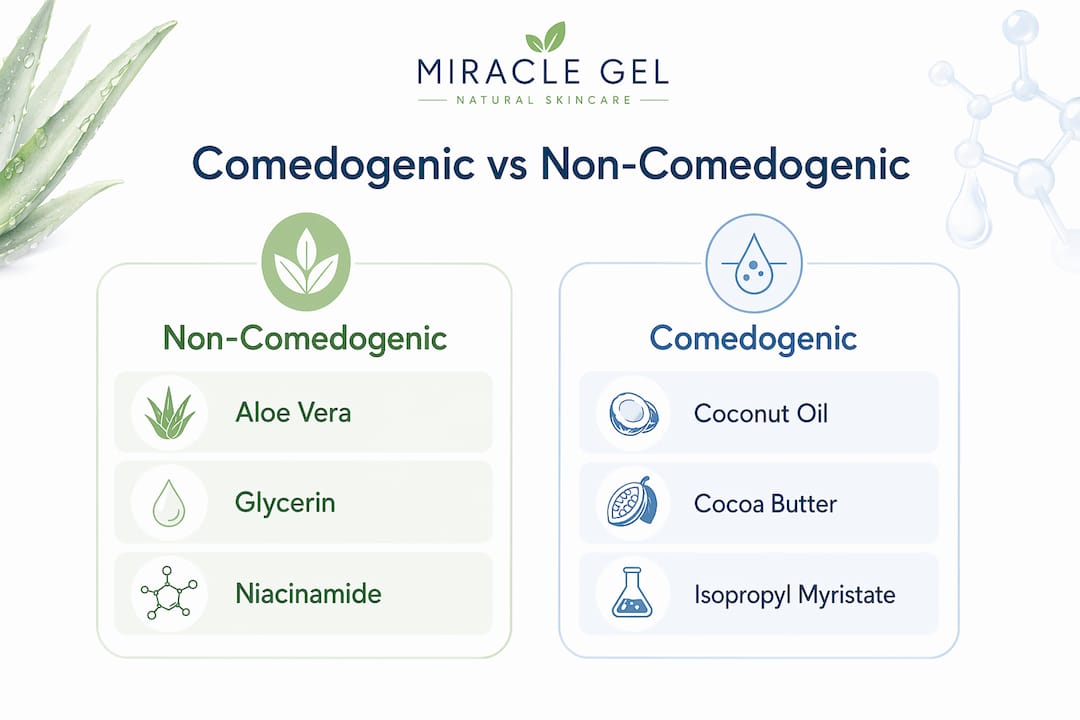
Common non-comedogenic ingredients include aloe vera, glycerin, niacinamide, dimethicone, witch hazel, jojoba oil, and grapeseed oil. These hydrate and soothe without commonly blocking follicles. Niacinamide, in particular, does double duty: it calms inflammation and helps regulate sebum production, making it a strong choice for oily and acne-prone skin.
Ingredients worth avoiding
Known comedogenic ingredients include coconut oil, cocoa butter, isopropyl myristate, and heavy silicones at high concentrations. Coconut oil scores a 4 on the comedogenic scale, yet it appears in countless “natural” skincare products marketed for sensitive skin. Cocoa butter is similarly problematic, despite its reputation as a gentle moisturizer.
Here is a quick reference for common ingredients and their general comedogenic status:
| Ingredient | Comedogenic Rating | Common Use |
|---|---|---|
| Aloe vera | 0 | Soothing, hydration |
| Glycerin | 0 | Moisturizer, humectant |
| Niacinamide | 0 | Sebum control, brightening |
| Jojoba oil | 2 | Moisturizer, carrier oil |
| Grapeseed oil | 1 | Lightweight moisturizer |
| Coconut oil | 4 | Moisturizer (avoid for acne) |
| Cocoa butter | 4 | Body moisturizer |
| Isopropyl myristate | 5 | Emollient, texture agent |
Concentration matters as much as the ingredient itself. A product with coconut oil listed near the bottom of a long ingredient list contains far less than one where it appears in the top five. Ingredient interactions, formulation texture, and concentration all influence whether a product actually clogs pores, more so than any single ingredient’s rating.
Pro Tip: Use the free CosDNA or INCIDecoder tools to paste in a full ingredient list and get a comedogenic risk breakdown in seconds. Neither replaces patch testing, but both save you from obvious red flags before you buy.
Who benefits most from non-comedogenic skincare?
Non-comedogenic products are typically recommended for oily, acne-prone, and sensitive skin types. They reduce the risk of new breakouts by keeping follicles clear, and they tend to use lighter textures that do not sit heavily on the skin.
That said, the benefits extend beyond acne-prone skin. People with mature skin often find that heavy creams trigger milia, those small white bumps that form when keratin gets trapped under the skin. Switching to lighter, pore-friendly formulations can reduce milia while still delivering the hydration mature skin needs. Sensitive skin types also benefit because non-comedogenic formulas typically avoid the heavy fragrances and occlusive oils that trigger reactions.
Signs a product may not suit your skin, even with a non-comedogenic label, include:
- New breakouts appearing within two to four weeks of starting the product
- Skin feeling congested or rough to the touch after consistent use
- Increased blackheads or whiteheads in areas where you apply the product
- Persistent redness or irritation that does not resolve after the first week
Product texture is a reliable signal. Lightweight, water-based formulas are generally less comedogenic than heavy creams or balms, regardless of what the label says. A gel moisturizer from a brand like Cetaphil or a water-based serum from La Roche-Posay will almost always perform better for acne-prone skin than a thick night cream, even if both carry the non-comedogenic label. For guidance on building a gentle cleansing routine that supports pore health, the approach matters as much as the individual products you choose.
How to choose non-comedogenic makeup and skincare
Choosing products wisely requires more than scanning for a label. Follow a structured approach and your skin will tell you what works faster than any marketing claim.
- Introduce one product at a time. Introducing new products one at a time and patch testing helps you identify exactly which product caused a reaction, rather than guessing across a full routine change.
- Patch test for at least 48 hours. Apply a small amount to your inner arm or behind your ear before using it on your face. This catches contact reactions before they spread.
- Check the ingredient list, not just the label. The non-comedogenic label is a useful but imperfect guide. Cross-reference the ingredient list against known comedogenic ingredients before committing to a product.
- Prioritize formulation type. Gels, serums, and water-based lotions carry lower pore-clogging risk than balms, oils, and thick creams. For makeup, mineral-based foundations and powder formulas tend to be safer for acne-prone skin than liquid foundations with heavy emollients.
- Give products a fair trial period. Skin purging, a temporary increase in breakouts as skin cell turnover speeds up, can look like a reaction. Allow four to six weeks before deciding a product is causing problems, unless the reaction is severe.
- Avoid layering multiple high-risk products. Even if each product scores low individually, stacking several products with borderline ingredients increases the cumulative comedogenic load on your skin.
Pro Tip: When choosing non-comedogenic makeup, look for the terms “oil-free” and “water-based” alongside the non-comedogenic claim. Products that meet all three criteria carry the lowest pore-clogging risk for acne-prone skin.
For a deeper look at avoiding harsh chemicals in your daily routine, understanding which ingredients to skip is just as valuable as knowing which ones to seek out.
Key takeaways
Non-comedogenic products reduce pore-clogging risk, but the label alone is not enough. Ingredient knowledge, formulation type, and personal patch testing are the real tools for acne-prone skin.
| Point | Details |
|---|---|
| Label is unregulated | The FDA sets no testing standard, so “non-comedogenic” reliability varies by brand. |
| Formulation beats individual ingredients | Ingredient combinations and texture matter more than any single ingredient’s comedogenic rating. |
| Pore-friendly ingredients exist | Aloe vera, glycerin, niacinamide, and jojoba oil hydrate without commonly clogging pores. |
| Skin type guides selection | Oily, acne-prone, and sensitive skin benefit most, but lightweight formulas suit most skin types. |
| Test before committing | Introduce one product at a time and patch test to catch reactions early and accurately. |
The label is a starting point, not a finish line
I have worked with enough acne-prone skin to know that the “non-comedogenic” label creates a false sense of security for a lot of people. They buy a product, see the label, and assume the work is done. Then they break out and feel confused, or worse, blame their own skin.
The honest reality is that most brands base their non-comedogenic claims on ingredient databases, not on clinical testing of the finished product. That is a meaningful gap. An ingredient database cannot predict how your skin will respond to a specific combination of 20 ingredients at specific concentrations, in a specific emulsion, applied twice a day.
What I have seen work consistently is treating the label as a filter, not a guarantee. Use it to narrow your options, then apply the real tests: check the ingredient list, assess the texture, and patch test before committing. Your skin’s feedback over four to six weeks is more reliable than any claim on the front of a bottle.
The other thing worth saying is that “non-comedogenic” and “natural” are not the same thing. Some natural ingredients, like coconut oil and cocoa butter, are among the most comedogenic substances you can put on acne-prone skin. And some synthetic ingredients, like dimethicone, are genuinely pore-friendly. Knowing the difference puts you in control of your skincare choices in a way that label-reading alone never will.
— Barbara
Natural skincare that works with your skin, not against it
If you have acne-prone or sensitive skin, the right formulation philosophy makes a real difference. Miraclegelnaturalskincare builds its products around gentle, pore-friendly ingredients that avoid the heavy oils and harsh chemicals that trigger breakouts.
The natural skincare range for 40+ at Miraclegelnaturalskincare focuses on lightweight formulations with ingredients like niacinamide and aloe vera, chosen specifically to support skin clarity without compromising hydration. Whether you are managing active breakouts or simply want a routine that keeps your pores clear, the curated selection gives you a practical starting point built on ingredient transparency. Explore the full range and find formulations designed to work with sensitive and acne-prone skin from the ground up.
FAQ
What does non-comedogenic mean on a skincare label?
Non-comedogenic means a product is formulated to be less likely to clog pores and cause blackheads or whiteheads. It is not a regulated term, so testing standards vary between brands.
Are non-comedogenic products guaranteed not to cause breakouts?
No. Non-comedogenic products reduce but do not eliminate the risk of breakouts. Individual skin responses vary, and ingredient combinations can still clog pores even when each ingredient appears safe on its own.
What is the difference between comedogenic and non-comedogenic?
Comedogenic ingredients or products are likely to block pores and trigger acne. Non-comedogenic products are formulated to minimize that risk, typically by avoiding high-rated ingredients like coconut oil and isopropyl myristate in favor of lighter alternatives like glycerin and niacinamide.
Which skin types benefit most from non-comedogenic products?
Oily and acne-prone skin types benefit most, but sensitive and mature skin also respond well to lighter, pore-friendly formulas. Heavy creams can trigger milia in mature skin, making non-comedogenic options a practical choice across multiple skin types.
How do i know if a product is truly non-comedogenic?
Check the ingredient list against known comedogenic ingredients, prioritize water-based or gel textures, and patch test before full use. Brands that conduct human testing on final formulas, rather than relying solely on ingredient databases, offer the most reliable claims.