
TL;DR:
- Effective skin renewal involves daily support for cellular turnover, barrier repair, and UV protection to improve skin texture and appearance. Consistent use of gentle cleansing, moisturizing, broad-spectrum SPF, and targeted actives like vitamin C and retinoids over several months is essential for visible results. Lifestyle factors such as hydration, nutrition, sleep, and stress management amplify the benefits of a routine focused on skin longevity.
Effective skin renewal is defined as the daily practice of supporting cellular turnover, barrier repair, and UV protection to visibly improve skin texture and appearance. The top skin renewal tips for adults 30 and up center on a four-step core routine of gentle cleansing, daily moisturizing, broad-spectrum SPF 30+ sunscreen, and targeted actives like vitamin C serum and retinoids. Together, these steps protect the skin barrier, promote fresh cell growth, and prevent the UV damage that accelerates aging. The industry term for this approach is skin longevity, and it is the framework behind every evidence-based recommendation in this guide.
1. start with the top skin renewal tips: gentle cleansing first
Cleansing is the first step in any skin renewal routine, and doing it wrong undoes everything that follows. The goal is to remove impurities, excess oil, and environmental residue without stripping the skin’s natural lipid barrier.
Mature or sensitive skin loses moisture faster than younger skin. Harsh cleansers, hot water, and long showers accelerate that loss. The result is tightness, flakiness, and a weakened barrier that makes actives like retinoids harder to tolerate.
Choose a fragrance-free, mild cleanser suited to your skin type. Cream or gel cleansers with a balanced pH work well for dry and combination skin. Avoid anything labeled “deep clean” or “foaming” unless your skin is genuinely oily.
- Wash your face twice daily: once in the morning, once at night
- Use lukewarm water, never hot
- Limit shower time to 5–10 minutes to reduce moisture loss
- Pat skin dry with a soft towel rather than rubbing
Pro Tip: If your skin feels tight or squeaky after cleansing, your cleanser is too harsh. Switch to a gentler formula and your barrier will recover within one to two weeks.
Gentle exfoliation two to three times weekly removes dead skin cells and improves texture without damaging the barrier. Use a soft washcloth or a mild chemical exfoliant like lactic acid rather than abrasive scrubs. Over-exfoliating is one of the most common mistakes adults over 30 make. It creates redness, sensitivity, and sets back renewal progress by weeks. For more on safe methods, the gentle cleansing guide from Miraclegelnaturalskincare covers the full approach.
2. moisturize daily to lock in hydration and support the barrier
Daily moisturizing is not optional for adults 30 and up. Skin produces less natural oil with each passing decade, and without consistent hydration support, the barrier weakens, texture suffers, and fine lines deepen faster.
The best moisturizers for skin renewal contain ceramides, hyaluronic acid, and glycerin. Ceramides rebuild the lipid layer between skin cells. Hyaluronic acid draws water into the skin. Glycerin holds it there. These three ingredients together reduce irritation, improve plumpness, and create the stable foundation that actives need to work.
- Look for moisturizers labeled “barrier repair” or “ceramide-rich”
- Avoid formulas with alcohol, synthetic fragrance, or strong preservatives
- For dry or mature skin, choose a cream over a lotion for richer coverage
- For oily or combination skin, a lightweight gel moisturizer with hyaluronic acid works well
Pro Tip: Apply your moisturizer within 60 seconds of cleansing while skin is still slightly damp. This seals in residual moisture and doubles the hydrating effect.
Barrier care with ceramides is the most underrated renewal strategy for mature or reactive skin. Most people focus on actives and skip this step. That is backwards. A healthy barrier makes every other product you use more effective and less irritating.
3. apply broad-spectrum sunscreen every single day
Daily broad-spectrum sunscreen at SPF 30 or higher is the single most effective anti-aging step you can take. UV radiation breaks down collagen, creates dark spots, and directly blocks the skin’s ability to renew itself. No serum or moisturizer compensates for skipping this step.
Sunscreen must be reapplied every two hours when you are outdoors, and after sweating or swimming. That rule applies even on overcast days, since UVA rays penetrate clouds and glass. If you work near a window, you are getting UV exposure indoors.
Different formulations suit different skin types:
- Mineral sunscreens (zinc oxide, titanium dioxide): best for sensitive or reactive skin, sit on top of the skin, and are less likely to cause breakouts
- Chemical sunscreens (avobenzone, octinoxate): absorb into skin, feel lighter, and work well under makeup
- Hybrid formulas: combine mineral and chemical filters for broad coverage with a lighter feel
- Water-resistant formulas: required for outdoor activity, exercise, or swimming
Apply sunscreen as the last step in your morning routine, after moisturizer and any serums. Use about a quarter teaspoon for your face and neck. Most people apply too little, which cuts the actual SPF protection significantly.
4. use vitamin c, retinoids, and gentle alternatives for cell renewal
Targeted actives are what separate a basic maintenance routine from a true skin revitalization routine. Three ingredients lead the evidence base: vitamin C, retinoids, and bakuchiol.
| Active | Best For | When to Use | Key Benefit |
|---|---|---|---|
| Vitamin C serum | All skin types | Morning, under SPF | Antioxidant protection, brightening |
| Retinoids | Normal to oily skin | Night, on dry skin | Cellular turnover, collagen support |
| Bakuchiol | Sensitive or dry skin | Morning or night | Retinoid-like renewal, gentler profile |
| Niacinamide | All skin types | Morning or night | Pore refinement, barrier support |
Vitamin C, retinoids, and bakuchiol are the core renewal actives recommended by wellness and medical sources. Vitamin C applied in the morning under sunscreen neutralizes free radicals and brightens uneven tone. Retinoids used at night accelerate cell turnover and stimulate collagen production.
Retinoids should be applied at night on dry skin, followed by moisturizer, to reduce irritation. The adjustment period runs 8–12 weeks. Start with two nights per week and build from there. Jumping straight to nightly use causes peeling and redness that discourages most people from continuing.
Bakuchiol and niacinamide are the right choice if your skin is sensitive or reactive. Bakuchiol delivers retinoid-like renewal without the irritation risk. Niacinamide refines pores and strengthens the barrier. Both work well layered under moisturizer. Miraclegelnaturalskincare has a dedicated resource on gentle retinol alternatives for anyone who wants to explore this category further.
5. build a consistent morning and night skin renewal routine
Skin longevity is best achieved through consistent basics: cleansing, moisturizing, and sunscreen, with simple targeted actives layered in. A routine you follow every day beats an elaborate one you abandon after two weeks.
Your morning routine should run in this order: gentle cleanser, vitamin C serum, moisturizer, SPF 30+ sunscreen. That sequence takes under five minutes and covers antioxidant protection, hydration, and UV defense in one pass.
Your nighttime routine is where repair happens. Nighttime routines focused on barrier repair counteract oxidative and environmental aging factors accumulated during the day. Use your retinoid or bakuchiol after cleansing, wait for it to absorb, then apply a ceramide-rich moisturizer on top. This sequence minimizes irritation and maximizes renewal.
Consistency over three months is the threshold where most people see meaningful texture improvement. Before that, you are building the habit and the barrier. After that, the actives start delivering visible results.
6. support skin renewal with lifestyle habits that actually work
Topical products do the heavy lifting, but hydration, nutrition, sleep, and stress management all contribute to how well your skin renews itself. These are not optional extras. They are the biological conditions that make renewal possible.
- Hydration: Drink enough water daily to keep skin cells plump and functioning. Dehydrated skin looks dull and creases more easily, regardless of what you apply topically.
- Nutrition: A diet rich in protein and antioxidants supports cellular repair. Vitamin C from food (citrus, bell peppers) and omega-3 fatty acids (salmon, walnuts) directly benefit skin structure.
- Sleep: Skin repairs itself during deep sleep. Consistently getting fewer than seven hours disrupts that process and shows up as dullness, puffiness, and slower recovery from irritation.
- Stress management: Chronic stress raises cortisol, which breaks down collagen and triggers inflammation. Practices like walking, breathwork, or even consistent sleep schedules reduce that load on your skin.
These habits do not replace a good topical routine. They amplify it. Adults who combine consistent product use with these lifestyle factors see faster and more lasting results than those who rely on products alone.
7. tailor your routine to your skin type and age
A curated routine for ages 30–50 looks different from a generic one-size-fits-all approach. Skin in your 30s still has relatively good elasticity but benefits from prevention. Skin in your 40s and 50s needs more active barrier support and hydration.
Dry skin types should prioritize ceramide-rich creams, avoid foaming cleansers, and use bakuchiol over retinoids if sensitivity is a concern. Oily skin types can tolerate stronger retinoids and benefit from niacinamide to control shine while supporting renewal. Combination skin does well with a lightweight moisturizer and a gradual retinoid introduction.
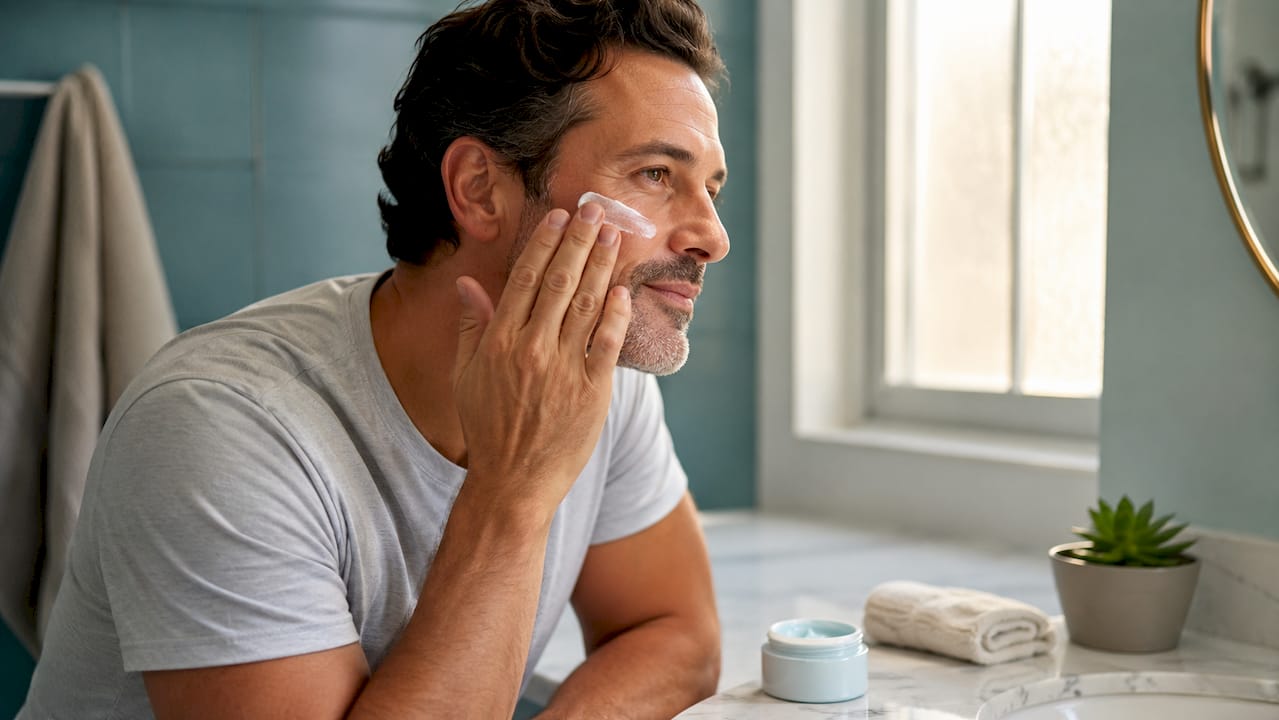
Men over 30 benefit from the same core principles. Shaving creates micro-abrasions that make barrier care especially important. A simple routine of gentle cleanser, moisturizer, and daily SPF covers the fundamentals effectively. Resources like the everyday skincare routine for men offer practical guidance tailored to that approach.
Key takeaways
The most effective skin renewal routine for adults 30 and up combines gentle cleansing, barrier-supporting moisturizers, daily SPF 30+ sunscreen, and targeted actives like vitamin C and retinoids applied consistently over months.
| Point | Details |
|---|---|
| Cleanse gently, always | Use fragrance-free, mild cleansers with lukewarm water to protect the skin barrier. |
| Moisturize with ceramides | Apply ceramide and hyaluronic acid formulas on damp skin to lock in hydration and reduce irritation. |
| Wear SPF 30+ daily | Reapply every two hours outdoors to prevent UV damage that blocks skin renewal. |
| Add actives strategically | Use vitamin C in the morning and retinoids or bakuchiol at night, introduced gradually to avoid irritation. |
| Lifestyle amplifies results | Consistent sleep, hydration, and a protein-rich diet accelerate the renewal your topical routine starts. |
What i’ve learned about skin renewal after years of watching routines succeed and fail
Most people who struggle with skin renewal are not using the wrong products. They are skipping the boring steps. Cleansing, moisturizing, and sunscreen feel unglamorous compared to a new serum or a trending active. But in my experience, the people who get the best results are the ones who treat those basics as non-negotiable and treat actives as a bonus layer on top.
The other pattern I keep seeing is impatience with retinoids. Adults start using them, hit the adjustment period at week three or four, and quit. That adjustment period is not a sign the product is wrong. It is the skin adapting. Pushing through it with a good moisturizer and a slower introduction schedule almost always leads to the results people were hoping for.
Barrier care is the piece most routines undervalue. Ceramide-rich moisturizers are not exciting, but they are the reason actives work without causing chronic irritation. If your skin is reactive or tight after cleansing, fix the barrier first. Add the actives second. That order matters more than which specific serum you choose.
The simplest advice I can give: pick a routine you will actually do every day, protect your skin from the sun without exception, and give your actives three months before judging the results. Skin renewal is not fast. It is consistent.
— Barbara
Natural skincare for adults 40 and up: where to start
If you are ready to put these skin revitalization tips into practice with products built for mature skin, Miraclegelnaturalskincare has a curated range designed around exactly these principles. Every formula prioritizes natural ingredients, barrier support, and gentle efficacy without harsh chemicals.

The natural skincare range for 40+ includes cleansers, moisturizers, and targeted treatments formulated with ceramides, hyaluronic acid, and plant-based actives. The 2-Minute Miracle Gel delivers visible renewal results in minutes through the Tri-Moisture Cryo Complex™, making it a practical fit for anyone building a consistent daily routine. Explore the full anti-aging skincare tips for women 40+ to find the right starting point for your skin type and goals.
FAQ
What are the top skin renewal tips for adults over 30?
The top skin renewal tips are gentle daily cleansing, moisturizing with ceramides and hyaluronic acid, applying SPF 30+ sunscreen every morning, and using vitamin C or retinoids as targeted actives. Consistency over months is what produces visible texture improvement.
How often should you exfoliate for skin renewal?
Exfoliating two to three times weekly with a gentle method removes dead skin cells and improves texture without damaging the barrier. Over-exfoliating causes irritation and sets back renewal progress.
Is retinol safe for sensitive skin?
Retinoids can be used on sensitive skin when introduced slowly, starting at two nights per week on dry skin followed by moisturizer. Bakuchiol is a gentler plant-based alternative that delivers similar renewal benefits with less irritation risk.
What lifestyle habits support natural skin renewal?
Drinking sufficient water, eating a protein and antioxidant-rich diet, getting at least seven hours of sleep, and managing chronic stress all support the skin’s natural repair processes. These habits amplify the results of a consistent topical routine.
When will you see results from a skin renewal routine?
Most people notice improved hydration and texture within four to six weeks of consistent cleansing, moisturizing, and sunscreen use. Actives like retinoids typically show visible renewal results after an 8–12 week adjustment period.