

TL;DR:
- Vitamin C is the most studied topical antioxidant in skincare, supporting collagen, neutralizing free radicals, and inhibiting melanin. It improves skin’s elasticity, brightness, and protects against photoaging when formulated properly at 10-15%. Using stable, high-quality topical products delivers faster, more targeted results than oral supplements.
Vitamin C is defined as the most studied topical antioxidant in dermatology, and its role in skin covers three distinct biological pathways: neutralizing free radicals, supporting collagen synthesis, and inhibiting melanin overproduction. No other single ingredient addresses all three simultaneously. Dermatologists consistently recommend it as a cornerstone of any anti-aging or brightening protocol. If you are over 30 and not yet using a stable Vitamin C formulation, your skin is likely missing one of its most reliable defenders against photoaging and uneven tone.
What is the role of vitamin C in skin biology?
Vitamin C, known in its active form as L-ascorbic acid, addresses three biological pathways simultaneously, which is what separates it from most other antioxidants. First, it neutralizes free radicals generated by UV exposure and pollution before they can break down collagen fibers. Second, it acts as a cofactor in the enzymatic reactions that produce and stabilize collagen, the structural protein responsible for skin firmness. Third, it blocks tyrosinase, the enzyme that triggers melanin production, which is why consistent use gradually fades dark spots without bleaching surrounding healthy tissue.

The role of antioxidants in skin is to intercept oxidative damage before it accumulates. Vitamin C does this more effectively than most. Vitamin C remains the gold standard antioxidant against UV-induced skin damage, outperforming many other antioxidant ingredients currently on the market. That distinction matters because UV exposure is the single largest driver of visible aging after 30.
How does vitamin C benefit skin biologically and cosmetically?
The cosmetic benefits of Vitamin C for skin are directly tied to its biology. When free radical activity is kept in check, collagen fibers remain intact longer, which translates to fewer fine lines and better skin elasticity. Clinical trials confirm that consistent topical L-ascorbic acid use fades hyperpigmentation and brightens dull skin over 8–12 weeks with stable formulations. That timeline is realistic, not a marketing promise.
Here is what the science supports for topical Vitamin C:
- Antioxidant defense: Neutralizes UV-induced oxidative stress before it degrades collagen and elastin.
- Collagen support: Acts as a required cofactor in collagen synthesis, meaning your skin literally cannot build new collagen without it.
- Brightening: Tyrosinase inhibition gradually fades abnormal hyperpigmentation without affecting your natural skin tone.
- Anti-aging: Clinical reviews document measurable improvements in fine lines, skin texture, and radiance over time.
- Photoprotection support: Works alongside sunscreen to reduce UV-induced cellular damage, though it does not replace SPF.
Compared to niacinamide, another popular brightening ingredient, Vitamin C acts faster on existing dark spots but requires more careful formulation to remain stable. Niacinamide is gentler and better tolerated by sensitive skin, but it does not match Vitamin C’s antioxidant potency or collagen support.
Pro Tip: If you have sensitive skin, start with a lower concentration formula (around 10%) and apply it every other day for the first two weeks before moving to daily use.
Topical vitamin C vs. oral supplements: which works better for skin?
Oral Vitamin C is necessary for overall health, but it is not the most direct path to visible skin improvements. Topical application delivers higher concentrations to skin layers than oral intake, producing better results for hydration, elasticity, and visible anti-aging effects. When you take a supplement, Vitamin C is distributed throughout the entire body. Only a fraction reaches the skin, and even less reaches the outer layers where photoaging and pigmentation occur.
Topical Vitamin C, by contrast, deposits the active ingredient exactly where it is needed. The key differences:
- Targeted delivery: Serums and creams place L-ascorbic acid directly in the epidermis and upper dermis.
- Concentration control: You can select a product with a clinically effective concentration, something oral dosing cannot replicate at the skin surface.
- Speed of results: Topical users typically see brightening changes within 8–12 weeks. Oral supplementation alone does not produce the same timeline.
- Combined approach: Oral Vitamin C still supports wound healing and immune function. Using both is not harmful, but topical application drives the visible skin results.
The dermatological consensus is clear: for cosmetic goals like fading dark spots, improving skin tone, and reducing fine lines, topical formulations are the more effective choice. Oral supplements are a complement, not a substitute.
What formulation factors determine vitamin C serum effectiveness?
This is where most consumers lose money. A Vitamin C product that has oxidized is not just ineffective. It can actually deposit a yellow or orange tint on the skin. L-ascorbic acid requires formulation at a pH below 3.5 and concentrations between 10–15% for optimal skin absorption. Outside those parameters, the molecule either fails to penetrate or degrades before it can work.
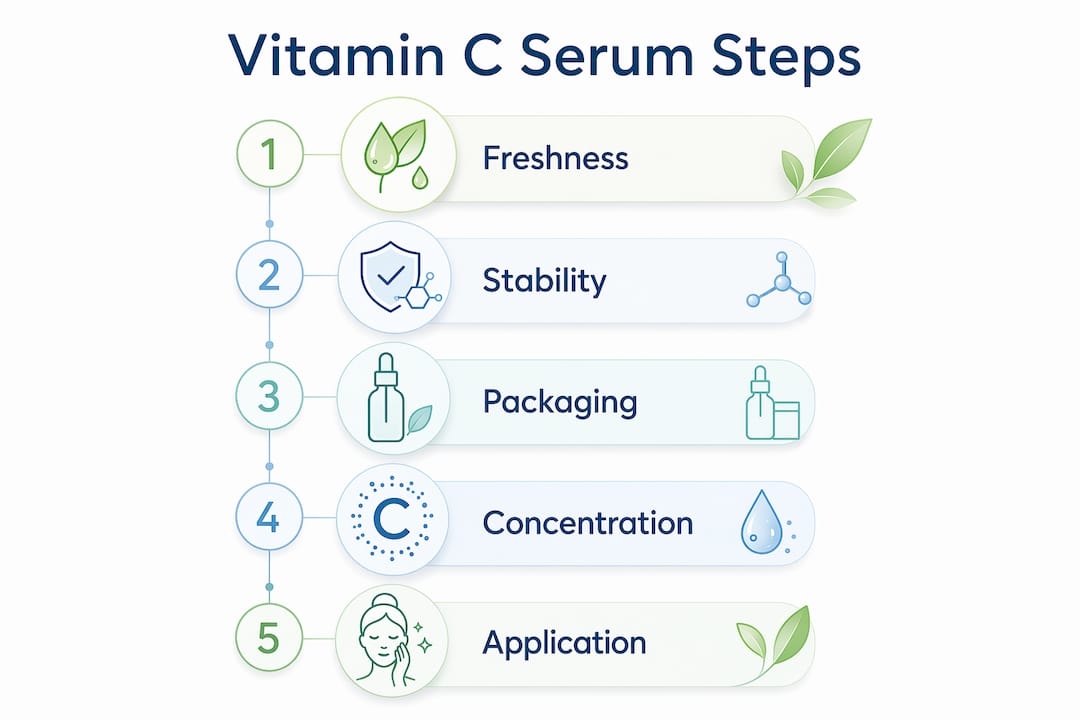
| Formulation Factor | Optimal Standard | What Goes Wrong Without It |
|---|---|---|
| Concentration | 10–15% L-ascorbic acid | Below 10%: too weak. Above 20%: higher irritation, no added benefit. |
| pH level | Below 3.5 | Higher pH reduces skin penetration significantly. |
| Antioxidant pairing | Vitamin E + ferulic acid | Vitamin C alone oxidizes faster and offers less photoprotection. |
| Packaging | Airless pump, opaque container | Clear glass or dropper bottles accelerate oxidation. |
| Storage | Cool, dark location | Heat and light degrade L-ascorbic acid within weeks. |
Combining Vitamin C with Vitamin E and ferulic acid enhances stability and photoprotection beyond what Vitamin C alone can deliver. Clinical studies confirm reduced UV-induced cellular damage with this triple combination. This is why the best serums on the market list all three actives, not just ascorbic acid.
Proper packaging such as airless pump bottles and opaque containers slows oxidation and preserves efficacy over time. If your serum has turned yellow or orange, it has oxidized. Discard it. Using an oxidized product wastes your money and may irritate your skin.
Pro Tip: Check the color of your Vitamin C serum before each use. A fresh, effective formula is clear to very pale yellow. A dark amber or orange color signals oxidation.
How to build a vitamin C skincare routine after 30
Timing and layering matter as much as the product itself. Apply your Vitamin C serum in the morning, after cleansing and before moisturizer and sunscreen. Morning application makes sense because you are heading into UV exposure, and Vitamin C’s antioxidant activity is most useful when your skin is about to face environmental stressors.
Follow these steps for a practical daily routine:
- Cleanse with a gentle, pH-balanced cleanser to remove overnight buildup without stripping your skin barrier.
- Apply Vitamin C serum to dry skin. Wait 60–90 seconds before the next step to allow absorption.
- Layer niacinamide if you use it. Despite the myth, niacinamide and Vitamin C can be used together without forming niacin, which was a concern based on outdated research.
- Moisturize to seal in actives and support your skin barrier, especially important for skin over 30 that produces less natural oil.
- Apply SPF 30 or higher as the final step. Vitamin C works best as an adjunct to sunscreen, enhancing protection against oxidative stress but not replacing SPF.
For adults looking at skin renewal after 30, the morning routine above is the most evidence-backed starting point. Realistic timelines matter here. Expect subtle brightening within four weeks and more visible improvements in skin tone and texture by weeks 8–12. Dramatic overnight results are not what Vitamin C delivers. Steady, cumulative improvement is.
Common myths about vitamin C in skincare
Several persistent myths lead people to either overestimate or abandon Vitamin C entirely.
- Myth: Higher concentration always means better results. Effective products use 10–15% L-ascorbic acid. Concentrations above 20% increase irritation without adding measurable benefit.
- Myth: Vitamin C replaces sunscreen. It does not. Vitamin C reduces oxidative damage from UV exposure but provides no SPF protection on its own.
- Myth: Vitamin C causes skin discoloration. Oxidized Vitamin C can temporarily tint skin, but a fresh, stable formula does not discolor healthy skin.
- Myth: Vitamin C derivatives are just as effective as L-ascorbic acid. Derivatives like ascorbyl glucoside are gentler but require conversion in the skin before becoming active, which reduces potency.
- Myth: Vitamin C is a standalone anti-aging cure. Effect sizes for Vitamin C are moderate. It is a strong supporting ingredient, not a single solution. Pairing it with retinol, SPF, and a solid moisturizer produces far better outcomes than using it alone.
Key Takeaways
Vitamin C is the most evidence-backed topical antioxidant for skin, delivering measurable improvements in collagen support, pigmentation, and photoprotection when used in a stable, correctly formulated product at 10–15% concentration.
| Point | Details |
|---|---|
| Three-pathway action | Vitamin C addresses antioxidant defense, collagen synthesis, and melanin inhibition simultaneously. |
| Topical beats oral | Serums deliver higher concentrations to skin layers than supplements, producing faster visible results. |
| Formulation is everything | Use 10–15% L-ascorbic acid at pH below 3.5, paired with Vitamin E and ferulic acid, in opaque packaging. |
| Morning application wins | Apply before sunscreen to maximize antioxidant protection during UV exposure. |
| Realistic timeline | Expect visible brightening and tone improvements over 8–12 weeks of consistent daily use. |
Why I think most people are using vitamin C wrong
I have spent years watching people cycle through expensive serums without seeing results, and the reason is almost always the same: they are using the wrong formulation or applying it at the wrong time. A Vitamin C serum stored in a clear bottle on a sunny bathroom shelf has likely oxidized before you even finish the first week of use. That is not a skincare failure. That is a packaging failure.
The other mistake I see constantly is expecting Vitamin C to do everything. It is a genuinely powerful ingredient, but marketing claims often exaggerate its impact. The clinical evidence shows moderate, steady improvement, not transformation. When you set that expectation correctly, you stop abandoning the ingredient after three weeks and start seeing what consistent use over three months actually delivers.
My honest advice: treat Vitamin C as the foundation of your morning routine, not the hero of your entire regimen. Pair it with a broad-spectrum SPF, a good moisturizer, and if your skin tolerates it, a retinol at night. That combination, applied consistently, is what clinically proven results for mature skin actually look like. Vitamin C earns its place in that stack, but only when the formulation is right and your expectations are grounded in science.
— Barbara
How Miraclegelnaturalskincare supports your vitamin C skincare goals
Miraclegelnaturalskincare formulates its products with the same principles the science demands: stable actives, skin-compatible concentrations, and ingredients that work together rather than against each other. If you are over 40 and building a routine around Vitamin C’s brightening and anti-aging benefits, the products in the natural anti-aging skincare range are designed to complement those goals without harsh chemicals or unnecessary irritants.
Founder Shelly Maguire built Miraclegelnaturalskincare on the principle that effective skincare does not require compromising on ingredient quality. The 2-Minute Miracle Gel and supporting formulations are developed for adults who want results they can see, backed by ingredients they can trust. Explore the full range and find the products that fit your skin’s specific needs at miraclegelnaturalskincare.ie.
FAQ
What does vitamin C actually do for your skin?
Vitamin C neutralizes free radicals, supports collagen production, and inhibits the enzyme that causes dark spots. These three functions make it one of the most effective ingredients for anti-aging and brightening.
How long does vitamin C take to show results on skin?
Clinical trials show visible improvements in skin tone and hyperpigmentation after 8–12 weeks of consistent daily use with a stable formulation.
Can you use vitamin C with niacinamide?
Yes. The concern that combining them forms niacin was based on outdated research. Current evidence confirms they can be layered safely and work well together for brightening.
What percentage of vitamin C is most effective in a serum?
The clinically supported range is 10–15% L-ascorbic acid. Below 10% is too weak for measurable results, and above 20% increases irritation without adding benefit.
Does vitamin C replace sunscreen in a skincare routine?
No. Vitamin C reduces oxidative damage from UV exposure but provides zero SPF protection. Apply it under your sunscreen every morning for the best combined photoprotection.