

TL;DR:
- Chronological skin aging is a genetically programmed process that causes gradual collagen loss and thinning beginning in your 30s. It involves cellular mechanisms like telomere shortening and mitochondrial dysfunction, leading to structural changes and increased skin vulnerability. Managing systemic health and using targeted skincare can slow visible signs and support skin resilience over time.
Chronological skin aging is the natural, genetically programmed process by which skin undergoes gradual structural and functional decline over time, independent of sun exposure or environmental damage. Clinicians call this intrinsic aging, and it begins earlier than most people expect. By your early 30s, collagen loss and slower cell turnover are already measurable. The process is driven by cellular mechanisms including telomere shortening, mitochondrial dysfunction, and stem cell exhaustion. Understanding what is chronological skin aging gives you a real foundation for choosing the right care, at the right time.
What is chronological skin aging at the cellular level?
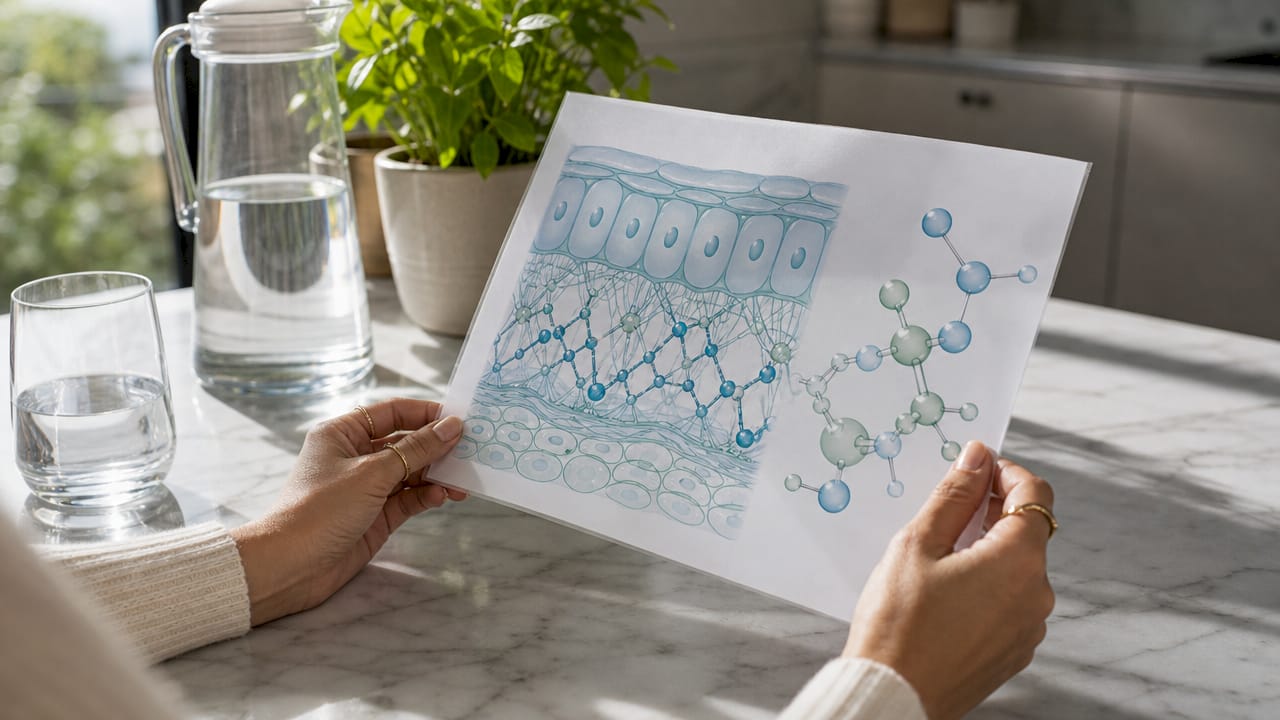
Chronological skin aging is defined as a genetically predetermined process characterized by collagen reduction, loss of elasticity, and declining cellular renewal. That definition matters because it separates intrinsic aging from damage caused by UV radiation, pollution, or lifestyle choices. Your genes set the baseline. Everything else modifies how fast that baseline shows up on your face.
The cellular drivers are specific and well documented. Telomere shortening, epigenetic drift, and stem cell exhaustion are the core mechanisms identified in current research. Each time a skin cell divides, its telomeres get slightly shorter. When telomeres become too short, the cell stops dividing and enters a state called senescence. Senescent cells do not just stop working. They actively release inflammatory signals that accelerate aging in surrounding tissue.
Mitochondrial dysfunction adds another layer. Reactive oxygen species (ROS) produced by aging mitochondria trigger enzymes called matrix metalloproteinases (MMPs). MMPs break down collagen and alter cell signaling throughout the dermis. The result is a progressive loss of the structural proteins that keep skin firm and resilient.
Pro Tip: Starting a collagen-supportive skincare routine in your early 30s, before visible signs appear, gives you a meaningful head start on slowing intrinsic aging.
How does chronological aging change your skin’s structure?
The physical changes that come with intrinsic aging are measurable and predictable. The epidermis, the outermost skin layer, thins by approximately 6% per decade as part of natural aging. That rate of thinning is now used clinically to assess how far intrinsic aging has progressed in a given person. Thinner epidermis means slower renewal, reduced moisture retention, and a skin surface that looks duller and feels rougher.
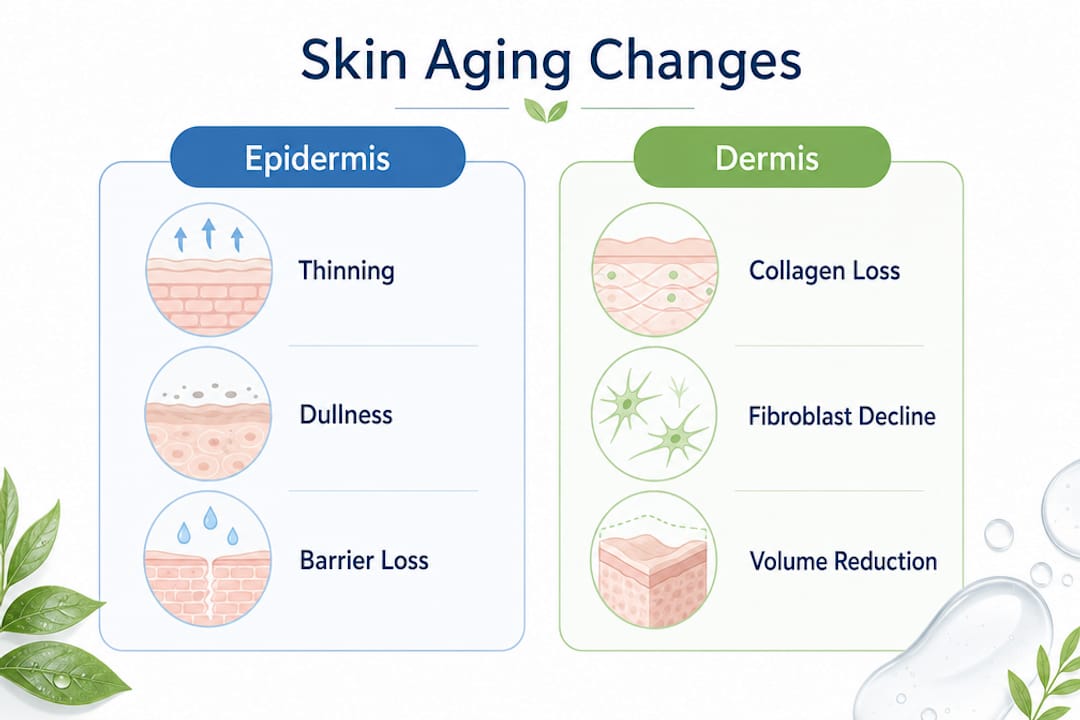
Below the epidermis, the dermis loses both volume and function. Fibroblasts, the cells responsible for producing collagen and elastin, decline in both number and activity. Skin elasticity drops noticeably after 40, contributing to sagging along the jawline and around the eyes. Oil and sweat glands also become less active, which is why skin tends to feel drier with age even when your hydration habits have not changed.
The table below summarizes the key structural changes across skin layers during intrinsic aging.
| Skin layer | Change with age | Visible effect |
|---|---|---|
| Epidermis | Thins ~6% per decade | Dullness, slower healing |
| Dermis | Collagen and elastin decline | Wrinkles, sagging, loss of firmness |
| Sebaceous glands | Reduced oil output | Dryness, flaking |
| Barrier function | Weakened tight junctions | Sensitivity, irritation |
Barrier function decline is one of the most underappreciated effects of aging on skin. Skin barrier integrity and immune defense both decrease progressively with intrinsic aging. That means older skin is not just thinner. It is also more vulnerable to irritants, allergens, and environmental stressors that younger skin would handle without reaction.
How is chronological aging different from photoaging?
Intrinsic aging and photoaging are distinct processes, but they almost always occur together. Photoaging is driven by cumulative UV radiation exposure and produces changes like deep wrinkles, uneven pigmentation, and leathery texture. Intrinsic aging produces finer lines, gradual thinning, and a loss of tone. The two processes overlap so completely that isolating pure chronological aging clinically is nearly impossible in most adults.
The concept of the cutaneous exposome captures this complexity. Your skin’s exposome is the total sum of environmental exposures across your lifetime, including UV, pollution, diet, and stress. These factors do not cause intrinsic aging, but they accelerate how quickly its signs appear. A person with significant sun exposure will show the same genetic aging changes as someone who avoided the sun, but those changes will appear earlier and more severely.
| Factor | Intrinsic (chronological) aging | Extrinsic (photoaging and other) |
|---|---|---|
| Cause | Genetic programming, cellular clocks | UV radiation, pollution, smoking |
| Onset | Gradual from early adulthood | Accelerated by cumulative exposure |
| Appearance | Fine lines, thinning, dryness | Deep wrinkles, pigmentation, roughness |
| Reversibility | Not reversible, but manageable | Partially reversible with treatment |
Smoking, chronic stress, and poor nutrition each contribute to extrinsic aging through distinct pathways. Smoking reduces blood flow to the skin and depletes antioxidants. Chronic stress elevates cortisol, which breaks down collagen. Understanding what causes skin aging across both intrinsic and extrinsic categories helps you address the factors you can actually control.
What practical steps can slow the effects of intrinsic aging?
Genetics govern the baseline, but systemic health and lifestyle heavily influence how fast intrinsic aging expresses itself. That distinction is important. You cannot stop chronological aging, but you can meaningfully slow its visible progression. The most effective approach combines systemic health habits with a targeted skincare routine.
Here are the most evidence-supported steps for managing intrinsic aging after 30:
- Prioritize sleep quality. Skin repair and collagen synthesis peak during deep sleep. Chronic sleep deprivation accelerates cellular aging and increases cortisol, which degrades collagen faster.
- Eat for skin structure. Protein, vitamin C, and zinc are direct building blocks for collagen. Diets low in these nutrients accelerate fibroblast decline. Antioxidant-rich foods also neutralize ROS before they damage the dermis.
- Manage stress actively. Systemic health issues like chronic stress and hormonal imbalances directly worsen intrinsic aging expression. Practices like regular exercise and adequate rest reduce cortisol and support skin repair cycles.
- Use skincare actives that target collagen and hydration. Ingredients like retinoids, peptides, and hyaluronic acid address the specific structural deficits of intrinsic aging. The best actives for anti-aging work by stimulating fibroblast activity and reinforcing the skin barrier.
- Start early, not late. Intervention in your 30s, before significant collagen loss has occurred, produces better long-term outcomes than starting in your 50s. Prevention is more effective than correction.
- Protect the barrier daily. A compromised skin barrier accelerates moisture loss and inflammation. Use a gentle, hydrating cleanser and a barrier-supporting moisturizer every day, regardless of your skin type.
Pro Tip: Vitamin C serum applied in the morning does double duty. It neutralizes free radicals from environmental exposure and directly stimulates collagen synthesis, targeting both extrinsic and intrinsic aging at once.
Clinicians now treat skin aging as a diagnostic window into systemic health. If your skin is aging faster than expected for your age, that can signal underlying issues like nutritional deficiency, hormonal imbalance, or chronic inflammation. Addressing those root causes often produces visible skin improvements alongside broader health benefits.
Key Takeaways
Chronological skin aging is a genetically driven, cellular process that begins in early adulthood and is measurably shaped by systemic health, lifestyle habits, and the quality of your daily skincare routine.
| Point | Details |
|---|---|
| Intrinsic aging starts early | Collagen loss and epidermal thinning begin in your 30s, well before visible signs appear. |
| Cellular drivers are specific | Telomere shortening, mitochondrial ROS, and stem cell exhaustion are the core mechanisms. |
| Epidermis thins predictably | The epidermis loses approximately 6% of its thickness per decade, reducing barrier function. |
| Lifestyle modifies genetic pace | Sleep, nutrition, and stress management directly influence how fast intrinsic aging expresses. |
| Early intervention works best | Starting a collagen-supportive routine in your 30s produces better outcomes than waiting. |
What I’ve learned from years of watching skin age
Most people treat chronological skin aging as a cosmetic problem. That framing is too narrow, and it leads to the wrong solutions. The skin is not just a surface that ages. Senescent skin cells actively propagate aging signals that affect distant organs and contribute to systemic frailty. That means what happens on your face is connected to what is happening throughout your body.
The insight that changed how I think about this: treating aging skin well is an act of systemic health management, not vanity. When you support collagen synthesis, reduce oxidative stress, and protect your barrier, you are also reducing the inflammatory burden on your whole body. The skin reflects internal health with remarkable accuracy.
The research direction I find most promising is systems reprogramming. The emerging view treats skin not as a passive victim of time but as an active participant in organismal aging. Future therapies will likely target cellular reprogramming rather than just surface correction. That is a significant shift from the current topical-first model.
For now, the practical message is this: accept that intrinsic aging is real and irreversible, but reject the idea that it is unmanageable. The gap between how your skin ages and how it could age, with the right systemic habits and targeted care, is larger than most people realize. Start earlier than you think you need to. Be consistent. And pay attention to what your skin is telling you about your overall health.
— Barbara
Natural skincare for skin that’s aging on its own terms
Intrinsic aging calls for skincare that works with your skin’s biology, not against it. Miraclegelnaturalskincare formulates products specifically for the structural changes that come with chronological aging: declining collagen, reduced elasticity, and a weakening barrier.

The 2 Minute Miracle Gel uses the Tri-Moisture Cryo Complex™ to deliver rapid hydration and barrier support, addressing the dryness and thinning that define intrinsic aging after 40. Founder Shelly Maguire built the range around natural ingredients with clinically proven results, making it a practical fit for anyone who wants effective care without harsh chemicals. If you are ready to build a routine that matches where your skin actually is, the clinical anti-aging range at Miraclegelnaturalskincare is a strong place to start.
FAQ
What is chronological skin aging in simple terms?
Chronological skin aging is the natural, genetically programmed process by which skin gradually loses collagen, thins, and becomes less elastic over time. It occurs independently of sun exposure or lifestyle factors, though both can accelerate its visible effects.
At what age does intrinsic skin aging begin?
Intrinsic aging begins in early adulthood, with measurable collagen loss and slower cell turnover detectable in the 30s. Visible signs such as fine lines and reduced elasticity typically become noticeable in the late 30s to mid-40s.
Can you stop chronological skin aging?
Chronological aging cannot be stopped because it is genetically programmed at the cellular level. However, lifestyle factors like nutrition, sleep, and stress management can slow how quickly its signs appear and how severe they become.
How is intrinsic aging different from sun damage?
Intrinsic aging produces fine lines, thinning, and dryness driven by internal cellular processes. Sun damage, or photoaging, causes deeper wrinkles, uneven pigmentation, and rougher texture through UV-induced DNA damage and inflammation.
What skincare ingredients help with chronological aging?
Retinoids, peptides, hyaluronic acid, and vitamin C are the most evidence-supported ingredients for intrinsic aging. They work by stimulating collagen synthesis, reinforcing the skin barrier, and neutralizing oxidative stress at the cellular level.