
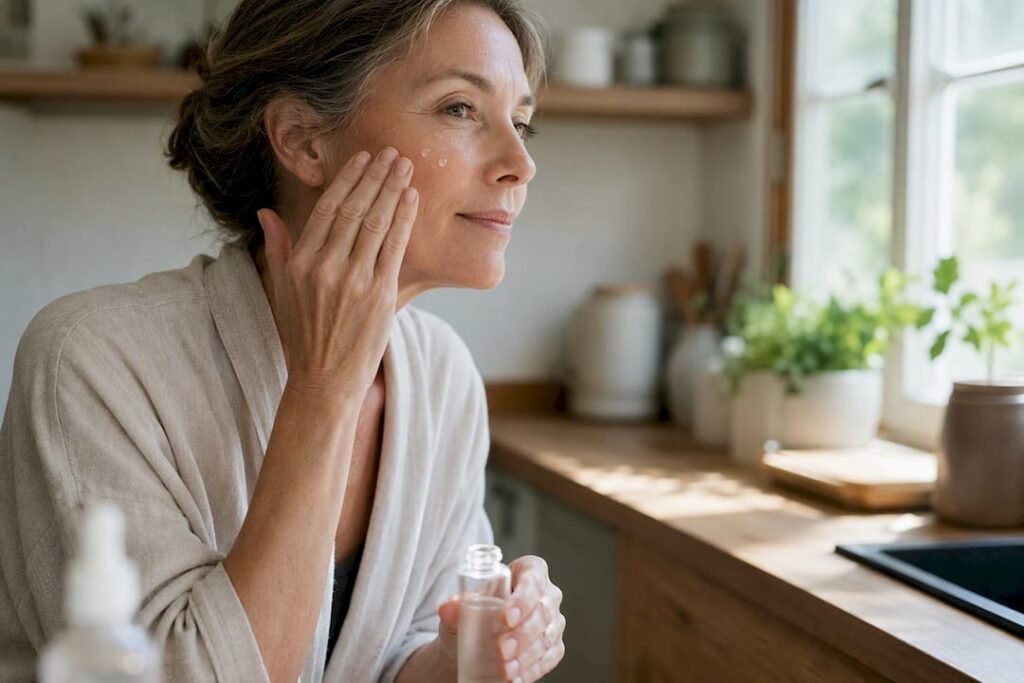
For mature skin, the highest-priority antioxidants are vitamin C, vitamin E, niacinamide, coenzyme Q10 (CoQ10), resveratrol, ferulic acid, alpha-lipoic acid, glutathione, carotenoids (lycopene and lutein), and the supportive minerals selenium and zinc. Topical delivery beats oral supplements for reaching the skin directly, and the biggest efficacy win comes from combining a few of them rather than relying on one alone.
Layer antioxidants in the morning under sunscreen, since that’s when they’re doing the most work against UV and pollution exposure. Vitamin C, vitamin E, and ferulic acid together form the best-studied combination: the trio stabilizes ascorbic acid and improves photoprotection compared to using vitamin C on its own.
Quick-reference list for mature skin:
- Vitamin C (L-ascorbic acid or a stable derivative): collagen support, brightening, AM use
- Vitamin E: hydration and antioxidant stability, pairs with vitamin C
- Niacinamide: barrier repair, tone evening, tolerated at 2 to 10%
- CoQ10: cellular energy support, gentle enough for nightly use
- Resveratrol: added UV defense, often layered with vitamin C
- Ferulic acid: stabilizes vitamin C, boosts photoprotection
- Alpha-lipoic acid: works in both water and fat layers of the skin
- Glutathione: emerging as a potent internal and topical antioxidant
- Carotenoids (lycopene, lutein): dietary and topical UV support
- Selenium and zinc: supportive minerals for enzymatic antioxidant function
Key Takeaways
Vitamin C, vitamin E, niacinamide, and ferulic acid form the most evidence-backed core of an antioxidant routine for mature skin, and their combined use outperforms any single ingredient on its own.
| Point | Details |
|---|---|
| Prioritize vitamin C | Choose L-ascorbic acid or a stable derivative at 10 to 20% for collagen and pigmentation support. |
| Combine, don’t isolate | Vitamin C, vitamin E, and ferulic acid together stabilize and outperform vitamin C alone. |
| Niacinamide is the tolerant option | Effective at 2 to 10%, with 5% a common, well-tolerated concentration for barrier repair. |
| Antioxidants support, they don’t replace SPF | Pair every topical antioxidant with daily broad-spectrum sunscreen for real photoaging protection. |
| Start with ready-made regimens | Miraclegelnaturalskincare’s serum and regimen pages group these same stable antioxidant combinations for readers who want a tested starting point. |
Table of Contents
- Why Key Antioxidants Matter for Mature Skin
- The Key Antioxidants for Skin: Full Ingredient Profiles
- How to Choose Antioxidant Products for Mature Skin
- What the Evidence Shows, and Safety Considerations
- Where to Find Antioxidant Support for Your Routine
- Sources
Why Key Antioxidants Matter for Mature Skin
Mature skin loses ground in its own defense system. As skin ages, enzymatic antioxidants like superoxide dismutase, catalase, and glutathione peroxidase decline, leaving less capacity to neutralize the reactive oxygen species generated by UV exposure and pollution. That decline is exactly why topical antioxidants become more valuable, not less, after 40.
Here’s the mechanism in plain terms. UV light and airborne pollutants generate free radicals, unstable molecules that damage collagen, elastin, and cell membranes through a process called lipid peroxidation. A comprehensive review of studies spanning 1997 to 2024 confirms that topical antioxidants interrupt this cascade by absorbing or deactivating those free radicals before they reach structural proteins. Less free-radical damage means slower collagen breakdown, steadier pigment production, and a stronger barrier.
The measurable payoff shows up in hydration and barrier metrics. A 2026 systematic review found that antioxidant-rich interventions, combining dietary intake with targeted topical products, produced real improvements in skin hydration and reductions in transepidermal water loss (TEWL). The catch: how much benefit you see depends heavily on which antioxidant you use and for how long you use it. A single week of vitamin C won’t rebuild a compromised barrier; consistent use over months is what the data reflects.
Three aging pathways respond most directly to antioxidant support:
- Collagen degradation: free radicals activate enzymes that break down collagen fibers faster than the body replaces them
- Pigmentary changes: oxidative stress triggers uneven melanin production, showing up as dark spots and blotchiness
- Barrier and moisture loss: oxidative damage to lipid membranes weakens the skin’s ability to hold water in and keep irritants out
The Key Antioxidants for Skin: Full Ingredient Profiles
Not every antioxidant belongs in every routine, and not every antioxidant has the same weight of evidence behind it. Here’s what actually matters for each one, and how to use it if you’re building a routine after 40.
Vitamin C: the reference standard
Vitamin C, in its L-ascorbic acid form or as a stable derivative like sodium ascorbyl phosphate, is widely regarded as the gold standard among topical antioxidants because it has the most robust clinical data behind it for collagen synthesis and fading hyperpigmentation. Look for concentrations between 10% and 20% L-ascorbic acid, though sensitive or thinner mature skin often does better starting at the lower end. It’s notoriously unstable, oxidizing when exposed to light and air, so packaging matters as much as the ingredient list: opt for opaque, air-restricted bottles over clear jars. Apply it in the morning, before sunscreen.
Vitamin E: the stabilizer
Vitamin E, usually listed as tocopherol or tocopheryl acetate, doesn’t headline a routine on its own so much as it supports everything around it. It’s fat-soluble, which lets it protect the lipid layer of the skin where water-soluble vitamin C can’t reach. Formulations pairing the two aren’t a marketing gimmick. The combination genuinely improves stability and reduces oxidation of the vitamin C itself.
Niacinamide: the barrier builder
Niacinamide is the most forgiving antioxidant on this list, and one of the best documented. Effective concentrations run between 2% and 10%, with 5% acting as a common, well-tolerated middle ground. It supports the skin barrier, calms redness, and evens tone over time, all without the irritation risk that comes with higher-strength vitamin C. It plays well with nearly everything, which makes it a natural evening or dual AM/PM ingredient.
Coenzyme Q10: the energy antioxidant
CoQ10 (in ubiquinol or ubiquinone form) supports mitochondrial energy production inside skin cells, which matters more as natural CoQ10 levels drop with age. It’s gentler than vitamin C, making it a solid nighttime option, and it works quietly in the background of a formula rather than driving dramatic visible change on its own.
Resveratrol: the UV-defense polyphenol
This plant-derived polyphenol, found naturally in grape skins, adds a layer of defense against UV-driven oxidative stress. Evidence in humans is thinner than what exists for vitamin C, but resveratrol layers well into serums alongside vitamin C or ferulic acid for added photoprotection.
Ferulic acid: the quiet multiplier
Ferulic acid rarely works alone. Its real value is in what it does for other antioxidants: it helps stabilize L-ascorbic acid and enhances the photoprotective effect of a vitamin C and vitamin E blend. If a serum lists all three, that’s a formulation built on real mechanism, not marketing.
Alpha-lipoic acid: the dual-solubility antioxidant
Alpha-lipoic acid is unusual because it works in both water and fat environments within the skin, giving it broader reach than single-solubility antioxidants. It’s typically found in serums at lower concentrations and tends to suit mature skin that tolerates actives well.
Glutathione: the master antioxidant
Glutathione is drawing increasing attention as a master regulator of the skin’s antioxidant network, partly because it helps regenerate other antioxidants like vitamin C and vitamin E once they’ve been used up neutralizing free radicals. Topical glutathione formulations are newer to market and less standardized than vitamin C, so treat claims here with a bit more caution until more human trial data accumulates.
Carotenoids: lycopene and lutein
Carotenoids like lycopene (found in tomatoes) and lutein (found in leafy greens and corn) provide antioxidant support both through diet and, less commonly, in topical form. Their contribution tends to be additive rather than a headline treatment.
Selenium and zinc: the mineral cofactors
Selenium and zinc aren’t antioxidants in the classic sense, but they’re essential cofactors for the enzymatic antioxidants your skin produces naturally, including glutathione peroxidase. Deficiency in either can blunt your skin’s own antioxidant machinery, which is one reason dietary balance matters alongside topical products.
Pro Tip: If you only add one combination to your routine, make it vitamin C, vitamin E, and ferulic acid together. The three ingredients stabilize each other chemically and the resulting serum outperforms vitamin C used alone, both for stability on the shelf and for photoprotection on your skin.
How to Choose Antioxidant Products for Mature Skin
The formulation matters as much as the ingredient list. A vitamin C serum sitting in a clear jar on a sunny shelf has likely lost much of its potency before it ever reaches your face. Prioritize stable formulations, correct concentration for your tolerance, opaque or air-restricted packaging, and combinations with a track record in mature-skin studies.
Run through this checklist before buying:
- Form: serums penetrate faster and layer more precisely than creams; creams offer more antioxidant support alongside heavier moisturizing
- Concentration: 10 to 20% for vitamin C, 2 to 10% for niacinamide, lower starting points for alpha-lipoic acid and resveratrol
- Packaging: opaque, airless pump bottles protect light-sensitive and oxygen-sensitive antioxidants far better than clear droppers
- pH and stability: L-ascorbic acid needs a low pH (around 3.5) to stay active, which is also why it can irritate thinner mature skin
- Ingredient order: apply thinnest, most active serums first, then move to heavier creams and finish with sunscreen in the AM
Layering rules matter just as much as product choice. Follow this sequence for actives that commonly show up together:
- Cleanse, then apply vitamin C serum in the morning, before moisturizer and sunscreen
- Save retinoids for nighttime use only, separate from vitamin C to avoid destabilizing either ingredient
- Introduce one new active at a time, waiting one to two weeks before adding the next
- Avoid stacking strong acids, retinoids, and high-concentration vitamin C in the same session until your skin has built tolerance
Pro Tip: Mature skin tends to have a thinner, more reactive barrier than skin in your twenties or thirties. Patch test any new antioxidant serum on your inner forearm for three nights before applying it to your face, and introduce actives one at a time rather than overhauling your routine all at once.
What the Evidence Shows, and Safety Considerations
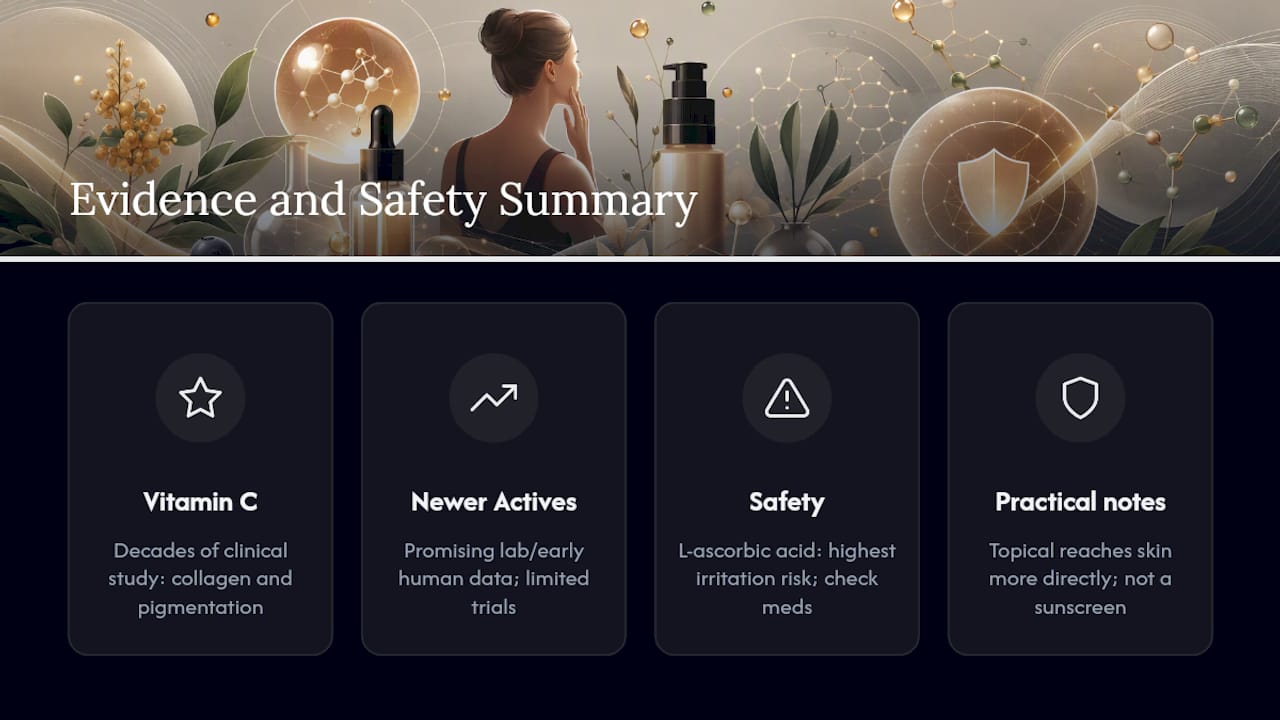
Topical antioxidants have real support behind them: they improve hydration, reduce TEWL, and in several cases improve pigmentation and visible signs of aging. How fast you see results and how large the effect is depends on which antioxidant you’re using and how long you stick with it.
The evidence isn’t equal across ingredients. Vitamin C has decades of clinical study behind it for collagen synthesis and pigmentation, which is why dermatologists keep pointing back to it. Newer entries like glutathione and some plant polyphenols show promising mechanisms in lab and early human studies, but the human clinical data is thinner. The 2026 systematic review mentioned earlier is a good example of where the field currently stands: measurable benefit, but variable by ingredient and duration, not a uniform guarantee.
Safety-wise, L-ascorbic acid carries the highest irritation risk of the group, particularly for mature skin with a compromised barrier. Some antioxidants can also interact with enzymatic detoxification pathways in the body, which matters if you’re on new prescription medications or managing an active dermatologic condition. Talk to a dermatologist before adding high-concentration actives if you’re being treated for eczema, rosacea, or are on isotretinoin or other prescription retinoids.
Are oral antioxidant supplements effective for skin? They can support overall health, but topical application generally reaches the skin more directly, since oral bioavailability and transport to the epidermis are limited. Can I use vitamin C and niacinamide together? Yes, most modern formulations are stable together, though older formulas sometimes caused pH conflicts. Do antioxidants replace sunscreen? No. Clinicians consistently frame antioxidants as an adjunct to daily SPF, not a substitute for it.
Simple AM and PM routines using antioxidants
Morning routine:
- Cleanse with a gentle formula
- Apply a vitamin C, vitamin E, and ferulic acid serum daily
- Follow with a hydrating moisturizer
- Finish with broad-spectrum SPF, non-negotiable
Evening routine:
- Cleanse thoroughly to remove SPF and daily buildup
- Apply a niacinamide or CoQ10 serum most nights
- Use a retinoid separately, on alternate nights if you’re new to it
- Seal with a repair-focused moisturizer
Recent research and what dermatologists actually say
The clearest research signal right now: antioxidant-rich interventions, both dietary and topical, produce measurable gains in hydration and TEWL reduction, with vitamin C carrying the strongest and longest clinical track record among individual ingredients. Dermatologists consulted on the topic consistently point back to vitamin C as the best-supported option for collagen synthesis and pigmentation, while stressing that no antioxidant works in isolation from sun protection.
Combine topical antioxidants with daily broad-spectrum SPF. That pairing, more than any single ingredient swap, is what produces measurable protection against photoaging over time.
- Enzymatic antioxidant decline with age makes topical support more relevant, not less
- Combination formulas outperform single-ingredient serums in stability and photoprotection
- Vitamin C remains the most heavily studied topical antioxidant for visible results
A practical note on why these ingredients made the list
I prioritized the antioxidants here because they have real clinical grounding, not because they’re trending on ingredient lists. Vitamin C, niacinamide, and the vitamin C/E/ferulic acid combination earned their spots because the data behind them for collagen support, barrier repair, and pigmentation is genuinely strong, not aspirational. If you’re evaluating a product, look past the marketing language and check whether the formulation reflects what actually holds up under study, including how it’s packaged and stabilized. Our ingredient breakdowns for mature skin at Miraclegelnaturalskincare follow that same standard, with contributor Barbara focused on translating the research into formulas that hold up on the shelf and on your skin.
Where to Find Antioxidant Support for Your Routine
If you’d rather start with a ready-made formula than build a routine ingredient by ingredient, Miraclegelnaturalskincare’s product pages are built around the same combinations covered above, stable vitamin C pairings, niacinamide-based repair formulas, and moisturizers designed to lock in whatever antioxidant serum you apply first.
A few starting points that map directly to what’s covered here:
- The anti-aging serum collection for concentrated antioxidant formulas
- The full serum category if you’re comparing texture and delivery format
- A complete natural skincare regimen for radiant, youthful skin at 40+ if you want the AM and PM steps already mapped out for you
For readers looking at complementary collagen-support formats, external options like collagen and peptide-based creams exist too, though our own line focuses on antioxidant stability and fast, visible results without a long ingredient list to sort through.
Browse the regimen page to see which combination fits your current routine and pick up where your morning serum leaves off.
Sources
- Antioxidants for skin: Benefits, drawbacks, and sources
- Role of antioxidants in skin aging and the molecular mechanism of ROS: A comprehensive review
- Antioxidant interventions and skin outcomes (systematic review) – MDPI
- Antioxidants in dermatology – PMC