
TL;DR:
- Women over 40 should prioritize barrier support and photoprotection in their skincare routines for effective anti-aging results. Incorporating well-researched ingredients like retinol, bakuchiol, vitamin C, niacinamide, ceramides, and hyaluronic acid with simplicity and patience yields better long-term improvements. Overloading products or chasing trends can cause irritation and hinder visible progress, so a minimal, consistent routine is most beneficial.
If you’ve ever stood in front of a pharmacy shelf, ingredients list in hand, feeling more confused than when you walked in, you’re not alone. Women over 40 face a flood of contradictory claims about which natural actives actually work for mature skin, and the noise keeps getting louder. The reality is that a handful of well-researched ingredients do the heavy lifting, while the rest are mostly marketing. This article cuts through the confusion with evidence-backed picks, honest comparisons, and practical guidance for building a routine that genuinely delivers.
Table of Contents
- How to choose the best ingredients for mature skin
- Top natural and clinically proven anti-aging ingredients
- Moisturizers, ceramides, and targeted hydrators: Supporting mature skin’s barrier
- Natural carotenoids and the limits of anti-aging supplements
- Side-by-side ingredient comparison and best picks for your routine
- Why ingredient simplicity wins for mature skin care (and what most brands miss)
- Explore proven natural skincare for radiant, age-defying results
- Frequently asked questions
Key Takeaways
| Point | Details |
|---|---|
| Retinol is top-rated | Retinol leads in scientific support for reducing wrinkles and photoaging in mature skin. |
| Bakuchiol offers a gentle option | Bakuchiol matches retinol’s anti-aging effects but is often better tolerated, especially for sensitive skin. |
| Ceramides restore and protect | Ceramide-rich moisturizers significantly improve dryness and barrier health in mature skin. |
| Vitamin C and niacinamide brighten and hydrate | These ingredients address dullness, uneven tone, and barrier support in daily routines. |
| Limit supplement expectations | Most oral supplements show limited visible anti-aging results; focus on topical evidence-backed actives. |
How to choose the best ingredients for mature skin
Mature skin has specific needs that younger skin simply doesn’t share. After 40, your skin produces less collagen, the barrier becomes more porous, and cell turnover slows noticeably. That means the criteria you use to evaluate ingredients must account for these biological realities, not just general beauty trends.
Here is a clear framework to guide your ingredient decisions:
- Prioritize photoprotection and barrier support first. These are the non-negotiables. Sun damage is the single biggest contributor to visible aging, and a compromised barrier accelerates moisture loss and irritation. Every other ingredient works better when these two foundations are solid.
- Add one proven active at a time. The safest anti-aging methodology is to prioritize barrier-friendly moisturizing and photoprotection, then layer in one active at a time, such as a retinoid or vitamin C, rather than stacking multiple new botanicals at once. This approach lets your skin adapt and makes it easier to identify what’s working.
- Avoid ingredient overload. More is not better. When you use six new actives simultaneously, your skin can react negatively and you won’t know which ingredient caused the problem. Simplicity gives you control.
- Match the product form to the ingredient. Serums deliver water-soluble actives deeper into skin layers, while facial oils work best for oil-soluble ingredients like vitamin E or rosehip. Layering in the wrong order or choosing the wrong vehicle reduces how much of the active your skin actually absorbs.
Pro Tip: Start any new ingredient on a small patch of skin near your jaw for three to four nights before applying it to your full face. This is especially important for mature skin, which tends to be more reactive.
For a wider view of how to structure your entire routine, the anti-aging skincare tips on this site offer practical, step-by-step guidance built specifically for women over 40.
Top natural and clinically proven anti-aging ingredients
With a solid framework in place, let’s look at which ingredients are actually worth your money, your shelf space, and your skin’s tolerance.
Retinol and retinoids
Retinol remains the most robustly studied anti-aging ingredient in existence. A 2025 network meta-analysis confirmed that retinoids are the top-performing category for reducing fine wrinkles and visible photoaging signs, outperforming most alternatives across multiple study designs. The mechanism is well understood: retinol speeds up cell turnover and stimulates collagen production. The catch is that it can cause dryness, flaking, and sensitivity, especially in the first few weeks of use. Starting at a low concentration (0.025% to 0.05%) two nights per week and building gradually is the standard approach.
Bakuchiol
Bakuchiol is a plant-derived compound from the seeds of the Psoralea corylifolia plant, and it has earned genuine clinical respect. It functions as a natural retinoid mimic, meaning it activates many of the same skin pathways as retinol without the harsh side effects. Clinical comparisons show that bakuchiol delivers comparable anti-aging effects in short-term trials with significantly fewer irritation symptoms. This makes it the preferred choice for women who find retinol too aggressive, or for those with sensitive or rosacea-prone skin.
Vitamin C
Topical vitamin C, typically as L-ascorbic acid, is widely recommended for addressing uneven tone and dullness, which are two of the most common complaints for women over 40. It supports brighter, more even skin by inhibiting melanin production and neutralizing free radical damage from environmental exposure. The biggest challenge is stability: vitamin C oxidizes quickly when exposed to air and light, which is why packaging matters. Look for dark glass bottles or airless pumps, and check that your serum smells clean rather than vaguely metallic, which signals oxidation.
Niacinamide
Niacinamide (vitamin B3) is one of the most versatile and well-tolerated ingredients for mature skin. A 2025 study in Scientific Reports confirmed its multifunctional benefits: it supports the skin’s barrier, reduces visible pore size, addresses pigmentation, and shows measurable improvements in skin texture and hydration. At concentrations between 2% and 10%, it’s effective without causing the sensitivity that retinol sometimes triggers. You can layer it under heavier moisturizers or use it as a standalone serum in the morning.
One thing experienced estheticians consistently observe: women over 40 often see more visible improvement from one well-chosen active used consistently for 12 weeks than from cycling through five trending ingredients over the same period. Patience and consistency beat novelty every time.
For deeper reading on which ingredients work best for your specific skin concerns, explore this full guide to natural anti-aging ingredients or learn more about organic skincare benefits for mature skin.
Pro Tip: Vitamin C and niacinamide can be used in the same routine, morning and evening, respectively. Vitamin C works best in the morning with SPF because it amplifies sun protection, while niacinamide shines in an evening routine layered before your moisturizer.
Moisturizers, ceramides, and targeted hydrators: Supporting mature skin’s barrier
Actives get most of the attention, but the barrier-support layer is where the real magic happens for women over 40. When the skin barrier is compromised, even the best actives lose effectiveness because they can’t reach the right layers of the skin.
Ceramides
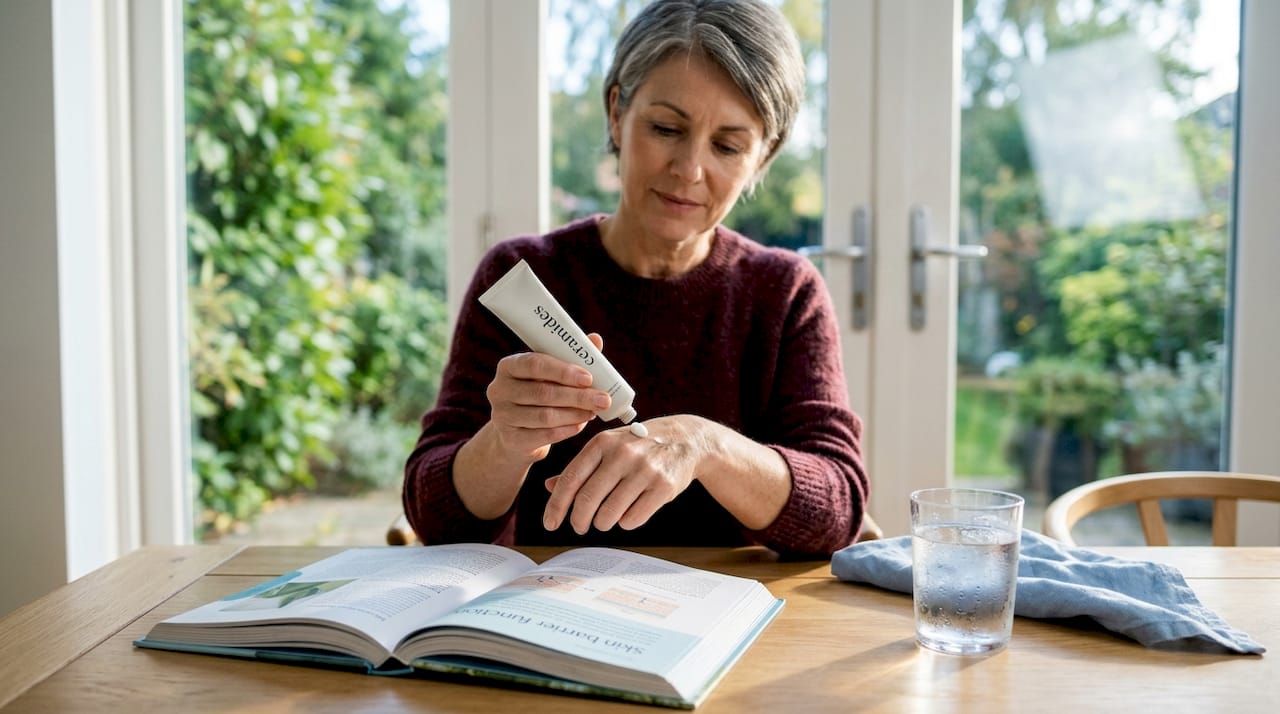
Ceramides are lipids (fats) that occur naturally in the skin and make up roughly 50% of the skin barrier. As you age, ceramide levels decline, which contributes to dryness, sensitivity, and increased transepidermal water loss. Ceramide-rich moisturizers are especially relevant for mature skin dryness and roughness because they physically replenish what the skin loses over time. Research shows ceramide moisturizers reduced signs of xerosis (medical term for abnormally dry skin) by up to 47% in studied populations, a result that rivals prescription creams in some trials.
Hyaluronic acid
Hyaluronic acid (HA) is a naturally occurring molecule that can hold up to 1,000 times its weight in water, making it a powerful humectant (a substance that draws moisture into the skin). A 2025 clinical trial found that topical sodium hyaluronate consistently supports hydration and a plumping effect, though its direct impact on wrinkle depth and collagen remodeling is more limited than some brands suggest. HA is most effective when applied to slightly damp skin and sealed with a ceramide moisturizer on top. Without the seal, it can actually draw moisture out of the skin in dry environments.
| Ingredient | Primary benefit | Best for | Application timing |
|---|---|---|---|
| Ceramides | Barrier restoration | Dry, sensitive, mature skin | Morning and evening |
| Hyaluronic acid | Surface hydration | All skin types, including oily | Before moisturizer, on damp skin |
| Glycerin | Humectant, barrier support | Normal to dry skin | Morning and evening |
| Squalane | Lightweight emollient | Dry to combination skin | Evening or mixed with serum |
For women over 40, using moisturizers for mature skin that combine ceramides with hyaluronic acid is not redundant. They work on different mechanisms and complement each other well.
Natural carotenoids and the limits of anti-aging supplements
Carotenoids are plant pigments found in foods like carrots, tomatoes, and leafy greens. Beta-carotene, lycopene, and lutein are the most studied in the context of skin health. They function primarily as antioxidants, neutralizing the oxidative stress that accelerates visible aging.
A 2025 systematic review on carotenoids found that dietary carotenoids may contribute to improved photoprotection and skin resilience, but the evidence spans multiple study designs and is inconsistent across all outcomes. In simple terms: eating more tomatoes and spinach probably helps, but it won’t replace SPF or a good retinol serum.
Here is where it gets important to be honest about oral supplements:
- Oral hyaluronic acid is widely marketed for skin hydration, but evidence for its effect on visible photoaging is mixed at best.
- Carotenoid supplements show some promise for photoprotection but are not a substitute for topical treatments.
- Collagen supplements receive a lot of attention but have variable results in robust clinical settings.
- The most consistent finding in a 2025 systematic review and meta-analysis was that many oral anti-aging supplement candidates, including hyaluronic acid and carotenoids, showed limited or no significant effects on photoaging endpoints specifically.
What this means practically: If you’re choosing between spending €40 on a supplement or a topically applied ceramide moisturizer, the topical product is almost always the better investment for visible skin improvement. Supplements may support overall health, but they rarely substitute for a well-built topical routine.
For a broader picture of how lifestyle and natural approaches work together, the holistic anti-aging approaches guide connects topical care with lifestyle choices that actually move the needle.
Side-by-side ingredient comparison and best picks for your routine
Here is a practical comparison of the top ingredients covered in this article, mapped to the most common mature skin concerns:
| Ingredient | Wrinkle reduction | Hydration | Tone/pigmentation | Sensitive skin friendly |
|---|---|---|---|---|
| Retinol | Excellent | Moderate | Good | Low (needs gradual intro) |
| Bakuchiol | Good | Moderate | Moderate | High |
| Vitamin C | Moderate | Low | Excellent | Moderate |
| Niacinamide | Moderate | Good | Good | High |
| Ceramides | Low (indirect) | Excellent | Low | Very high |
| Hyaluronic acid | Low | Excellent | Low | Very high |
Quick-pick guidance based on your skin’s most urgent needs:
- Wrinkles are your top concern: Start with retinol at a low concentration, two nights per week, paired with a ceramide moisturizer.
- Sensitive or rosacea-prone skin: Bakuchiol is better tolerated for reactive skin and is often the smarter starting point over retinol, which can cause scaling and stinging.
- Dullness and uneven tone: Layer a vitamin C serum each morning, followed by SPF 30 or higher.
- Dryness and flaking: Build your routine around ceramide moisturizers and hyaluronic acid before adding any actives.
- General maintenance and prevention: Niacinamide is an ideal daily all-rounder that supports multiple skin functions without needing phase-in time.
For women looking to target brighter, youthful results, combining niacinamide with a stable vitamin C serum is one of the most practical pairings you can make.
You can also explore the role of natural oils for anti-aging as an additional layer, particularly rosehip oil (a natural source of vitamin A precursors) and sea buckthorn oil for added antioxidant support.
Why ingredient simplicity wins for mature skin care (and what most brands miss)
Here is a perspective that most product-focused content avoids saying out loud: the skincare industry profits from complexity. New ingredient launches, multi-step systems, and exotic botanical fusions all create buying behavior. But the women over 40 who report the most consistent visible improvement are almost never the ones with 12-step routines.
The evidence supports this. A 2025 network meta-analysis clarified something crucial: ingredient effectiveness is highly endpoint-specific. Retinoids show strong evidence for wrinkle and photoaging endpoints. Antioxidants show effects primarily on tone and oxidative protection. Hydrators show results in hydration-specific measurements. When you stack many actives simultaneously, you’re not multiplying the benefits. You’re often creating competition between ingredients, increasing irritation risk, and making it nearly impossible to know what’s actually working.
Mature skin reacts more slowly and more persistently than younger skin. A single barrier disruption from over-exfoliation or ingredient conflict can take weeks to settle. This is why the less-irritation approach that emphasizes gentle, evidence-backed ingredients in manageable layers tends to outperform the “more is more” philosophy over any meaningful time frame.
Our honest take: the routines that deliver the most visible results consistently follow the same simple architecture. A good cleanser. A barrier-supporting moisturizer with ceramides. One targeted active (retinol or bakuchiol for wrinkles, or vitamin C for tone). Daily SPF. That’s the core, and it works precisely because it’s not trying to do everything at once.
Trend-chasing is expensive and often counterproductive for women 40 and over. The brands and routines worth trusting are the ones willing to say: choose less, use it consistently, and give your skin time.
Explore proven natural skincare for radiant, age-defying results
You now have a clear, evidence-based map of the ingredients that matter most for mature skin and why. The next step is finding formulations that actually deliver on these principles, without unnecessary fillers, harsh synthetics, or ingredient overload.
At Miracle Gel Natural Skincare, every product is designed around the same philosophy covered in this article: proven actives, barrier-first formulations, and natural ingredients that work with your skin’s biology rather than against it. Browse our best anti-aging tips section for curated guidance, explore our top anti-aging serums formulated with women over 40 in mind, or discover the full age-defying collections built specifically for radiant, healthy skin at every stage of life. Your skin deserves ingredients you can trust.
Frequently asked questions
What ingredient is best for reducing wrinkles in mature skin?
Retinol remains the gold standard, with strong evidence for wrinkle reduction and photoaging improvement in women over 40 confirmed by a 2025 network meta-analysis. Start low and build gradually for best results.
Are natural alternatives like bakuchiol effective?
Yes. Bakuchiol performs similarly to retinol for visible anti-aging benefits in short-term clinical trials, with the added benefit of significantly lower irritation rates, making it a smart choice for sensitive skin.
Should I use both ceramide moisturizers and hyaluronic acid?
Absolutely. Ceramides restore and reinforce the skin barrier while hyaluronic acid draws water into the skin, so they work on different but complementary mechanisms and layer well together.
Do oral anti-aging supplements really work?
Evidence is mixed. A 2025 systematic review and meta-analysis found limited or no significant effects for several popular oral candidates including hyaluronic acid and carotenoids when measured against visible photoaging outcomes specifically.
How can I avoid irritation with powerful actives?
Introduce one active at a time and start with a lower concentration two to three nights per week. If you have sensitive or rosacea-prone skin, bakuchiol is the better-tolerated option compared to retinol, which can cause scaling and stinging during initial use.
Recommended
- Natural Skincare Tips for Women 40+: Best Anti-Aging
- Natural body care essentials for youthful skin over 40
- 5 key ingredients in natural anti-aging skincare for 40+
- Top anti-aging skincare tips for women 40+: natural solutions
- Advanced Multi-Peptide Serum with Copper Peptide for Youthful Skin – Equanimist