
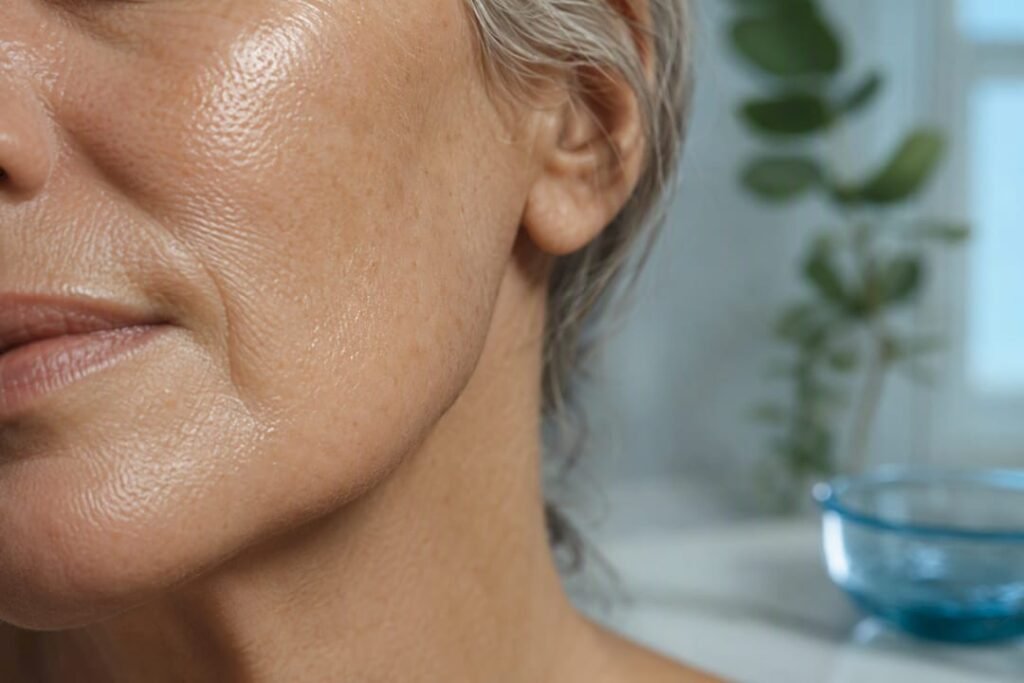
The Tri-Moisture Cryo Complex delivers immediate surface hydration, a temporary plumping and smoothing effect, and gradual barrier support that reduces water loss with repeated use. The “cryo” in the name refers to a cooling sensory experience, not a laboratory preservation technique, so treat structural anti-aging claims as a slow-build benefit rather than an overnight transformation.
TL;DR:
- The Tri-Moisture Cryo Complex provides rapid surface hydration within minutes, with long-term barrier repair developing over days to weeks.
- Expect immediate surface smoothing effects from film-formers and humectants, but significant anti-aging results require consistent, months-long use of supportive actives.
- The “cryo” in the name refers to a cooling sensation, not actual cryogenic or medical cryotherapy effects.
- Ingredient quality, especially the presence of humectants and lipid-repair agents, is more important than brand claims or hyperbolic marketing.
- Reliable evidence from supplier and independent data shows true hydration benefits appear within days to weeks, not from superficial claims or vague superlatives.
Table of Contents
- Tri-Moisture Cryo Complex Benefits: Decoding the Name
- The Core Benefits, and How Fast You’ll See Them
- Ingredients That Actually Deliver These Effects
- Building a Routine Around Tri-Moisture Hydration
- Separating Real Claims From Marketing Hyperbole
- How Reliable Is the Underlying Evidence?
- Why Barrier-First Thinking Beats Chasing Buzzwords
- Why the 2 Minute Miracle Moisturizer Fits This Same Logic
- Where to Verify These Claims Yourself
- Sources
Tri-Moisture Cryo Complex Benefits: Decoding the Name
“Tri” refers to three separate jobs happening in the formula at once: a film-forming layer that seals moisture at the surface, lamellar lipids that slot into the skin’s own barrier structure, and humectants that pull water into the outer layers. This is not a marketing fiction. It mirrors a well-documented ingredient system called TriMoist™ KMF, built by Mibelle Biochemistry around the same three-part logic.
“Cryo” is where consumers get misled most often. In cosmetics, it typically signals a cooling sensation on application, sometimes reinforced with menthol derivatives or a chilled gel texture, rather than any freezing or cellular preservation process. Industry commentary is blunt about this gap: shoppers should expect sensory cooling, not lab-level cryo effects from a jar moisturizer.
What this naming actually promises:
- A three-mechanism moisture system, not a single ingredient doing all the work
- A cooling, refreshing sensory layer on top of the hydration function
- No connection to cryo-electron microscopy or medical cryotherapy, despite the shared prefix
The Core Benefits, and How Fast You’ll See Them
Each benefit tied to a Tri-Moisture Cryo Complex moisturizer runs on its own timeline, and knowing that timeline keeps expectations honest.
Hydration shows up first. Humectants like glycerin and hyaluronic acid start drawing water into the skin’s surface within minutes, while the film-forming layer holds that moisture in place for hours. Clinical evaluation of TriMoist KMF recorded measurable increases in skin hydration after just three days of consistent use.
A three-part system, not a single trick: Mibelle Biochemistry reports TriMoist™ KMF produces a full 24-hour hydration effect, along with visible improvements in firmness and smoothness, by combining film polysaccharides, lamellar lipids, and humectants rather than relying on one mechanism alone.
Barrier repair takes longer. Lamellar lipids need to integrate with the skin’s own lipid matrix, a process that plays out over days to weeks rather than a single application. This is the mechanism behind reduced transepidermal water loss, and it’s the part of the “anti-aging” claim that actually holds up over time.
Plumping and smoothing are mostly instant and mostly cosmetic. Film-formers and humectants fill in fine surface texture the moment you apply the product, which reads as smoother skin in a mirror or under makeup. That is a real, visible effect. It is not the same as collagen remodeling, which requires sustained use of structural actives over months, not days.
Anti-aging support depends on which secondary actives ride along in the formula. Anti-glycation ingredients like carnosine and protective glycoproteins such as Antarcticine can support skin quality over time, but they work incrementally. Nobody should expect a single application to reverse years of sun damage.
- Hydration: minutes to build, hours to hold
- Barrier support: days to weeks to show up
- Surface smoothing: immediate, but cosmetic
- Deeper anti-aging support: months of consistent use
Ingredients That Actually Deliver These Effects
Reading the label matters more than reading the marketing copy. A few ingredient categories consistently show up in effective Tri-Moisture formulas, and knowing what they do lets you judge any product on its own merits, not just its name.
Humectants do the heavy lifting for hydration. Glycerin, hyaluronic acid, and sodium lactate all pull water from the air and deeper skin layers toward the surface, which is why they’re almost universal in serious moisturizers.
Film-formers and polysaccharides, including ingredients like CM-Glucan, create a light surface layer that traps that water in place instead of letting it evaporate within the hour.
Lamellar lipids are the barrier builders. Stearoyl lactylate, cetyl alcohol, and plant sterols mimic the skin’s own lipid structure, which is exactly the three-mechanism strategy supplier data credits with hydration gains after three days of use.
Anti-glycation and protective actives like carnosine and Antarcticine add a longer-term layer of support, though the research behind them is generally smaller in scale than the humectant and lipid data.
- Look for glycerin, hyaluronic acid, or sodium lactate near the top of the ingredient list
- Check for a lipid component (cetyl alcohol, plant sterols) rather than water and fragrance alone
- Note whether peptides or Antarcticine appear; they’re supportive, not headline actives
Pro Tip: Patch-test any new formula on your inner forearm for 48 hours before applying it to your face, especially if the ingredient list includes fragrance or a high concentration of active acids alongside the moisture complex.
If you want a fuller breakdown of how these categories interact, the types of moisturizing complexes guide walks through the formulation logic in more depth.
Building a Routine Around Tri-Moisture Hydration
Getting consistent results comes down to sequence and frequency, not just picking the right jar.
- Cleanse first, then apply any treatment serums (vitamin C, retinoids, peptides) while skin is still slightly damp.
- Apply the Tri-Moisture moisturizer next, morning and night, letting the humectants and film-formers seal in whatever actives you layered underneath.
- If you use exfoliating acids or retinoids, apply them on alternating nights rather than stacking them under the moisturizer every day, since over-exfoliation can undercut barrier repair.
- For dry or mature skin, follow with a richer occlusive at night if your skin still feels tight after ten minutes.
- For sensitive skin, skip fragrance-heavy versions and stick to twice-daily use without additional actives for the first two weeks.
Daily use is what produces the barrier-level improvements; skipping days resets the clock on the slower mechanisms. A barrier-first hydration approach works best when it’s this consistent, not occasional.
Separating Real Claims From Marketing Hyperbole
Some claims in this category are defensible; others aren’t. A brand stating its complex “supports 24-hour hydration” is echoing real supplier data. A brand claiming its serum “locks in moisture 1,000 times its weight” is describing hyaluronic acid’s lab-condition water-binding capacity, not what happens on your face in a humid bathroom.
Watch for these signals:
- Vague superlatives (“miracle,” “instant collagen boost”) with no ingredient backing
- Any claim that conflates “cryo” with cellular preservation or medical cryotherapy, which has no topical skincare equivalent
- No mention of concentration levels for active ingredients (responsible formulas often specify usage levels around 1 to 5% for biomimetic hydrators)
People with rosacea, eczema, or highly reactive skin should introduce any new complex gradually and consult a dermatologist if cooling sensory ingredients trigger irritation rather than comfort.
How Reliable Is the Underlying Evidence?
Independent ingredient data offers the clearest picture here. Supplier evaluations of TriMoist KMF found increased hydration after three days, with improved smoothness and firmness reported in short-term testing. Miracle Gel Natural Skincare, founded by industry professional Shelly Maguire, builds its own moisturizer claims on this same mechanism logic and backs them with clinical framing and customer testimonials on its product pages.
Small brand or supplier studies are genuinely useful as preliminary evidence, but they typically involve limited sample sizes and short observation windows. Cross-checking a brand’s claims against supplier-level data, like TriMoist KMF’s published results, gives you a more reliable read than either source alone.
- TriMoist KMF: 24-hour hydration effect, improved firmness and smoothness in short trials
- Miracle Gel: clinically framed product claims plus founder credentials and customer testimonials
- Best practice: treat small studies as a signal, not a guarantee, and look for independent ingredient data alongside brand claims
Why Barrier-First Thinking Beats Chasing Buzzwords
Most of the disappointment people feel with hydration products traces back to one thing: they bought the name, not the mechanism. A jar labeled with a “cryo complex” and a jar labeled with plain glycerin and ceramides can perform identically if the ingredient logic underneath is the same. The branding is a shortcut, and shortcuts mislead when nobody checks what’s actually inside.
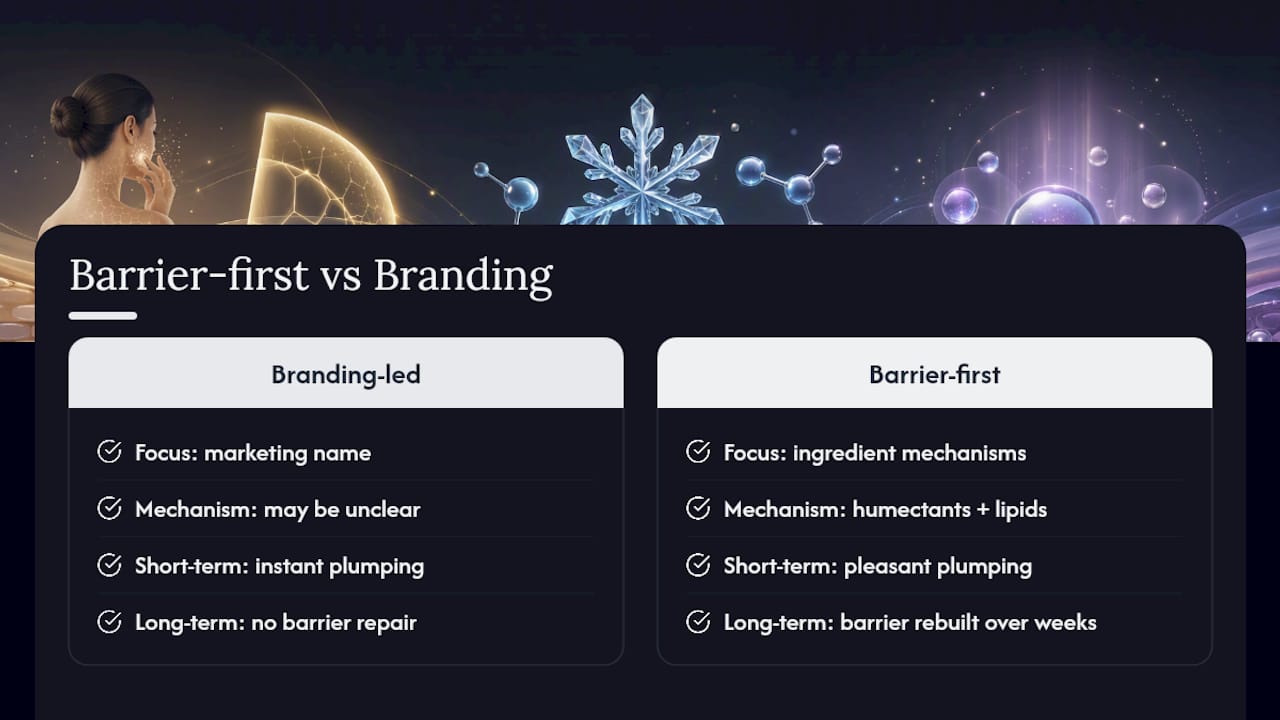
The conventional advice in this space, “just find a hydrating moisturizer,” undersells how much the barrier-repair timeline matters. Instant plumping feels good and sells products, but the real payoff, fewer fine lines from dehydration and steadier moisture retention, takes weeks of lamellar lipids integrating into your skin’s structure. Readers who understand that distinction stop expecting overnight miracles and start judging products on ingredient concentration and consistency of use instead.
If there’s one thing to prioritize first, it’s checking whether a formula pairs humectants with actual lipid-repair ingredients, not just water-binding agents alone. That combination is what separates a product that feels good for an hour from one that changes how your skin holds moisture by next month.
— Barbara
Why the 2 Minute Miracle Moisturizer Fits This Same Logic
Miracle Gel’s 2 Minute Miracle Moisturizer is built on the exact mechanism map covered above: humectants for immediate hydration, protective actives like Antarcticine for skin comfort, and a formula designed to show visible smoothing within minutes rather than after weeks of guessing whether a product is working.
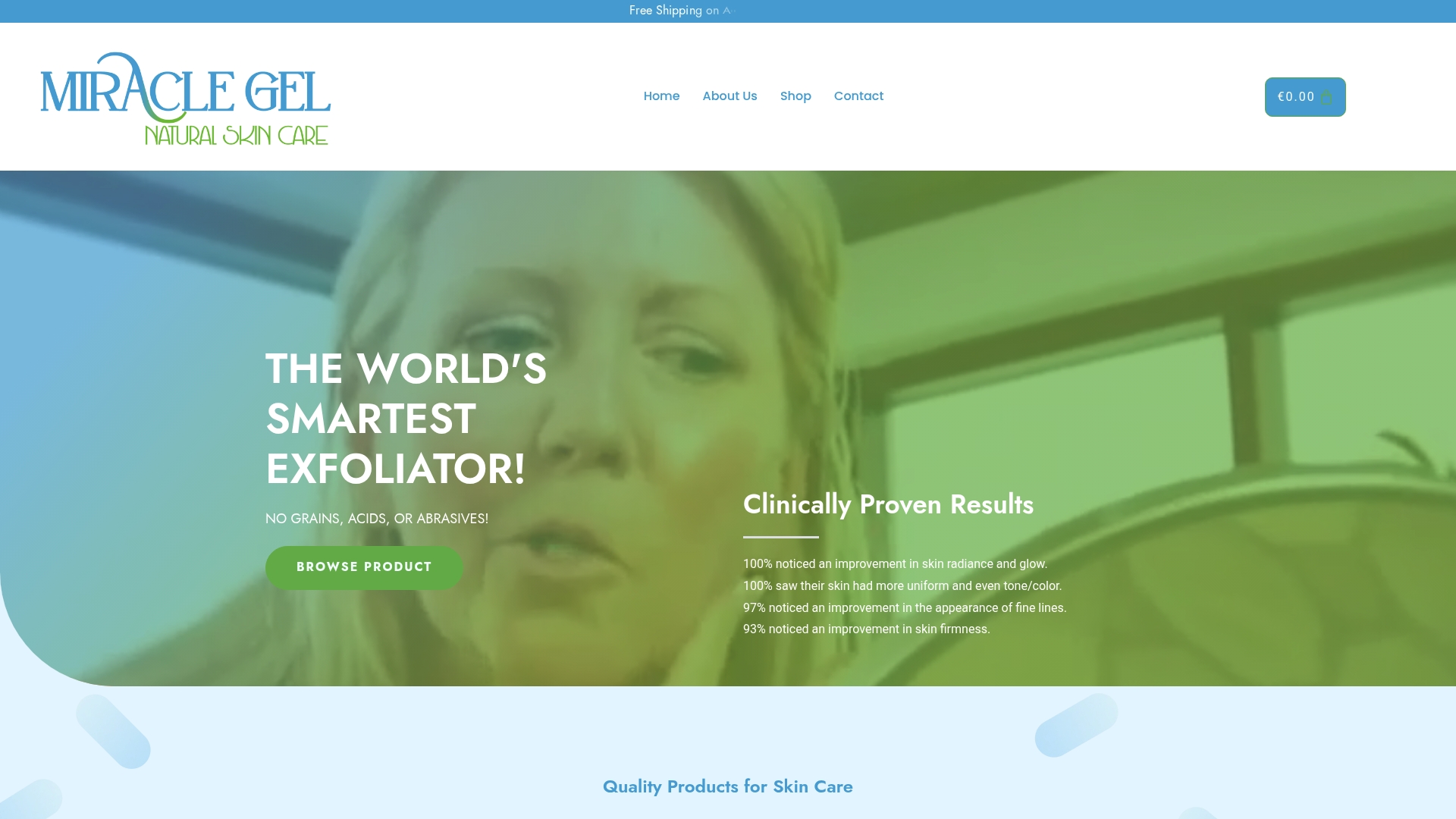
It’s formulated for mature and sensitive skin types that need barrier support without heavy fragrance or harsh actives, and its clinical framing follows the same evidence-based logic used to evaluate ingredient systems like TriMoist KMF, not vague marketing language. If you’re building a fuller regimen around this approach, the natural skincare collection for women 40 and up is the next place to look. Visit the product page, check the ingredient list against what you’ve just learned, and see how the formula holds up under that scrutiny.
Where to Verify These Claims Yourself
- Mibelle Biochemistry’s TriMoist™ KMF page for manufacturer-reported clinical results
- SpecialChem’s ingredient summary for formulation levels and third-party evaluation
- A peer-reviewed cryo-EM review for scientific context on what “cryo” means outside cosmetics
- The 2 Minute Miracle Moisturizer product page for formulation and proof-point details
Sources
- Trimoist™ KMF | Mibelle Biochemistry
- Trimoist KMF — SpecialChem
- Developments, applications, and prospects of cryo‐electron microscopy | PMC
- From cryo-facial to ice rollers — what cryotherapy can do for skin | BeautyTechReview