
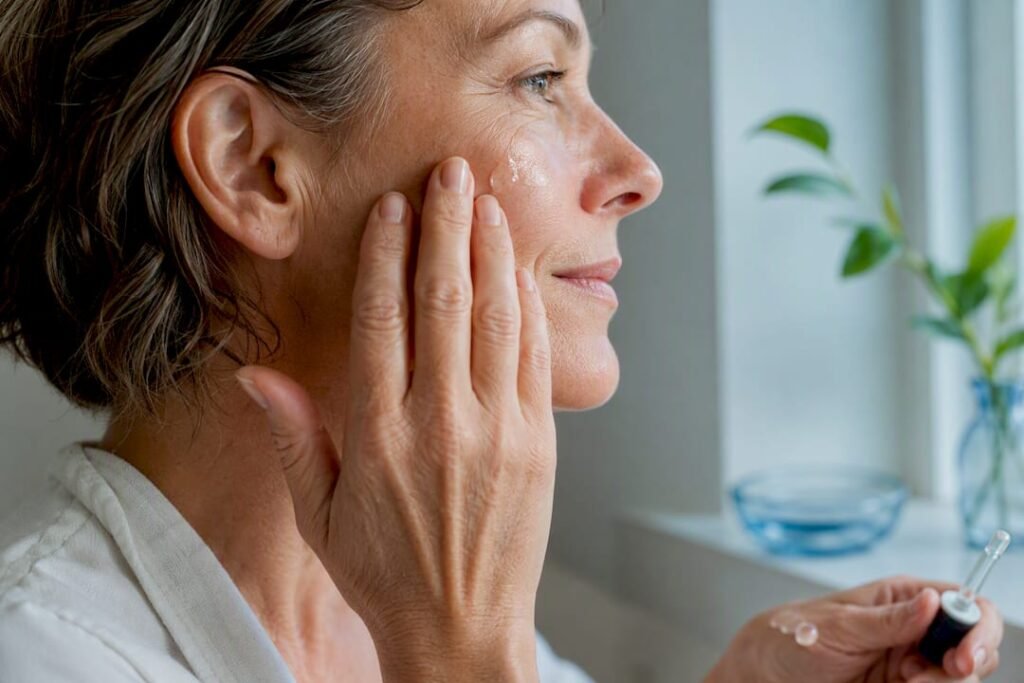
Peptide serums can genuinely firm skin and improve texture, but only when the formulation actually delivers active peptides into the skin rather than leaving them sitting on the surface. Clinical studies show measurable improvement within weeks to twelve weeks of consistent use, with one open-label trial finding about 52% of subjects reached moderate-to-marked improvement after twelve weeks of twice-daily use. Miracle Gelnaturalskincare formulates its peptide products around that same principle: the peptide matters less than whether it can actually get where it needs to go.
TL;DR:
- Peptides need effective delivery systems like liposomes or penetration enhancers to cross the skin barrier and be truly active.
- Signal peptides such as Matrixyl show significant collagen and firmness improvements within 12 weeks of consistent use.
- Expression line-reducing peptides like Argireline can decrease wrinkle depth by up to 30% after 30 days of daily application.
- Formulation quality, including concentration and carrier systems, largely determines a peptide serum’s effectiveness.
- Peptides are generally safe for sensitive skin, but poor formulation or added ingredients can cause irritation or reactions.
Table of Contents
- How Do Peptide Serums Work on the Skin?
- What Types of Peptides Show the Strongest Evidence?
- What Are the Real Peptide Serum Benefits for Skin?
- How Should You Use a Peptide Serum in Your Routine?
- When Will You See Results From a Peptide Serum?
- Are Peptide Serums Safe for Sensitive or Mature Skin?
- Miracle Gelnaturalskincare’s Approach to Peptide Formulation
- Who Peptides Actually Help Most
- Try a Peptide Serum Built for Real Skin Barriers
- Sources
- FAQ
How Do Peptide Serums Work on the Skin?
Peptides are short chains of amino acids that act as messengers, signaling skin cells to produce more collagen, elastin, and the structural proteins that keep skin firm and supple. Your body already makes thousands of them. Skincare formulas borrow specific sequences shown to trigger particular responses, like ramping up collagen synthesis or calming inflammatory signals.
Here’s where topical peptides differ fundamentally from injectable ones. Injected peptides, like the ones used in some medical treatments, work systemically and bypass the skin barrier entirely. Topical peptides have to survive on the skin’s surface, then cross the stratum corneum, which was built by evolution specifically to keep foreign molecules out.
That’s the crux of why formulation matters so much. A well-known guideline in dermal science holds that molecules over roughly 500 daltons in molecular weight struggle to penetrate the skin barrier without help. Most peptides exceed that threshold on their own.
- Chemists get around this through palmitoylation, attaching a fatty acid tail to the peptide so it can slip through lipid layers in the skin.
- Others rely on carrier systems, liposomes, or penetration enhancers built into the base formula.
- A review of cosmetic peptide delivery methods confirms that poor membrane permeability remains one of the biggest hurdles in peptide skincare, and that the delivery system often matters as much as the peptide itself.
What Types of Peptides Show the Strongest Evidence?
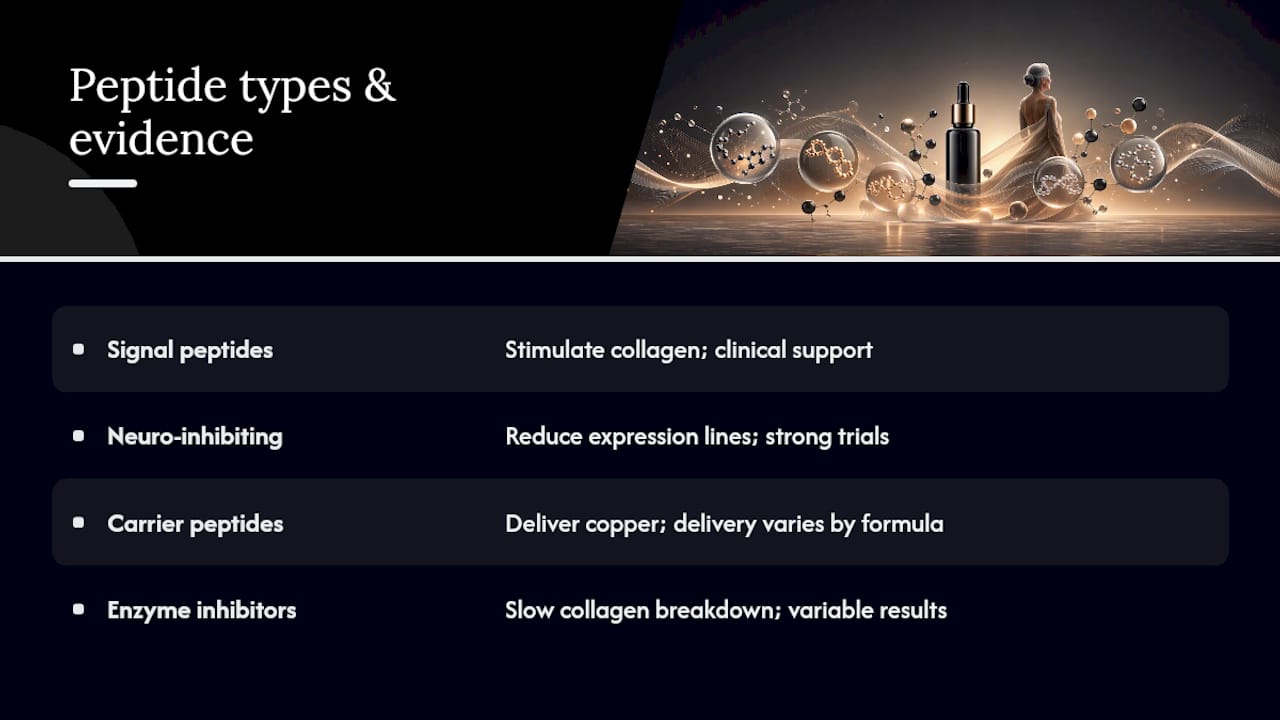
Not all peptides are chasing the same goal, and lumping them together is where a lot of skincare marketing goes wrong. Cosmetic peptides fall into four broad categories, each working through a distinct mechanism.
Signal peptides, like palmitoyl pentapeptide-4 (commonly sold as Matrixyl), tell fibroblasts to ramp up collagen and elastin production. A clinical and ex vivo study of a multi-peptide serum using this approach found statistically significant reductions in microfolds and increases in epidermal thickness after twelve weeks compared to a control formula.
Neurotransmitter-inhibiting peptides, most famously acetyl hexapeptide-3 (Argireline), work by softening the muscle contractions that cause expression lines around the eyes and forehead. This category has some of the strongest trial support of any peptide class.
A 30-day trial using a 10% Argireline concentration in an emulsion base reported wrinkle-depth reductions of up to 30% with twice-daily application, though that result reflects a specific concentration and vehicle, not a guarantee across every product on shelves.
Carrier peptides, such as copper peptides (GHK-Cu), ferry trace minerals like copper into the skin to support wound healing and collagen remodeling. The mechanistic case is compelling, but consistent dermal delivery still depends heavily on formulation quality.
Enzyme-inhibitor peptides work differently again, slowing the enzymes that break down existing collagen rather than stimulating new production. Review-level evidence points to Argireline and Matrixyl as having the most consistent topical trial support, while other peptide types show more variable results depending on formulation.
The practical takeaway: two products can list the same peptide and perform completely differently. Concentration, vehicle, and delivery system decide the outcome.
What Are the Real Peptide Serum Benefits for Skin?
This is the part most readers actually came for, so here’s the honest rundown of what a well-formulated peptide serum can and can’t do.
- Firmness and collagen support. Signal peptides give fibroblasts a nudge toward producing more collagen, with visible firmness improvements typically measured between four and twelve weeks of consistent use.
- Smoother texture and softened fine lines. Expression lines, the kind that form from repeated facial movement, tend to respond better and faster than deeper static wrinkles caused by volume loss.
- Barrier support and hydration. Many peptide serums pair well with humectants like hyaluronic acid, since peptides work on structural repair while hyaluronic acid pulls in water. The two mechanisms complement rather than compete.
- Calming and anti-inflammatory effects. Certain peptides help quiet inflammatory signaling in skin, which makes them a reasonable pick for sensitive or reactive skin types looking for gentle anti-aging support.
Clinical commentary from the Cleveland Clinic confirms peptides can support collagen production and barrier strength, while noting that formulation quality drives both cost and effectiveness. A cheap peptide serum with an unstable base or poor delivery system may do almost nothing, regardless of what’s printed on the label.
Pro Tip: Look for peptide serums that also list a delivery-focused ingredient, like liposomes, ceramides, or a lipid-based carrier, in the first half of the ingredient list. That’s usually a better predictor of results than the peptide name alone.
How Should You Use a Peptide Serum in Your Routine?
Peptide serums slot into a routine in a specific order, and getting that order wrong can dilute results.
- Cleanse first. Start with a gentle, non-stripping cleanser so the skin barrier is intact before anything else goes on.
- Apply an antioxidant serum, if you use one. Vitamin C in the morning works well ahead of peptides, though this step is optional.
- Apply the peptide serum to slightly damp skin, which can help with absorption.
- Follow with a moisturizer to lock in the serum and support the barrier.
- Finish with SPF in the morning. Peptides don’t replace sun protection. Unprotected UV exposure breaks down collagen faster than any serum can rebuild it.
Start with once-daily application, typically in the evening, and increase to twice daily only if your skin tolerates it well and the product is designed for that frequency. Give it four to twelve weeks before judging results.
Peptides generally play well with hyaluronic acid, most moisturizers, and vitamin C. Where you want to be more careful is layering multiple peptide products at once or combining peptides with a strong retinoid in the same routine. Cosmetic chemists caution that stacking too many peptide formulas can create instability and actually dilute the benefit rather than compounding it. One well-formulated peptide serum usually beats three layered on top of each other. Patch-test any new product on your inner forearm for 48 hours before applying it to your face, especially if you have sensitive or reactive skin.
When Will You See Results From a Peptide Serum?
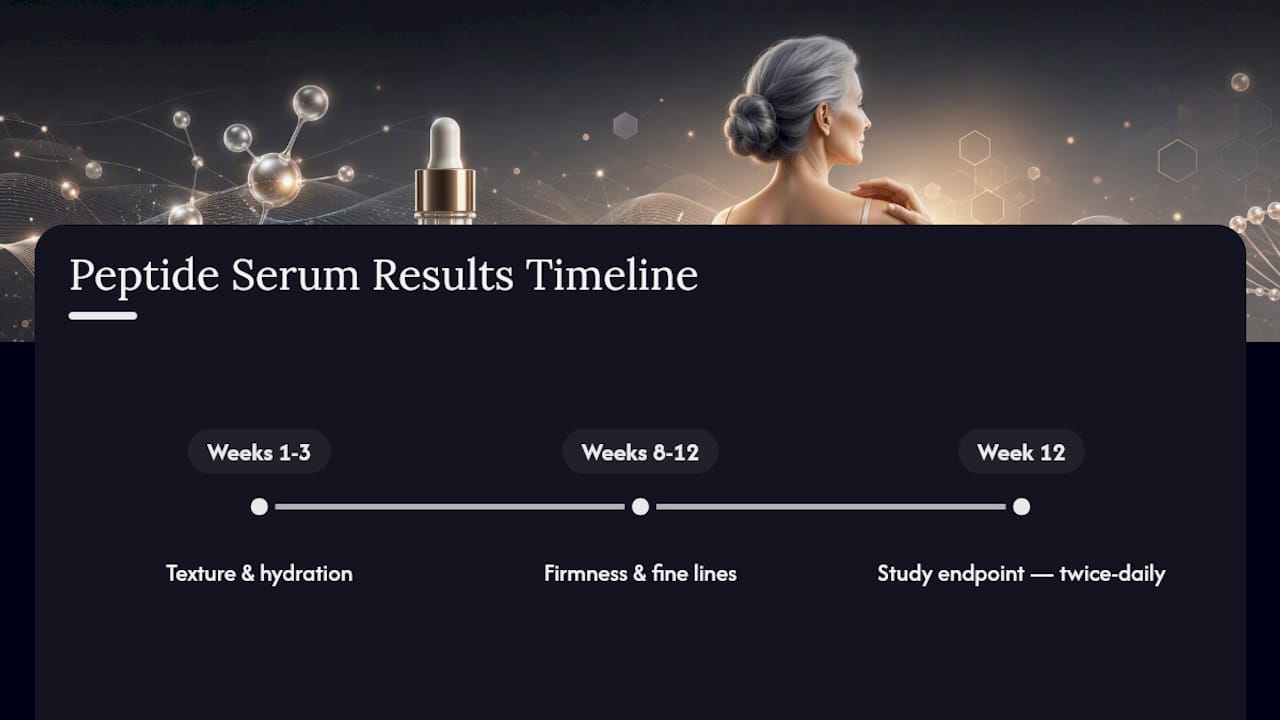
Patience matters here. The 12-week open-label study that found meaningful improvement in most subjects used twice-daily application for the full twelve weeks, not a quick fix over a few days. Texture and hydration often shift first, sometimes within a few weeks, while firmness and fine-line improvement tend to show up closer to the eight to twelve week mark.
Peptides realistically improve texture, softness, and mild expression lines. They are not a substitute for injectables, laser resurfacing, or other in-office procedures when it comes to dramatic lifting or deep static wrinkles. Peptide size, the delivery system, and concentration all cap how much a topical product can achieve. Pairing a peptide serum with daily SPF and a solid moisturizer routine gives it the best chance of showing what it can actually do.
Are Peptide Serums Safe for Sensitive or Mature Skin?
Peptides themselves are generally well tolerated, even on reactive or mature skin, since they’re structurally similar to proteins your skin already recognizes. Most reported issues trace back to other ingredients in the formula, like fragrance, preservatives, or added acids, rather than the peptides.
- Mild redness or transient stinging can occur, especially when introducing a new product.
- True allergic reactions are rare, but stop use and seek medical advice if you notice swelling, blistering, or persistent irritation.
- Talk to a dermatologist before starting a new active if you’re pregnant, breastfeeding, or considering professional-grade peptide treatments alongside your routine.
- For sensitive skin, introduce one new active product at a time and lean toward fragrance-free formulas to make it easier to identify what’s causing a reaction, if one happens.
Miracle Gelnaturalskincare’s Approach to Peptide Formulation
Miracle Gelnaturalskincare built its 2 Minute Miracle Peptide+ Serum around the same formulation principles covered above: getting active ingredients past the surface rather than letting them sit on top of skin. The product uses the brand’s Tri-Moisture Cryo Complex™ alongside its peptide blend, aiming to pair barrier support with peptide activity rather than treating them as separate steps.
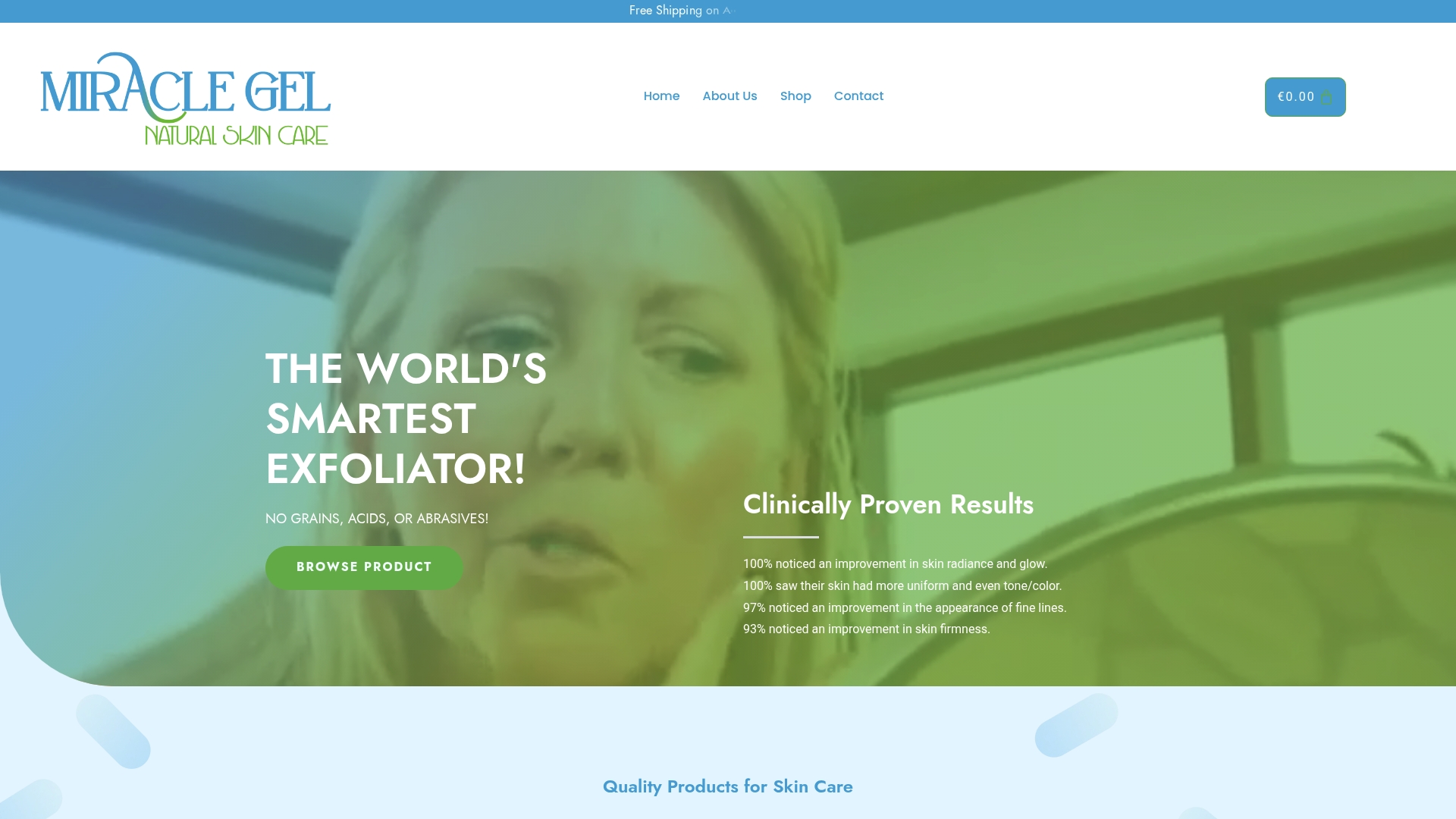
Some brands are built around natural, gentle formulations for women navigating visible aging without harsh actives. Miracle Gelnaturalskincare.ie features clinically proven results and customer testimonials on its product pages, and readers who want the full formulation breakdown or study details can review those directly on the site’s peptide serum product listings.
Who Peptides Actually Help Most
Mature skin benefits most from peptides used as gentle maintenance, not a rescue treatment. Get sunscreen and barrier care solid first. Peptides work best as the next step after those basics, supporting collagen and texture rather than replacing foundational skin health.
— Barbara
Try a Peptide Serum Built for Real Skin Barriers
Formulation is the whole game with peptides, and Miracle Gelnaturalskincare built its 2 Minute Miracle Peptide+ Serum specifically to address the penetration and stability problems that make cheaper peptide products underperform. It pairs peptide actives with the brand’s Tri-Moisture Cryo Complex™, aiming for the kind of visible firmness and texture improvement that clinical studies associate with well-delivered formulas, without synthetic fragrance or harsh actives that can irritate mature or sensitive skin.
If you’re weighing peptides against other anti-aging ingredients, browse the full anti-aging serum lineup to compare formulas and find the one that matches your skin’s needs, or head straight to the product page to check current pricing and start a routine this week.
Sources
- An Open‐Label Study to Assess the Efficacy and Tolerability of a Multifunctional, 10‐Peptide Face and Neck Serum to Address Skin Quality
- Peptides for skin care – Cleveland Clinic
- Do Peptide Serums Actually Work? What Studies Show | RethinkPeptides
FAQ
What is peptide serum used for?
Peptide serums are used to support collagen production, firm skin texture, soften fine expression lines, and strengthen the skin barrier, typically as part of a daily anti-aging routine.
Should I use peptide serum every day?
Most people start with once-daily application, usually at night, then move to twice daily if the product is formulated for it and skin tolerates it well; visible results generally take four to twelve weeks.
Which is better, retinol or peptide?
They work differently rather than competing directly: retinoids speed up cell turnover and can cause more irritation, while peptides work more gently on collagen signaling, which makes peptides a better starting point for sensitive or mature skin easing into actives.
What not to mix with peptides?
Avoid stacking several different peptide products at once, since cosmetic chemists warn this can destabilize formulas and dilute results; introduce strong retinoids cautiously and on alternating nights rather than layering everything together.