
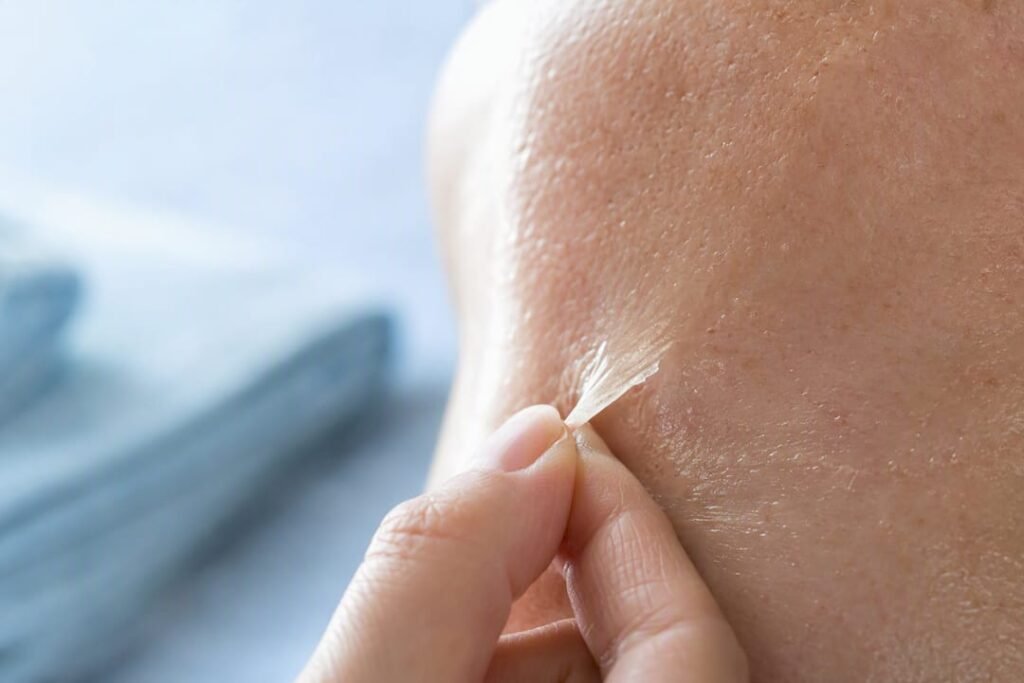
Gommage is a “erasing” exfoliation method that uses a film forming gel (cellulose or starch plus mild enzymes) to lift away dead skin and debris without scrubbing or acid penetration. It suits sensitive, dry, and mature skin best, along with anyone whose barrier reacts badly to grainy scrubs or strong AHAs. If your skin flushes easily or you’re over 40, this is usually the safer entry point into regular exfoliation.
TL;DR:
- Gommage uses film-forming gels and enzymes to lift surface debris without abrasion or acid penetration, making it suitable for sensitive and mature skin.
- The exfoliating flakes are product residue, not skin, formed by contraction of the film layer as it dries and trapped debris in small, rollable flocs.
- Use gommage once or twice a week, avoiding active ingredients like retinoids or acids on the same day, and always patch-test if you have allergies or recent skin treatments.
- Proper technique involves applying a thin layer on damp skin, waiting for the film to set, then massaging gently until the flakes roll off, followed by rinsing and moisturizing.
- Overuse or incorrect drying timing can cause irritation, so adjusting frequency based on skin response is key, especially for those over 40 or with reactive skin.
Table of Contents
- What Is Gommage Exfoliation, Exactly?
- How Does Gommage Actually Work on Skin?
- Who Should Use Gommage, and Who Should Skip It?
- How to Do Gommage at Home, Step by Step
- How Often Should You Gommage?
- What Backs These Claims?
- What Side Effects Can Gommage Cause?
- Where the Conventional Advice on Exfoliation Gets It Wrong
- Try a Gentle Gommage Approach That Fits Your Skin
- Sources
- FAQ
What Is Gommage Exfoliation, Exactly?
The word comes from the French verb meaning “to erase,” and that’s a genuinely useful mental image. You’re not sanding your face down or dissolving skin cells with acid. You’re applying a thin gel that dries into a soft film, then rolling it off with your fingertips so it takes surface gunk with it, according to Wiktionary’s entry on the term.
That distinction matters more than most product labels let on. A body scrub relies on physical grit, salt, sugar, or crushed shells, to knock loose dead cells through friction. A chemical peel or an AHA/BHA serum works by dissolving the bonds between cells, sometimes reaching several layers deep. Gommage stays on the surface. It’s mechanical and enzymatic, not abrasive or corrosive.
When you’re shopping, look for these signals on the ingredient list:
- Cellulose, starch, or similar film formers near the top of the list
- Papain or bromelain, plant enzymes doing gentle chemical work
- A gel or paste texture rather than a beaded scrub
- No visible grit particles you can feel between your fingers
How Does Gommage Actually Work on Skin?
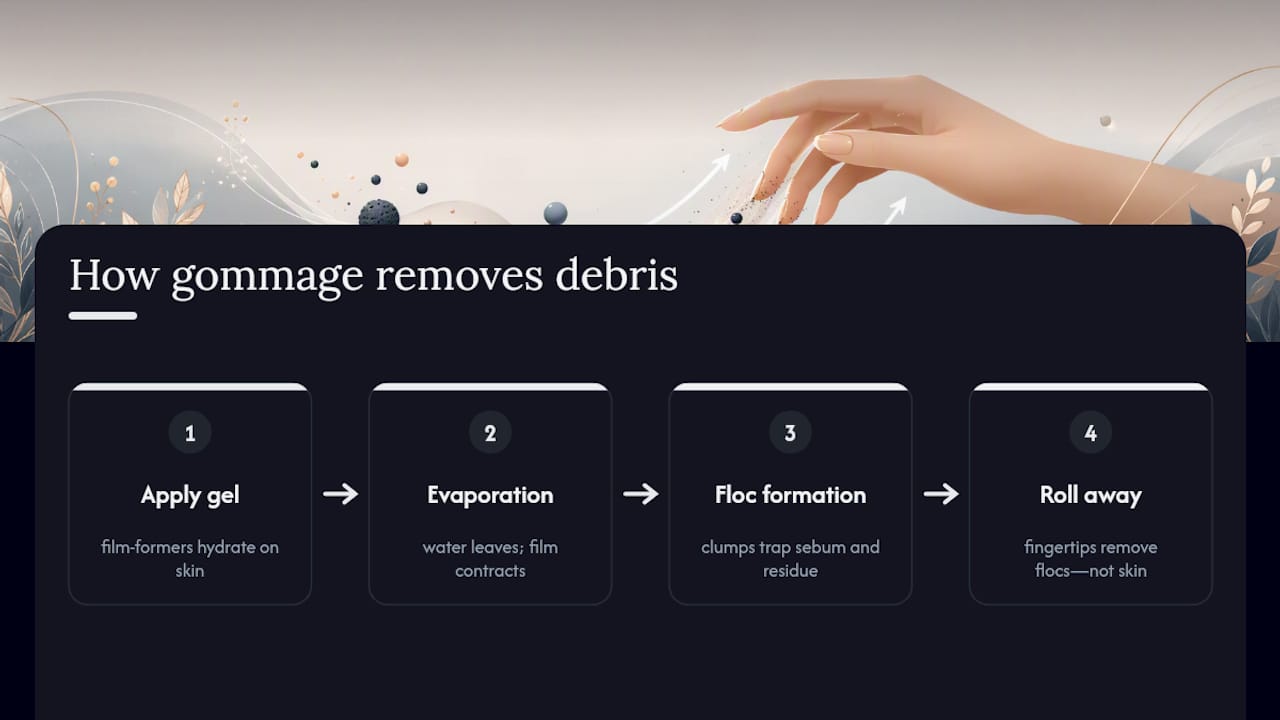
Film forming ingredients like cellulose and starch hydrate when you apply the gel, then start drying into a thin layer as the water evaporates. As that layer dries, it contracts and clumps into small, rollable pieces, called flocs, that trap sebum, dead skin, and surface residue as you massage, according to Cosmetics & Toiletries.
Many formulas add papain (from papaya) or bromelain (from pineapple) to that base. These enzymes break down surface keratin gently while the film does its physical job, giving you a light chemical assist without the sting of a concentrated acid, per mindbodygreen’s breakdown of the French method.
Here’s the part most people get wrong: those dramatic little “shavings” you see rolling off your face aren’t skin. They’re product flocs that have trapped debris, a mechanical clumping effect rather than actual skin peeling away, as Into The Gloss has pointed out. It looks satisfying. It’s not your face flaking off in sheets.
Formulators control how well this works by adjusting the ratio of film former to liquid and how fast the product dries. Dry too fast and the flocs turn hard and scratchy. Dry too slow and they never roll properly, leaving you rubbing a sticky gel that does nothing. That balance is why a well-made gommage feels different from a cheap knockoff, even when the ingredient lists look similar.
Who Should Use Gommage, and Who Should Skip It?
Gommage tends to work well across most skin types, but the fit varies:
- Sensitive or reactive skin: Usually the gentlest exfoliation option available, since there’s no grit and no deep acid penetration.
- Dry skin: Works well when followed immediately by a rich moisturizer, since the drying phase can pull some surface moisture with it.
- Normal to oily skin: Handles gommage easily and can often use it more frequently than drier skin types.
- Acne-prone skin: Fine for mild, non-inflamed breakouts, but skip it over active cystic acne or open lesions.
- Rosacea: Patch-test first. Some tolerate it well; others find any massage triggers flushing.
Mature skin, especially over 40, often benefits the most from this gentler approach. Skin naturally sheds dead cells more slowly with age, so regular light exfoliation helps skincare products absorb better and makeup sit smoother. Pair it with a barrier-supporting moisturizer afterward, since aging skin also loses moisture faster.
Avoid gommage if you have open cuts, sunburn, a chemical peel or laser treatment within the past week, or a known allergy to papaya or pineapple enzymes. When in doubt, patch-test on your inner arm first.
How to Do Gommage at Home, Step by Step
Getting the technique right is what separates a satisfying gommage session from a frustrating, sticky mess.
- Cleanse first. Use a gentle cleansing routine and pat skin lightly damp, not soaking wet.
- Apply an even layer. Use a pea to nickel sized amount, spread thinly across your face, avoiding the eye area.
- Wait for the film to set. Most products need 30 seconds to two minutes before they’re ready to roll. Check the label, since drying time varies by formula.
- Massage in small circles. Use light fingertip pressure and gentle circular strokes. You should feel the product rolling into soft flecks, not grinding against your skin.
- Rinse thoroughly. Lukewarm water removes any residue the massage didn’t lift.
- Pat dry and moisturize immediately. Follow with a hydrating cream, and add sunscreen if this is a daytime routine.
Pro Tip: If the gel starts pilling into hard, scratchy clumps instead of soft flecks, you’ve let it dry too long. Rinse it off and start with a thinner layer next time.
Don’t layer a strong retinoid or acid serum on the same day you gommage. Your skin just did surface renewal work; stacking actives on top invites irritation. For a broader framework on sequencing exfoliation with the rest of your routine, this step by step exfoliation guide walks through the order that works best.
How Often Should You Gommage?
Frequency depends entirely on how your skin tolerates it. Sensitive or dry skin generally does best with once a week. Normal to oily, more tolerant skin can often handle two to three sessions weekly. If you notice redness, tightness, or increased sensitivity to other products, cut back immediately, that’s your skin telling you to slow down.
Results show up in two timeframes. Immediately, you’ll notice smoother texture, less visible buildup in pores, and makeup applying more evenly. Over weeks, consistent use tends to improve how well serums and moisturizers absorb. Don’t expect gommage to fade pigmentation or build collagen the way a dermatologist-administered peel might, since it works only on the surface, per Cosmetics & Toiletries.
Track your progress by feel, not by drama. Run your fingers across your cheek before and after a few weeks of consistent use:
- Does skin feel smoother under your fingertips?
- Are clogged pores less visible around your nose and chin?
- Does foundation or tinted moisturizer sit more evenly?
Those are the honest markers of gommage working, not how impressive the flakes look mid-massage.
What Backs These Claims?
The mechanism details throughout this guide, film formation, floc creation, enzyme action, come from formulation-industry sources and clinician-facing explainers, not marketing copy. If you want a deeper look at sensitive-skin exfoliation logic before you buy anything, Miraclegelnaturalskincare’s guide to gentle exfoliant alternatives covers how to match a formula to your specific skin concerns. Founder Shelly Maguire built the brand’s approach around gentle, natural formulations rather than harsh chemical shortcuts, which is the same standard applied to every recommendation in this article.
What Side Effects Can Gommage Cause?
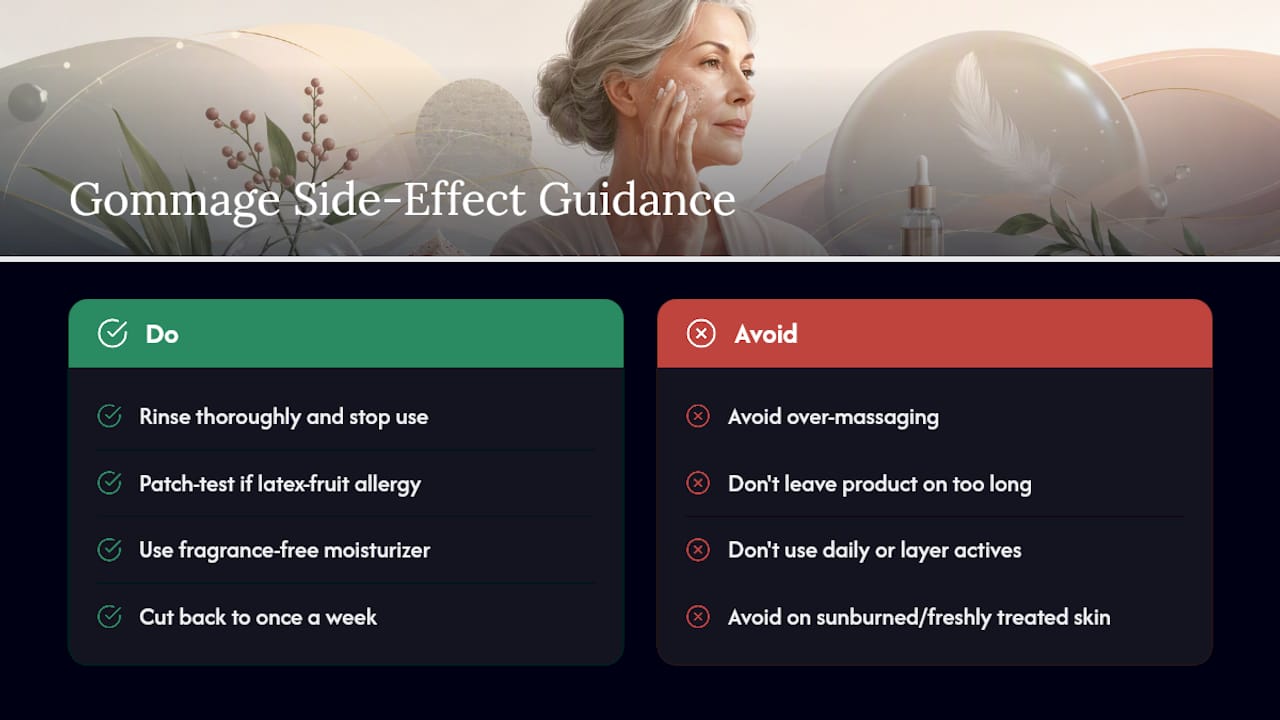
Gommage causes fewer reactions than scrubs or acids, but it isn’t risk-free. The most common complaint is mild redness or tightness right after rinsing, usually from over massaging or leaving the product on too long before working it off. This typically fades within an hour and responds well to a fragrance-free moisturizer.
A smaller number of people react to the enzymes themselves. Papain and bromelain are plant proteins, and plant-protein allergies exist, according to mindbodygreen. If you notice hives, intense burning, or swelling rather than ordinary mild warmth, stop using the product and rinse thoroughly. Anyone with a known latex-fruit allergy syndrome, common with papaya and pineapple, should patch-test carefully or avoid enzyme-heavy formulas altogether.
Over-exfoliation is the other real risk, and it sneaks up gradually rather than all at once. Using gommage daily, or layering it with retinoids and strong acids the same day, can leave skin feeling raw, tight, and more reactive to products that never bothered it before. If your skin starts stinging when you apply a normal moisturizer, that’s a sign you’ve pushed too far. Cut back to once a week, skip actives for a few days, and lean on a simple, hydrating routine until your barrier settles.
Sunburned or freshly treated skin, post-laser, post-peel, needs a full recovery window before gommage returns to the rotation. When irritation doesn’t resolve within a day or two, or gets worse instead of better, that’s a conversation for a dermatologist rather than a skincare forum.
Where the Conventional Advice on Exfoliation Gets It Wrong
Most exfoliation content treats “gentle” and “effective” as opposites, pushing readers toward stronger acids the moment they want real results. This framing doesn’t hold up once you look at what gommage actually does. The film-former-and-enzyme mechanism removes genuine surface debris and sebum, it’s not a placebo step people do because they’re afraid of acids.
What’s overrated is the drama. Plenty of marketing leans on those satisfying rolling flakes as proof of “deep” exfoliation, when the research is clear that they’re just product residue trapping debris, not skin cells sloughing off. Judge a gommage by how your skin feels the next morning, not by how much visibly rolled off during the massage.
The mistake I’d prioritize fixing first is frequency, not formula. People buy an excellent gentle gommage and then use it daily hoping for faster results, which defeats the entire point of choosing a gentle method. Pick a good formula, use it once or twice a week, and give your barrier the recovery time it’s designed around. That’s where the real payoff shows up, especially for skin over 40 that can’t recover as quickly as it used to.
— Barbara
Try a Gentle Gommage Approach That Fits Your Skin
Miraclegelnaturalskincare builds its exfoliating and prep products around the same barrier-first logic covered above: gentle, plant-derived formulations instead of harsh grit or aggressive acids, designed to work with mature and sensitive skin rather than against it.

If you’re over 40 and want an exfoliation step that won’t leave your skin tight or reactive, the natural skincare regimen built for radiant, youthful skin at 40+ walks through how gentle exfoliation fits alongside moisturizing and brightening steps in a full routine. Shipping and promotions may encourage building out a fuller regimen in one order rather than piecing it together over several. Start there, patch-test any new product on your inner arm first, and give your skin a full week to tell you how it’s responding before adjusting frequency.
Sources
For the formulation mechanics behind gommage, Cosmetics & Toiletries covers film-former chemistry in depth. For consumer-facing context on the method’s origins and suitability, see mindbodygreen and Skincare.
- Exfoliation, Scrub and Gommage
- What Is Gommage? We Explain The French Exfoliating Method | mindbodygreen
- Are peeling masks just a big hoax? | Into The Gloss
FAQ
Do Gommage Exfoliators Actually Work?
Yes. The film-former-and-enzyme combination genuinely lifts surface debris and sebum, though the effect stays on the skin’s surface rather than reaching the depth an acid peel does.
What Exactly Are Gommage Exfoliators?
They’re gel or paste exfoliants that use cellulose or starch to form a thin film, plus mild enzymes like papain or bromelain, which roll off surface buildup instead of scrubbing or dissolving it.
What Should I Look for in a Gommage Product?
Look for cellulose or plant-derived starch high on the ingredient list, gentle enzymes rather than concentrated acids, and a gel texture with no visible grit. A product built around these barrier-friendly ingredients, like the options in Miraclegelnaturalskincare’s sensitive-skin collection, fits most sensitive and mature skin types.
What Is the Gommage Method, in Practice?
Apply a thin layer to clean, slightly damp skin, let it dry into a soft film for about a minute, then massage in gentle circles until it rolls into soft flecks before rinsing and moisturizing.