
TL;DR:
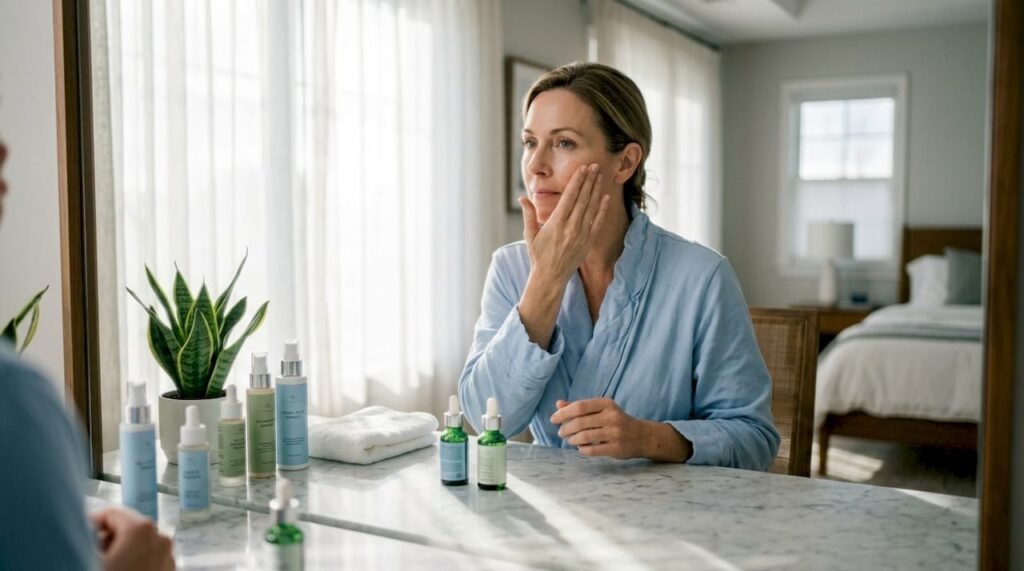
- Many women over 40 overlook serums, but they deliver concentrated actives that fill skincare gaps. Serums penetrate skin more effectively than creams, targeting aging signs with ingredients like vitamin C, hyaluronic acid, and peptides. Incorporating targeted serums into routines promotes visible, lasting anti-aging and skin-brightening results tailored to mature skin’s unique needs.
Many women over 40 write off facial serums as overpriced extras that sit between cleansing and moisturizing without doing much. That assumption costs you real results. Targeted serums complement moisturizers and sun protection rather than replacing them, meaning each product earns its place in your routine by doing a specific job. Serums exist to drive potent actives deeper into skin, which is exactly what mature skin needs when collagen production slows and radiance starts to fade. This guide unpacks what serums are, which ingredients actually move the needle, and how to use them for visible, lasting results.
Table of Contents
- What is a facial serum and how is it different from creams?
- Why women over 40 choose serums for anti-aging and skin-brightening
- Understanding serum ingredients: what should you look for?
- How to use facial serums for best results in your 40s and beyond
- Why generic skin routines miss the mark for mature skin
- Build your best anti-aging serum routine today
- Frequently asked questions
Key Takeaways
| Point | Details |
|---|---|
| Targeted active delivery | Facial serums provide potent ingredients directly to skin concerns like aging and dullness. |
| Complement, don’t replace | Serums work best alongside moisturizers and SPF, not as substitutes. |
| Ingredient choices matter | Look for vitamin C, niacinamide, and hyaluronic acid in serums for mature, luminous skin. |
| Consistent application | Daily, correct use of serums unlocks visible anti-aging and brightening effects in weeks. |
What is a facial serum and how is it different from creams?
Think of a facial serum as a highly focused delivery vehicle. Its job is to carry a concentrated dose of active ingredients into your skin as efficiently as possible, not to sit on top and protect the surface the way a moisturizer does.
Serums are water-based or oil-based liquids with a much thinner consistency than creams. That lighter texture means the molecules in a serum are generally smaller, which allows them to penetrate the upper layers of skin more effectively. A standard moisturizer, by contrast, contains a higher proportion of emollients and occlusives (ingredients that soften skin and form a protective seal) designed to lock in water and shield the skin barrier. Neither product replaces the other. They are built for completely different tasks.
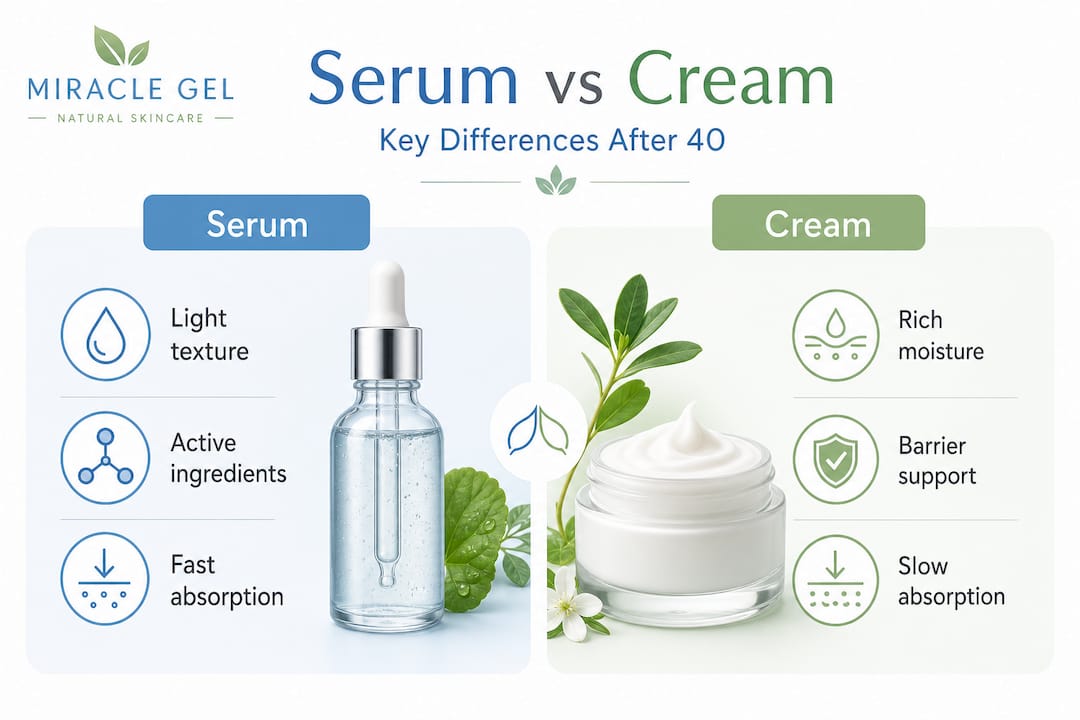
Here is a quick side-by-side to make that clearer:
| Feature | Facial serum | Moisturizer or cream |
|---|---|---|
| Texture | Thin, lightweight | Thick, creamy |
| Primary job | Deliver actives deep into skin | Hydrate, protect, and seal |
| Active concentration | Very high | Low to moderate |
| Best used | Before moisturizer | After serum, before SPF |
| Replaces moisturizer? | No | No |
Key things a well-formulated serum can do for mature skin:
- Deliver antioxidants to fight free-radical damage from pollution and UV exposure
- Brighten uneven skin tone and reduce the appearance of dark spots
- Plump fine lines with hydrating actives
- Smooth skin texture over time with regular use
- Support natural collagen synthesis with targeted compounds
Brightening serums often use vitamin C or niacinamide, while hydrating serums lean on hyaluronic acid or glycerin. Learning the difference between these ingredient families helps you pick the right serum for your specific concerns. More on the full ingredient breakdown is covered in the section below.
Pro Tip: If you have been skipping serum because your skin felt fine with moisturizer alone, consider that your moisturizer is likely not formulated to correct issues like uneven tone or fine lines. Serums fill that gap with precision. Explore brighter skin ingredients to understand which actives to look for in your next formula.
Why women over 40 choose serums for anti-aging and skin-brightening
After 40, your skin biology genuinely changes. Collagen production declines at roughly one percent per year from your mid-twenties onward, and by your forties those losses are visible. Skin loses the plumpness and snap-back elasticity you once took for granted. Cell turnover slows, which means dead skin cells linger longer on the surface, contributing to that flat, grayish look that no highlighter fully fixes.
Environmental stressors compound the problem. Years of sun exposure accumulate as hyperpigmentation (uneven dark patches), and oxidative stress from pollution continues to break down the proteins that keep skin firm. A basic moisturizer is not equipped to reverse or even meaningfully slow these processes because its formula simply does not carry enough of the right actives at the right concentration.
This is exactly where serums earn their place. Here are the top reasons women over 40 make serums a non-negotiable part of their routine:
- Concentrated results. Serums carry far higher percentages of actives than standard creams, so a small amount goes a long way.
- Targeted action. You can select a serum specifically for brightening, for firmness, or for deep hydration depending on your priority that season or year.
- Faster visible change. Because the actives penetrate more effectively, many women notice improvements in radiance and texture within the first few weeks of consistent use.
- Compatibility with natural formulas. Serums work exceptionally well with plant-based actives, meaning you can choose formulas that avoid harsh synthetics without sacrificing efficacy.
- Layerable. You can pair a serum with your existing cleanser, moisturizer, and SPF without overhauling your routine.
“The best actives for aging and brightening concerns can require some guidance to find your ideal match, but consistent use of the right serum produces meaningful, visible improvements.” Dermatologist guidance on serums reinforces this point and encourages selecting formulas suited to your specific skin goals rather than reaching for whatever is trending.
Pro Tip: Skin concerns shift through perimenopause and beyond. What worked brilliantly at 42 may need reassessing at 48. Check in on your skin every six months and adjust your serum choice accordingly. Start by reviewing best actives for 40+ so you always know which ingredients are most relevant to your current concerns, and browse brightening options curated specifically for mature skin.
Understanding serum ingredients: what should you look for?
Not all serums are created equal, and the ingredient list is where you separate a genuinely effective formula from a beautifully packaged disappointment. Here is a breakdown of the key actives and what each one actually does for mature, brightening-focused skin.
| Ingredient | Primary benefit | Why it matters after 40 |
|---|---|---|
| Vitamin C | Brightening, antioxidant | Fades dark spots, boosts radiance, protects from free radicals |
| Niacinamide | Tone evening, pore refining | Reduces redness, improves skin texture, calms sensitivity |
| Hyaluronic acid | Deep hydration | Holds up to 1,000 times its weight in water, plumps fine lines |
| Glycerin | Surface hydration | Draws moisture to skin, inexpensive yet highly effective |
| Vitamin E | Antioxidant, barrier support | Repairs lipid barrier, works synergistically with Vitamin C |
| Ferulic acid | Antioxidant stabilizer | Doubles the antioxidant power of Vitamins C and E |
| Peptides | Collagen support | Signal skin to produce more collagen for firmer texture |
| Bakuchiol | Natural retinol alternative | Gentler than synthetic retinoids, suits sensitive mature skin |
Brightening serums use vitamin C or niacinamide, while antioxidant formulas typically include vitamin E alongside ferulic acid for maximum protective power. Knowing this combination means you can evaluate any product label quickly and confidently.
What to actively avoid in a natural-focused serum routine:
- Denatured alcohol (alcohol denat.) listed high on the ingredient label, which strips the skin barrier and worsens dryness over time
- Synthetic fragrances, often labeled simply as “parfum” or “fragrance,” which are a common source of irritation and sensitivity for mature skin
- Overly high concentrations of strong acids such as glycolic acid at 10 percent or above without guidance, particularly if your skin is reactive or has thinned with age
- Mineral oil and petrolatum in serum formulas, as these can block the lightweight delivery mechanism that makes serums effective in the first place
Browse anti-aging serums formulated with natural, skin-compatible actives, or look specifically at fine line solutions if that is your primary concern right now.
How to use facial serums for best results in your 40s and beyond
Having the right serum is only half the equation. Application technique and layering order make a measurable difference in how much of that active ingredient actually reaches your skin and does its job. Follow these steps consistently for the best outcome.
- Cleanse thoroughly. Start with a gentle cleanser to remove makeup, sunscreen, and the day’s buildup. Clean skin allows the serum to absorb without interference. A double-cleanse works well in the evening if you wear SPF or makeup.
- Tone if it suits your routine. A gentle, alcohol-free toner or essence after cleansing slightly re-hydrates skin and can actually improve serum absorption. This step is optional but worth experimenting with.
- Apply your serum. Dispense two to three drops into your palm. Press (do not drag) your palms gently against your face and neck using light upward motions. Pressing is kinder than rubbing, especially on mature skin that has lost some structural support.
- Allow full absorption. Give your serum 60 to 90 seconds to sink in before moving on. Applying moisturizer too quickly can dilute the serum or physically push it off the skin surface.
- Follow with moisturizer. Your moisturizer seals in the work the serum has done and maintains your skin barrier. Never skip this step.
- Add SPF in the morning. Serums complement, not replace, moisturizers and sun protection, and a broad-spectrum SPF 30 or higher is non-negotiable if you use brightening or antioxidant actives during the day. Vitamin C, in particular, is most effective when paired with sun protection.
Morning versus evening use. Antioxidant and brightening serums (vitamin C, ferulic acid) work best in the morning when your skin faces environmental exposure. Hydrating and repairing serums (hyaluronic acid, peptides, bakuchiol) suit the evening when skin naturally goes into repair mode overnight.
For sensitive skin. Introduce any new serum slowly. Try every other evening for the first two weeks, then build up to daily use once you confirm your skin tolerates it. If you experience stinging, redness, or breakouts, reduce frequency rather than stopping entirely.
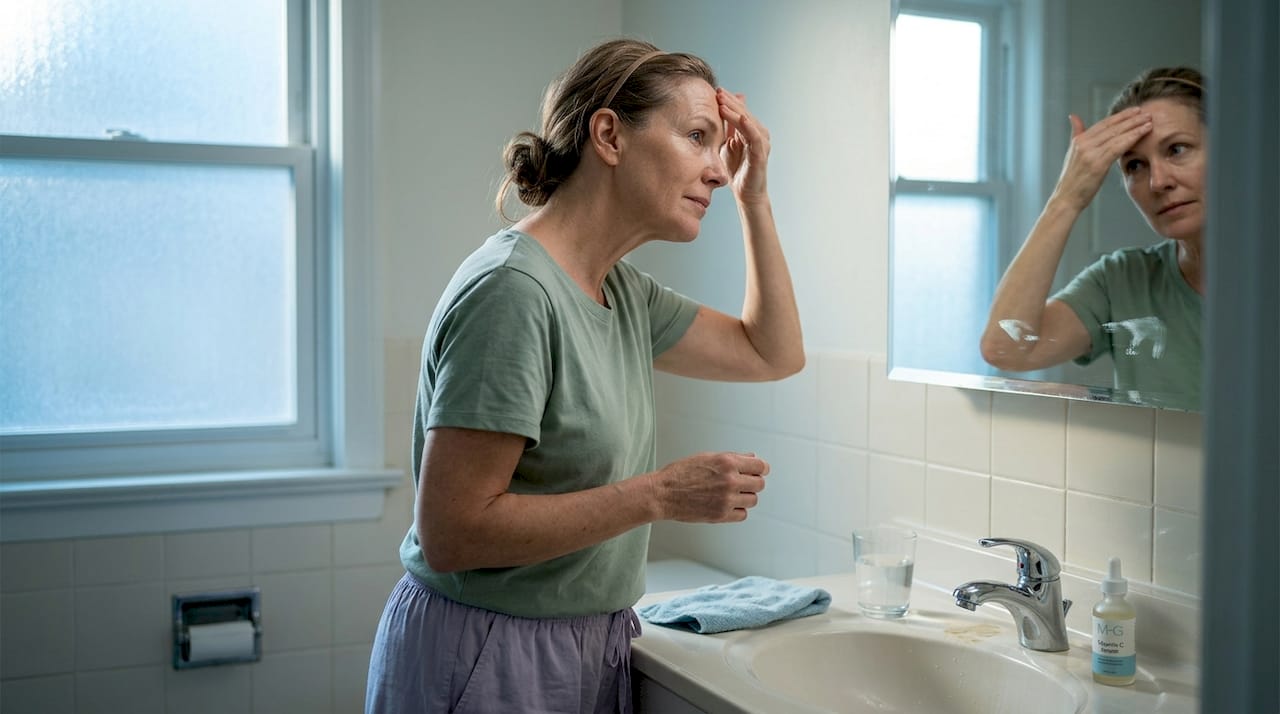
Pro Tip: Slightly damp skin absorbs hyaluronic acid better because the ingredient needs available water to bind to. Apply your serum within 30 seconds of toning or misting your face for noticeably better plumping results. Check whether your serum is suitable for daily use by reviewing sensitive skin serums and learning more about the organic skincare benefits of natural formulas.
Why generic skin routines miss the mark for mature skin
Here is something the mainstream beauty industry rarely admits: the vast majority of skincare advice is written for skin in its twenties and early thirties. The “cleanse, tone, moisturize” framework that dominated beauty counters for decades was designed around younger skin that naturally regenerates quickly, holds water efficiently, and has relatively stable collagen. It was never a blueprint for the complexities that come after 40.
Women over 40 are often handed the same generic product recommendations as their younger counterparts, just in packaging that says “anti-aging.” That is not a strategy. It is a marketing exercise.
The truth is that skin after 40 operates by different rules. Cell turnover has slowed, the microbiome (the community of beneficial microorganisms on your skin’s surface) is more fragile, and the skin barrier is thinner, meaning it loses water faster and reacts more intensely to ingredients it might have tolerated effortlessly at 25. A serum chosen with your actual concerns in mind, whether that is hyperpigmentation, loss of firmness, or persistent dryness, is one of the few skincare investments that directly addresses these biological realities rather than ignoring them.
Anti-aging and brightening needs require targeted serums that complement your other skincare essentials rather than generic products that promise everything and deliver little. The difference between women who age radiantly and those who feel frustrated by their skin often comes down to this simple distinction: intention. Using products chosen deliberately for your skin stage, applied correctly, and given enough time to work produces results that no all-in-one cream can match.
The most powerful thing you can do right now is stop following routines designed for someone else and start building one that reflects the skin you actually have. That means a serum is no longer optional. It is foundational. Discover practical inspiration through age-defying beauty routines built around real results for women at your life stage.
Build your best anti-aging serum routine today
Understanding serums is only the beginning. The next step is finding the right formulas and putting that knowledge to work on your skin.

At Miracle Gel Natural Skincare, every product in our range is formulated with natural, skin-compatible ingredients chosen specifically for women over 40. Our view anti-aging serums collection brings together brightening, hydrating, and firming options so you can build a routine that addresses your exact concerns without compromise. Want to see what consistent use of the right serum can actually achieve? Browse clinically proven skincare results from real women and find out how targeted natural actives deliver visible renewal. For step-by-step guidance tailored to your skin stage, explore our anti-aging tips for 40+ and start your most intentional skincare chapter yet.
Frequently asked questions
Can I use facial serum instead of moisturizer if I have oily skin after 40?
No, serums are best used alongside a moisturizer rather than as a replacement, since even oily mature skin still needs barrier protection. Serums complement, not replace, moisturizers and sun protection, so choose a lightweight, non-comedogenic moisturizer if oiliness is a concern.
Which ingredients should mature skin avoid in serums?
Avoid denatured alcohol, synthetic fragrances labeled as “parfum,” and high-concentration acids without professional guidance, as these can strip or irritate the thinner, more reactive skin that often develops after 40.
How long will it take to see results from a facial serum?
You may notice improved hydration and a fresh glow within the first few days, but meaningful reduction in fine lines, dark spots, or uneven tone typically takes four to twelve weeks of consistent daily use.
Do I need a separate serum for day and night?
Not necessarily, but it is worth considering. Brightening serums with vitamin C or niacinamide and antioxidant formulas (often with vitamin E and ferulic acid) are best suited to daytime use, while hydrating and peptide-rich serums pair well with your skin’s overnight repair process.