
TL;DR:
- Gentle chemical exfoliants like PHAs, low-strength lactic, and mandelic acids are safest for sensitive, mature skin. Enzyme exfoliants and peeling gels serve as effective alternatives when acids cause irritation, but abrasive scrubs should be avoided. Consistent, low-frequency use paired with hydrating skincare supports skin health and reduces aging signs after 40.
The safest exfoliant alternatives for sensitive, mature skin are PHAs (gluconolactone, lactobionic acid), low-concentration lactic and mandelic acids, enzyme exfoliants (papain, bromelain), and ultra-gentle physical options like konjac sponges and peeling gels. The American Academy of Dermatology (AAD) consistently recommends chemical methods over mechanical scrubs for sensitive skin types, and Miraclegelnaturalskincare’s 2 Minute Miracle Gel is built around exactly this philosophy.
Quick match guide:
- PHAs (gluconolactone, lactobionic acid): most sensitive skin, including rosacea-prone
- Mandelic acid (low concentration): acne-prone sensitive skin, post-acne marks
- Lactic acid (low concentration): dry, dull, mature skin over 40
- Enzyme exfoliants (papain, bromelain): reactive skin that stings with any acid
- Konjac sponge / peeling gel: anyone who wants zero chemical contact
TL;DR: Start with occasional use, patch-test every new product, and always follow with a hydrating serum and sun protection.
Table of Contents
- Why mature and sensitive skin reacts differently to exfoliation
- Gentle chemical alternatives that actually work for sensitive skin
- Enzyme exfoliants and gentle physical options: when to choose them over acids
- How to introduce any exfoliant safely: a step-by-step plan
- Red flags: when to pause and when to see a dermatologist
- Why pairing exfoliation with hydrators matters most after 40
- The 2 Minute Miracle Gel: a gentle option for sensitive, mature skin
- Key Takeaways
Why mature and sensitive skin reacts differently to exfoliation
Skin after 40 has a thinner barrier and slower cell repair, so gentler, slower-acting exfoliants reduce risk significantly compared to what worked at 25.
Cell turnover slows with age. Younger skin renews roughly every month; by middle age, that renewal cycle significantly lengthens. Dead cells accumulate faster than they shed, creating dullness and uneven texture. The instinct to scrub harder is understandable. It is also exactly wrong.
Aggressive exfoliation on a compromised barrier triggers inflammation, and for women over 40, that inflammation often leaves behind post-inflammatory hyperpigmentation that takes months to fade. The AAD’s guidance is clear: tailor your method to your skin type, start at the lowest effective frequency, and increase only when your skin has fully adjusted. That principle shapes every recommendation in this article.
Gentle chemical alternatives that actually work for sensitive skin
PHAs and low-strength AHAs are the first-line exfoliant alternatives for sensitive, mature skin. They resurface without the aggressive penetration that causes stinging and redness.
PHAs (polyhydroxy acids) like gluconolactone and lactobionic acid have larger molecules that penetrate slowly and superficially, reducing irritation risk while also delivering humectant benefits. Think of them as the gentlest rung on the chemical exfoliant ladder. They are the right starting point if your skin flushes easily or reacts to most actives.
Lactic acid at concentrations of 5–10% is the go-to for dry, dull, mature skin. It exfoliates while attracting moisture, which makes it unusually well-suited to the dehydration that often accompanies skin over 40. Start at low concentration once weekly before considering anything stronger.
Mandelic acid has the largest molecular size among common AHAs, enters skin more slowly than glycolic acid, and is better tolerated by acne-prone sensitive skin. If you are dealing with post-acne marks alongside sensitivity, mandelic is worth trying before lactic.
- PHAs: start once weekly, any concentration marketed for sensitive skin
- Lactic acid: 5% once weekly for 3–4 weeks before increasing
- Mandelic acid at low concentration, used once weekly, is well-suited to combination-sensitive types.
Pro Tip: After applying any acid exfoliant, layer a hyaluronic acid serum immediately while skin is still slightly damp, then seal with a ceramide-rich moisturizer. Avoid retinoids, vitamin C, and benzoyl peroxide on the same night during the first 4–6 weeks of introducing a new exfoliant.
Enzyme exfoliants and gentle physical options: when to choose them over acids
When acids sting or cause persistent redness, enzyme exfoliants and peeling gels are the practical fallback. They deliver real resurfacing without the same penetration risk.
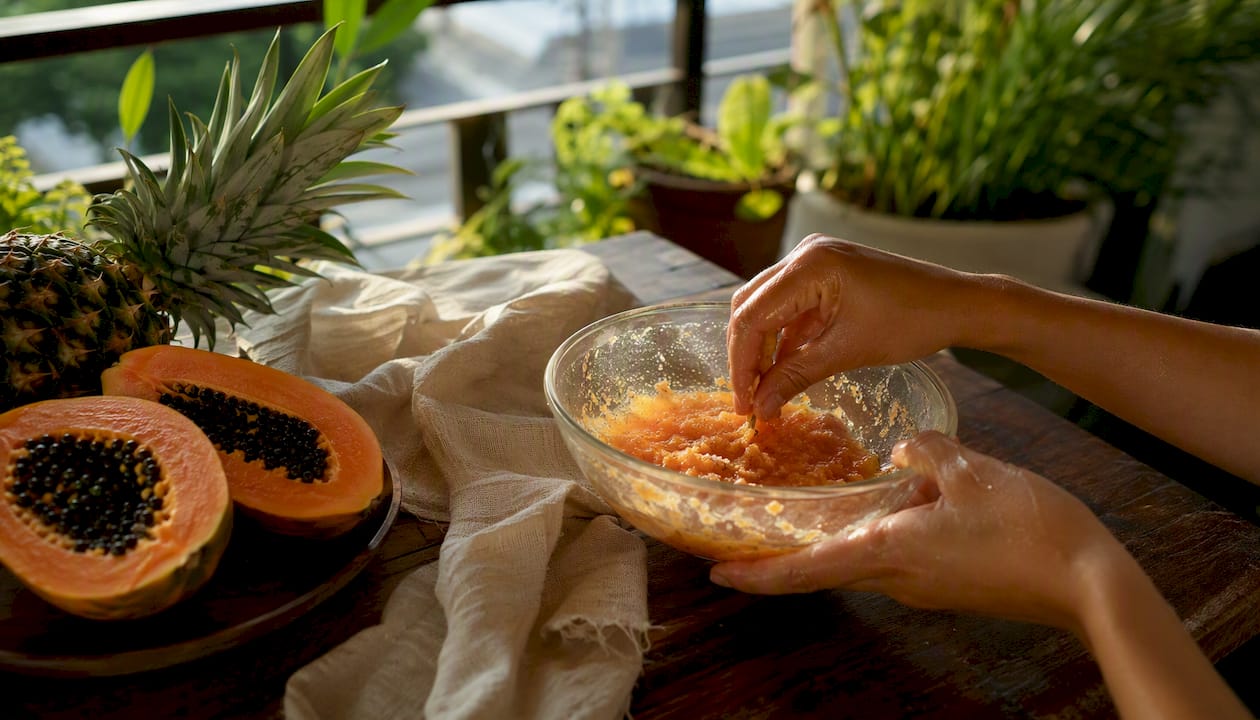
Enzymes like papain (from papaya) and bromelain (from pineapple) work by digesting the protein bonds holding dead skin cells together. They act entirely on the surface, which is why reactive skin often tolerates them when acids do not. Peeling gels take a different approach: you massage them onto dry skin and they physically clump and roll off, taking dead cells with them. No acid chemistry, no abrasion.
The one category to avoid entirely: gritty scrubs with walnut shells, apricot pits, or sugar crystals. These create micro-tears in already fragile skin, and the damage is cumulative. Abrasive facial brushes fall in the same category.
| Method | Mechanism | Best for | Risk level |
|---|---|---|---|
| Enzyme exfoliant | Digests dead cell proteins at surface | Reactive, acid-sensitive skin | Low |
| Peeling gel | Rolls away dead cells physically | All sensitive types, beginners | Low |
| Gentle physical (konjac sponge, soft washcloth) | Light micro-polish, no grit | Daily or near-daily gentle use | Low–moderate |
| Abrasive scrub (walnut, sugar, brush) | Mechanical friction | Not recommended for sensitive skin | High |
How to introduce any exfoliant safely: a step-by-step plan
Patch-test first, use once weekly at low concentration, monitor for 2–4 weeks, then increase only if there is no irritation. That sequence is non-negotiable for sensitive skin.
Step-by-step:
- Patch test (days 1–3): Apply a small amount to the inner forearm or behind the ear. Wait 24–48 hours. No redness or itching means you can proceed to the face.
- First application (week 1): Apply to clean, dry skin at night. Leave on for the recommended time (or use a leave-on formula as directed). Rinse if the product instructs it.
- Follow immediately with a hydrating serum and moisturizer. Skip all other actives that night.
- Sunscreen the next morning: Newly exfoliated skin is more UV-sensitive, so SPF 30 or higher is not optional.
- Weeks 1–2: Once weekly only. Note any tingling, redness, or flaking.
- Weeks 3–6: If skin shows no irritation, increase to twice weekly.
- Week 6 onward: Evaluate texture and radiance. Gradual improvement in smoothness and brightness is realistic over 6–12 weeks of consistent use.
Signs your skin is tolerating the exfoliant well:
- Mild, brief tingling that fades within minutes
- Skin feels smoother 24 hours after use
- No persistent redness or tightness
Signs to slow down or stop:
- Burning that lasts more than 10 minutes
- Visible flaking or peeling between sessions
- Increased breakouts or spreading redness
Red flags: when to pause and when to see a dermatologist
Stop immediately if you experience persistent burning, spreading redness, open sores, or a worsening of eczema or rosacea. These are not adjustment reactions.
Red flags that require stopping use now:
- Intense stinging or burning that does not subside within 10–15 minutes
- Spreading redness beyond the application area
- Visible blistering, open sores, or weeping skin
- Sudden increase in breakouts or pustules
- Pigment changes (darkening or lightening patches)
- Worsening eczema or rosacea flare
When any of these appear: rinse thoroughly with cool water, apply a fragrance-free barrier repair cream (look for ceramides and panthenol), and stop all exfoliation until skin is fully calm. Do not exfoliate during active flare-ups of redness, eczema, or sunburn.
If symptoms persist beyond 72 hours or worsen, see a board-certified dermatologist. The AAD’s find-a-dermatologist tool is a reliable starting point for locating a qualified professional near you.
Why pairing exfoliation with hydrators matters most after 40
Pairing exfoliation with humectants and barrier-repair ingredients prevents moisture loss and makes visible results arrive faster for mature skin.
After 40, natural ceramide production slows and the skin’s ability to retain water decreases. Exfoliation speeds cell turnover, but without adequate hydration support, that process leaves skin tight, reactive, and more vulnerable to environmental damage. The fix is straightforward: hyaluronic acid, glycerin, ceramides, and niacinamide applied immediately after exfoliation seal in moisture and calm any residual sensitivity.
A practical layering sequence: after your acid or enzyme step, apply a hyaluronic acid serum to damp skin, follow with a ceramide-rich cream, and finish with a plant oil if your skin is particularly dry. Avoid alcohol-heavy toners in the same routine. For a complete evening skincare routine built around this logic, Miraclegelnaturalskincare has a detailed guide for women 40+.
One timing note: if you use retinoids, keep them on separate nights from your exfoliant, especially during the first 6 weeks. Layering both in one session amplifies irritation risk without adding proportional benefit.
The 2 Minute Miracle Gel: a gentle option for sensitive, mature skin

The 2 Minute Miracle Gel from Miraclegelnaturalskincare is formulated for exactly this reader: mature, sensitive skin that needs real resurfacing results without the irritation risk of conventional exfoliants. Its Tri-Moisture Cryo Complex™ combines gentle resurfacing with active hydration support, so you are not trading barrier health for smoother texture.
How to use it safely:
- Patch-test on the inner forearm for 24–48 hours before applying to the face
- Use once weekly for the first few weeks, then increase frequency only if your skin shows no signs of irritation.
- Apply at night, follow with a hyaluronic serum and ceramide moisturizer
- Use SPF 30+ the following morning
Miraclegelnaturalskincare reports clinically proven results and strong customer feedback from women over 40 who have incorporated the gel into their routines. Founder Shelly Maguire’s background in professional skincare informs the formulation’s emphasis on efficacy without compromise on gentleness.
For women who want sensitive-skin-safe products that fit a barrier-first approach, the 2 Minute Miracle Gel is a practical starting point. Browse the full age-defying collection for 40+ to find the right routine pairing.
Key Takeaways
The safest exfoliant alternatives for sensitive, mature skin are PHAs, low-concentration lactic or mandelic acids, and enzyme exfoliants, all introduced once weekly with a hydrating follow-up routine.
| Point | Details |
|---|---|
| Start frequency | Once weekly at low concentration; increase frequency only if there is no irritation after at least 2–4 weeks of consistent use. |
| Best chemical options | PHAs for most sensitive; lactic acid for dry/mature; mandelic acid for acne-prone sensitive skin. |
| Enzyme and physical fallback | Papain/bromelain enzymes and peeling gels work when acids sting, with lower penetration risk. |
| Always pair with hydrators | Apply hyaluronic acid and ceramides after every exfoliation session to protect the barrier. |
| Miraclegelnaturalskincare | The 2 Minute Miracle Gel offers gentle resurfacing with Tri-Moisture Cryo Complex™ for sensitive, mature skin. |
What actually matters about gentle exfoliation after 40
The conversation around sensitive skin exfoliation tends to focus on what to avoid, which is useful but incomplete. The more interesting question is why so many women over 40 are still using products that were never designed for their skin in the first place.
Most exfoliant marketing targets younger skin with faster recovery. PHAs, low-concentration mandelic, and enzyme-based options exist precisely because the dermatology community recognized that the glycolic-acid-at-10% approach was causing more problems than it solved for reactive and mature skin types. The shift toward barrier-first formulation is not a trend. It reflects a real understanding of how skin physiology changes with age.
What gets underestimated is the compounding benefit of consistency at low frequency. Twice-weekly PHA use over 12 weeks produces more visible improvement than aggressive monthly peels, with far less recovery time and no risk of post-inflammatory hyperpigmentation. The patience required is the actual barrier for most people, not the product selection.
Sources and further reading
- How to safely exfoliate at home — AAD guidance on method selection by skin type, frequency, and layering cautions
- The 13 Best Exfoliators for Sensitive Skin, Tested by Byrdie — expert-reviewed product picks and ingredient guidance for sensitive skin
- Best Exfoliation Tips for Glowing Skin — Women’s Health — timing, sunscreen guidance, and nighttime exfoliation rationale
- How to Exfoliate Safely by Skin Type — Healthline — skin-type-specific guidance including sensitive and mature skin considerations
For personalized advice, consult a board-certified dermatologist who can assess your specific skin concerns and recommend the right exfoliant type and frequency for your skin.
This article is for general informational purposes only and is not a substitute for professional dermatological advice. Confirm any new skincare routine with a qualified dermatologist, especially if you have a diagnosed skin condition.