

If you’ve over-exfoliated, stop all exfoliants now. Pause every acid, retinoid, and scrub, and simplify to three things: a gentle cleanser, a ceramide-rich moisturizer, and a mineral SPF 30+. That combination is what dermatologists recommend for barrier repair, and it works for most people within days. If you’re seeing swelling, oozing, or intense pain, skip the home routine and call a clinician.
TL;DR:
- Over-exfoliated skin can show signs like persistent redness, burning, flaking, and increased sun sensitivity, which vary in severity from mild to severe.
- Recovery should focus on stopping all actives, using a minimal routine with a plain moisturizer and SPF, and avoiding irritating products during healing.
- Mild damage often resolves within a week, while moderate and severe cases may take several weeks or require medical intervention.
- Reintroduce exfoliants only after complete recovery, patch testing first and gradually increasing frequency over several weeks.
- Products for repair should contain ceramides, cholesterol, and fatty acids, while avoiding acids, retinoids, fragrances, and harsh exfoliants during the recovery phase.
Table of Contents
- How Do You Know if You’ve Over-Exfoliated Your Skin?
- The First 48 Hours (and First Week): A Step-by-Step Recovery Plan
- What to Use and What to Avoid for Barrier Repair
- How Long Does It Take to Heal Over-Exfoliated Skin?
- How Should You Reintroduce Exfoliants After Recovery?
- When Should You See a Doctor for Over-Exfoliated Skin?
- How Miracle Gelnaturalskincare Fits a Barrier-First Routine
- What Home Remedies Actually Help With Irritated, Over-Exfoliated Skin?
- A Quick Professional Perspective on Repairing Over-Exfoliated Skin
- Start Rebuilding Your Barrier With Gentle, Natural Products
- Sources
- FAQ
How Do You Know if You’ve Over-Exfoliated Your Skin?
Skin that’s been scrubbed, acid-peeled, or retinol-treated too aggressively sends fairly obvious signals. The trick is figuring out how bad the damage actually is, because that decides whether you handle this yourself or book an appointment.
Common signs of over-exfoliation include:
- Persistent redness that doesn’t fade between applications
- Stinging or burning when you apply anything, even plain water
- A tight, papery feeling across the cheeks or forehead
- Visible flaking or peeling in patches
- New breakouts or clogged pores, oddly enough, as the barrier struggles to regulate oil
- Skin that burns or reddens faster than usual in the sun
Mild damage looks like light redness and occasional tightness, mostly cosmetic and usually gone within a week of gentle care. Moderate damage means visible flaking, consistent stinging with product application, and skin that reacts to things it never used to (your regular moisturizer suddenly burns, for instance). That tier typically needs two to four weeks and a stricter routine.
Severe damage is a different category entirely: cracked or weeping skin, spreading swelling, pain that doesn’t ease with moisturizer, or a rash that keeps expanding. That’s not a home-care situation. The NHS guidance on irritated skin is clear that non-responsive or intense reactions warrant a clinical review rather than more waiting.
A useful gut check: if your skin feels worse 48 hours after you’ve stopped all actives and started gentle care, that’s not a “give it more time” signal. That’s a “call someone” signal.
The First 48 Hours (and First Week): A Step-by-Step Recovery Plan
Recovery isn’t complicated, but the sequence matters. Rushing back to a full routine, or overcorrecting with ten different soothing products, tends to prolong irritation rather than fix it.
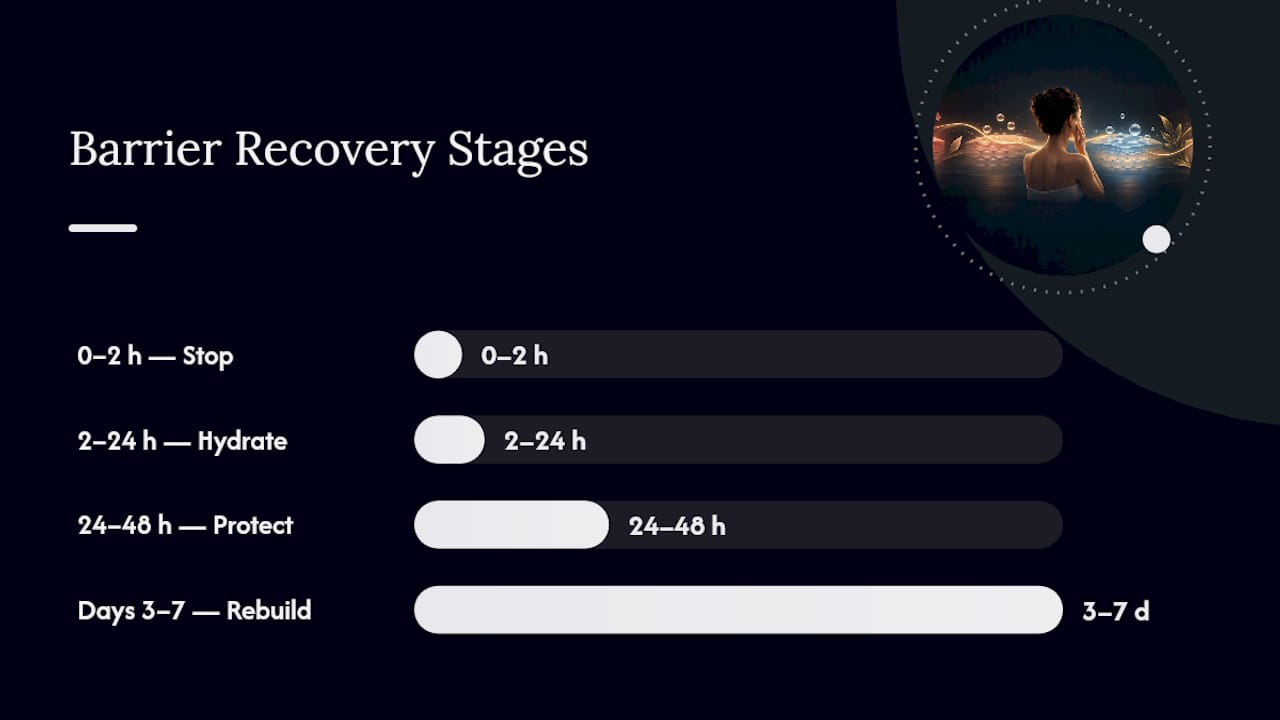
- Hour 0 to 2: Stop every active immediately. If your skin still has product residue or feels gritty, rinse gently with lukewarm water, no cleanser needed. Pat dry, then apply a plain, fragrance-free emollient while skin is still slightly damp.
- Hours 2 to 24: Cleanse once, at most, with something mild. Reapply your emollient every few hours, more than feels necessary. Skip makeup entirely. If you’re heading outside, use a mineral sunscreen, since UV exposure actively slows healing on compromised skin.
- Hours 24 to 48: Keep the same minimal routine. If your skin is tolerating the emollient well, you can layer in a plain humectant like glycerin underneath it. Watch for any new stinging. That’s your cue to strip back further, not add more.
- Days 3 to 7: Hold the gentle routine steady. Don’t reach for anything “brightening” or “renewing” yet. If redness or flaking is still present on day seven, extend the rest period rather than testing your patience with a new product.
Pro Tip: Keep your moisturizer in the fridge for the first 48 hours. The cool temperature takes the edge off stinging and makes application far more comfortable on raw, sensitized skin.
The stepwise approach, stop, hydrate, protect, and only then rebuild, is the standard framework recommended across dermatology and consumer health sources for rebuilding skin after over-exfoliation, and it’s the fastest route back to normal.
What to Use and What to Avoid for Barrier Repair
The products you reach for during recovery matter almost as much as what you stop using. Your barrier is made of skin cells held together by a lipid matrix, and the ideal repair ratio mimics what’s naturally there: roughly three parts ceramides to one part cholesterol to one part fatty acids, often called the 3:1:1 principle. Formulations with longer-chain ceramides (C24 to C30) show stronger barrier-enhancing effects than shorter-chain versions, so ingredient lists matter more than marketing claims.
Reach for:
- Ceramide-rich moisturizers with cholesterol and fatty acids
- Humectants like glycerin or hyaluronic acid to draw in water
- Occlusives such as petrolatum or dimethicone to seal moisture in
Avoid entirely during recovery:
- AHAs, BHAs, and retinoids of any strength
- Vitamin C and alcohol-based toners
- Fragranced products and harsh surfactants like sodium lauryl sulfate
- Physical scrubs or exfoliating tools
Layer in this order: cleanse, hydrating humectant, lipid-rich moisturizer, then mineral SPF. Skipping steps or reversing the order undercuts the whole point of barrier-first repair.
How Long Does It Take to Heal Over-Exfoliated Skin?
Timelines vary by severity, but the pattern is consistent. Mild irritation, light redness and occasional tightness usually resolve within about a week with gentle care. Moderate damage, such as visible flaking and consistent stinging, tends to require several weeks to improve. Severe cases, including cracked or weeping skin, often need medical treatment and may have a longer recovery period.
Age changes the math. Mature skin replaces barrier lipids less efficiently than younger skin, so readers over 40 should expect recovery on the slower end of each range, and chronic dry or eczema-prone skin follows the same pattern.
Track progress by symptom, not by the calendar. Watch for less stinging when you apply moisturizer, redness fading rather than flaring, flaking tapering off, and your skin tolerating products it used to reject. When all four line up, you’re close to ready for the next stage.
How Should You Reintroduce Exfoliants After Recovery?
Jumping back into your old routine the moment skin looks normal is the single most common way people re-trigger the same damage. Wait until skin feels calm and hydrated with zero stinging, which for moderate or severe cases can mean several weeks, not several days.
- Patch test any active on a small area first, like your inner forearm, before applying to your face.
- Reintroduce one product at a time, no more, at low frequency, roughly every three to five days.
- Increase frequency slowly only if there’s no reaction after several applications.
Pro Tip: If reactivity returns at any stage, stop that specific product immediately rather than assuming your skin “just needs to adjust.” Adjustment and irritation look similar, but only one of them gets better on its own.
Once you’re stable, a piece on gentle exfoliant alternatives for sensitive skin is worth reading before you pick your next product.
When Should You See a Doctor for Over-Exfoliated Skin?
Certain symptoms move this out of DIY territory. Severe swelling, oozing, a rash that keeps spreading, fever, or irritation that hasn’t improved after two to four weeks of gentle care are all reasons to book a clinical visit rather than wait it out.
A clinician’s toolkit for this typically includes short-course topical corticosteroids for inflammatory flares, prescription-strength barrier creams, and oral antibiotics if the skin has become infected. Emollients remain the first-line approach in most cases, with prescription treatment reserved for reactions that don’t respond.
Before your appointment, take a few photos as symptoms progress, write down roughly when the over-exfoliation started, and list every product you’ve used in the past two weeks, including how often. That timeline saves time and gets you a faster, more accurate assessment.
How Miracle Gelnaturalskincare Fits a Barrier-First Routine
Barrier-first repair depends on reading labels, not marketing copy: look for ceramides near the top of the ingredient list, no added fragrance, and no acids or grains hiding in a “gentle” formula. The product philosophy follows the principle of avoiding harsh chemicals, grains, acids, and abrasives, favoring gentle, natural formulations.
For readers rebuilding their routine, the brand’s fragrance-free skincare guidance and its notes on exfoliating mature skin conservatively are useful implementation references, particularly for the 40+ readers who recover more slowly. Founder Shelly Maguire’s formulation background sits behind that same gentle-but-effective approach.
What Home Remedies Actually Help With Irritated, Over-Exfoliated Skin?
Not every soothing trick belongs in your routine. Some genuinely calm inflammation; others just feel good for a minute and add irritants you don’t need.
Cool compresses work well for active burning or swelling. A clean cloth soaked in cool water, applied for five to ten minutes, reduces surface inflammation without introducing anything your skin has to process.
Niacinamide has a solid reputation for calming redness and supporting barrier function, and it layers well under a ceramide moisturizer without competing for absorption. Aloe vera, used plain and without added fragrance or alcohol, offers similar short-term relief for stinging and heat, though it works better as a supplement to your moisturizer than a replacement for it.
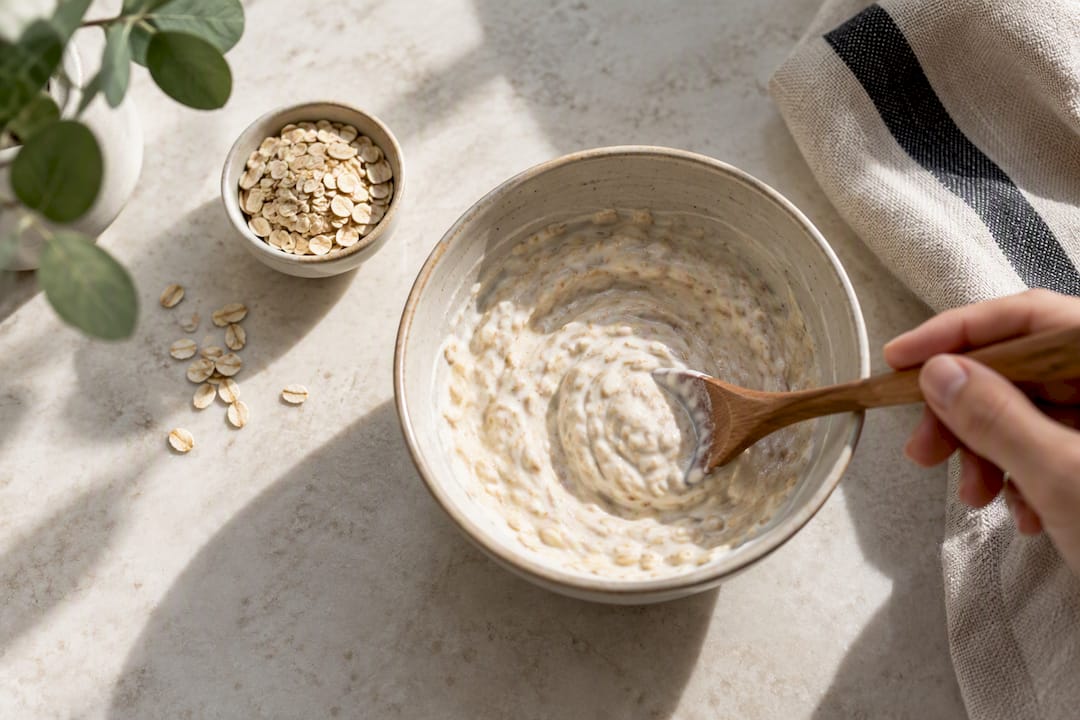
Oatmeal-based masks, colloidal oatmeal specifically, have a long track record for calming itchy, inflamed skin and are gentle enough for daily use during recovery.
What to skip: DIY lemon juice, baking soda pastes, apple cider vinegar toners, and anything positioned as a “natural exfoliant.” These are acidic or abrasive by nature and will set your recovery back, not forward. Steer clear too of hot showers and saunas during active flare-ups, since heat dilates blood vessels and tends to intensify redness and stinging rather than easing it.
A Quick Professional Perspective on Repairing Over-Exfoliated Skin
Most over-exfoliation heals fine with patience and a conservative routine. Nothing here requires miracle products or aggressive intervention. What people underestimate is prevention: the damage almost always traces back to stacking too many actives too fast. Barrier-first thinking, and sensible exfoliation frequency, beats chasing fast results every time.
— Barbara
Start Rebuilding Your Barrier With Gentle, Natural Products
Once your skin has calmed down and you’re ready to rebuild rather than just repair, the products you reach for should still follow the same rule: no harsh chemicals, no grains, no acids or abrasives, just gentle formulations designed for sensitive, barrier-compromised skin.

The shop carries the categories your recovery routine actually needs: gentle cleansers, ceramide-forward moisturizers, and lightweight serums that won’t sting healing skin. If you’re specifically hunting for a lipid-rich cream to support your barrier long term, the moisturizer collection is the place to start, and once your skin is fully stable, the 2 Minute Miracle Gel at €50.00 is worth revisiting as a future gentle-exfoliation option, not something to reach for during active repair. Browse the shop, pick the piece that matches where your skin actually is right now, and build back from there.
This article is general information, not a substitute for advice from a qualified doctor. Consult a qualified healthcare professional about your own circumstances before acting on anything here.
Sources
- American Academy of Dermatology — Safely exfoliate at home
- NHS — Contact dermatitis: treatment
- Sung Ha Lim et al. — A lipid mixture enriched by ceramide NP with diverse acyl chain lengths contributes to restore the skin barrier function (Skin Pharmacology and Physiology, 2026)
- Cleveland Clinic — Skin barrier: what it does and how age affects it
FAQ
How Can I Fix Over-Exfoliated Skin?
Stop every active product immediately and switch to a gentle cleanser, a ceramide-rich moisturizer, and daily mineral SPF 30+. Keep the routine minimal for at least a week, and extend that rest period if stinging or flaking hasn’t improved.
How Do You Repair a Damaged Skin Barrier From Over-Exfoliation?
Barrier repair centers on three things: hydrating with humectants like glycerin, replenishing lipids with ceramide and cholesterol formulations, and sealing moisture in with an occlusive. Frequent, liberal emollient use applied to damp skin speeds the process along.
How Long Does It Take to Fix Over-Exfoliated Skin?
Mild irritation typically clears in three to seven days, while moderate damage can take two to four weeks. Severe cases, and mature skin over 40, often need longer because older skin replaces barrier lipids less efficiently.
What Causes Over-Exfoliated Skin?
Over-exfoliation usually comes from stacking too many actives, using acids or retinoids too frequently, or combining physical scrubs with chemical exfoliants in the same routine. Skipping sunscreen while using these products compounds the damage, since unprotected UV exposure aggravates already-inflamed skin.
Does Miraclegelnaturalskincare Sell Products Suitable for Repairing Skin?
Miraclegelnaturalskincare’s range is built around gentle, natural formulations that avoid harsh chemicals, acids, and abrasives, which aligns with barrier-first repair principles. Current prices and product details are listed on the shop page.