
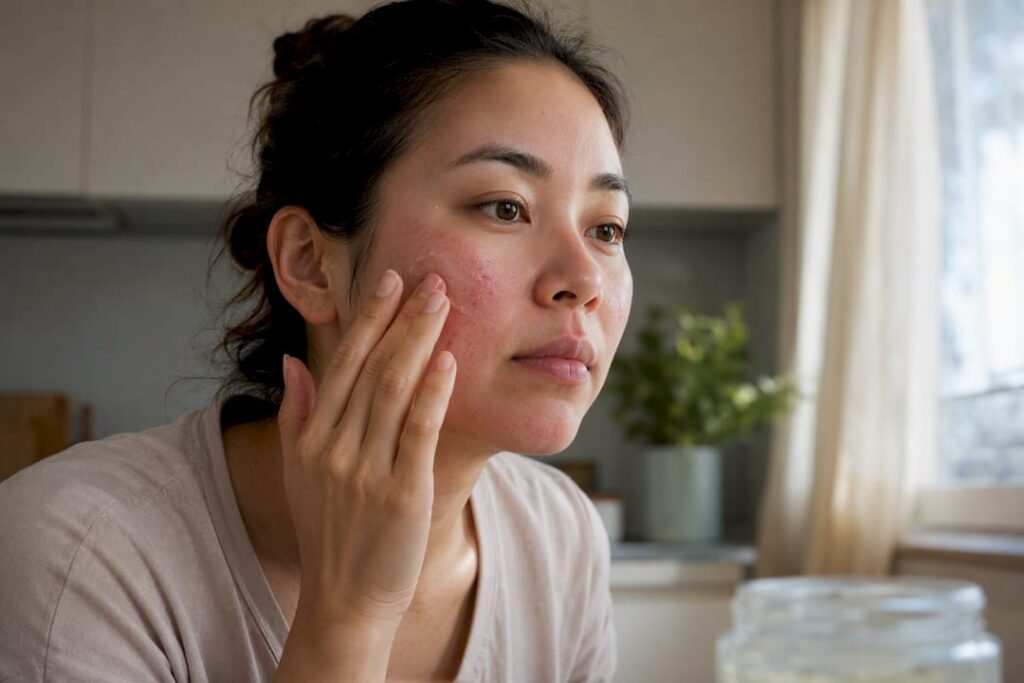
Most people with rosacea can exfoliate safely only in a very limited way, and for many, skipping it entirely is the better call. The one rule that matters most: pause any exfoliation the moment you’re in an active flare, and if you introduce anything new, patch test it first and start at a low frequency, such as once weekly or less. Groups like Rosacea and DermNet NZ back this cautious approach, and brands like Miraclegelnaturalskincare build formulas around that same barrier-first logic.
TL;DR:
- Physical exfoliation methods like scrubs and brushes are strictly discouraged, as they generate heat and friction that worsen rosacea symptoms.
- Low-risk chemical options such as PHAs and enzymatic exfoliants should be introduced slowly and only once weekly, with tight attention to skin reactions.
- It’s essential to patch test new products, start with short contact durations, and cease use immediately if irritation, burning, or persistent redness occurs.
- During flares, all exfoliation should be paused because the skin barrier is compromised and blood vessels are more prone to dilation.
- Focusing on barrier repair ingredients and gentle routines often yields better, safer results than aggressive or frequent exfoliation.
Table of Contents
- Quick Checklist: Dos and Don’ts for Rosacea-Safe Exfoliation
- Why Rosacea Skin Reacts So Easily
- Safe vs Risky Exfoliation Methods: Acids, Enzymes, and Mechanical Options
- How to Introduce an Exfoliant Without Triggering a Flare
- When to Stop and How to Recover After Irritation
- Alternatives to Exfoliation for Smoother, Brighter Skin
- What the Evidence Says, and Where We Get Our Guidance
- Why We Usually Recommend Barrier Repair Over Regular Exfoliation
- A Gentler Routine, Built for Skin That Reacts Easily
- Sources
Quick Checklist: Dos and Don’ts for Rosacea-Safe Exfoliation
Before you touch a single product, run through this list. It’s the fast version of everything explained in more depth further down.
Don’t:
- Use physical scrubs, cleansing brushes, or microdermabrasion, at home or in a spa.
- Reach for glycolic acid or other high-strength AHAs.
- Layer a new exfoliant on top of retinoids or vitamin C without spacing them out.
- Exfoliate at all during an active flare.
Do:
- Patch test anything new on your inner arm or behind the ear for several days first.
- Start with once-weekly use, and only escalate if your skin stays calm.
- Choose PHAs, enzymes, or low-dose mandelic acid over stronger acids.
- Apply moisturizer before or after your exfoliant to buffer the effect.
- Follow up with mineral SPF, since freshly exfoliated skin burns and reacts more easily.
Watch for burning that lasts more than a few minutes, new soreness, or redness that doesn’t fade by the next day. Any of those are your cue to stop, not push through.
Why Rosacea Skin Reacts So Easily
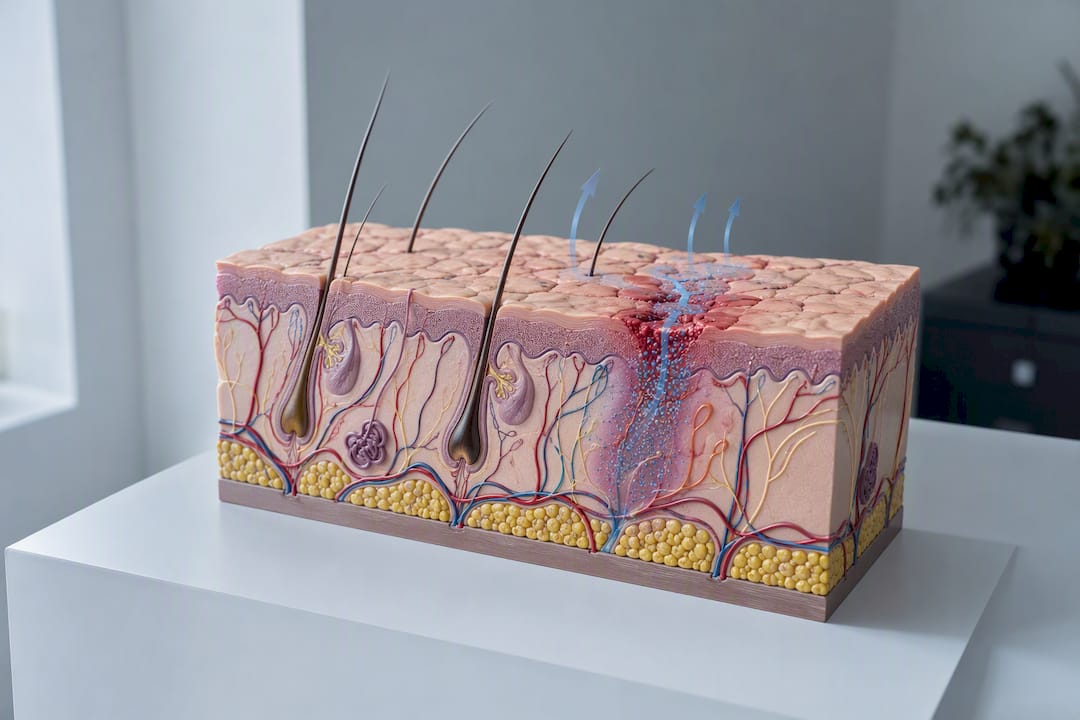
Rosacea-prone skin has a compromised barrier, meaning it loses water faster than normal skin through a process dermatologists call transepidermal water loss, or TEWL. A weaker barrier lets irritants penetrate deeper and lets moisture escape faster, which is why products that feel fine on other people can sting or burn on rosacea skin within seconds.
The vascular side is just as important. Rosacea involves blood vessels that dilate more easily and more often than they should, a phenomenon known as flushing. Friction and heat, the two things almost every physical exfoliation method generates, activate nerve receptors called TRPV1 channels that trigger this flushing response. Rubbing a scrub across your cheeks doesn’t just remove dead skin cells. It raises surface temperature and tells your blood vessels to dilate, which is exactly the mechanism Minimalcutsurgery points to when it flags scrubs and brushes as particularly risky. Repeated friction over time can also cause micro-tears in already fragile capillaries near the skin’s surface, which is part of why visible redness tends to worsen, not improve, with aggressive exfoliation.
This is also why timing matters so much. During an active flare, your barrier is already under stress and your vessels are already primed to dilate. A product you tolerated perfectly well two weeks ago can burn during a flare, because the skin underneath it has changed. That’s not inconsistency on your part. It’s the biology shifting under you, and it’s the main reason clinicians advise pausing actives until things calm down rather than trying to power through.
Safe vs Risky Exfoliation Methods: Acids, Enzymes, and Mechanical Options
Not all exfoliation is created equal, and the differences come down to two things: how the product physically interacts with skin, and how deep or fast it penetrates.
Physical exfoliation sits at the top of the risk list for a straightforward reason. Scrubs, brushes, and microdermabrasion all rely on mechanical abrasion, and mechanical abrasion generates heat and friction on skin that’s already prone to flushing and barrier breakdown. There’s no concentration to dial down here. Either you’re rubbing particles or bristles across your face, or you’re not, which is why most dermatology resources recommend avoiding this category outright for rosacea rather than trying to find a “gentle enough” version.
Chemical exfoliants split into tiers based on molecule size and how aggressively they resurface skin:
- Glycolic acid and other strong AHAs: high risk. Glycolic acid has the smallest molecular size of the common AHAs, which lets it penetrate fast and deep. That’s great for resurfacing tough, resilient skin. It’s a liability on a barrier that’s already compromised. A clinical risk summary from Minimal Cut Surgery ranks glycolic acid among the highest-risk options for rosacea, and most dermatology guidance agrees it’s worth avoiding.
- Lactic and mandelic acid: possible, but only at low concentrations and introduced slowly. Mandelic acid in particular has a larger molecule size than glycolic, so it penetrates more slowly and tends to sit better on reactive skin, though tolerance still varies person to person.
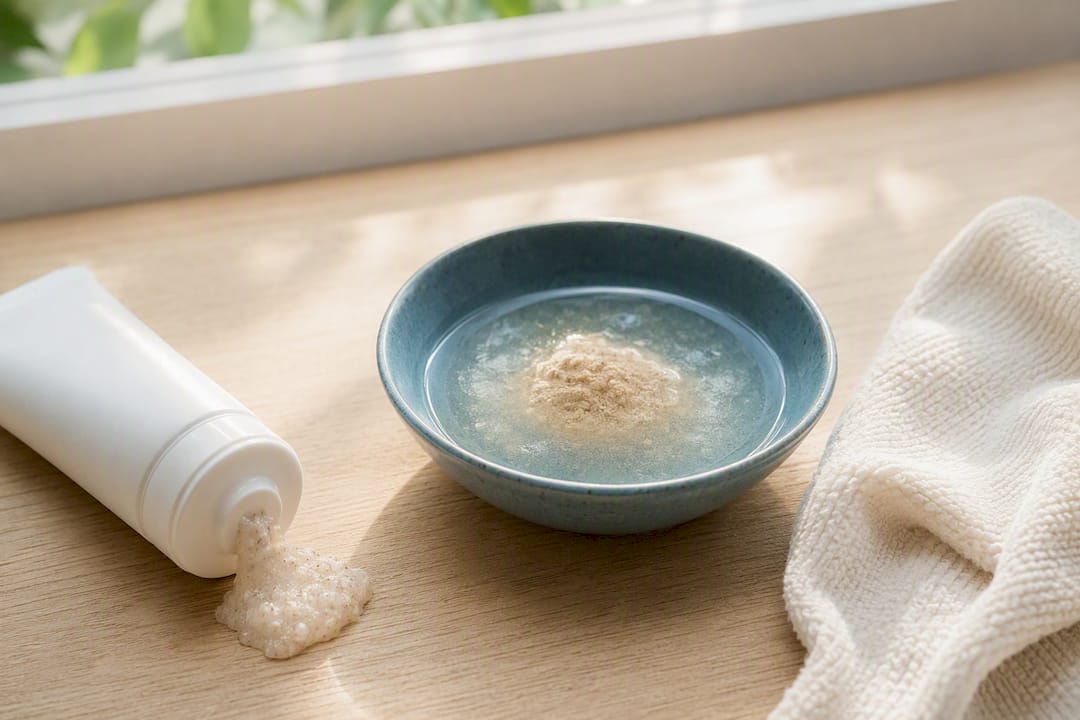
- PHAs (polyhydroxy acids) and enzymatic exfoliants: generally the safest chemical route. PHAs have an even larger molecular structure than mandelic acid, which limits how fast they penetrate and gives skin more time to adjust. Enzyme-based options, often derived from fruit, work by loosening the bonds between dead skin cells rather than dissolving them outright.
- Azelaic acid and low-dose salicylic acid: these occupy a different category entirely. Azelaic acid is recognized as an actual rosacea treatment in its own right, not just an exfoliant, and it can improve texture and reduce inflammation without the same barrier disruption risk carried by AHAs. Low-dose salicylic acid can sometimes be tolerated for its anti-inflammatory properties, but it needs the same cautious introduction as everything else on this list.
Medical News Today’s clinical summary reinforces the practical takeaway here: tolerance is genuinely individual, physical scrubs are discouraged across the board, and frequency should stay low, typically once weekly or less, regardless of which chemical option you choose.
How to Introduce an Exfoliant Without Triggering a Flare
Rushing this process is the single most common way people end up with a flare they didn’t need to have. Follow it in order.
- Stabilize your baseline for one to two weeks first. Before adding anything new, settle into a simple routine of a gentle cleanser, a barrier-supporting moisturizer, and daily SPF. You need a calm starting point to actually judge how a new product behaves.
- Run an open-application patch test. Apply a small amount behind your ear, on your inner forearm, or in one contained spot on your cheek. DermNet NZ’s guidance on open-application testing recommends monitoring for several days, since rosacea reactions can be delayed rather than immediate.
- Start with short-contact use, not leave-on. If the patch test goes well, apply the exfoliant for a limited window and rinse it off rather than leaving it on overnight. This gives you a buffer if your skin reacts more on the face than it did on the test spot.
- Begin at once weekly, and escalate only if calm. If a week passes with no redness, stinging, or peeling, you can consider increasing frequency slightly. If anything, hold at once weekly. There’s rarely a reason to rush past it.
- Buffer the application. Apply your moisturizer either right before or right after the exfoliant to soften its contact with skin. Use clean hands rather than cotton pads, which can add friction you don’t need, and stick to lukewarm water, never hot.
- Space out your actives. Don’t stack a new exfoliant on the same night as a retinoid or vitamin C. Alternating nights, or dedicating specific days to specific actives, reduces the odds of cumulative irritation.
Pro Tip: Keep a simple log for the first month, noting the date, product, and how your skin looked the next morning. Rosacea reactions are often delayed, so what you remember two days later matters more than how your skin felt in the moment.
For a longer-form version of this protocol, our step-by-step exfoliation guide walks through the same sequence in more detail.
When to Stop and How to Recover After Irritation
Certain signs mean stop immediately, not “wait and see.” Burning or stinging that lasts more than a few minutes, flushing that’s worse than your usual baseline, new soreness, peeling that drags on for days, or a fresh cluster of papules and pustules are all reasons to halt whatever you just applied.
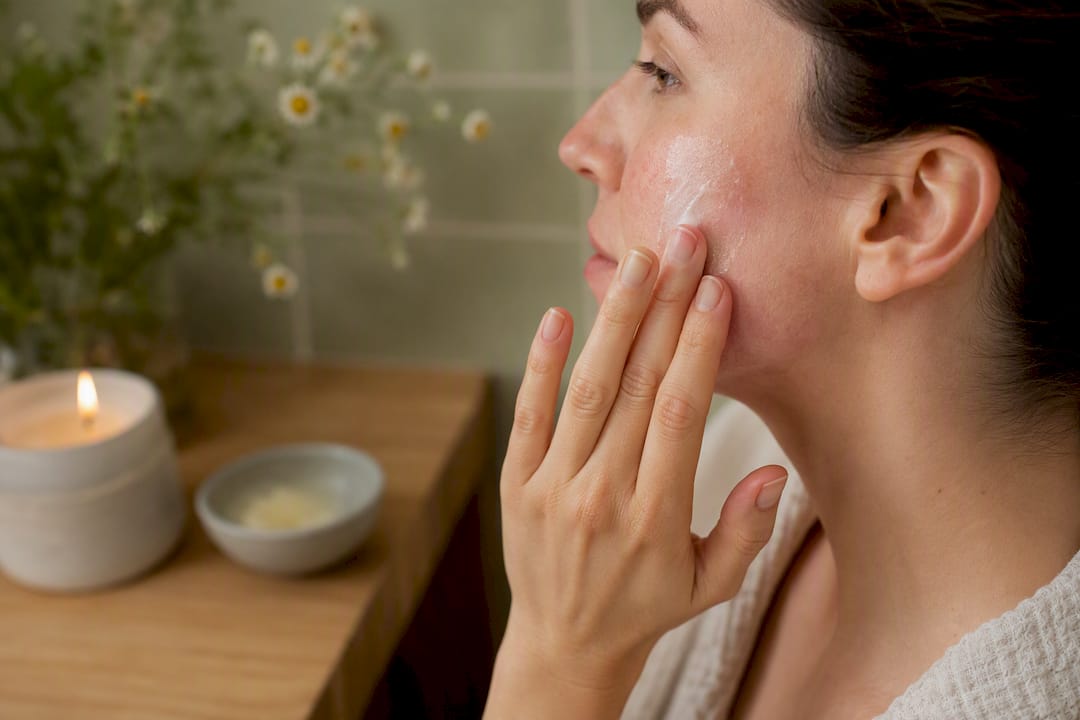
Once you spot any of those, simplify hard. Drop every active product, including retinoids and vitamin C, not just the exfoliant. Switch to a gentle, fragrance-free cleanser and a barrier-repair moisturizer, and give your skin several days of doing as little as possible. Avoid heat sources, hot showers, saunas, and direct sun exposure, since all three feed the flushing cycle described earlier. Keep applying mineral SPF daily regardless, since a compromised barrier burns more easily, not less.
If symptoms don’t settle within a week, or if you’re seeing frequent flares tied to a specific product, that’s the point to get a dermatologist involved rather than keep self-adjusting. Persistent papules and pustules, in particular, often respond better to a prescribed topical than to more trial and error at home.
Alternatives to Exfoliation for Smoother, Brighter Skin
If exfoliation keeps triggering reactions, or you’d rather not risk it at all, texture improvement doesn’t have to stop there.
- Barrier-first ingredients like ceramides, niacinamide, and humectants support the skin’s own natural shedding process, called desquamation, instead of forcing it along mechanically or chemically.
- Azelaic acid works as a legitimate rosacea therapy on its own, easing inflammation and improving surface texture over time without the resurfacing intensity of an AHA.
- Enzyme masks and PHAs offer the gentlest form of active resurfacing available, and they’re the logical starting point for anyone still curious about mild chemical exfoliation. Our guide to gentle exfoliant alternatives breaks down specific options in this category.
- Clinical treatments, including certain lasers and physician-administered mild peels, sit in a different tier entirely and require dermatology oversight. These aren’t homecare swaps. In select cases, such as thickening associated with phymatous rosacea, specialists may consider more targeted mechanical techniques, but that’s a clinical decision, not a bathroom-cabinet one.
What the Evidence Says, and Where We Get Our Guidance
Every recommendation here traces back to patient-facing clinical resources, not marketing claims. Rosacea.org’s understanding of rosacea explains the flushing tendency at the core of the condition, while DermNet NZ’s patch-testing protocols shape the stepwise introduction method outlined above. Both organizations land on the same conclusion: gentle, slow, and reversible beats fast and aggressive, every time.
If you want to go deeper on any single piece of this, our sensitive-skin exfoliant guide and our barrier-first routine breakdown both expand on the product side. Author: Barbara. Formulation and ingredient sourcing details for specific products are listed on each product page.
Why We Usually Recommend Barrier Repair Over Regular Exfoliation
Here’s where I land after going through the evidence: for most rosacea skin, exfoliation is a tool you reach for occasionally, not a routine step you do because every other skincare article tells you to. If your barrier feels tight, stings easily, or you’re mid-flare, skip it and focus on repair first. Texture improves anyway once the barrier stabilizes.
When we do recommend a product for sensitive or rosacea-prone skin, it gets checked against the same patch-test logic laid out here, because a “natural” label means nothing if the formula still irritates. For readers over 40 dealing with both rosacea and thinning, drier skin, gentler almost always outperforms stronger. Our guide to exfoliation after 40 covers that overlap directly.
— Barbara
A Gentler Routine, Built for Skin That Reacts Easily
If scrubs and strong acids are off the table, the real question becomes what to put on your skin instead. Miraclegelnaturalskincare builds its formulas around barrier support rather than aggressive resurfacing, which means you’re not stuck choosing between doing nothing and risking a flare.

A simple routine works best here: a gentle cleanser, followed by a barrier-repair moisturizer formulated to sit well with reactive skin, finished with mineral SPF. Our sensitive-skin safe collection is built around exactly that logic, and if you’re specifically shopping for something suited to skin over 40 that also happens to be rosacea-prone, the natural skincare line for radiant, age-defying beauty is the right place to start. Browse the collection and build a routine around what your skin can actually tolerate, not what a trend says you should be doing.
Sources
- Open application test | DermNet NZ
- Rosacea
- Exfoliating with rosacea: What to know | Medical News Today