

The three actions that matter most for skin renewal are: cleanse gently twice daily, restore your moisture barrier with a ceramide-rich moisturizer, and apply broad-spectrum SPF 30+ every morning. According to the American Academy of Dermatology and the Mayo Clinic, these three non-negotiables form the foundation every other step builds on.
Your daily skin renewal checklist at a glance:
- Gentle cleanse morning and night (lukewarm water only, no hot water or harsh scrubbing)
- Moisturize immediately after cleansing to support your barrier
- SPF 30+ broad-spectrum every single morning, rain or shine
- Optional add-ons: a topical vitamin C in the morning before SPF, gentle exfoliation once or twice weekly (chemical or mild physical), and introduce one new active ingredient at a time, patch-tested before full use
Two immediate safety rules: avoid hot water and aggressive scrubbing, both of which strip the barrier faster than almost any other habit. Check your moles monthly using the ABCDE rule (asymmetry, border, color, diameter, evolving). Visible improvements from a consistent routine typically begins after several weeks of regular use. Deeper structural changes take longer.
Table of Contents
- What your skin renewal schedule looks like daily, weekly, monthly, and yearly
- The five daily steps that form the core of any skin renewal routine
- Which ingredients actually accelerate renewal, and which combinations to avoid
- How skin renewal actually works, and what timeline to expect
- When to stop DIY and see a dermatologist
- At-home routines versus in-office procedures: what each one actually delivers
- Key Takeaways
- Miraclegelnaturalskincare fits naturally into this checklist
- Useful sources and further reading
What your skin renewal schedule looks like daily, weekly, monthly, and yearly
Turning a checklist into a real program means knowing which actions belong to which time window. Trying to do everything every day leads to over-treatment. Spacing things out correctly is what actually works.
Daily
Morning: gentle cleanse, moisturizer, SPF 30+. Evening: gentle cleanse, moisturizer. Optional additions include a vitamin C serum in the morning and treatment serums (like retinoids or peptides) at night, as tolerated. That’s the full daily backbone recommended by Cleveland Clinic dermatologists.
Weekly
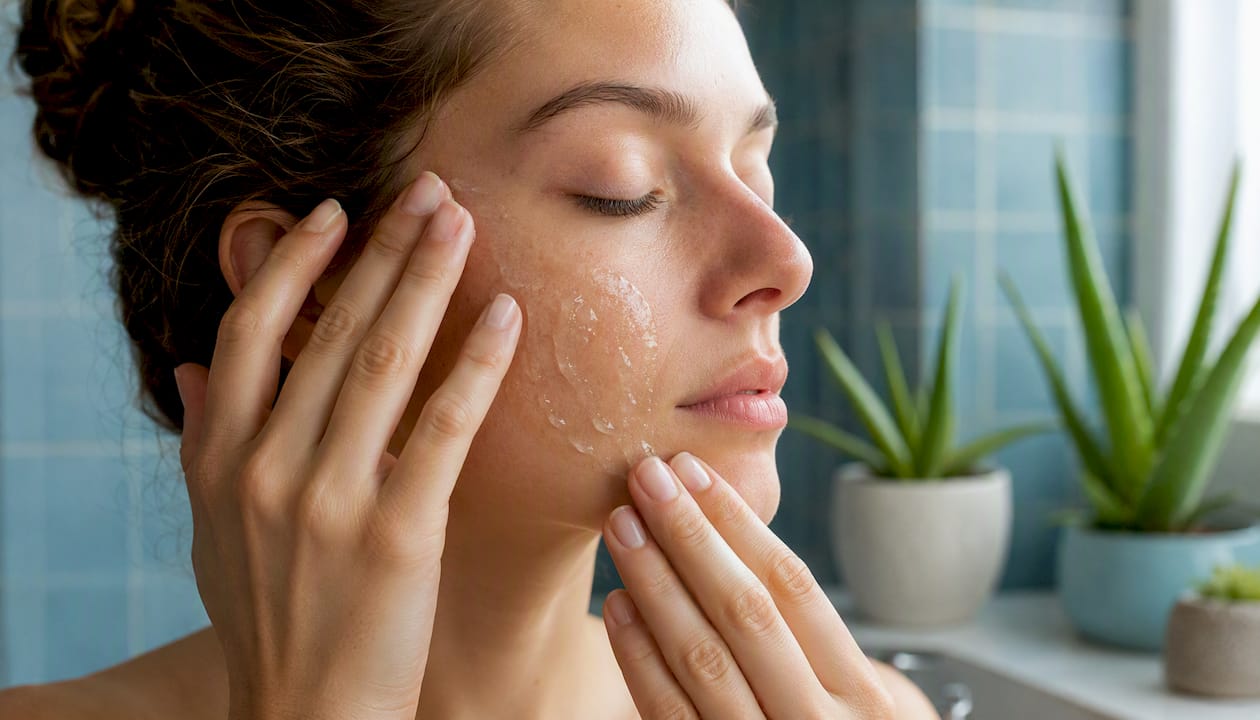
One to two sessions of gentle exfoliation (chemical AHA/BHA or a mild physical option). Add a hydrating mask on a rest day if your skin feels tight or reactive.
Monthly
Review how your skin is tolerating current actives. If you’ve been using a retinoid for 4+ weeks without irritation, this is a reasonable point to consider a slightly higher frequency. Consider an overnight retinol session if your skin is ready.
Quarterly
Reassess your goals and skin sensitivity. Seasons change skin behavior. A dermatologist or esthetician check-in every few months helps you catch early signs of photodamage or sensitivity shifts before they become bigger problems.
Yearly
A full skin exam for suspicious lesions is the one appointment most people skip and shouldn’t. A professional consultation to plan any in-office rejuvenation (laser, microneedling, PRP) also fits here.
Practical timing note: Introduce one new active every 2–4 weeks so you can identify what’s working or causing irritation. Stop retinoids 5–7 days before any in-office procedure; pause AHAs 3–5 days prior.
Pro Tip: Set a recurring monthly phone reminder labeled “mole check” and do it in good lighting after a shower. Catching a changing lesion early is the single highest-value skin health habit on this entire list.
The five daily steps that form the core of any skin renewal routine
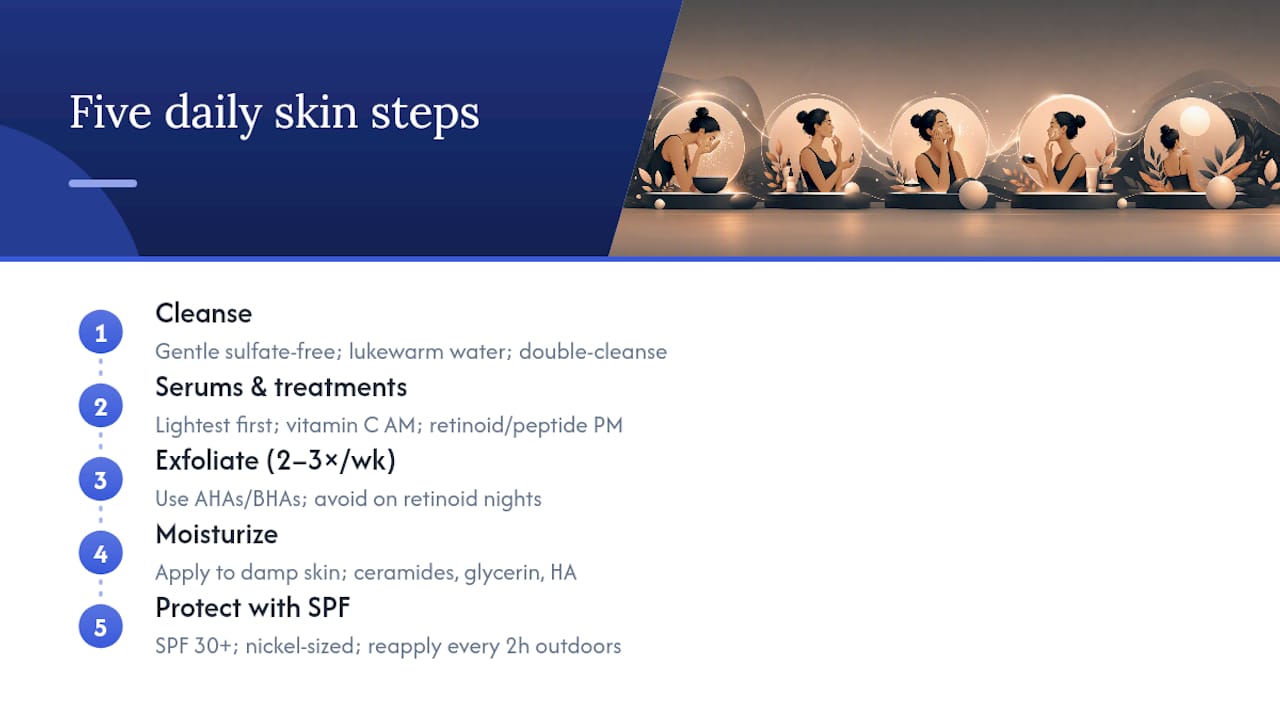
Geisinger’s guidance confirms the backbone: cleanse, moisturize, and sunscreen daily. The full five-step sequence adds serums and sequencing logic that makes each product work harder.
1. Cleanse
A gentle, sulfate-free cleanser removes overnight oil, pollutants, and product residue without stripping the barrier. Use lukewarm water. Hot water disrupts the lipid layer that holds moisture in. If you wore heavy makeup or sunscreen, a double cleanse (oil-based cleanser first, then water-based) at night is worth the extra 60 seconds. For a practical how-to, the gentle cleansing guide from Miraclegelnaturalskincare covers product selection and technique.
2. Hydrate and treat with serums
Serums go on before moisturizer, lightest texture first. In the morning, a vitamin C serum (L-ascorbic acid or a stable derivative) delivers antioxidant protection and supports collagen production. Harvard Health notes that topical vitamin C, when correctly formulated, helps defend against UV-induced oxidative damage and brightens uneven tone. At night, a retinoid or peptide serum handles repair and renewal while you sleep.
3. Exfoliate (2–3 times weekly, not daily)
Chemical exfoliants (AHAs like glycolic or lactic acid, BHAs like salicylic acid) dissolve dead cells more evenly than physical scrubs. Use them on non-retinoid nights to avoid stacking too much cell-turnover stimulus at once.
4. Moisturize
Apply moisturizer to slightly damp skin. Ingredients like ceramides, glycerin, and hyaluronic acid pull water into the skin and seal it there. This step is non-negotiable even for oily skin types. Skipping it in favor of “letting skin breathe” is one of the most common mistakes that slows renewal. For barrier-first options, see the natural skin barrier boosters guide.
5. Protect with SPF
SPF 30+ broad-spectrum, every morning, applied as the last step. The AAD recommends about a nickel-sized amount for the face. Reapply every two hours if you’re outdoors. Mineral formulas (zinc oxide, titanium dioxide) suit sensitive or reactive skin; chemical filters tend to feel lighter under makeup.
Pro Tip: On rushed mornings, compress steps 1–5 to: rinse face, apply a vitamin C moisturizer with SPF built in, done. Consistency beats perfection every time.
Which ingredients actually accelerate renewal, and which combinations to avoid
| Ingredient | Primary benefit | Best for | Common side effects | Avoid combining with | Frequency |
|---|---|---|---|---|---|
| Retinol / tretinoin / adapalene | Speeds cell turnover, stimulates collagen | Fine lines, texture, acne | Dryness, peeling, redness | Strong AHAs/BHAs on the same night | 2–3x/week → nightly as tolerated |
| Glycolic acid (AHA) | Exfoliates surface, brightens | Dull skin, uneven tone | Sensitivity, stinging | Retinoids on same night; vitamin C at low pH | 1–3x/week |
| Lactic acid (AHA) | Gentler exfoliation, hydrating | Dry or sensitive skin | Mild sensitivity | Same as glycolic | 1–3x/week |
| Salicylic acid (BHA) | Clears pores, anti-inflammatory | Oily, acne-prone skin | Dryness | Retinoids on same night | 2–3x/week |
| Vitamin C (L-ascorbic acid) | Antioxidant, brightens, supports collagen | All types, especially aging/dull | Tingling, oxidation if stored poorly | High-pH acids at same step | Optional in the morning |
| Peptides | Signal collagen production, repair | Mature or sensitive skin | Rare | Generally well-tolerated with most actives | Optional daily |
| Niacinamide | Reduces redness, minimizes pores, brightens | Oily, sensitive, hyperpigmented | Rare flushing at high concentrations | Vitamin C (at very high concentrations) | Optional daily |
| Ceramides | Barrier repair, moisture retention | Dry, compromised, sensitive | None typical | None | Daily |
| Hyaluronic acid | Draws water into skin | All skin types | None typical | None | Daily |
| Physical exfoliants | Manual surface smoothing | Normal skin, light texture concerns | Micro-tears if too abrasive | Retinoids same session | 1x/week max |
Clinical evidence published on PubMed confirms that retinoids and AHAs increase epidermal turnover and improve texture with consistent use. The key word is consistent. Rotating too many actives too quickly is what causes barrier breakdown, not the actives themselves.
Pairing cautions worth knowing:
- Retinoid + strong AHA/BHA on the same night is often too aggressive for most skin types, especially when starting out.
- Vitamin C is most stable and effective at a low pH. Layering it directly with high-pH alkaline products can reduce its efficacy.
- Niacinamide and vitamin C can be used together at typical over-the-counter concentrations without the “niacin flush” reaction that older formulations caused.
Pro Tip: Patch test every new active on the inner forearm for 48 hours before applying to your face. It takes two minutes and saves weeks of recovery from an unexpected reaction.
For a deeper look at how peptides fit into a renewal routine, the peptides in skincare guide from Miraclegelnaturalskincare is worth reading.
How skin renewal actually works, and what timeline to expect
Skin renewal follows the same biological cascade that governs wound healing: inflammation, proliferation, and remodeling. Research published in NCBI PMC documents how topical actives and in-office procedures modulate each phase to accelerate the process. Retinoids and exfoliants act primarily in the proliferation phase, speeding cell turnover. Collagen-stimulating treatments (microneedling, lasers, PRP) work deeper, in the remodeling phase, which is why their results take longer to appear.
| Treatment type | When you may see initial change | Full results |
|---|---|---|
| Consistent topical routine (retinoid, vitamin C, SPF) | 4–12 weeks | 3–6 months |
| Chemical peels (light to medium) | 1–2 weeks post-peel | 1–3 months |
| Microneedling / non-ablative laser | 4–6 weeks after first session | 3–6 sessions spaced 4–6 weeks |
| Ablative resurfacing | 2–4 weeks post-procedure | 3–6 months |
The 6–12 week rule: Both Cleveland Clinic and Geisinger note that many topical products require several weeks of consistent use before visible results appear. Stopping a routine at week three because you “don’t see anything yet” is the most common reason routines fail.
For professional modalities, Zodule’s skin rejuvenation guide notes that microneedling and non-ablative lasers typically require multiple sessions spaced weeks apart to achieve meaningful collagen remodeling. That’s a 3–6 month commitment minimum, not a one-and-done treatment.
A word on aggressive approaches: Faster is not always better. Protocols that stack multiple strong actives or use high-energy procedures back-to-back can disrupt the moisture barrier, trigger post-inflammatory hyperpigmentation, and delay skin health recovery. The Mayo Clinic’s overview of skin renewal procedures specifically flags the importance of following pre- and post-procedure care to avoid complications.
When to stop DIY and see a dermatologist
Most skin concerns respond to a consistent home routine. Some don’t, and recognizing the difference matters.
See a dermatologist promptly if you notice:
- A mole or lesion that is asymmetric, has irregular borders, contains multiple colors, is larger than 6mm (about the size of a pencil eraser), or is changing (the ABCDE rule)
- Any lesion that bleeds without injury, itches persistently, or won’t heal
- Rapidly spreading pigment changes or rashes
- Severe cystic acne that isn’t responding after 8 weeks of consistent treatment
- Sudden, unexplained skin texture changes across a large area
Monthly self-check habit: After a shower, in good lighting, scan your full body for new or changing spots. Take a photo of anything suspicious and date it. If it looks different a month later, book an appointment.
For persistent concerns like acne or hyperpigmentation, give your routine 4–8 weeks before concluding it isn’t working. For anything that bleeds, spreads, or causes pain, don’t wait.
Making the dermatologist visit productive:
- Bring photos of the concern over time
- List every product and active you’re currently using
- Note when the issue started and any triggers you’ve identified
Pro Tip: Most dermatology practices now offer teledermatology appointments for initial triage. If you’re unsure whether something warrants an in-person visit, a photo-based consult can save you time and give you a faster answer.
At-home routines versus in-office procedures: what each one actually delivers
Home routines and professional treatments are not competing options. They work at different depths and on different timelines.
A solid home routine (retinoids, vitamin C, SPF, gentle exfoliation) delivers steady, cumulative improvement over weeks and months. It handles early fine lines, mild uneven tone, dryness, and general texture. Professional treatments (microneedling, fractional lasers, PRP, chemical peels) stimulate deeper dermal collagen and produce structural changes that topicals alone cannot reach.
| Concern | Best handled at home | Usually needs professional care |
|---|---|---|
| Early fine lines | Retinoids, peptides, SPF | Botox, filler, fractional laser |
| Mild uneven tone | Vitamin C, niacinamide, AHAs | Medium-depth peel, IPL |
| Dryness / barrier damage | Ceramides, hyaluronic acid, gentle routine | Rarely needed |
| Deep acne scarring | Supportive care only | Microneedling, ablative laser |
| Significant skin laxity | Limited benefit | RF microneedling, ultrasound, laser |
| Severe photodamage | Maintenance only | Fractional resurfacing |
Recovery and maintenance tradeoffs:
- Home care: daily, low effort, no downtime, cumulative over months.
- In-office: sessions spaced weeks apart, possible downtime (redness, peeling, sensitivity for days to weeks depending on intensity), faster structural change.
Practical pairing guidance:
- Build a consistent home routine for at least 8–12 weeks before pursuing in-office treatments. Providers get better results when the skin barrier is healthy going in.
- Stop retinoids 5–7 days before any resurfacing procedure.
- Pause AHAs 3–5 days prior.
- Follow your provider’s post-care instructions exactly. Skipping SPF after a laser treatment, for example, can cause hyperpigmentation that takes months to resolve.
The Mayo Clinic’s procedural overview covers pre- and post-care steps for common in-office renewal procedures in detail.
Key Takeaways
A consistent, gentle routine built around SPF, barrier support, and one active at a time is the most reliable path to visible skin renewal, with most people seeing initial changes within 4–12 weeks of daily practice.
| Point | Details |
|---|---|
| SPF every morning | Broad-spectrum SPF 30+ is the single most evidence-backed step for preventing and reversing photodamage. |
| 4–12 week timeline | Most routines require 4–12 weeks of consistent use before visible improvement appears. |
| One active at a time | Introduce each new ingredient every 2–4 weeks to identify what works and avoid barrier breakdown. |
| Monthly mole check | Use the ABCDE rule monthly; see a dermatologist promptly for any changing or bleeding lesion. |
| Miraclegelnaturalskincare | The 2-Minute Miracle Gel and barrier moisturizer offer a gentle, natural-ingredient option that maps directly to the cleanse and moisturize steps in this checklist. |
What actually works, and the mistakes most people make
The single most impactful habit in any skin renewal program is daily SPF combined with consistent barrier support. Not the most exciting answer, but the most defensible one based on everything the research points to.
Two patterns come up repeatedly when people struggle with their skin. The first is over-exfoliation. Someone reads that glycolic acid and retinol both accelerate cell turnover and decides to use both every night. Within two weeks, their skin is red, flaky, and more reactive than before they started. The fix is simple: alternate them on different nights, or pick one to start. The second pattern is product-switching too fast. A routine needs 6–12 weeks to show results. Abandoning it at week four and starting something new resets the clock every time.
The conventional wisdom that more aggressive equals faster results is the one idea worth pushing back on hardest. Slow, consistent improvements compound. A barrier that’s been stripped and rebuilt three times in a month is not renewing. It’s recovering.
One concrete habit change that makes a real difference: commit to the same three-step morning routine (cleanse, moisturizer, SPF) for 60 days before adding anything else. That baseline alone produces measurable change for most people, and it gives you a clean comparison point when you do introduce an active.
Miraclegelnaturalskincare fits naturally into this checklist
The checklist in this article maps directly to what Miraclegelnaturalskincare builds its products around: gentle formulas that support the barrier, not fight it. The 2-Minute Miracle Gel handles the exfoliation step with a natural-ingredient formula designed to resurface without the irritation that harsher exfoliants cause. The barrier moisturizer covers the ceramide and hydration step. Together, the Dynamic Duo Skincare Set gives you two of the five daily steps in one purchase, with formulas developed specifically for women 40+ who want results without aggressive chemistry.

Founder Shelly Maguire built the line around the principle that clinically meaningful results don’t require harsh ingredients. The Tri-Moisture Cryo Complex™ in the Miracle Gel is designed to deliver visible change quickly while keeping the barrier intact. If you’re ready to put the checklist into practice with products built for it, browse the full Miraclegelnaturalskincare routine or go straight to the Dynamic Duo to start with the two steps most people get wrong.
Useful sources and further reading
These are the primary sources used throughout this article. Each one is worth bookmarking if you want to go deeper on a specific topic.
- American Academy of Dermatology – Skin care basics: Care
- Skin Care Routine: A Step-by-Step Guide — Cleveland Clinic
- How to Build a Skincare Routine for Beginners — Geisinger
- New skin renewal procedure explained – Mayo Clinic Health System
- Why is topical vitamin C important for skin health? — Harvard Health Blog
- NCBI PMC — review related to skin repair and renewal
- Skin Rejuvenation Guide 2026: Laser, Microneedling, PRP, Cost & Full Breakdown | Zodule
- PubMed — clinical evidence for topical actives