
Topical superfood ingredients genuinely support skin health, but the word “superfood” is a marketing term, not a clinical one. What the evidence actually shows is more specific and more useful: certain plant-derived extracts, fatty acids, and polyphenols applied to skin can measurably improve hydration, strengthen the lipid barrier, and reduce inflammatory signaling. They are supportive tools, not cures.
The research-backed benefits you can realistically expect:
- Improved hydration: A 2026 systematic review and meta-analysis found antioxidant-rich extracts increased skin hydration significantly.
- Reduced transepidermal water loss (TEWL): The same analysis recorded a meaningful reduction in TEWL, an important marker of barrier integrity.
- Antioxidant protection: Polyphenols from green tea, cacao, and berries neutralize free radicals that accelerate visible aging.
- Anti-inflammatory effects: Ingredients like colloidal oatmeal, turmeric, and aloe vera sterols suppress inflammatory cytokines linked to redness and sensitivity.
If you have a diagnosed skin condition such as atopic dermatitis, rosacea, or psoriasis, consult a board-certified dermatologist before relying on any topical ingredient alone.
Table of Contents
- What “superfood” actually means on a skincare label
- The best superfoods for skin: an ingredient-by-ingredient breakdown
- How superfood ingredients actually work on your skin
- What the clinical evidence actually supports
- How to build a superfood skincare routine that actually works
- Which skin types benefit most, and who should be cautious
- Key Takeaways
- Why I think the “superfood skincare” conversation is missing the point
- The Miraclegelnaturalskincare product that puts this into practice
- Useful sources
What “superfood” actually means on a skincare label
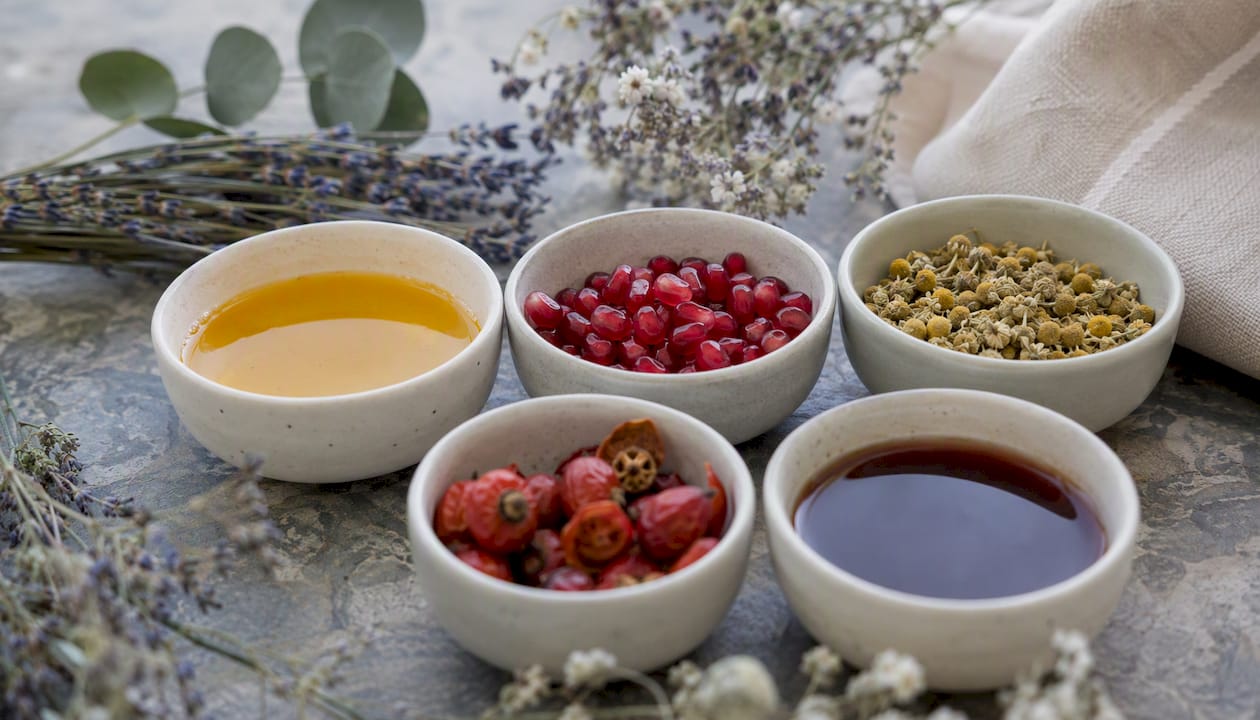
The term “superfood” has no regulatory definition in cosmetics. The FDA does not recognize it as a product category, and no ingredient earns the label through a standardized test. In practice, it refers to nutrient-dense, plant or food-derived extracts used in topical formulas for their vitamins, polyphenols, essential fatty acids, or enzymes. Think avocado oil, green tea catechins, sea buckthorn, or fermented rice extract.
What the label implies versus what it can deliver are two different things. A product called “superfood” may contain a meaningful concentration of a well-studied extract, or it may contain a trace amount added for marketing purposes. The ingredient, its form, and its concentration in the formula are what matter, not the word on the front of the bottle.
Clinical research measures specific biomarkers: hydration levels, TEWL, erythema scores, skin density. Phytosterols and topical phytonutrients have been shown to reach viable skin layers and improve barrier function in clinical contexts. That is a meaningful claim. “Superfood-powered glow” is not.
Pro Tip: When reading an ingredient list, look for the extract’s position relative to the full list. Ingredients appear in descending order by concentration. If your “green tea” product lists Camellia sinensis extract near the bottom, after fragrance, the concentration is likely too low to deliver the studied benefits. Standardized extracts (e.g., “50% EGCG” or “standardized polyphenol content”) signal a more bioavailable, research-aligned form.
The best superfoods for skin: an ingredient-by-ingredient breakdown
Each ingredient below is matched to the skin outcomes it reliably supports, along with notes on formulation and who benefits most. This is the kind of nutrient-rich skincare breakdown that separates evidence from hype.
Avocado oil: Rich in oleic acid, vitamins E and K, and plant sterols. Supports lipid barrier repair and deep emolliency. Pilot data links avocado consumption to improved skin elasticity. Best for dry and mature skin; use as a facial oil or in rich moisturizers. Avoid if prone to comedones.
Green tea (Camellia sinensis, catechins/EGCG): Delivers potent antioxidant and anti-inflammatory polyphenols. Reduces UV-induced oxidative stress and helps calm reactive skin. Works well in serums and toners. Suitable for all skin types, particularly oily and acne-prone. No significant photosensitivity risk.
Berries and vitamin C sources (rosehip, acerola, sea buckthorn): Provide ascorbic acid and co-antioxidants that support collagen synthesis and protect against photoaging. Vitamin C is required for collagen production and vitamin E protects against oxidative damage. Best in serums at stable, encapsulated forms (ascorbyl glucoside, MAP). Unstabilized L-ascorbic acid oxidizes quickly; look for airless packaging.
Turmeric (curcumin): A well-documented anti-inflammatory and antioxidant. Reduces erythema and supports even tone. Formulation challenge: curcumin has low bioavailability in standard emulsions; fermented or liposomal delivery improves penetration. Can temporarily stain skin at high concentrations.
Colloidal oatmeal (Avena sativa): FDA-recognized skin protectant. Contains avenanthramides, which suppress histamine-triggered inflammation. Excellent for sensitive, eczema-prone, and reactive skin. Found in cleansers, masks, and leave-on moisturizers. One of the safest options across all skin types.
Aloe vera sterols: Beyond the well-known humectant mucilage, aloe’s phytosterols have been shown in small trials to improve barrier markers and reduce erythema after UV exposure. Suitable for all skin types; particularly useful post-sun or post-procedure. Look for “aloe vera sterols” or “aloe vera inner leaf gel” rather than generic “aloe” in the INCI list.
Cacao (cocoa polyphenols): High-flavanol cocoa has shown improvements in skin hydration and photoprotection in human trials. Topically, cocoa butter provides emolliency and fatty acid support. Best for dry and mature skin. Rich texture makes it less suitable for acne-prone skin in heavy concentrations.
Honey (raw or Manuka): A natural humectant and antimicrobial agent. Draws moisture to the skin surface and supports the wound-healing environment. Manuka honey contains methylglyoxal, which has documented antimicrobial properties. Works well in masks and leave-on balms. Avoid if you have a bee-product allergy.
Algae and seaweed (spirulina, kelp, red algae): Provide minerals, amino acids, and polysaccharides that hydrate and firm. Some algae extracts show prebiotic effects on the skin microbiome. Suitable for most skin types; particularly useful for dull, dehydrated, or mature skin. Spirulina is rich in phycocyanin, a potent antioxidant.
Seed oils (marula, sea buckthorn, rosehip): Marula oil is high in oleic acid and absorbs quickly without greasiness. Sea buckthorn is exceptionally rich in omega-7 and carotenoids; it supports barrier repair but can temporarily tint skin orange at high concentrations. Rosehip seed oil contains trans-retinoic acid precursors and linoleic acid, making it useful for hyperpigmentation and essential fatty acid support in mature skin. All three are best used in the PM routine.
Pro Tip: Fermented plant extracts (fermented green tea, fermented rice water, fermented soy) tend to have smaller molecular weights and higher bioavailability than their unfermented counterparts. If you want a superfood ingredient to actually reach the viable epidermis, a fermented or standardized polyphenol version is a smarter choice than a generic “botanical extract.”
How superfood ingredients actually work on your skin
The benefits of superfood skincare come down to five overlapping mechanisms, and understanding them helps you pick the right ingredient for the right problem.
Antioxidant scavenging is the most studied pathway. Polyphenols from green tea, cacao, and berry extracts donate electrons to neutralize reactive oxygen species (ROS) generated by UV exposure, pollution, and metabolic stress. Left unchecked, ROS degrade collagen, trigger melanin overproduction, and accelerate barrier breakdown. Topical antioxidants intercept that chain reaction before it causes visible damage.
Anti-inflammatory signaling is closely related. Ingredients like curcumin, avenanthramides (oats), and green tea catechins suppress pro-inflammatory cytokines including IL-1β and TNF-α. This is why they reduce redness, calm reactive skin, and, per expert commentary, improve tolerance for stronger actives like retinoids and acids when used alongside them.
Lipid barrier integration is where fatty-acid-rich oils earn their place. The stratum corneum’s lipid matrix relies on ceramides, cholesterol, and free fatty acids in a specific ratio. Oleic-acid-rich oils (avocado, marula) and linoleic-acid-rich oils (rosehip, sea buckthorn) supplement depleted lipid layers, reducing TEWL and improving the skin’s ability to hold water. Phytosterols from aloe and plant sources integrate into this matrix and reduce UV-induced erythema.
Humectant action from polysaccharides, sugars, and mucilages (honey, aloe gel, seaweed) draws water from the dermis and environment into the stratum corneum. This is immediate, measurable, and does not require deep penetration to work.
Prebiotic and microbiome support is an emerging area. Certain fermented botanicals and polyphenol-rich extracts selectively feed beneficial skin bacteria, supporting a balanced microbiome that reinforces barrier function and reduces pathogen-driven inflammation.
Clinical signal: A 2026 meta-analysis compiling 94 preclinical and clinical studies found that antioxidant-rich extracts increased skin hydration and reduced TEWL. Subgroup analysis showed extracts and polyphenols produced the most consistent improvements, stronger than general dietary supplement data alone.
One important limit: the stratum corneum is a selective barrier. Most large-molecule plant compounds do not penetrate deeply on their own. Formulation vehicle matters enormously. Liposomal delivery, microemulsions, and fermented extracts substantially increase the probability that an active reaches viable epidermal targets.
What the clinical evidence actually supports
The strongest evidence for topical superfood ingredients clusters around hydration, barrier markers, and inflammatory skin conditions. Rapid wrinkle reversal and instant brightening are not well-supported by the current body of research.
| Outcome | Evidence strength | Notes |
|---|---|---|
| Skin hydration (MD = 2.12; 95% CI [1.02; 3.21]) | Strong | Consistent across extracts, polyphenols, fatty acids |
| TEWL reduction (MD = -0.68; 95% CI [-1.21; -0.16]) | Moderate–strong | Best in extract and fatty acid subgroups |
| Atopic dermatitis severity | Moderate | Astaxanthin, DHA, vitamin D show condition-specific benefit |
| Skin density / firmness | Moderate | Avocado, high-flavanol cocoa in pilot trials |
| Wrinkle depth reduction | Weak–moderate | Longer timelines; often combined oral + topical interventions |
| Instant brightening | Weak | No robust short-term clinical data |
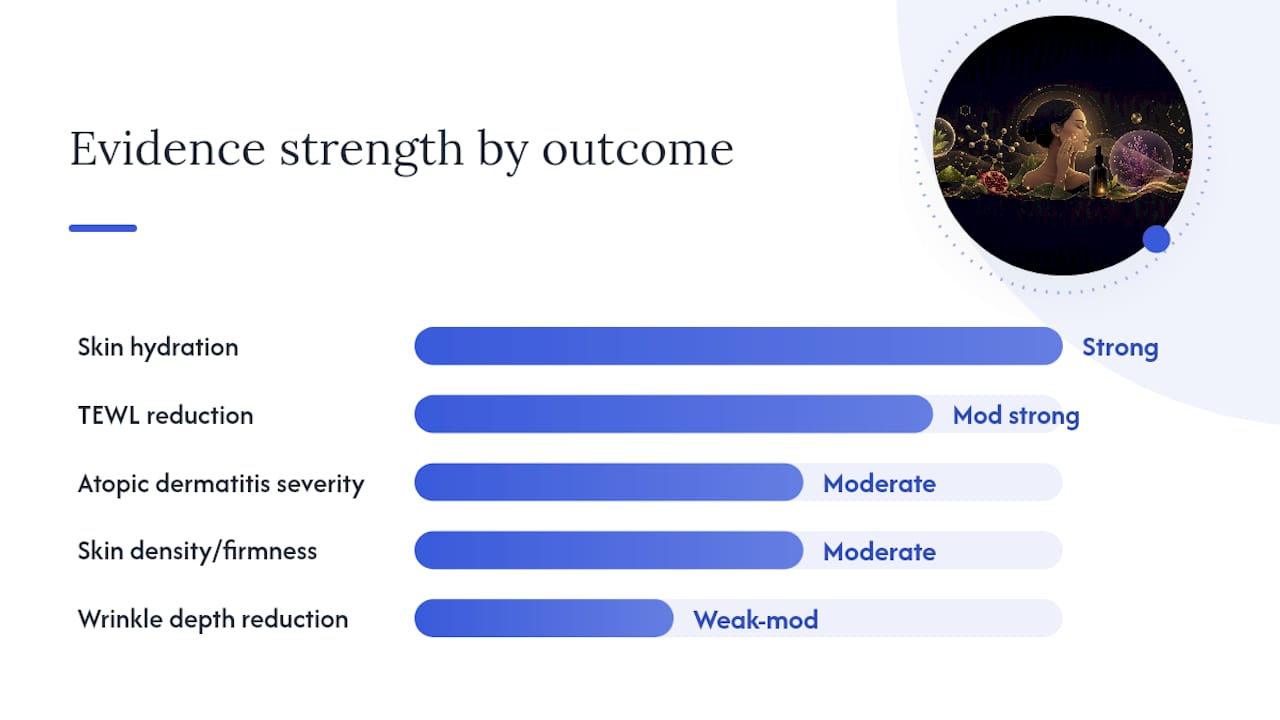
Source: Impact of Antioxidant-Rich Whole Foods or Supplements on Skin Health
Realistic timelines matter. Hydration improvements can appear within days of consistent use. Barrier repair takes two to four weeks of daily application. Changes in tone, texture, or firmness typically require eight to twelve weeks, and many studies showing those results combined oral and topical interventions. A topical product alone, used for two weeks, will not replicate the outcomes of a twelve-week combined trial.
Key figure: Extracts and polyphenol-rich formulations produced the clearest, most consistent improvements in barrier markers across the meta-analysis subgroups, outperforming general whole-food supplement data. That distinction matters for product selection: a well-formulated topical extract is not the same as eating more blueberries.
Condition-specific effects also vary. Astaxanthin, DHA, and vitamin D supplementation showed improvements in atopic dermatitis severity and quality-of-life scores in some subgroup analyses. That does not mean any superfood product treats eczema. It means certain specific interventions, at studied doses, have condition-relevant evidence. Always confirm with a dermatologist before substituting any ingredient for a prescribed treatment.
How to build a superfood skincare routine that actually works
Getting results from nutrient-rich skincare comes down to product selection, layering order, and patience. Here is a practical checklist.
- Check ingredient form and position. The active extract should appear in the first half of the INCI list. Standardized or fermented forms signal higher bioavailability.
- Choose packaging that protects actives. Vitamin C, retinol, and polyphenol-rich formulas degrade in light and air. Airless pumps, opaque bottles, and dark glass preserve potency.
- Layer thinnest to thickest. Apply water-based serums before oils and moisturizers. Antioxidant serums go on cleansed skin before SPF in the morning. Fatty-acid oils seal in serums at night.
- Pair strategically. Green tea and niacinamide work well together. Vitamin C pairs with vitamin E for synergistic antioxidant protection. Avoid layering high-concentration acids directly with fresh turmeric or citrus-based extracts until you know your skin’s tolerance. For a full holistic anti-aging routine, pairing superfood ingredients with clinical actives like retinoids is effective but requires a gradual introduction.
- Patch-test every new product. Apply a small amount to the inner forearm or behind the ear for 24–48 hours before full-face use. Signs to stop: persistent redness, itching, swelling, or breakouts.
- Start new products at 2–3 times per week. Increase frequency as your skin adjusts, typically over two to three weeks.
- Use the right format for the goal. Serums deliver concentrated actives. Facial oils provide barrier support. Masks offer an intensive, short-contact dose. Leave-on moisturizers provide sustained hydration throughout the day.
Pro Tip: Natural and preservative-light formulations are more vulnerable to oxidation and microbial contamination than conventional products. Store them in a cool, dark place. If the product recommends refrigeration, follow it. Discard any product that changes color, develops an off smell, or separates unexpectedly, regardless of the printed expiry date.
Which skin types benefit most, and who should be cautious
Most skin types can benefit from superfood ingredients, but the right ingredient depends on your specific concerns.
- Dry and mature skin: Avocado oil, marula, rosehip, cacao butter, and honey deliver the most direct benefit through fatty acid replenishment and humectant action. Essential fatty acids are especially relevant for skin over 40, where lipid production naturally declines.
Common precautions to know:
- When to see a dermatologist: — Persistent dermatitis, worsening acne, or any skin condition being managed with prescription treatments warrants professional guidance before adding new actives to your routine.
For guidance on clean beauty formulation and ingredient sourcing, Miraclegelnaturalskincare’s blog covers preservative approaches and what “natural” actually means on a label.
Key Takeaways
Topical superfood ingredients deliver measurable support for skin hydration and barrier function, but results depend on ingredient quality, formulation, and consistent use over weeks to months.
| Point | Details |
|---|---|
| Hydration and barrier evidence | A 2026 meta-analysis found antioxidant-rich whole foods or supplements increased skin hydration (MD = 2.12; 95% CI [1.02; 3.21]) and reduced TEWL (MD = -0.68; 95% CI [-1.21; -0.16]). |
| Realistic timeline | Hydration improves within days; barrier repair takes 2–4 weeks; tone and texture changes need 8–12 weeks. |
| Formulation quality matters | Standardized, fermented, or liposomal extracts reach viable skin layers more reliably than generic botanicals. |
| Safety first | Patch-test every new product; avoid photosensitizing citrus extracts in AM routines; check for botanical allergies. |
| Miraclegelnaturalskincare | The 2-Minute Miracle Gel uses a Tri-Moisture Cryo Complex™ to pair superfood-forward actives with barrier support for mature skin. |
Why I think the “superfood skincare” conversation is missing the point
The debate around superfood skincare tends to split into two camps: enthusiasts who treat every berry extract as a miracle, and skeptics who dismiss the whole category as marketing theater. Both miss what the evidence actually shows.
The real story is about formulation intelligence, not ingredient glamour. A green tea extract at 0.1% in a poorly preserved emulsion does almost nothing. The same catechins in a fermented, standardized form at a meaningful concentration, paired with a fatty-acid-rich base, can genuinely reduce inflammatory signaling and support barrier repair. The ingredient is not the variable. The delivery system is.
What I find most underappreciated is the role these ingredients play as tolerance builders. Mature skin, or skin that has been over-treated with acids and retinoids, often needs a period of barrier restoration before it can tolerate stronger actives again. Superfood-forward formulas, particularly those built around colloidal oatmeal, aloe sterols, and seed oils, are exceptionally good at that job. They are not a replacement for clinical actives. They are what makes clinical actives work better over time.
The sustainability angle also deserves more attention. Responsibly sourced sea buckthorn, marula, and algae extracts have a significantly lower environmental footprint than many synthetic actives. For anyone building a natural anti-aging routine that they can sustain long-term, ingredient sourcing is part of the equation, not an afterthought.
The bottom line: superfood skincare works when the formulation is serious. Treat the ingredient list as the evidence, not the front-of-pack claim.
The Miraclegelnaturalskincare product that puts this into practice
Skin that needs both barrier support and gentle exfoliation at the same time rarely gets both from a single product. The 2-Minute Miracle Gel from Miraclegelnaturalskincare is built around the Tri-Moisture Cryo Complex™, which combines superfood-aligned actives with barrier-supporting hydration in a formula designed specifically for mature skin.
It delivers the kind of multi-mechanism approach the evidence supports: antioxidant protection, hydration, and gentle resurfacing without the irritation risk of aggressive acids. For skin over 40 that needs results without compromise, it fits directly into the routine framework this article describes: patch-test first, layer under SPF in the morning, and pair with a targeted moisturizer for PM barrier repair.
Browse the full natural skincare range to find the right combination for your skin concerns, or start with the 2-Minute Miracle Gel and build from there.
This article is for general informational purposes only and does not constitute medical or dermatological advice. Consult a qualified dermatologist for personalized guidance on skin conditions or prescription treatments.
Useful sources
- Impact of Antioxidant-Rich Whole Foods or Supplements on Skin Health: A Systematic Review and Meta-Analysis of Preclinical and Clinical Studies
- Nutritional Dermatology: Optimizing Dietary Choices for Skin Health — PMC
- The best foods for healthy skin | Good Food
- Should you try fresh superfood skincare? Beauty experts weigh in
- 2-Minute Miracle Gel | Exfoliating Gel for Radiant Skin