

TL;DR:
- UK-certified organic skincare is verified by independent bodies like the Soil Association and COSMOS Organic, ensuring high organic ingredient content and strict standards. These products reduce skin irritation and deliver greater antioxidant benefits, especially important for women over 40 with sensitive, aging skin. Verification comes from logos on packaging and ingredient lists with certification footnotes, promoting transparency and authentic quality.
UK-certified organic skincare refers to cosmetic products independently verified to contain a high proportion of organically farmed ingredients, produced without synthetic pesticides, fertilizers, or GMOs, and manufactured under strict ethical and environmental standards. Two bodies govern this space in the UK: the Soil Association and COSMOS Organic. For women over 40, this distinction matters because certified products deliver 22% less skin irritation than conventional alternatives, making them a credible choice for mature skin that needs both gentleness and results. Certification is not a marketing badge. It is a verified guarantee of what goes into every bottle.
What are the main UK organic skincare certifications and their standards?
The Soil Association is the UK’s gold standard for certified organic skincare. It requires annual audits covering ingredient origin, formulation, packaging, and production premises. No parabens, sulfates, petrochemicals, phthalates, or synthetic dyes are permitted under its rules. That level of scrutiny means every product carrying its logo has been examined from the farm to the finished formula.

COSMOS Organic operates alongside the Soil Association and carries international recognition across Europe and beyond. It distinguishes between Organic and Natural standards, with the Organic tier requiring a higher proportion of certified organic ingredients. COSMOS also regulates packaging choices and restricts synthetic chemical use throughout the supply chain. Many UK brands carry both logos, which signals the highest level of verified commitment.
Certified organic ingredient percentages typically require 70%–95% organic content depending on the certification tier. That range reflects the practical reality that water and some minerals cannot be certified organic, so the percentage applies to the certifiable portion of the formula. A product sitting at 95% organic content has almost no room for compromise.
| Certification | Governing body | Key requirement | What it bans |
|---|---|---|---|
| Soil Association | Soil Association UK | Annual audits, ingredient origin | Parabens, SLS, petrochemicals |
| COSMOS Organic | COSMOS-standard AISBL | 70%–95% organic content | Synthetic dyes, phthalates |
| COSMOS Natural | COSMOS-standard AISBL | Natural origin ingredients | Petrochemicals, GMOs |
Pro Tip: Look for both the Soil Association and COSMOS logos on the same product. Dual certification means the brand has passed two independent audits, which is the strongest assurance available to UK shoppers.
How does UK-certified organic skincare benefit skin health, especially for mature skin?
Certified organic skincare reduces skin irritation by about 22% compared to conventional products. For women over 40, whose skin barrier naturally becomes thinner and more reactive, that reduction is clinically meaningful. Fewer synthetic chemicals in a formula means fewer triggers for redness, dryness, and sensitivity.
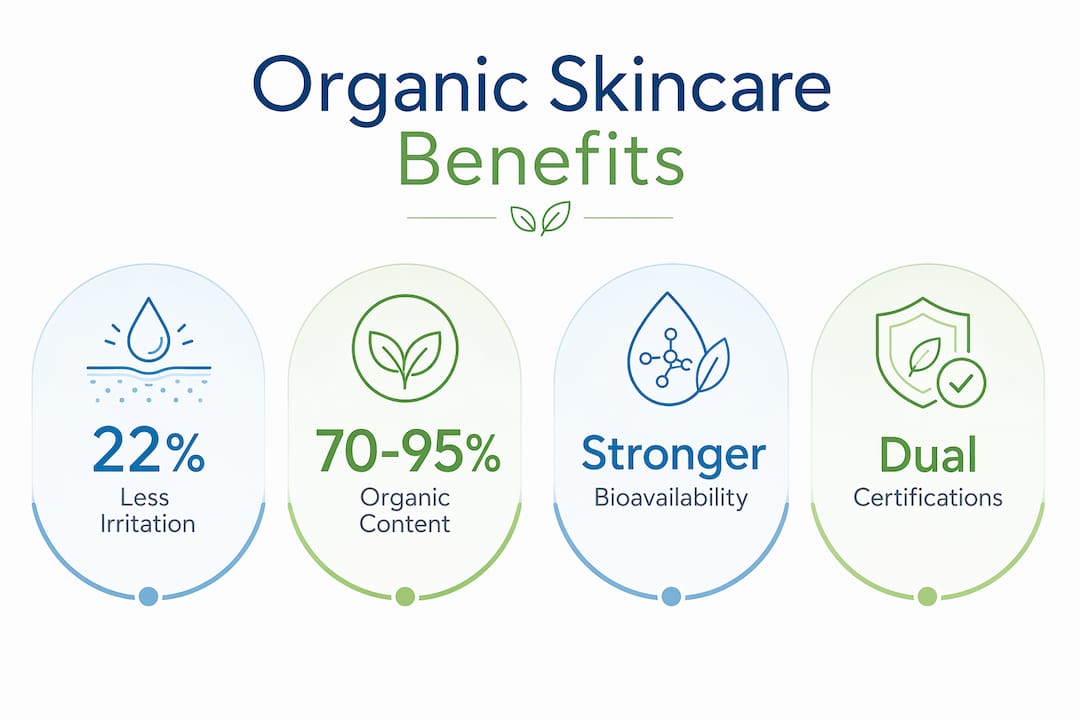
Organic ingredients also deliver stronger bioavailability. Plants grown without synthetic pesticides tend to produce higher concentrations of natural antioxidants and phytonutrients as a defense mechanism. Those compounds transfer directly into the finished product, giving your skin access to natural antioxidants and hydrating herbal extracts that support barrier repair and reduce oxidative stress. Oxidative stress is one of the primary drivers of visible aging.
The absence of parabens, phthalates, and synthetic dyes also matters for long-term skin health. These ingredients have been linked to hormonal disruption and cumulative sensitization over years of daily use. Removing them from your routine reduces that cumulative load, which is particularly relevant for women who have been using conventional products for decades.
Specific skin health benefits for mature skin include:
- Improved hydration from plant-based humectants and emollients that mimic the skin’s natural lipid structure
- Antioxidant delivery from organic botanicals like rosehip, sea buckthorn, and green tea that neutralize free radicals
- Reduced redness and sensitivity due to the absence of synthetic preservatives and fragrance compounds
- Skin barrier support from certified organic oils and butters that reinforce the lipid layer
- Gentler anti-aging effects without the irritation risk associated with high-concentration synthetic actives
What distinguishes UK-certified organic skincare from clean beauty and natural skincare?
Clean beauty focuses on avoiding specific synthetic chemicals, while organic certification verifies how ingredients were farmed and processed. The distinction is fundamental. A product can be clean but not organic if its plant ingredients were grown using synthetic pesticides. A product can carry organic certification but still use ingredients that some clean beauty advocates would flag. They are overlapping but separate standards.
Natural skincare sits in an even less regulated space. The word “natural” carries no legal definition in the UK cosmetics market. A brand can print “natural” on packaging without any third-party verification. Organic certification closes that gap by requiring documented proof of ingredient origin and independent auditing.
The term “organic-inspired” is a red flag. It signals that a brand is borrowing the language of certification without meeting its requirements. Transparency in INCI listings and third-party logos are the only reliable way to separate genuine certified products from marketing language. Understanding the difference between these categories helps you make a genuinely informed choice, which is exactly what the clean beauty vs. organic distinction is about.
Key differences at a glance:
- Certified organic: Third-party audited, verified ingredient origin, strict percentage requirements, no synthetic pesticides or GMOs
- Clean beauty: Brand-defined, no universal standard, focuses on ingredient safety rather than farming practices
- Natural skincare: No legal definition, no required certification, relies entirely on brand claims
Pro Tip: Organic certification is a guarantee of ingredient origin and environmentally conscious production, not just ingredient safety. When you see a Soil Association or COSMOS logo, you are getting both.
How to identify genuine UK-certified organic skincare products when shopping?
The Soil Association and COSMOS logos are the two marks UK shoppers should prioritize. These logos are the critical markers to trust over marketing buzzwords or unverified “natural” claims. Both appear on the front or back of packaging and link to publicly searchable certification databases where you can verify a brand’s status.
The INCI ingredient list is your second line of verification. Certified organic ingredients are marked with an asterisk and a footnote explaining the certification. If a product claims to be organic but its INCI list shows no asterisked ingredients and no certification footnote, the claim is decorative rather than verified.
Packaging also signals authenticity. Certified brands typically use glass, aluminum, compostable cartons, or refillable bottles as part of their environmental commitment. Eco-friendly packaging is not a certification requirement in isolation, but it reflects the broader values that certified brands are audited on. A brand serious about organic standards is usually serious about its environmental footprint too.
Shopping checklist for genuine certified organic skincare:
- Look for the Soil Association or COSMOS Organic logo on the label
- Check the INCI list for asterisked organic ingredients with a certification footnote
- Search the brand name in the Soil Association’s online certified business directory
- Avoid products using “organic-inspired,” “made with organic ingredients,” or “natural organic” without a certification logo
- Check for additional ethical badges such as cruelty-free, vegan, and Leaping Bunny, which often accompany certified organic products
- Prefer brands using recyclable or refillable packaging as a secondary indicator of genuine commitment
For a deeper look at what certification processes actually involve, the organic certifications guide at Miraclegelnaturalskincare covers the full verification chain in plain language.
Key Takeaways
UK-certified organic skincare is defined by third-party audited ingredient origin, strict organic content percentages, and a complete ban on synthetic pesticides, parabens, and petrochemicals, making it the most verifiable standard available to women over 40.
| Point | Details |
|---|---|
| Certification is third-party verified | Soil Association and COSMOS Organic logos confirm independent audits, not just brand claims. |
| Organic content has a minimum threshold | Certified products require 70%–95% organic ingredient content depending on the certification tier. |
| Mature skin benefits directly | Certified organic products reduce skin irritation by about 22%, supporting sensitive and aging skin. |
| Clean beauty is not the same | Clean beauty avoids certain chemicals; organic certification verifies farming origin and production practices. |
| INCI lists confirm authenticity | Asterisked organic ingredients with a certification footnote are the clearest proof of genuine certification. |
Why I think most women over 40 are underestimating what certification actually means
Most conversations about organic skincare stop at “no nasty chemicals.” That framing undersells what certification actually delivers. When I look at what the Soil Association and COSMOS audits cover, the scope goes far beyond the ingredient list. It includes how the farm was managed, how the manufacturer handles waste, and whether the packaging can be recycled. That is a complete supply chain review, not a label check.
What I find most compelling for mature skin specifically is the bioavailability argument. Organically farmed plants produce more of their own protective compounds because they cannot rely on synthetic pesticides for defense. Those compounds, including polyphenols, flavonoids, and essential fatty acids, are exactly what aging skin needs to manage oxidative stress and maintain its barrier. You are not just avoiding harm. You are getting a more nutritionally dense ingredient.
The environmental dimension also resonates with me personally. Women over 40 have spent decades making purchasing decisions. Choosing certified organic skincare aligns those decisions with values around soil health, reduced chemical runoff, and ethical labor practices. That alignment is not a luxury consideration. It is a reasonable expectation from a product that costs a premium and claims to be better.
My practical advice is simple. Stop reading the front of the packaging and start reading the back. The INCI list and the certification logo tell you everything the front label is trying to suggest. If both are present and verifiable, the product earns its place in your routine. If either is missing, keep looking.
— Barbara
Miraclegelnaturalskincare: natural skincare built for women over 40
If you have spent time understanding what certified organic skincare actually requires, the next step is finding products that meet that standard and work for mature skin.
Miraclegelnaturalskincare formulates with natural and organic ingredients specifically chosen for their efficacy on skin over 40. The range includes cleansers, moisturizers, eye serums, and targeted treatments developed by founder Shelly Maguire, a recognized industry professional. Every product prioritizes ingredient transparency and gentleness without sacrificing visible results. The age-defying skincare collection is the right place to start if you want products that align with everything covered here.
FAQ
What is UK-certified organic skincare?
UK-certified organic skincare refers to cosmetic products independently audited to verify that their ingredients were grown without synthetic pesticides or GMOs and manufactured under strict ethical and environmental standards. The Soil Association and COSMOS Organic are the two primary certification bodies in the UK.
How is organic skincare different from natural skincare?
Organic skincare carries third-party certification confirming ingredient origin and farming practices, while natural skincare has no legal definition or required verification. A product labeled “natural” may contain conventionally farmed or synthetic ingredients without any independent audit.
Does certified organic skincare actually work for anti-aging?
Certified organic products reduce skin irritation by about 22% and deliver natural antioxidants and hydrating botanicals that support skin barrier repair and reduce oxidative stress, both of which are central to anti-aging skincare for women over 40.
How do I know if a product is genuinely certified organic?
Look for the Soil Association or COSMOS Organic logo on the label, then check the INCI ingredient list for asterisked organic ingredients with a certification footnote. You can also verify a brand’s certification status directly through the Soil Association’s online directory.
What percentage of ingredients must be organic for certification?
Certified organic products typically require between 70% and 95% organic content depending on the certification standard, with the percentage applying to the certifiable portion of the formula since water and minerals cannot be organically certified.