

If your skin flushes, stings, or breaks out at the first sign of an active ingredient, the right vitamin C for sensitive skin is a stabilized derivative, not the high-strength L-ascorbic acid that dominates most serums. Tetrahexyldecyl ascorbate (THDA), magnesium ascorbyl phosphate (MAP), and sodium ascorbyl phosphate (SAP) deliver the same antioxidant and brightening payoff with far less irritation risk. Miracle Gel from Miraclegelnaturalskincare is a client-recommended gentle option built around this philosophy: effective brightening without the sting.
Quick picks for sensitive skin:
- THDA (tetrahexyldecyl ascorbate): Lipid-soluble, pH-independent, slow-release. The gentlest option for reactive or rosacea-prone skin.
- MAP (magnesium ascorbyl phosphate): Water-soluble phosphate derivative, well-tolerated, stable, good for dry or dehydrated sensitive skin.
- SAP (sodium ascorbyl phosphate): Similar profile to MAP, often found in lighter gel textures.
- Low-% buffered L-ascorbic acid (5–10%): Workable for mild sensitivity when paired with vitamin E and ferulic acid and kept in airless, opaque packaging.
- Miracle Gel (Miraclegelnaturalskincare): A gentle, multi-functional formulation designed for sensitive and mature skin, available through the sensitive-skin safe collection.
Pro Tip: Start with THDA or MAP if you have never used vitamin C before. Both work at skin-neutral pH, so you skip the low-pH burn that catches most first-timers off guard.
Research published in PMC indicates that topical vitamin C can reduce erythema in reactive sensitive skin when delivered in appropriate, gentle formulations — meaning the formula matters as much as the ingredient itself.
Key Takeaways
Gentle vitamin C derivatives like THDA and MAP deliver the same antioxidant and brightening benefits as L-ascorbic acid with significantly lower irritation risk, making them the practical first choice for sensitive skin.
| Point | Details |
|---|---|
| Choose a derivative first | THDA, MAP, or SAP are better tolerated than high-strength L-ascorbic acid for reactive skin. |
| Packaging protects potency | Airless pumps or opaque tubes prevent oxidation; jar packaging degrades vitamin C quickly. |
| Vitamin C and niacinamide work together | Layer vitamin C first, then niacinamide; they target different steps of pigmentation and barrier repair. |
| Introduce slowly and patch test | Start every other day at night; patch test 24–48 hours before full-face use to catch reactions early. |
| Miraclegelnaturalskincare Miracle Gel | A fragrance-free, barrier-supportive option formulated for sensitive and mature skin, available in the sensitive-skin safe collection. |
Table of Contents
- What does vitamin C actually do for your skin?
- Which vitamin C forms are gentlest for reactive skin?
- How to choose a vitamin C product for sensitive skin
- How to introduce vitamin C into a sensitive-skin routine
- How do gentle vitamin C categories compare?
- How to recognize vitamin C irritation and when to stop
- Miracle Gel’s gentle vitamin C approach for sensitive skin
- Sources
What does vitamin C actually do for your skin?
Vitamin C is one of the most clinically supported topical actives available. According to Harvard Health, consistent topical use provides antioxidant protection, supports collagen synthesis, and helps address photodamage and uneven pigmentation.
The core mechanisms:
- Antioxidant defense: Vitamin C neutralizes free radicals generated by UV exposure and pollution, reducing oxidative stress before it degrades collagen and elastin.
- Brightening via tyrosinase inhibition: It interrupts melanin production at the enzyme level, which gradually fades dark spots and evens skin tone.
- Collagen support: Early biochemical research links vitamin C directly to collagen cross-linking, the structural process that keeps skin firm. Without adequate vitamin C, that process stalls.
- Sunscreen synergy: Vitamin C does not replace SPF, but it does reinforce UV protection by neutralizing oxidative byproducts that sunscreen alone cannot catch.
For sensitive skin specifically, realistic timelines matter. Brightening effects on dark spots typically take 8–12 weeks of consistent use. Antioxidant protection begins immediately with each application, even if you cannot see it. Collagen remodeling is a slower process, measured in months rather than weeks. Understanding this prevents the common mistake of abandoning a product too early, or worse, layering on more actives to speed things up.
You can also read more about why vitamin C serum supports brighter, younger skin in the Miraclegelnaturalskincare guide to antioxidant skincare.
Which vitamin C forms are gentlest for reactive skin?
The short answer: lipid-soluble derivatives first, phosphate derivatives second, and low-concentration buffered L-ascorbic acid only if you have already built some tolerance.
Why L-ascorbic acid often irritates
L-ascorbic acid (LAA) is the active form your skin uses directly, but it requires a formula pH below 3.5 to stay stable and penetrate effectively. That low pH is the primary irritation trigger for sensitive skin. LAA also oxidizes quickly once exposed to air and light, turning the serum yellow-orange and losing potency. For reactive skin, the combination of low pH, water solubility (which limits penetration depth), and instability makes high-concentration LAA a poor starting point.
The gentler alternatives
According to Allure’s reporting on sensitive-skin vitamin C, THDA (tetrahexyldecyl ascorbate) is lipid-soluble because of a structural lipid tail added during manufacturing. That modification lets it penetrate skin more effectively than LAA, work at a skin-neutral pH, and release active vitamin C more slowly, reducing the spike of reactivity that causes stinging. It also pairs naturally with oil-based leave-on formulas, which tend to be more barrier-supportive than water-based serums.
Phosphate derivatives like MAP and SAP convert to active vitamin C inside the skin, as reviewed in PMC’s analysis of topical vitamin C formulations. They are more stable than LAA, work at higher pH values, and are commonly better tolerated by sensitive or dry skin. The trade-off is that conversion efficiency varies, so the effective dose reaching the dermis is lower than the label percentage suggests.
| Vitamin C form | Irritation risk | pH requirement | Texture fit | Stability |
|---|---|---|---|---|
| L-ascorbic acid (LAA) | Higher (low pH needed) | Below 3.5 | Water serums | Oxidizes quickly |
| THDA / THDC | Low (pH-independent) | Skin-neutral | Oil serums, balms | High |
| MAP (magnesium ascorbyl phosphate) | Low | Near-neutral | Water or gel | High |
| SAP (sodium ascorbyl phosphate) | Low | Near-neutral | Gel, lightweight serum | High |
| Ascorbyl glucoside | Low to moderate | Near-neutral | Water serum | Moderate to high |
| Ethyl ascorbic acid (3-O-ethyl) | Low to moderate | Near-neutral | Water or hybrid serum | Moderate to high |
Pro Tip: If you have oily or acne-prone sensitive skin, SAP is worth prioritizing. Some research suggests it may have mild antimicrobial properties in addition to its brightening effect, making it a practical two-for-one for breakout-prone reactive skin.
How to choose a vitamin C product for sensitive skin
Three non-negotiable starting rules: choose a derivative or low-concentration buffered LAA, choose fragrance-free, and choose stable packaging. Everything else is refinement.
What to look for on the label:
- Vitamin C form: THDA, MAP, SAP, ascorbyl glucoside, or ethyl ascorbic acid for lowest irritation risk. If LAA, keep it at 5–10% and confirm the formula includes vitamin E and ferulic acid.
- Concentration: Derivatives are effective at lower concentrations than LAA. MAP and SAP at 5–10% are well-studied. THDA at 2–5% in an oil base delivers meaningful activity.
- Supporting antioxidants: Vitamin E and ferulic acid stabilize vitamin C in the formula and extend its skin-level activity. Formulators consistently recommend this trio for real-world performance.
- Packaging: Airless pumps or opaque, sealed tubes protect vitamin C from light and air oxidation. Jar packaging is a red flag for any vitamin C product.
- Fragrance-free: Fragrance is one of the most common sensitizers in skincare. For reactive skin, it is a hard pass.
- Texture: Oil-based serums suit THDA and dry or dehydrated skin. Water-based gels suit MAP/SAP and oily or combination skin.
- Price and US availability: Effective vitamin C derivatives are available across price points. Paying more does not guarantee better tolerance.
Red flags to avoid:
- High-percentage LAA (15–25%) at low pH in a fragranced formula
- Rinse-off vitamin C products (contact time is too short for meaningful absorption)
- Clear glass jar packaging with no airless mechanism
- “Vitamin C complex” with no named derivative on the INCI list
Pro Tip for readers over 40 or with melanin-rich skin: Post-inflammatory hyperpigmentation (PIH) is a real risk when irritation occurs repeatedly. Prioritizing low-irritation derivatives like THDA or MAP is not just about comfort. It actively reduces the chance of triggering the very dark spots you are trying to fade. Pair with a broad-spectrum SPF 30+ daily.
How to introduce vitamin C into a sensitive-skin routine
The safest introduction follows a simple rule: go slower than you think you need to.
- Patch test first. Apply a small amount of the product to the inside of your forearm or behind your ear. Wait 24–48 hours. If no redness, itching, or swelling appears, proceed. This is the standard approach recommended by dermatology resources including Boston University Dermatology for reactive and rosacea-prone skin.
- Start at night, every other day. Apply after cleansing on a gentle face cleansing workflow and before moisturizer. Night application lets you monitor any reaction without the variable of daytime sun exposure, and every-other-day frequency gives your barrier time to adjust.
- Apply to dry skin. Damp skin can drive actives deeper and increase irritation risk. Wait two minutes after cleansing before applying.
- Follow with moisturizer. A barrier-supportive moisturizer immediately after vitamin C reduces transient stinging and locks in the active.
- Add sunscreen every morning. Vitamin C is not photosensitizing, but it works synergistically with SPF. Skipping sunscreen wastes much of the antioxidant benefit.
- Increase frequency gradually. After two weeks with no reaction, move to daily use. After another two weeks, you can assess whether you want to try a slightly higher concentration.
- Layer niacinamide after vitamin C, not before. If you use both, apply vitamin C first (thinner texture, lower pH if using LAA), let it absorb for 30–60 seconds, then apply niacinamide. The old concern about mixing them causing flushing is largely a lab-condition artifact, not a real-world risk in finished products.
Dos and don’ts:
- Do use a derivative if you have had reactions to LAA before.
- Do introduce only one new active at a time so you can identify the cause of any reaction.
- Don’t layer vitamin C directly with AHAs or retinoids on the same application until your skin is fully adjusted. Alternate mornings and evenings instead.
- Don’t push through persistent burning. Transient stinging that fades in under a minute is normal. Burning that lasts longer is a signal to stop.
Pro Tip: If irritation appears, apply a thin layer of a fragrance-free barrier cream (petrolatum or ceramide-based) over the area immediately. Do not rinse the vitamin C off with a cleanser — that can worsen irritation. Plain water rinse, then barrier cream.
How recommendations and evidence were selected
Picks in this article were prioritized based on peer-reviewed research on vitamin C derivatives, formulation stability, packaging quality, dermatologist guidance on sensitive skin, and the Miraclegelnaturalskincare product philosophy of gentle, clinically informed formulations. Products were evaluated against criteria for safety in reactive skin, supporting antioxidant inclusion, and US availability.
Selection criteria:
- Demonstrated safety profile for sensitive or reactive skin
- Named vitamin C derivative with published tolerability data
- Fragrance-free formulation
- Stable, light-protective packaging
- Supporting antioxidants (vitamin E, ferulic acid, or equivalent)
- Expert or dermatologist endorsement in published sources
Individual tolerance varies. Product availability and formulations can change. Always patch test a new product before full-face use, and consult a board-certified dermatologist if you have a diagnosed skin condition such as rosacea, eczema, or contact dermatitis before introducing new actives.
How do gentle vitamin C categories compare?
The categories below use neutral labels rather than brand names so you can apply the framework to any product you encounter.
| Category | Best for | Vitamin C form | Typical concentration | Irritation tendency | Texture | Stability | Key supporting ingredients |
|---|---|---|---|---|---|---|---|
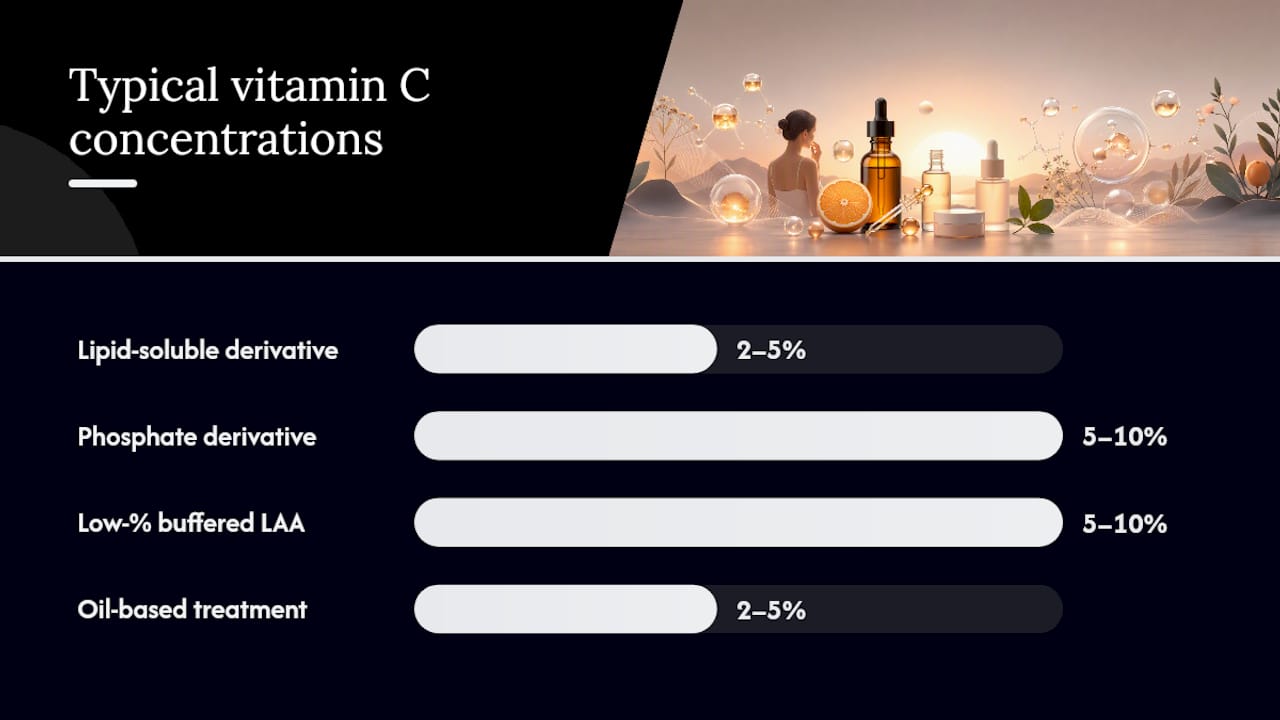
| Lipid-soluble derivative | Reactive, rosacea-prone, dry | THDA / THDC | 2–5% | Very low | Oil serum, balm | High | Vitamin E, ferulic acid |
| Phosphate derivative | Dry, dehydrated, mild sensitivity | MAP or SAP | 5–10% | Low | Gel or water serum | High | Hyaluronic acid, niacinamide |
| Low-% buffered LAA | Mild sensitivity, experienced users | L-ascorbic acid | 5–10% | Moderate | Water serum | Moderate (needs airless) | Vitamin E, ferulic acid |
| Oil-based vitamin C treatment | Very dry, barrier-compromised | THDA or mixed | 2–5% | Very low | Facial oil | High | Squalane, vitamin E |
Miracle Gel (Miraclegelnaturalskincare) is formulated with sensitive and mature skin in mind, using a multi-functional approach that avoids harsh concentrations and fragrance. Its Tri-Moisture Cryo Complex™ supports barrier function alongside brightening actives, making it a practical choice for readers over 40 who want brightening results without sacrificing skin comfort. Available through the anti-aging serum collection and the sensitive-skin safe range.
Generic category alternatives:
- Lipid-soluble derivative serums suit anyone who has previously reacted to water-based vitamin C. The oil texture also doubles as a barrier treatment for very dry or compromised skin.
- Phosphate derivative gels work well for oily or combination sensitive skin where a heavy oil serum would feel uncomfortable. MAP and SAP both convert to active vitamin C in the skin with a gentler delivery curve.
- Low-% buffered LAA serums are worth considering if you have mild sensitivity and want the most direct form of vitamin C. Keep concentration at or below 10% and confirm airless packaging.
Pro Tip: Check the INCI list before buying. If “ascorbic acid” appears without a modifier (no “magnesium,” “sodium,” “tetrahexyldecyl,” or “ethyl”), you are looking at straight LAA. That is fine if you know your skin tolerates it, but it is not a gentle derivative.
How to recognize vitamin C irritation and when to stop
Some reactions are normal. Others are signals to stop immediately.
Normal adjustment reactions (usually resolve within a few minutes):
- Brief, mild tingling or stinging on application (especially with LAA formulas)
- Slight transient redness that fades within 10–15 minutes
- Mild warmth at the application site
Signs to stop use:
- Burning that persists beyond 20–30 minutes
- Swelling, hives, or raised welts
- Blistering or skin peeling beyond normal flaking
- Itching that spreads beyond the application area
- Systemic symptoms: throat tightness, difficulty breathing, dizziness (seek emergency care immediately)
Action steps if irritation occurs:
- Rinse with cool, plain water (no cleanser).
- Apply a fragrance-free, ceramide-based or petrolatum barrier emollient.
- Do not reapply the product until the skin has fully recovered.
- Patch test on a small area before trying again at a lower concentration or switching to a gentler derivative.
- Contact a board-certified dermatologist if reactions are persistent, severe, or recur with multiple products.
For people with melanin-rich skin, repeated low-grade irritation carries an additional risk: post-inflammatory hyperpigmentation (PIH). Even reactions that seem mild can trigger excess melanin production, creating new dark spots. Switching to a gentler derivative proactively is a better strategy than managing PIH after the fact.
Expert notes and evidence: vitamin C vs. niacinamide and gentler derivatives
The evidence base for vitamin C in sensitive skin has grown meaningfully in recent years, and the picture is clearer than the marketing noise suggests.
Key evidence-based conclusions:
- Gentler derivatives reduce irritation risk without sacrificing efficacy. PMC’s review of topical vitamin C formulations confirms MAP and SAP are commonly better tolerated than high-strength LAA, with meaningful antioxidant and brightening activity.
- Allure’s synthesis of cosmetic chemist and dermatologist input confirms THDA’s lipid-soluble structure makes it pH-independent and slower-releasing, which is the mechanism behind its gentler profile.
- Vitamin C and niacinamide are complementary, not competing. DermApproved’s analysis explains that the old concern about mixing them, which was based on a lab reaction producing nicotinic acid, does not apply to finished skincare products under normal use conditions. Vitamin C targets tyrosinase-driven pigmentation; niacinamide works on melanin transfer and barrier repair. Used together, they address more of the pigmentation pathway than either does alone.
According to Women’s Health, vitamin C is the stronger choice for antioxidant protection and pigment inhibition, while niacinamide excels at barrier repair and calming inflammation. For sensitive skin, using both in a layered routine covers more ground than choosing one.
The vitamin C and collagen synthesis connection is also well-supported: vitamin C is a required cofactor in the enzymatic steps that produce stable collagen, which is why consistent topical use contributes to firmer skin over time, not just brighter tone.
What the evidence says, and what most articles miss
Most vitamin C articles frame the choice as “L-ascorbic acid or nothing,” which leaves sensitive-skin readers either pushing through irritation or abandoning the ingredient entirely. Both outcomes are unnecessary.
The real insight from the research is that the molecular form of vitamin C matters far more than the percentage on the label. Stability, pH independence, and lipid solubility are the variables that determine whether the active vitamin C actually reaches the dermis intact and without triggering a defensive response.
There is also a tendency to treat niacinamide and vitamin C as rivals in a brightening competition. They are not. Niacinamide for pores, barrier repair, and inflammation control; vitamin C for antioxidant defense and tyrosinase inhibition. A barrier-first skincare routine that includes both, layered correctly, is more effective than either alone for sensitive skin dealing with dullness, uneven tone, and reactive redness simultaneously.
The other underappreciated point: packaging is not cosmetic. A vitamin C product in a clear jar is degrading every time you open it. Airless pumps and opaque tubes are not premium features. They are the minimum requirement for a vitamin C product to remain effective through the last application.
Miracle Gel’s gentle vitamin C approach for sensitive skin
Sensitive skin does not have to mean skipping vitamin C. Miraclegelnaturalskincare’s Miracle Gel is formulated specifically for skin that reacts easily, using a gentle, multi-functional approach that prioritizes barrier health alongside brightening. The formula avoids fragrance and harsh concentrations, and the Tri-Moisture Cryo Complex™ supports hydration and skin comfort alongside the active brightening ingredients.

For readers over 40 looking for visible brightening without the irritation risk of high-strength actives, Miracle Gel fits into a radiant, age-defying skincare routine as a daily-use option that works with your skin’s barrier rather than against it. The full sensitive-skin safe range is available at Miraclegelnaturalskincare’s sensitive-skin collection, where you can browse formulations matched to reactive and mature skin types. Start with a patch test, apply every other day for the first two weeks, and let the formula do the work gradually.
Sources
- If You Have Sensitive Skin, This Form of Vitamin C Is for You | Allure
- PMC article on topical vitamin C and skin inflammation
- Why is topical vitamin C important for skin health? | Harvard Health Blog