
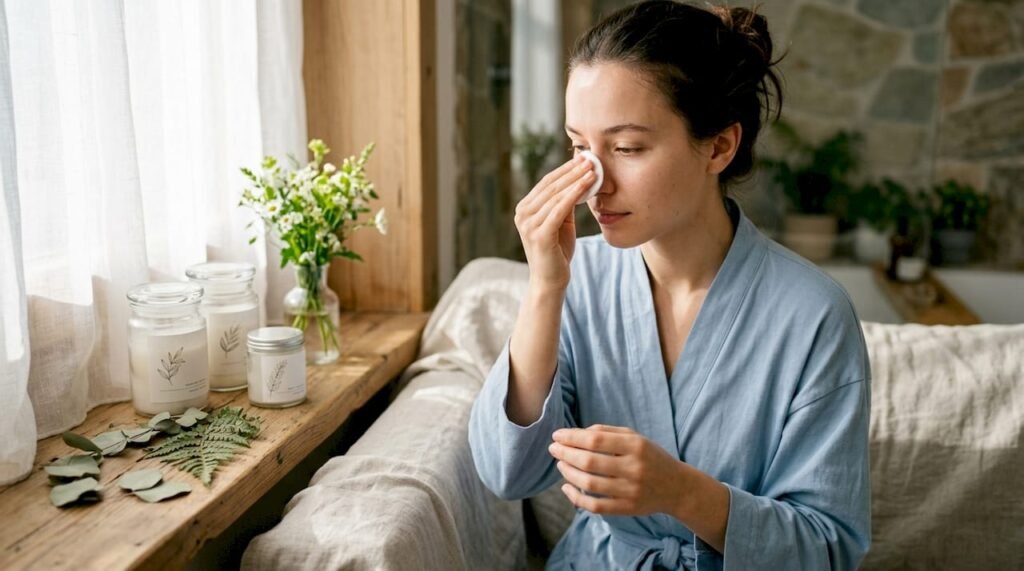
A natural astringent in skincare is a plant or mineral-derived substance that causes skin tissue to contract, temporarily tightening pores, reducing excess oil, and creating a smoother surface. The mechanism is biochemical: tannins and polyphenols bind to proteins in the outer skin layers, triggering protein precipitation that physically tightens tissue. This is not a cosmetic trick. It is a measurable chemical interaction that dermatologists recognize and formulators build products around.
The most widely used natural astringents include:
- Witch hazel (distilled from Hamamelis virginiana bark and leaves)
- Sage (rich in antioxidant polyphenols)
- Black tea (high tannin content)
- Oak bark (one of the most tannin-dense botanicals available)
- Alum (a naturally occurring mineral salt)
These ingredients work best for oily and acne-prone skin, where excess sebum production and enlarged pores are the primary concerns. For dry or sensitive skin, they require careful handling, and in some cases they are not appropriate at all.
What are the real benefits of natural astringents for skin?
Natural astringents do several things at once, which is part of why they have stayed relevant in skincare for centuries. The core benefits are pore tightening, oil control, and mild antibacterial action, but the full picture is more interesting than that.
- Pore tightening: Astringents constrict skin tissue by precipitating surface proteins, which temporarily reduces the visible size of pores.
- Oil control: They remove excess sebum from the skin’s surface without the aggressive stripping that alcohol-heavy formulas cause.
- Antibacterial effect: Witch hazel, for example, has a documented inhibitory effect on Propionibacterium acnes, the primary bacterial driver of inflammatory acne.
- Anti-inflammatory and antioxidant action: Flavonoids in witch hazel neutralize free radicals and calm inflamed tissue, making it useful beyond simple oil control.
- Gentle enough to preserve the skin barrier: Unlike alcohol-based chemical astringents, properly prepared witch hazel preserves the skin’s moisture barrier and microbiome while still controlling surface oiliness.
Skin types that benefit most are oily, combination, and acne-prone. Normal skin can tolerate occasional use. The goal is always balance. Stripping all oil from the skin triggers the sebaceous glands to overproduce sebum in response, which makes the original problem worse.
Pro Tip: If you have combination skin, apply your natural astringent only to the T-zone rather than the full face. This targets oil where it actually appears without drying out already-balanced areas.
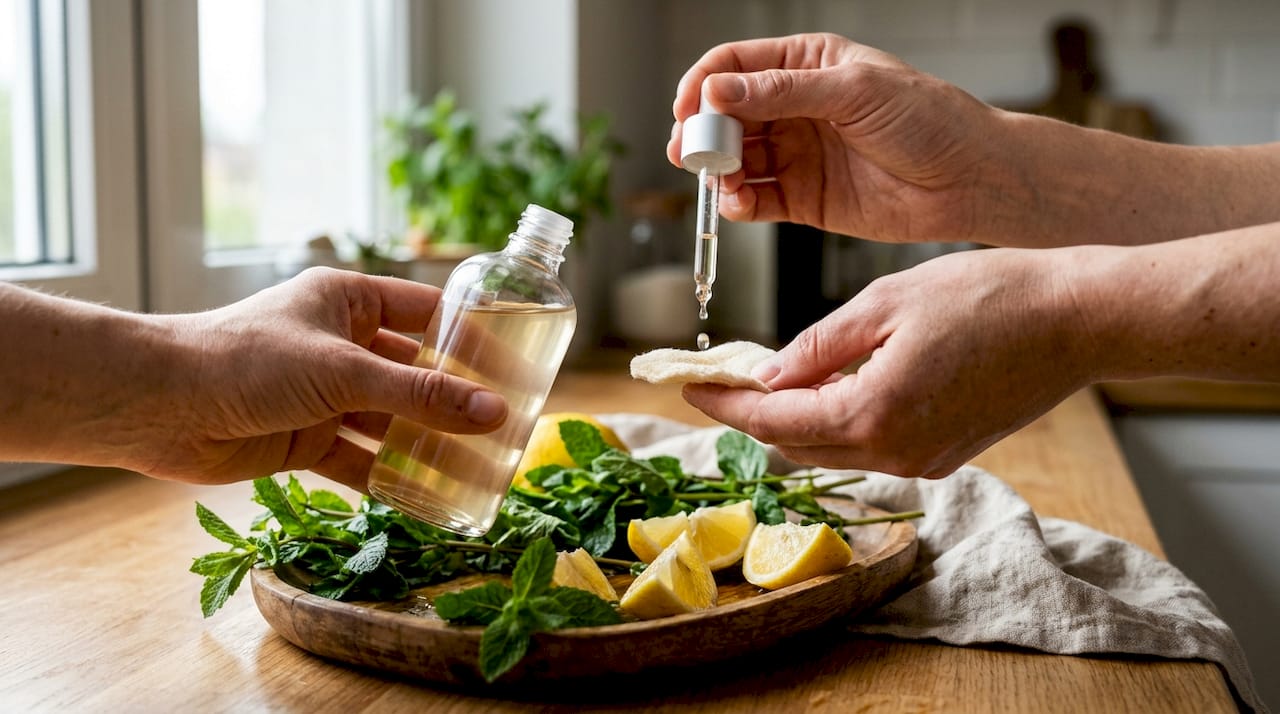
Side effects and safety considerations you should know
Natural astringents are gentler than their chemical counterparts, but they are not without risk. Experts caution that using astringents on dry or sensitive skin can worsen barrier damage and cause lasting irritation.
- Dryness: Overuse pulls moisture from the skin along with oil, leaving it tight and flaky.
- Irritation and redness: Concentrated tannins can inflame already-sensitive skin, particularly around the eyes and mouth.
- Allergic reactions: Botanical ingredients carry allergen potential. Sage and oak bark, in particular, can trigger contact dermatitis in some people.
- Rebound oiliness: When the skin is over-stripped, sebaceous glands compensate by producing more oil, creating a cycle that is hard to break.
People with rosacea, eczema, or chronically dry skin should avoid astringents entirely or consult a dermatologist before trying them. For everyone else, starting with once or twice a week and watching how the skin responds is the safest approach.
Pro Tip: Always patch test a new astringent on the inside of your wrist for 24 hours before applying it to your face. If redness, itching, or swelling appears, skip that ingredient.
How do natural and chemical astringents actually differ?
The core difference is ingredient origin and processing, but the practical consequences for your skin go further than that.
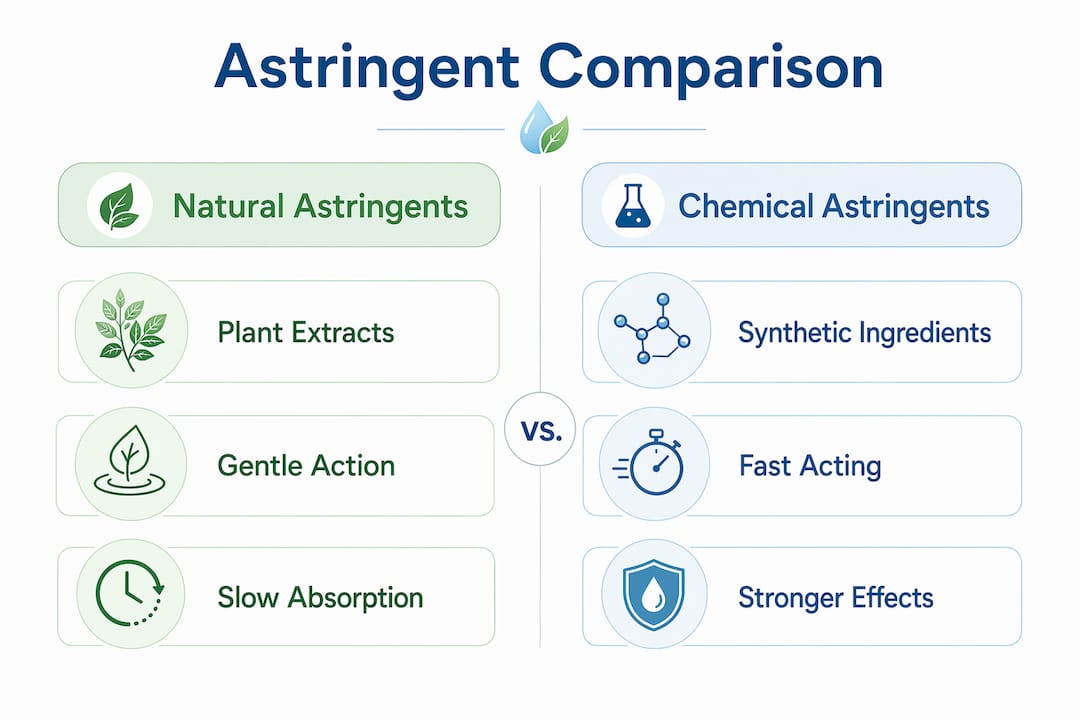
| Feature | Natural astringents | Chemical astringents |
|---|---|---|
| Source | Plant extracts, mineral salts | Synthetic alcohols, aluminum salts |
| Potency | Generally milder | Often more intense |
| Skin barrier impact | Tends to preserve moisture | Can strip lipid barrier |
| Side effect profile | Lower risk, allergen potential | Higher dryness and irritation risk |
| Typical ingredients | Witch hazel, sage, black tea, alum | Isopropyl alcohol, aluminum chloride |
| Best skin type | Oily, combination, acne-prone | Oily skin only, with caution |
Chemical astringents work faster and more aggressively, which appeals to people dealing with severe oiliness. The tradeoff is a higher likelihood of barrier disruption, especially with repeated use. Natural options like witch hazel balance oil without the harsh drying effect that alcohol-based formulas produce. For anyone wanting to avoid harsh chemicals in their routine, natural astringents are the more sustainable long-term choice.
Astringents vs. toners: what is actually different?
These two terms get used interchangeably, but they describe different products with different purposes.
- Toners are primarily hydrating, pH-balancing liquids. They prep the skin to absorb serums and moisturizers, and they work across most skin types, including dry and sensitive.
- Astringents are oil-stripping, pore-tightening agents. They are more intense, and they are formulated specifically for oily or acne-prone skin.
- Ingredient focus: A toner might contain hyaluronic acid, glycerin, or rose water. An astringent leads with tannin-rich botanicals or alcohol.
- Frequency: Toners can typically be used twice daily. Astringents, especially natural ones, are better suited to once daily or every other day, depending on skin type.
- Placement in routine: Both go after cleansing and before moisturizer, but an astringent should always be followed by a moisturizer to replace any lost hydration.
The simplest way to think about it: a toner adds back, an astringent takes away. Neither is universally better. The right choice depends entirely on what your skin needs.
How to safely use natural astringents in your skincare routine
- Patch test first. Apply a small amount to your inner wrist or behind the ear. Wait 24 hours and check for any reaction before using it on your face.
- Cleanse your face. Always apply an astringent to clean skin, after washing but before any serums or moisturizer.
- Apply with a cotton pad. Soak a cotton pad lightly, then sweep it across oily zones. Avoid the eye area and any broken or irritated skin.
- Start with two to three times per week. Give your skin time to adjust before increasing frequency.
- Follow immediately with moisturizer. This step is non-negotiable. Skipping it leaves the skin vulnerable to dryness and rebound oil production.
- Increase frequency gradually. If your skin tolerates it well after two weeks, you can move to daily use on oily areas.
- Store DIY preparations in the refrigerator. Homemade infusions and decoctions degrade quickly at room temperature. A bark decoction, for example, keeps for up to five days when refrigerated.
Pro Tip: Keep your homemade astringent preparations at low temperatures during both preparation and storage. Heat degrades the active tannin compounds, reducing the tightening effect you are trying to achieve.
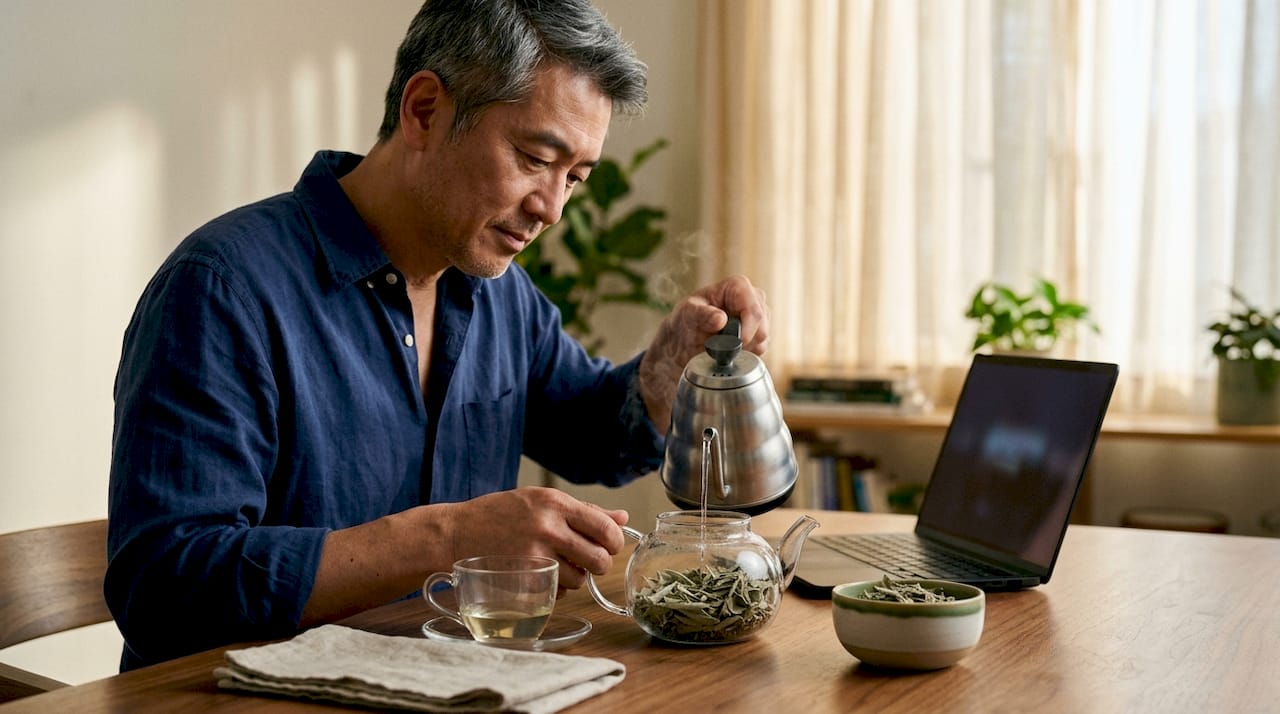
Common natural astringent ingredients and what makes each one work
The herbal skincare ingredients most commonly used as astringents each bring a distinct chemical profile.
- Witch hazel: Contains hamamelitannin, a tannin unique to this plant, plus flavonoids that add anti-inflammatory and antioxidant action. It has held an FDA monograph as a recognized OTC skin protectant for decades, which is a level of institutional validation few botanicals can claim.
- Sage: Rich in rosmarinic acid and other polyphenols that give it both antioxidant and pore-tightening properties. Often used in toners for oily skin.
- Black tea: Tannins in brewed black tea act as mild astringents when applied topically. The caffeine content also helps reduce puffiness.
- Oak bark: One of the most tannin-dense plant materials available. Decoctions are potent and should be diluted before skin application.
- Alum: A naturally occurring mineral salt (potassium aluminum sulfate) that contracts tissue on contact. Common in traditional shaving products and natural deodorants.
A note on preparation form: cold-infused tinctures and bark decoctions retain more active tannins than steam-distilled extracts. Commercial distilled witch hazel loses a portion of its tannins during processing, which is why a homemade bark decoction often feels noticeably more astringent than the bottled pharmacy version.
What can you use instead of an astringent?
Not every skin type needs an astringent, and some people do better with alternatives that offer gentler oil control or mild tightening without the same intensity.
- Aloe vera gel: Mildly tightening and deeply soothing. A good option for sensitive or reactive skin that still wants some pore-minimizing effect.
- Rose water: Gently balances skin pH and provides a light toning effect without stripping oil. Works well as a toner substitute for normal to dry skin.
- Gentle chemical exfoliants: Low-concentration salicylic acid (0.5–1%) clears pores and controls oil without the tissue-contracting mechanism of astringents.
- Niacinamide: Regulates sebum production at the cellular level over time. Slower to show results but less likely to cause irritation.
- Green tea extract: Contains catechins with antioxidant and mild astringent properties. Gentler than oak bark or alum, and well-tolerated by most skin types.
Pairing topical skincare with foods rich in antioxidants also supports skin health from the inside, complementing what any topical ingredient can do on its own.
What does the science actually say about natural astringents?
The biochemistry is well established. Tannins bind to proline residues in skin proteins, causing protein precipitation and the characteristic tightening sensation. This is not a folk remedy explanation. It is a documented chemical interaction studied in pharmacognosy and dermatology.
Witch hazel has the strongest clinical record among natural astringents. It was listed in the United States Pharmacopeia from 1882 to 1916 and has maintained an FDA OTC monograph as a skin protectant ever since. Clinical studies confirm its inhibitory effect on acne-causing bacteria and its anti-inflammatory action through flavonoid activity. The anti-inflammatory and antioxidant effects of witch hazel’s flavonoids are backed by peer-reviewed research, not just traditional use.
For other botanicals like sage and black tea, the evidence is primarily based on their known tannin and polyphenol content rather than large clinical trials. The mechanism is the same. The depth of clinical validation differs. Oak bark decoctions have a long history in European herbal medicine for wound care and skin inflammation, with pharmacopeial recognition in several countries.
Homemade natural astringent recipes you can make at home
Making your own astringent gives you control over concentration and ingredients. These preparations are straightforward, but they require clean equipment and refrigerated storage.
Witch hazel bark decoction
Simmer one ounce of dried witch hazel bark in one pint of water for 20 minutes, covered. Strain through a fine cloth, cool completely, and store in a sealed glass jar in the refrigerator for up to five days. This produces a tannin-rich preparation noticeably more potent than commercial distillate.
Black tea astringent toner
Brew two black tea bags in one cup of boiling water for five minutes. Allow to cool fully. Add one tablespoon of raw apple cider vinegar if you want added pH-balancing effect. Apply with a cotton pad after cleansing. Use within three days.
Sage infusion for oily skin
Steep two tablespoons of dried sage leaves in one cup of just-boiled water for 15 minutes. Strain, cool, and refrigerate. The polyphenol content makes this particularly useful for combination skin with an oily T-zone.
Alum solution for spot use
Dissolve a small amount of alum powder (roughly a quarter teaspoon) in one cup of distilled water. Use as a targeted spot treatment rather than an all-over application, given its intensity.
Miraclegelnaturalskincare and the case for botanical actives

Natural astringents are one piece of a larger picture. If you are building a routine around plant-based ingredients, the formulation quality and ingredient sourcing matter as much as the ingredient itself. Miraclegelnaturalskincare takes that approach with every product, combining botanical actives for mature skin with clinically supported complexes that deliver visible results without harsh chemistry. The 2-Minute Miracle Gel is a strong starting point for anyone who wants the benefits of natural ingredients in a ready-to-use, professionally formulated product.
Key Takeaways
Natural astringents work by binding tannins to skin proteins, causing tissue contraction that tightens pores and reduces oil, with witch hazel holding the strongest clinical record among plant-based options.
| Point | Details |
|---|---|
| Mechanism is biochemical | Tannins bind to skin proteins, causing protein precipitation and physical tissue tightening. |
| Best for oily and acne-prone skin | Natural astringents control sebum and clear bacteria without the barrier damage of alcohol-based formulas. |
| Overuse causes rebound oiliness | Stripping too much oil signals sebaceous glands to overproduce sebum, worsening the original problem. |
| Preparation form affects potency | Cold-infused tinctures and bark decoctions retain more active tannins than commercial steam-distilled extracts. |
| Always follow with moisturizer | Applying a moisturizer after an astringent prevents dryness and protects the skin barrier. |