

TL;DR:
- Clinical results provide proof that skincare products are safe and effective for real people. They distinguish genuine skin improvements from marketing claims and help consumers make informed choices. Transparency and proper testing on finished products are essential for trustworthy clinical evidence.
Clinical results are the evidence that prove whether a skincare product is safe and effective for real people, not just in a lab. Why clinical results matter comes down to one simple truth: without this evidence, you are choosing products based on packaging and promises alone. The FDA, Henry Ford Health, and leading dermatology researchers all point to the same conclusion. Rigorous clinical data separates products that genuinely improve skin health from those that simply sound convincing. This article shows you how to read that data, spot weak claims, and choose products that deliver real, visible results.
Why clinical results matter more than marketing claims
Clinical results are defined as measurable outcomes from structured studies testing a product’s safety and efficacy on human participants. They are the gold standard for knowing whether a product does what it claims. Clinical trials confirm safety and efficacy while giving consumers monitored access to products before they become widely available. That process is what separates evidence from advertising.
The skincare industry is full of bold claims. Words like “visibly firms,” “reduces wrinkles,” and “clinically tested” appear on nearly every premium product. Without understanding what those claims are based on, you cannot tell the difference between a product with solid proof and one with a single poorly designed study behind it. The importance of clinical results lies in giving you that ability to judge.
Regulatory bodies like the FDA set standards for how clinical data must be reported and made public. When brands meet those standards, you can verify their claims. When they do not, the claim is essentially unverifiable, which means it carries no real weight for your purchasing decision.
What is the difference between statistical significance and clinical relevance?
Statistical significance and clinical relevance are two different things, and confusing them is one of the most common mistakes consumers make when reading skincare claims.
Statistical significance is expressed as a p-value, typically p<0.05. It means the result is unlikely to be due to chance. Large sample sizes can produce statistically significant results for differences so small they are invisible to the naked eye. A study with 5,000 participants might find a “significant” 0.3% reduction in fine lines. That number is statistically real, but it means nothing to your skin.
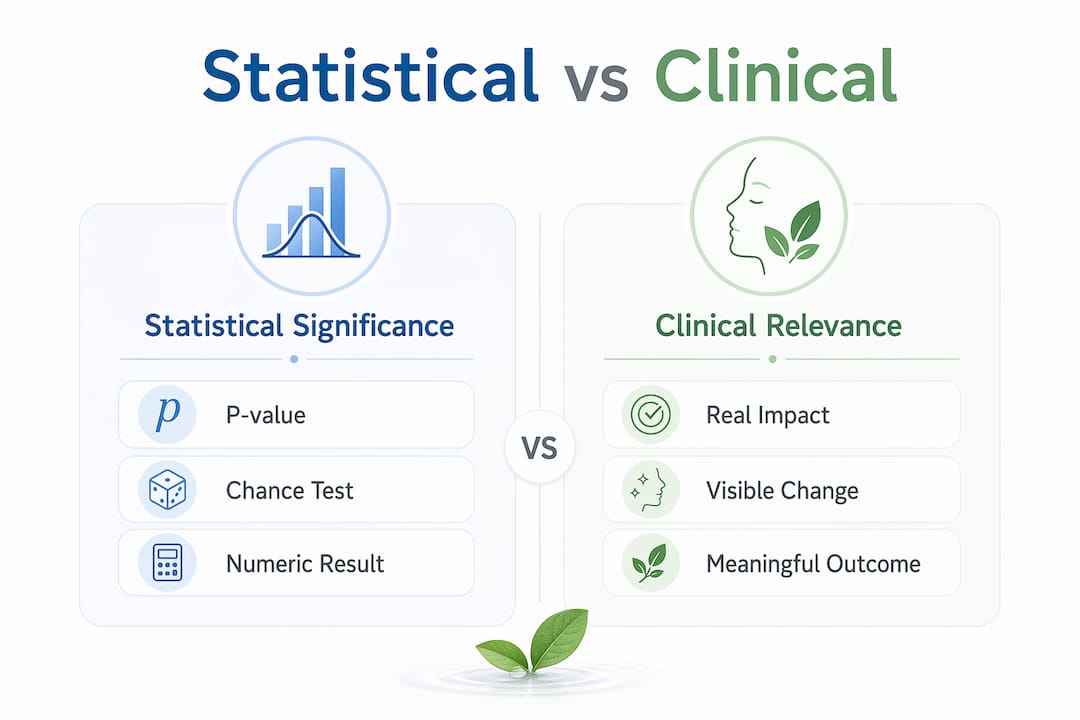
Clinical relevance, by contrast, measures whether the change is large enough to matter in real life. Patient-centered outcomes like effect size, absolute risk reduction, and minimum clinically important differences tell you whether a product produces a visible, meaningful improvement. These metrics are frequently underreported in skincare marketing.
| Measure | Statistical significance | Clinical relevance |
|---|---|---|
| What it tests | Whether a result is due to chance | Whether the result matters in real life |
| Key metric | p-value (typically p<0.05) | Effect size, absolute improvement |
| Risk for consumers | Can mislead with trivial differences | Rarely reported in marketing |
| What to ask for | p-value and sample size | Minimum clinically important difference |
Pro Tip: When a brand cites a clinical study, ask for the effect size and whether the improvement meets a minimum clinically important difference. A p-value alone tells you almost nothing about whether you will actually see a change in the mirror.
How do clinical trials for skincare products work?
Clinical trials for skincare follow a structured process that moves from lab research to human testing before results reach the public. Understanding that process helps you judge how much weight to give any claim.
The key stages of a well-designed skincare clinical trial include:
- Preclinical research: Ingredients and formulations are tested in lab settings to establish basic safety and biological activity before any human testing begins.
- Human trials: Participants apply the product under controlled conditions over a set period, typically 4–12 weeks for skincare, while researchers track safety, tolerability, and visible outcomes.
- Control groups: A credible trial includes a placebo or comparator group so researchers can isolate the product’s actual effect from other variables.
- Diverse populations: Trials that include participants across different ages, skin tones, and skin types produce results that apply to a broader range of real consumers.
- Endpoints: Researchers measure specific outcomes such as reduction in fine lines, improvement in skin tone, hydration levels, and participant-reported satisfaction.
One critical detail most consumers miss: clinical data on finished product formulations is what matters, not data on isolated ingredients. A brand may cite retinol studies to support a product that contains retinol at a fraction of the tested concentration. That ingredient data does not confirm the finished product works. Only a trial on the actual product in its final formula does.
For context on how demanding this process can be, pharmaceutical drug development takes an average of 14 years from initial research to public availability. Skincare timelines are shorter, but the principle of rigorous testing still applies.

Does data transparency affect how much you can trust a skincare claim?
Data transparency is the single biggest factor in determining whether a clinical claim is trustworthy. A brand that publishes its full study methodology, participant numbers, and outcome data is giving you the tools to verify their claims. A brand that says “clinically tested” without providing any supporting data is not.
The FDA’s 2026 enforcement identified over 3,000 clinical trials lacking mandatory result reporting. Nearly 30% of trials requiring public reporting had no publicly available results at the time of review. That gap directly affects consumer safety. When results are not published, you cannot evaluate the evidence, and neither can independent researchers.
Data fragility is a related problem. An analysis of 129 clinical trials found that only 39% had robust, stable evidence. Over 31% showed fragile patterns, meaning their results were close to the threshold of no clinical impact despite reaching statistical significance. A fragile result can collapse with the addition of just a few more participants or a slight change in methodology.
Publication bias also skews what consumers see. Studies with statistically significant results are far more likely to be published than studies showing no effect. This means the published record for a product can look more positive than the full body of evidence warrants.
Pro Tip: Search for a product’s clinical data on PubMed or ClinicalTrials.gov. If you cannot find an independently published study on the finished product, treat the brand’s claim as unverified marketing, not clinical proof.
How do you evaluate clinical results when choosing skincare products?
Reading clinical claims critically is a skill, and it protects you from wasting money on products that cannot deliver. The goal is to find credible clinical evidence that is specific, transparent, and relevant to your skin concerns.
A credible clinical result meets several criteria. The study should be peer-reviewed and published in a recognized journal. The sample size should be large enough to produce reliable results. The endpoints should match what you actually care about, such as visible reduction in fine lines or measurable improvement in skin tone, not just a change in a lab biomarker. The improvement should be both statistically and clinically significant.
Visible, functional changes matter far more than small statistical differences. If a study shows a 2% improvement in a hydration biomarker, that result may be statistically significant but invisible in daily life. A study showing a measurable reduction in wrinkle depth that participants themselves could see and feel is a far stronger basis for a purchase decision.
Ask these questions before trusting a clinical claim:
- Was the study conducted on the finished product, or only on individual ingredients?
- What was the sample size, and did it include people with your skin type and age range?
- Is the full study or a detailed summary publicly available?
- Does the brand report effect size, not just a p-value?
- Were the results independently verified, or was the study funded and conducted entirely by the brand?
- How long did the trial run, and were results measured at multiple time points?
Vague claims like “dermatologist tested” or “clinically proven” with no supporting data are marketing language, not clinical evidence. Visible skincare results after 40 require products backed by trials that specifically tested mature skin, not general population data applied broadly.
Key Takeaways
Clinical results matter because they are the only reliable way to confirm that a skincare product delivers real, visible improvements in safety and efficacy for your specific skin concerns.
| Point | Details |
|---|---|
| Statistical vs. clinical significance | A p-value alone does not confirm visible results; always ask for effect size and real-world impact. |
| Finished product testing | Only clinical data on the final formulation confirms a product works, not ingredient studies alone. |
| Data transparency | Brands that publish full study details give you the tools to verify claims independently. |
| Fragile evidence risk | Over 31% of analyzed trials showed fragile results despite statistical significance, so look for robust, replicated findings. |
| Questions to ask | Demand peer-reviewed publication, adequate sample size, and clinically meaningful endpoints before trusting any claim. |
Why I think most people are reading clinical claims backwards
Most people look at a clinical claim and ask, “Is it significant?” The better question is, “Is it meaningful?” I have spent years watching consumers choose products based on the word “clinically proven” printed on a box, with no idea what study sat behind that phrase or whether it had any bearing on their skin.
The uncomfortable truth is that a study can be technically correct and still tell you nothing useful. A brand can run a trial on 20 participants, find a statistically significant result in one narrow biomarker, and legally call the product “clinically tested.” That is not deception in the legal sense. But it is a long way from the kind of evidence that should drive your purchasing decision.
What I have found actually works is treating clinical claims the way you would treat a financial investment. You would not put money into a fund based on one good quarter. You want a track record, independent verification, and results that hold up under scrutiny. The same logic applies to skincare. Look for brands that publish their methodology, report effect sizes, and test their finished products on people who look like you.
The FDA’s push for greater trial transparency is a step in the right direction. But regulatory pressure alone will not protect you. Your own critical thinking will. When you understand the difference between statistical significance and clinical relevance, you stop being a target for vague claims and start making choices grounded in real evidence.
— Barbara
Miraclegelnaturalskincare and the standard for proven results
Miraclegelnaturalskincare was built on the principle that natural skincare should be backed by real evidence, not just appealing ingredients lists. Every formulation in the range, from the 2 Minute Miracle Gel to the eye serums, is developed with transparency and efficacy at the center.
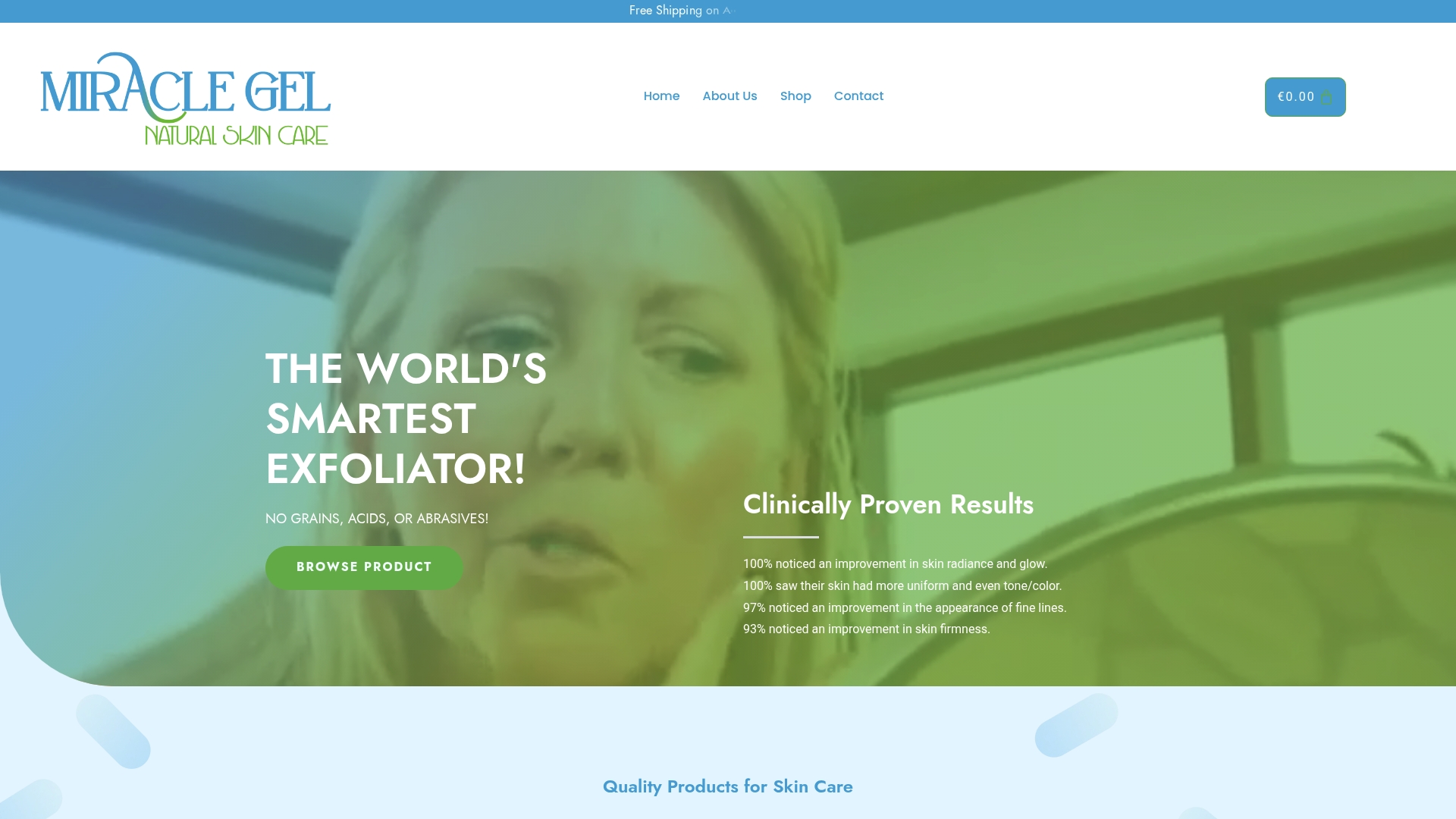
For women over 40 who want products with genuine clinical backing, Miraclegelnaturalskincare offers a curated range of age-defying natural skincare formulated specifically for mature skin. The brand’s commitment to publishing clinical outcomes and ingredient transparency means you can evaluate the evidence before you buy. Founder Shelly Maguire’s expertise shapes every product decision, from ingredient selection to the clinical testing process. If you are ready to move beyond marketing language, clinically proven options for 40+ skin are available to explore now.
FAQ
What does “clinically proven” actually mean on a skincare label?
“Clinically proven” means the product was tested in a structured study measuring specific outcomes. The phrase carries no legal definition, so always look for the published study behind the claim.
Is statistical significance enough to trust a skincare product?
Statistical significance alone is not enough. Large studies can produce significant results for changes too small to see or feel, so clinical relevance and effect size matter more.
Why does it matter whether a finished product was tested, not just its ingredients?
Ingredient studies do not confirm that the final formulation works at the concentration used. Only trials on the finished product verify that the specific product you are buying is safe and effective.
How can I find independent clinical data on a skincare product?
Search the product or its key ingredients on PubMed or ClinicalTrials.gov. If no peer-reviewed study on the finished formulation appears, the brand’s claim is self-reported and unverified.
What questions should I ask a skincare brand about their clinical results?
Ask for the sample size, study duration, effect size, and whether the trial was independently conducted. A brand with strong clinical data will answer those questions directly and provide a published reference.