
TL;DR:
- Peptides are signaling molecules composed of amino acids that stimulate collagen, elastin, and skin repair. They are effective in leave-on formulations at therapeutic concentrations, with results typically appearing in 8 to 12 weeks. Consistent use paired with proper formulation and!concentration maximizes their anti-aging benefits.
Peptides in skincare are short chains of amino acids that act as signaling molecules, instructing your skin cells to produce more collagen, elastin, and other structural proteins that decline with age. After 30, collagen production drops measurably each year, and the visible result is thinner skin, fine lines, and reduced firmness. Peptides address this at the cellular level. They are the second most studied anti-aging ingredient class after retinoids, with a growing body of clinical research confirming their role in improving hydration, brightness, and wrinkle depth. Understanding how they work gives you a real advantage when choosing products that actually deliver results.
What are peptides in skincare and how do they work?
Peptides are fragments of proteins. When applied to the skin or taken orally, they mimic the body’s natural signaling system, triggering cellular responses that include collagen synthesis, antioxidant activity, and inflammation reduction. Dr. Gloria Lin explains that peptides mimic natural messengers to stimulate these cellular responses, which is fundamentally different from how retinol works. Retinol directly alters gene expression. Peptides work upstream, sending the signal that prompts the gene to act.

This distinction matters practically. Peptides are generally better tolerated than retinol, making them a strong option for sensitive skin or for anyone who finds retinoids too irritating. They also work well alongside retinol in a layered routine, addressing collagen stimulation through a separate biological pathway. The role of peptides in skin health is not to replace other actives but to reinforce the skin’s own repair mechanisms consistently over time.
Types of peptides and what each one does for your skin
Not all peptides perform the same function. Skincare formulations draw from several distinct categories, each with a specific mechanism and benefit profile.
| Peptide type | Example | Primary function | Visible effect timeline |
|---|---|---|---|
| Signal peptides | Palmitoyl pentapeptide-4 (Matrixyl) | Stimulate collagen and elastin production | 8 to 12 weeks |
| Carrier peptides | Copper tripeptide-1 (GHK-Cu) | Deliver copper to support enzymatic collagen crosslinking | 8 to 12 weeks |
| Neurotransmitter-inhibiting | Acetyl hexapeptide-3 (Argireline) | Relax facial muscle contractions to soften expression lines | 2 to 4 weeks |
| Enzyme-inhibiting | Soybean-derived peptides | Block enzymes that break down collagen | 8 to 12 weeks |
| Antimicrobial peptides | Defensins | Support skin barrier and reduce inflammation | Variable |
Signal peptides like Palmitoyl pentapeptide-4, sold under the trade name Matrixyl, are the most widely studied. They send a false signal of collagen breakdown, which prompts fibroblasts to ramp up new collagen production. Carrier peptides like copper tripeptide-1 (GHK-Cu) take a different approach: they transport copper ions directly to the dermis, where copper acts as a cofactor for the enzymes responsible for crosslinking collagen and elastin fibers. The result is measurably thicker, more elastic skin over time.
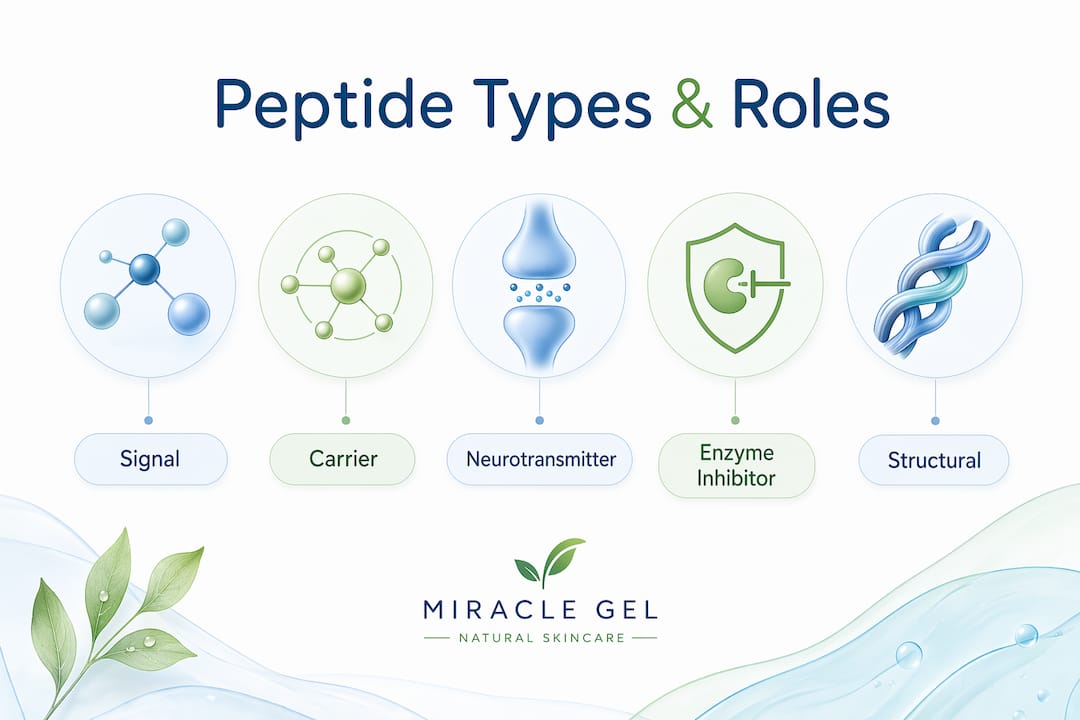
Neurotransmitter-inhibiting peptides such as Acetyl hexapeptide-3 work faster but with a different mechanism. They temporarily limit the nerve signals that cause repetitive muscle contractions, softening expression lines around the eyes and forehead. Effects appear within 2 to 4 weeks but are not permanent, requiring consistent use to maintain.
Pro Tip: If you are new to peptides, start with a serum containing Matrixyl or GHK-Cu. These two have the strongest clinical track records and are well tolerated across all skin types.
What does the science actually say about peptide effectiveness?
The clinical evidence for peptides is now substantial enough to move beyond anecdote. A 2026 meta-analysis of 19 RCTs covering 1,341 participants found that peptides significantly improve skin brightness and hydration while producing a modest but statistically significant reduction in wrinkle depth. Oral polypeptide formulations showed stronger brightness improvements (MD=3.81, p<0.01) than topical versions. This tells you that delivery method is not a minor detail. It is a primary variable in how much benefit you actually receive.
Topical peptides still deliver real results, particularly for hydration and elasticity, but they face a penetration challenge that oral forms do not. The skin barrier is designed to keep things out, which is why formulation technology matters so much. A 2026 study on peptide-enriched hydrogel formulations found that advanced delivery systems release 75 to 80% of peptides rapidly, improving absorption while remaining non-irritating for sensitive and allergic skin types. Standard creams and poorly formulated serums cannot match that release rate.
The safety profile of peptides is consistently strong across both topical and oral studies. Unlike retinoids, peptides carry no photosensitivity risk and do not cause the purging or peeling that many people experience with vitamin A derivatives. This makes them one of the few anti-aging actives you can use daily, year-round, without seasonal adjustments or ramp-up periods.
How formulation and concentration determine whether peptides actually work
The most common reason peptide products underperform is not the peptide itself. It is the concentration. Many skincare products contain peptides at levels too low to produce any measurable biological effect. They appear on the ingredient list, often near the bottom, which signals a decorative rather than therapeutic inclusion. Brands use this to market a product as “peptide-enriched” without committing to the concentrations that clinical studies actually used.
When evaluating a product, look for these formulation signals:
- Peptides listed in the first half of the ingredient list, not buried after fragrance or preservatives
- Serum or leave-on moisturizer format rather than a cleanser or toner, since leave-on formulations give peptides the contact time needed to penetrate the skin barrier
- Hydrogel or encapsulated delivery systems, which improve release rates significantly compared to standard emulsions
- Transparent brand communication about peptide percentages or clinical study references
Ingredient compatibility is the second formulation factor most people overlook. Copper tripeptide-1 is destabilized by acidic ingredients including vitamin C serums and AHA exfoliants. Using them together in the same routine step reduces the efficacy of both. The fix is straightforward: apply vitamin C in the morning and copper peptides at night, or separate them by at least 30 minutes if you use both in the same session.
Pro Tip: Check the pH of your peptide serum. Most peptides perform best between pH 4 and 7. Products formulated outside this range, particularly very low pH exfoliants, can degrade peptide bonds before they reach the dermis.
How to use peptides effectively in your skincare routine
Peptides fit naturally into most routines because they are compatible with the majority of skincare ingredients. The key rules are about sequencing and consistency rather than complexity.
- Apply peptide serums after cleansing and toning, before moisturizer. Serums have smaller molecular weights and penetrate more effectively on clean, slightly damp skin. Layering a moisturizer on top seals in the active and extends contact time.
- Use peptides twice daily for best results. Morning and evening application maintains a consistent signal to fibroblasts. Once-daily use still produces benefits but extends the timeline for visible improvement.
- Avoid layering peptides directly with strong exfoliating acids in the same step. AHAs like glycolic acid and BHAs like salicylic acid can disrupt peptide bonds. Use exfoliants on alternating evenings or apply them at a different time of day.
- Pair peptides with hyaluronic acid for a hydration and structural benefit combination. Hyaluronic acid draws water into the skin, while peptides work on the collagen matrix below. They address different layers and reinforce each other without conflict.
- Give the routine at least 8 to 12 weeks before evaluating results. Collagen remodeling is a slow biological process. Expecting visible firming in two weeks sets you up for disappointment. Neurotransmitter-inhibiting peptides are the exception, often softening expression lines within a month.
For individuals over 30 focused on fine lines and early firmness loss, a peptide serum used consistently twice daily is one of the highest-return additions you can make to a routine. Pair it with SPF in the morning, since sun damage is the primary accelerant of collagen breakdown, and you are addressing both prevention and repair simultaneously.
Peptides vs retinol in skincare is a common question, and the honest answer is that they are not competing choices. Retinol works faster on surface texture and cell turnover. Peptides work more gently on the structural proteins underneath. For anyone over 30 who wants a retinol alternative due to sensitivity, pregnancy, or preference, peptides are the most clinically supported substitute available.
Key takeaways
Peptides are the most clinically supported gentle anti-aging ingredient available, delivering measurable improvements in collagen, hydration, and brightness when used in therapeutic concentrations within leave-on formulations.
| Point | Details |
|---|---|
| Peptides defined | Short amino acid chains that signal collagen and elastin production in the dermis. |
| Formulation matters | Therapeutic concentration in leave-on serums or hydrogels outperforms low-dose creams. |
| Ingredient compatibility | Separate copper peptides from vitamin C and strong acids to prevent degradation. |
| Timeline for results | Signal and carrier peptides require 8 to 12 weeks; neurotransmitter-inhibiting types work in 2 to 4 weeks. |
| Peptides vs retinol | Peptides complement retinol rather than replace it, working through a separate biological pathway. |
Why I think most people underestimate what peptides can do
I have spent years watching people cycle through harsh actives, experience irritation and barrier damage, and then abandon their routines entirely. Peptides rarely get the credit they deserve because they do not produce the dramatic overnight change that some products promise. What they do produce is consistent, compounding improvement that holds up under clinical scrutiny.
The research from 2026 on oral and topical peptides confirmed what I had already observed in practice: the delivery system and concentration are where most products fail, not the peptide molecule itself. A well-formulated peptide serum from a brand that publishes its clinical data is worth more than three trendy products with peptides listed as afterthoughts.
My honest recommendation for anyone over 30 is to treat peptides as the foundation of an anti-aging routine rather than a bonus add-on. Pair them with SPF, use a vitamin C serum in the morning, and let the peptides work overnight on collagen repair. Skip the marketing language about “miracle results in 48 hours” and look for products with named peptides, transparent concentrations, and real study references. Patience and consistency with the right formulation will outperform any shortcut.
— Barbara
How Miraclegelnaturalskincare supports your peptide skincare goals
If you are ready to put peptides to work in your routine, Miraclegelnaturalskincare has built its formulations specifically for skin over 30 that needs more than surface hydration.
The 2 Minute Miracle Peptide+ Serum delivers clinically supported peptide concentrations in a leave-on format designed for rapid absorption and daily use. For a broader look at what works for mature skin, the age-defying skincare collection brings together peptide serums, moisturizers, and targeted treatments formulated with natural ingredients and backed by real clinical data. Every product is built around the principle that effective skincare does not require harsh chemicals, just the right actives at the right concentrations.
FAQ
What are peptides in skincare, exactly?
Peptides are short chains of amino acids that act as signaling molecules in the skin, stimulating collagen and elastin production to improve firmness, hydration, and wrinkle depth. They are the second most studied anti-aging ingredient class after retinoids.
How long does it take for peptides to show results?
Signal and carrier peptides like Matrixyl and GHK-Cu typically require 8 to 12 weeks of consistent use for visible collagen-related improvements. Neurotransmitter-inhibiting peptides such as Argireline can soften expression lines within 2 to 4 weeks.
Are peptides safe for sensitive skin?
Peptides have a strong safety profile across clinical studies and are non-irritating for most skin types, including sensitive and allergic skin. A 2026 study on peptide hydrogel formulations confirmed they soothe redness and skin tension without causing sensitization.
Can you use peptides with retinol?
Yes. Peptides and retinol work through different biological pathways and complement each other well. Apply retinol at night and use peptides in the morning, or layer them in the same evening routine with peptides applied first, before retinol.
Why do some peptide products not work?
Many products contain peptides at concentrations too low to produce measurable effects. Look for peptides listed in the first half of the ingredient list, in leave-on formats like serums or moisturizers, and from brands that reference clinical data rather than relying solely on marketing claims.