

TL;DR:
- An eye serum is a lightweight, concentrated product formulated to nourish and rejuvenate the delicate skin around the eyes, delivering potent actives directly to this sensitive area. It outperforms regular moisturizers by containing higher, calibrated concentrations of targeted ingredients like peptides, vitamin C, and retinoids, which address signs of aging more effectively. Using the serum before other products with proper application techniques enhances results, but structural issues like fat pad herniation require professional treatment, not topical solutions.
An eye serum is a concentrated, lightweight product formulated specifically to nourish, protect, and rejuvenate the delicate skin around your eyes. Unlike a standard facial moisturizer, a dedicated eye serum delivers potent actives at calibrated concentrations directly to periorbital skin, the thinnest and most vulnerable skin on your face. For women over 40, this distinction is not cosmetic preference. It is biochemical necessity. Brands like Kiehl’s and Charlotte Tilbury have built entire product lines around this reality, and the science behind why use eye serum as a daily step is now well established.
Why use eye serum instead of your regular moisturizer
The skin around your eyes is structurally unlike the rest of your face. Periorbital skin has very few oil glands, high permeability, and a low self-repair capacity, which means it loses moisture faster, absorbs ingredients more readily, and recovers from damage more slowly than skin on your cheeks or forehead. That combination makes it the first place aging shows up and the last place standard products are equipped to handle.
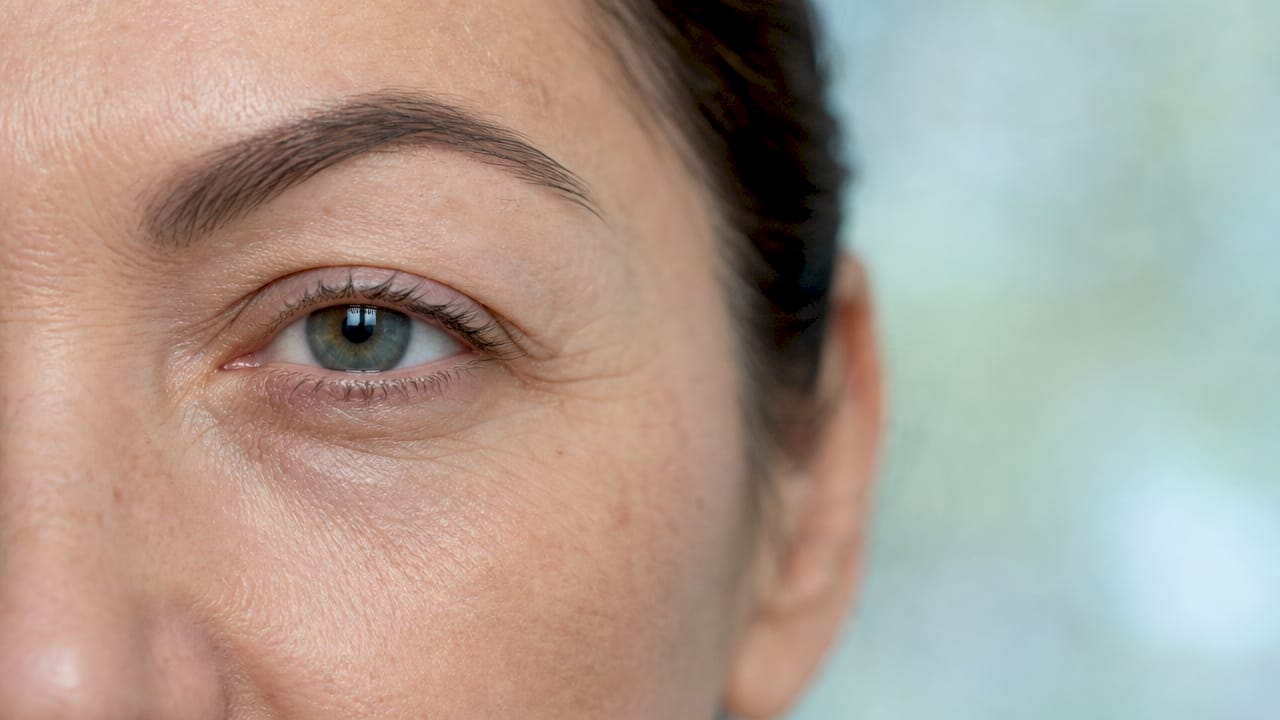
You blink roughly 15,000 times a day. Every blink, squint, and expression accelerates the breakdown of collagen fibers in the periorbital zone. By your 40s, that cumulative mechanical stress is visible as crow’s feet, crepe texture, and deepening under-eye hollows. A facial moisturizer formulated for the cheek or forehead carries actives at concentrations that can irritate this thinner tissue. Eye serums are calibrated in both potency and formulation to work with periorbital skin, not against it.
Key structural differences that make specialized care necessary:
- Periorbital skin is roughly four times thinner than facial skin on the cheeks
- Fewer sebaceous glands mean the eye area cannot self-moisturize effectively
- High permeability increases both absorption of beneficial actives and risk of irritation from unsuitable ingredients
- Reduced fibroblast activity after 40 slows collagen and elastin production in this zone specifically
Pro Tip: Apply your eye serum before any other facial product. Periorbital products applied first with a wait of 60 to 90 seconds before other facial products prevents dilution and reduces the risk of active ingredients migrating into the eye.
How eye serums compare to eye creams and regular moisturizers
The confusion between eye serums and eye creams is understandable. Both are marketed for the same zone. The difference lies in texture, concentration, and purpose.
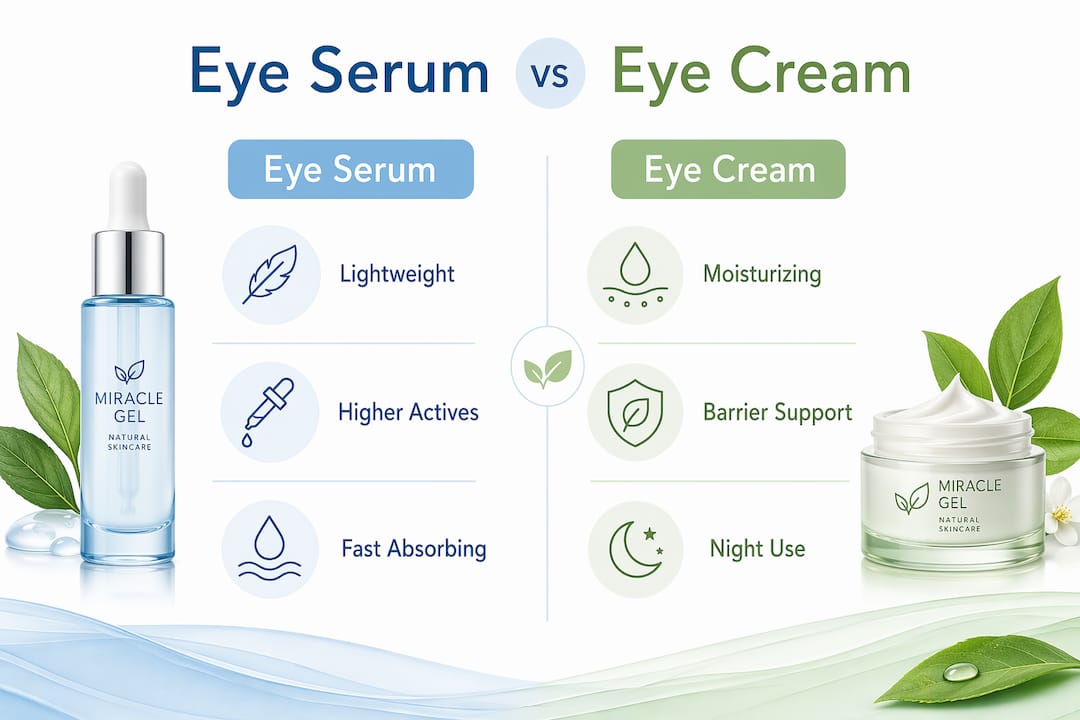
| Feature | Eye serum | Eye cream | Facial moisturizer |
|---|---|---|---|
| Texture | Lightweight, fast-absorbing | Richer, occlusive | Varies, often heavier |
| Active concentration | High, calibrated for sensitivity | Moderate | Often too high for eye area |
| Primary function | Targeted treatment | Barrier support and hydration | Broad facial hydration |
| Best for | Fine lines, dark circles, puffiness | Dryness, overnight repair | General facial moisture |
| Risk near eyes | Low when formulated correctly | Low | Moderate to high |
Eye serums carry higher concentrations of treatment actives like peptides, vitamin C, and retinoids, but those concentrations are specifically calibrated for the sensitivity of periorbital tissue. Retinol in eye products is formulated at 0.025 to 0.1%, far below the 0.3 to 1% levels common in facial retinol products. That lower concentration is not a compromise. It is the correct dose for tissue that absorbs more readily and tolerates less.
Eye creams, by contrast, focus on occlusive barrier support. They seal in moisture and are particularly useful overnight. The most effective approach for women 40 and above is to layer both: apply the serum first to deliver actives, then follow with an eye cream to lock in hydration and support the skin barrier. Applying a facial moisturizer over the eye area as a substitute for either product introduces concentrations of fragrance, exfoliants, or retinoids that the periorbital zone cannot handle without irritation.
Pro Tip: If you use only one product on the eye area, make it the serum. The higher potency actives in a well-formulated eye serum deliver more measurable improvement in texture, elasticity, and dark circles than a cream alone.
For a broader understanding of how serums function across the face, the facial serums explained guide from Miraclegelnaturalskincare covers the full picture of serum science for women over 40.
What ingredients in a natural eye serum actually do for mature skin
The natural eye serum benefits that matter most for women over 40 come from a short list of well-researched actives. Understanding what each ingredient does helps you read a label with confidence and avoid products that look impressive but underdeliver.
- Retinol and retinoids: Consistent use of retinoids over 12 weeks improves collagen synthesis and skin texture around the eyes. Retinoids work by upregulating collagen production and accelerating epidermal cell turnover. Results require patience, but the structural improvement is real.
- Peptides: Short chains of amino acids that signal skin cells to produce more collagen. Peptides are gentler than retinoids and suitable for daily use in both morning and evening routines.
- Caffeine: Topical caffeine causes vasoconstriction that transiently reduces under-eye puffiness and vascular darkness for 3 to 6 hours. It is the most effective short-term ingredient for morning puffiness.
- Hyaluronic acid: Hyaluronic acid binds 1,000 times its weight in water, hydrating and plumping fine lines without permanent structural change. Multi-molecular-weight formulations penetrate at different depths for broader effect.
- Niacinamide (vitamin B3): Reduces hyperpigmentation, strengthens the skin barrier, and calms inflammation. Particularly useful for dark circles caused by melanin overproduction.
- Vitamin C: Clinical data shows vitamin C reduces periorbital wrinkles within weeks of consistent use. It also brightens dark circles caused by vascular pooling and protects against UV-induced collagen breakdown.
- Ceramides: Lipid molecules that reinforce the skin barrier. After 40, ceramide levels drop significantly, making supplementation through topical products more important.
When choosing a natural eye serum, avoid formulations that contain synthetic fragrance, alcohol denat, or high concentrations of essential oils near the eye area. These ingredients are common irritants in an already sensitive zone. The best natural ingredients for mature skin resource from Miraclegelnaturalskincare provides a detailed breakdown of ingredient choices specific to women over 40.
How to use eye serum correctly for maximum results
Knowing how to use eye serum correctly is as important as choosing the right formula. The most common mistake is applying too much product with too much pressure. Both undermine results.
- Cleanse first. Apply eye serum to clean, slightly damp skin. Residual makeup or sunscreen blocks absorption.
- Dispense a small amount. One to two drops per eye is sufficient. More product does not mean more benefit and increases the risk of product migrating into the eye.
- Use your ring finger. Applying eye serum with the ring finger uses the least pressure of any finger, protecting the thin collagen network around the eye and preventing mechanical damage to the tissue.
- Tap, do not rub. Gently tap the product along the orbital bone, from the inner corner outward. Never drag or pull the skin.
- Wait 60 to 90 seconds. Waiting 60 to 90 seconds after applying eye serum before other facial products minimizes product migration and allows active ingredients to set properly.
- Layer strategically. Follow with eye cream if you use one, then proceed with the rest of your facial routine.
Morning and evening routines call for different formulations. Use caffeine and antioxidants in the morning to reduce puffiness and defend against environmental stress. Use retinoids and peptides at night to promote repair and collagen synthesis while skin is in recovery mode. Pairing your evening eye serum with a broad-spectrum SPF 30 or higher the following morning protects the collagen gains you are building over time.
Pro Tip: Store your morning eye serum in the refrigerator. The cool temperature amplifies caffeine’s vasoconstrictive effect and reduces puffiness more noticeably than room-temperature application.
Can eye serums permanently fix under-eye bags and dark circles?
This is the question that deserves a straight answer. Topical products cannot reposition herniated orbital fat or replace lost volume. Structural changes to the eye area, including fat pad herniation, tear trough hollows, and significant volume loss, require professional interventions such as hyaluronic acid fillers or blepharoplasty surgery.
What a well-formulated eye serum can do is meaningful, but it operates at the surface level:
- Reduce transient puffiness through caffeine-driven vasoconstriction
- Brighten dark circles caused by pigmentation or vascular pooling using vitamin C and niacinamide
- Plump fine lines temporarily through hyaluronic acid hydration
- Build collagen over time with consistent retinoid use, reducing the depth of existing lines
- Improve overall skin texture and tone with regular use of peptides and antioxidants
Lifestyle factors compound or counteract what any serum can achieve. Poor sleep, high sodium intake, chronic stress, and smoking all accelerate the structural changes that topical products cannot reverse. Managing those variables alongside a consistent serum routine produces the most visible improvement. If your primary concern is volume loss or significant structural change, a consultation with a dermatologist or aesthetic practitioner is the appropriate next step.
Key takeaways
Eye serums deliver targeted, concentrated actives to periorbital skin that facial moisturizers cannot match, making them the most effective topical tool for women over 40 managing signs of aging around the eyes.
| Point | Details |
|---|---|
| Periorbital skin is unique | Thinner, less oily, and more permeable than facial skin, requiring calibrated formulations. |
| Serums outperform creams for treatment | Higher active concentrations in serums address fine lines, dark circles, and puffiness more directly. |
| Ingredient timing matters | Use caffeine and antioxidants in the morning; use retinoids and peptides at night for repair. |
| Application technique protects skin | Tap with the ring finger, use minimal product, and wait 60 to 90 seconds before layering. |
| Topical limits are real | Structural concerns like fat pad herniation require professional treatment, not topical serums. |
What I’ve learned after years of watching women navigate eye care
I have spent years watching women in their 40s and 50s invest in expensive eye creams and see modest results, then switch to a well-formulated eye serum and notice a real difference within weeks. The pattern is consistent enough that I now consider the serum step non-negotiable for this age group.
The mistake I see most often is impatience with retinoids. Women try a retinol eye serum for three or four weeks, see no dramatic change, and abandon it. Retinoids require a full 12-week commitment before collagen synthesis improvements become visible. That timeline is not a marketing caveat. It reflects how long the skin remodeling cycle actually takes. Dropping the product before the window closes means starting over.
The second most common error is skipping sun protection after investing in a serum. Vitamin C and retinoids build collagen and brighten the skin, but UV exposure degrades collagen faster than any serum can rebuild it. A mineral SPF applied to the orbital area every morning is not optional if you want to see the results of your serum working.
My honest recommendation is to pair a targeted eye serum with a simpler, barrier-focused eye cream and treat the combination as a single step rather than two competing products. The serum treats. The cream protects. Together, they cover what neither can do alone. Women who commit to this approach consistently and protect their investment with SPF see the most meaningful, lasting improvement.
— Barbara
Discover natural eye serums formulated for women 40+
If you are ready to add a targeted eye serum to your routine, Miraclegelnaturalskincare offers natural formulations designed specifically for the concerns that matter most after 40: puffiness, fine lines, and dark circles.

The 2-Minute Miracle Eye Serum from Miraclegelnaturalskincare is built around fast-absorbing, natural actives that deliver visible results without harsh chemicals. For women building a complete anti-aging regimen, the natural skincare for 40+ collection covers every step from cleansing to targeted treatment. Explore the full eye serum range to find the formula that fits your skin’s specific needs.
FAQ
What does an eye serum actually do?
An eye serum delivers concentrated actives like peptides, caffeine, hyaluronic acid, and retinoids directly to the periorbital skin to reduce puffiness, brighten dark circles, and improve fine lines. It works at a higher potency than eye cream while remaining calibrated for the sensitivity of the eye area.
Is eye serum necessary if I already use a good moisturizer?
Yes. Facial moisturizers contain actives at concentrations and formulations unsuitable for periorbital skin, which is thinner, more permeable, and less able to self-repair. A dedicated eye serum addresses the structural and biochemical needs of the eye area that a standard moisturizer cannot meet.
How long before I see results from an eye serum?
Caffeine-based serums reduce puffiness within hours. Vitamin C and niacinamide brighten dark circles within four to six weeks of consistent use. Retinoid-based serums require at least 12 weeks of consistent application before collagen improvements become visible.
Can I use eye serum for dark circles?
Yes. Eye serums formulated with vitamin C, niacinamide, or caffeine are the most effective topical treatments for dark circles. Vitamin C addresses pigmentation-driven darkness, caffeine reduces vascular pooling, and niacinamide targets melanin overproduction.
When should I apply eye serum in my routine?
Apply eye serum as the first product on clean skin, before moisturizer, SPF, or any other facial treatment. Wait 60 to 90 seconds after application before layering other products to allow actives to absorb fully and prevent migration into the eye.