
TL;DR:
- Perimenopausal skin undergoes significant hormone-driven changes, leading to dryness, thinning, and loss of elasticity. Proper skincare focused on barrier support, hydration, and sun protection can slow these effects and improve skin health during this transition. Early, consistent routines and professional treatments are essential for managing symptoms effectively.
Perimenopausal skin is defined as skin undergoing hormone-driven physiological changes caused by declining estrogen levels during the perimenopause transition. This transition typically begins in a woman’s mid-to-late 40s and lasts an average of four years, though it can extend to seven to ten years. During this window, skin becomes drier, thinner, and less elastic as collagen production drops sharply. Women also experience increased sensitivity, hormonal acne, and pigmentation shifts. Understanding what drives these changes is the first step toward managing them with confidence and care.
What is perimenopausal skin and what causes it biologically?
Estrogen is the primary regulator of skin health in women. It stimulates collagen production, maintains the skin’s moisture barrier, and supports the production of sebum, hyaluronic acid, and ceramides. When estrogen levels fall during perimenopause, all of these functions decline together.
The most dramatic consequence is what dermatologists now call the “collagen cliff.” Women lose approximately 30% of their skin collagen within the first five years of the perimenopause transition. Some women lose up to 60–70% by the time the transition ends. That rate of loss is far steeper than the gradual collagen decline seen in earlier decades.
Reduced sebum means skin produces less of its natural oil. Less hyaluronic acid means the skin holds less water. Fewer ceramides mean the skin barrier becomes porous and reactive. The result is a skin surface that is simultaneously dry, sensitive, and prone to inflammation.
Genetics, cumulative sun exposure, and ethnicity all influence how quickly and severely these changes appear. Women with lighter skin tones and significant sun exposure history tend to show more visible collagen loss earlier. However, no skin type is exempt from the hormonal effects of perimenopause.
- Collagen loss: Accelerates sharply at perimenopause onset, not gradually
- Sebum reduction: Leads to dryness and a compromised moisture barrier
- Hyaluronic acid decline: Reduces skin’s ability to retain water
- Ceramide depletion: Makes skin more reactive and easily irritated
- Barrier impairment: Increases sensitivity to products and environmental triggers
Pro Tip: If your skin suddenly feels tight, itchy, or reactive to products you have used for years, declining estrogen is likely the cause. This is a signal to simplify your routine, not add more products.
What are the common symptoms of perimenopausal skin?
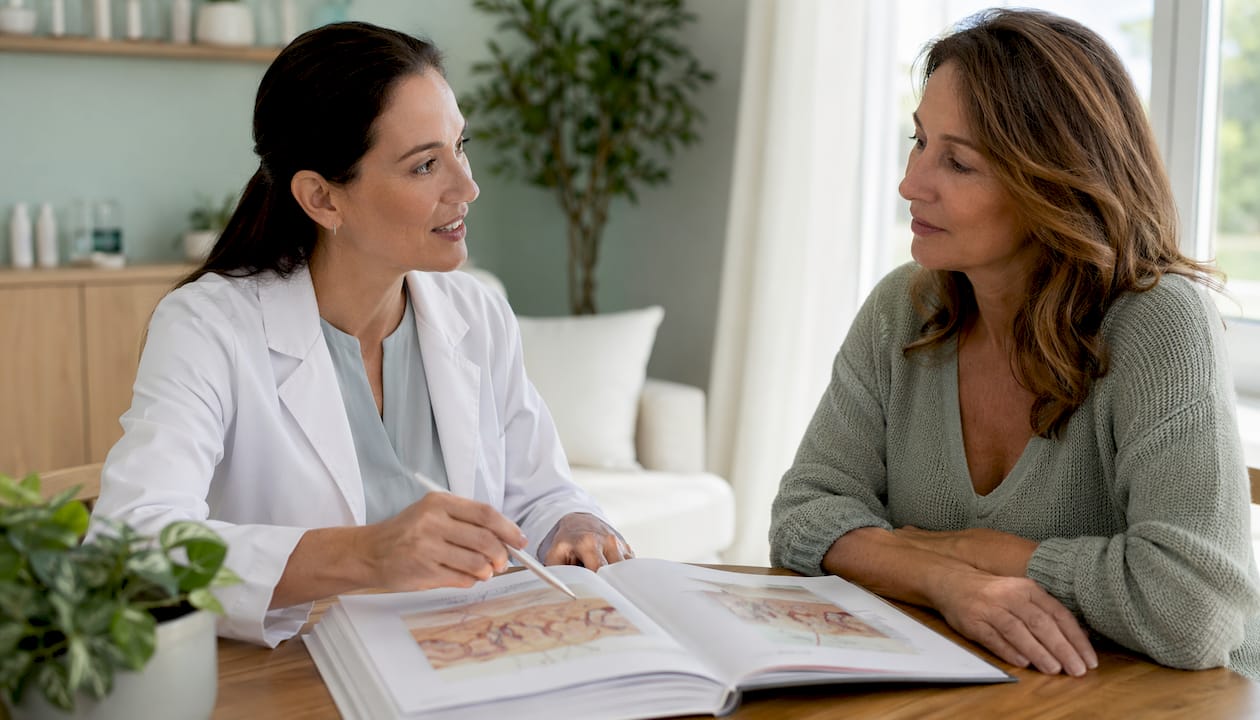
The symptoms of perimenopausal skin are wide-ranging and often catch women off guard. A Newson Health survey from 2025 found that 64% of perimenopausal and menopausal women report dry skin, 56% report itching, 30% report spots or acne, and 22% report formication. Formication is the sensation of insects crawling on the skin. It is unsettling but entirely physiological.
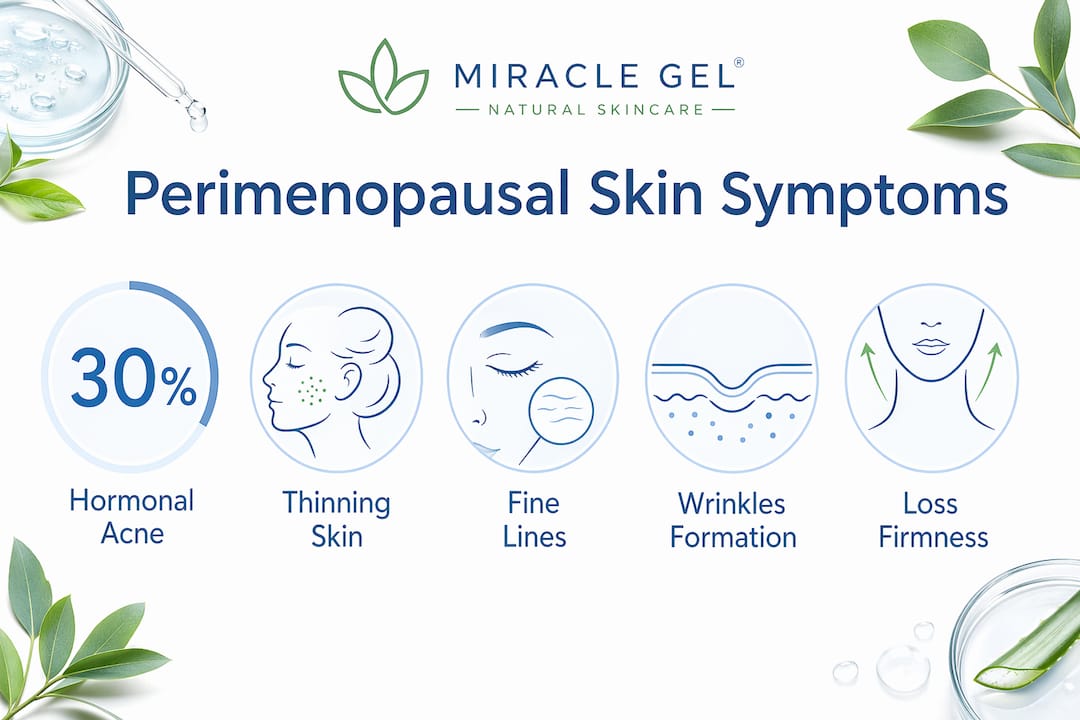
Visible changes include thinning skin, fine lines, deeper wrinkles, and a loss of facial firmness. The face, neck, and hands show these changes most clearly. Skin also bruises more easily and heals more slowly because the dermis is thinner and blood vessel walls are more fragile.
Hormonal acne during perimenopause differs from teenage acne. It tends to cluster along the jawline and chin, driven by the relative rise in androgens as estrogen falls. Pigmentation changes, including melasma and age spots, also become more pronounced. Vascular changes like flushing and rosacea are common and often worsen with heat, stress, and alcohol.
The emotional impact of these changes is real. Many women describe feeling like their skin no longer reflects how they feel inside. Recognizing that these symptoms have a clear biological cause, not a personal failing, changes how you approach care.
- Dry, itchy skin: Reported by the majority of women in perimenopause
- Thinning and sagging: Loss of collagen and elastin reduces firmness
- Hormonal acne: Jawline breakouts driven by androgen dominance
- Pigmentation changes: Melasma and age spots become more visible
- Formication: Crawling skin sensation caused by nerve sensitivity changes
- Slower healing: Thinner dermis means bruises and wounds take longer to resolve
How to care for perimenopausal skin: routines and products
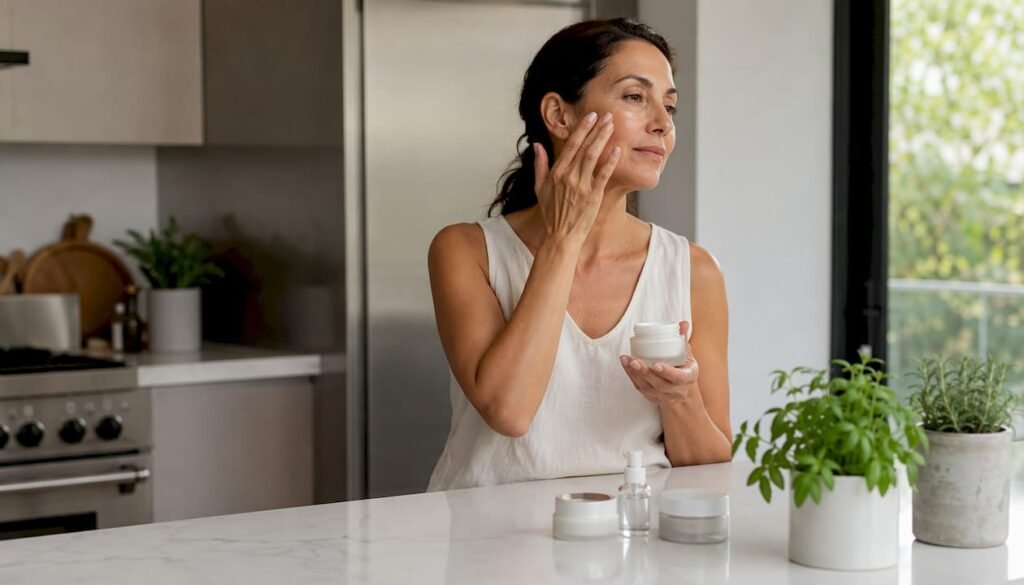
Caring for perimenopausal skin requires a shift in strategy. The goal is no longer aggressive anti-aging. The goal is barrier support, hydration, and protection. A minimalist, fragrance-free routine reduces the risk of triggering the hyper-reactive skin barrier that perimenopause creates.
Dermatologists recommend twice-daily moisturizing with fragrance-free products containing ceramides, hyaluronic acid, or glycerin. These ingredients replenish what declining estrogen takes away. Apply moisturizer to slightly damp skin to lock in hydration more effectively.
Sun protection is non-negotiable. Starting daily SPF 30 or higher in your 40s and 50s significantly reduces future skin cancer risk and slows photoaging, even if you have not been consistent with sun protection before. Mineral sunscreens with zinc oxide are gentler on sensitive perimenopausal skin than chemical filters.
- Cleanse gently. Use a low-pH, fragrance-free cleanser morning and night. Avoid foaming cleansers with sulfates, which strip the already-depleted moisture barrier.
- Apply a hydrating serum. A hyaluronic acid serum applied to damp skin draws moisture into the dermis before your moisturizer seals it in.
- Moisturize twice daily. Choose a ceramide-rich, fragrance-free formula. Apply immediately after cleansing while skin is still slightly damp.
- Use SPF every morning. Broad-spectrum SPF 30 or higher is the single most effective anti-aging step you can take. Reapply every two hours if outdoors.
- Introduce retinoids slowly. Retinoids should be introduced at a frequency of one to two times per week to avoid irritating thinning skin. Build up gradually over several months.
- Avoid harsh acne treatments. Benzoyl peroxide and strong exfoliating acids can damage the compromised skin barrier. Opt for gentler alternatives like niacinamide for acne and azelaic acid for pigmentation.
Lifestyle factors matter as much as products. Adequate sleep supports skin repair. Omega-3 fatty acids from oily fish and flaxseed reduce skin inflammation. Antioxidant-rich foods like berries, leafy greens, and green tea protect against oxidative stress that accelerates skin aging. Chronic stress raises cortisol, which breaks down collagen. Managing stress is a genuine skincare strategy.
Pro Tip: Build your evening skincare routine around repair. Nighttime is when skin cell turnover peaks, making it the best window for your moisturizer, retinoid, or peptide serum to work.
See a dermatologist if you experience sudden severe acne, unexplained rashes, or significant pigmentation changes. A dermatologist can also assess whether topical prescription treatments or referral to a gynecologist for hormone evaluation is appropriate.
What treatments can support skin health during perimenopause?
Medical and cosmetic treatments offer meaningful support for perimenopausal skin issues beyond what topical products alone can achieve. The key is matching the treatment to the specific concern and the skin’s current sensitivity level.
| Treatment | Primary benefit | Key consideration |
|---|---|---|
| Laser resurfacing | Stimulates collagen production | Requires downtime; not suitable for all skin tones |
| Microneedling | Builds collagen and improves texture | Multiple sessions needed for visible results |
| Ultherapy | Lifts and firms via ultrasound | Non-invasive but can be uncomfortable |
| Topical retinoids (prescription) | Increases cell turnover and collagen | Must be introduced slowly on sensitive skin |
| Hormone replacement therapy (HRT) | Addresses systemic estrogen decline | Requires medical evaluation; not suitable for everyone |
| Topical estrogen creams | Improves local skin thickness and hydration | Limited evidence for facial use; discuss with a doctor |
| Peptide and antioxidant serums | Supports collagen synthesis and reduces oxidative damage | Well-tolerated by sensitive skin; good daily option |
Integrated care combining HRT and dermocosmetic regimens outperforms standard anti-aging approaches for menopausal skin. This means working with both a dermatologist and a gynecologist gives you a more complete picture than either specialist alone. HRT is not right for every woman, but for those who are candidates, its skin benefits are a documented secondary gain.
In-office collagen-building treatments like microneedling and laser resurfacing work best when skin is not acutely inflamed or reactive. Always disclose your hormonal status to your provider so they can adjust protocols for thinner, more sensitive skin. Treatments that are appropriate for skin in your 30s may need to be modified in your 40s and 50s.
Peptides and antioxidants are the gentlest daily support options. Ingredients like vitamin C, niacinamide, and copper peptides support collagen synthesis without the irritation risk of retinoids. They are a practical first step for women who are new to active ingredients or whose skin is currently too reactive for retinoids.
What I have learned about perimenopausal skin after years of working with women 40+
The biggest myth I encounter is that skin aging during perimenopause is inevitable and untreatable. It is not. Early, consistent care with supportive topicals and sun protection significantly slows the visible signs of aging. The women who fare best are not the ones who spend the most. They are the ones who start early and stay consistent.
The “collagen cliff” concept changed how I think about timing. The sharpest collagen loss happens in the first five years of the transition. That means your 40s are not a time to wait and see. They are the window where protective habits pay the biggest dividends. Banking collagen now, through SPF, retinoids, and barrier support, gives your skin a better foundation for the years ahead.
I also want to push back on the idea that perimenopausal skin needs to be “fixed.” What it needs is to be understood. When you know that your skin is reactive because its barrier is compromised, not because you are using the wrong products, you stop chasing solutions and start choosing support. A simplified, well-chosen routine built around your skin’s current needs will always outperform a complicated one built around what worked a decade ago.
This phase of life deserves informed, respectful care. Your skin is not failing you. It is responding to a profound hormonal shift. Meet it where it is.
— Barbara
Natural skincare for perimenopausal women at Miraclegelnaturalskincare
Perimenopausal skin needs products that work with its changing biology, not against it. Miraclegelnaturalskincare formulates with that reality in mind, offering fragrance-free, moisture-boosting, and antioxidant-rich options designed specifically for women 40 and older.
The natural skincare range for women 40+ at Miraclegelnaturalskincare includes cleansers, moisturizers, and serums built around ingredients like ceramides, hyaluronic acid, and plant-based antioxidants. These formulas complement the barrier-first approach that dermatologists recommend for perimenopausal skin. Founder Shelly Maguire, a recognized skincare professional, developed these products with the specific needs of mature, hormonally shifting skin in mind. If you are ready to build a routine that supports your skin through this transition, the Miraclegelnaturalskincare collection is a practical, well-considered place to start.
FAQ
What is perimenopausal skin in simple terms?
Perimenopausal skin is skin that is changing due to falling estrogen levels during the years before menopause. It becomes drier, thinner, less elastic, and more sensitive as collagen, sebum, and hyaluronic acid production all decline.
At what age does perimenopausal skin start to change?
Most women notice perimenopause skin changes in their mid-to-late 40s, though the transition can begin earlier. The average age of menopause is 51, and the transition period typically lasts four years but can extend to seven to ten years.
How much collagen do you lose during perimenopause?
Women lose approximately 30% of their skin collagen within the first five years of the perimenopause transition. Some women lose up to 60–70% by the end of the full transition.
Can you reverse perimenopausal skin changes?
You cannot fully reverse them, but consistent care significantly slows their progression. Daily SPF, ceramide-rich moisturizers, gradual retinoid use, and in-office treatments like microneedling all produce measurable improvements in skin texture and firmness.
Is hormonal acne a symptom of perimenopausal skin?
Yes. Around 30% of perimenopausal women report acne flare-ups, typically along the jawline and chin. This occurs because falling estrogen creates a relative rise in androgens, which stimulate excess oil production and clogged pores.
Key takeaways
Perimenopausal skin changes are driven by estrogen decline, and early, consistent barrier-focused care is the most effective way to slow their progression.
| Point | Details |
|---|---|
| Collagen loss is rapid | Women lose about 30% of skin collagen in the first five years of perimenopause. |
| Barrier support is the priority | Fragrance-free, ceramide-rich moisturizers twice daily protect the compromised skin barrier. |
| SPF is non-negotiable | Daily broad-spectrum SPF 30 or higher slows photoaging and reduces skin cancer risk at any age. |
| Introduce actives slowly | Retinoids and exfoliating acids should be used one to two times per week to avoid irritating thinning skin. |
| Integrated care works best | Combining dermatological and gynecological care produces better outcomes than topical products alone. |