

What is a natural emollient, and how does it work?
A natural emollient is a plant- or animal-derived substance, typically an oil, butter, or wax, that softens skin by filling gaps between skin cells with lipids. That lipid layer creates a hydrophobic film on the surface, slowing water loss and shielding skin from environmental irritants. The result is skin that feels smoother, looks less flaky, and holds onto moisture far better than untreated skin.
The key distinction from humectants is worth getting clear right away. Humectants like glycerin or hyaluronic acid pull water into the skin from the air or deeper layers. Natural emollients don’t attract water. They seal it in. Most well-formulated moisturizers use both, but the emollient is the ingredient doing the barrier work.
Common natural emollients you’ll find in skincare products include:
- Shea butter — rich in oleic and stearic acids, deeply nourishing
- Coconut oil — high in lauric acid, with a lightweight feel on skin
- Jojoba oil — technically a liquid wax, closely mimics the skin’s own sebum
- Beeswax — a firm wax that adds occlusiveness and structure to balms
- Lanolin — derived from sheep’s wool, one of the most effective natural occlusives
- Cocoa butter — dense and slow-absorbing, excellent for very dry skin
- Squalane — typically derived from olives or sugarcane, lightweight and non-comedogenic
What are the real benefits of natural emollients for your skin?
Natural emollients do more than make skin feel soft. They actively support the skin barrier, the outermost layer responsible for keeping moisture in and irritants out. When that barrier is compromised, skin becomes dry, reactive, and prone to inflammation. Emollients help restore it by replenishing the lipids that hold skin cells together.

The NHS recommends emollients for managing dry, itchy, and scaly conditions like eczema, psoriasis, and ichthyosis, noting that regular use helps prevent flare-ups and patches of inflammation. That’s not a cosmetic claim. It’s clinical guidance backed by dermatology practice.
Key benefits include:
- Hydration retention — the lipid film slows transepidermal water loss
- Smoother texture — lipids physically fill micro-cracks in the stratum corneum
- Reduced irritation — a reinforced barrier keeps allergens and pollutants out
- Calming effect — particularly useful for sensitive, reactive, or eczema-prone skin
- Improved skin flexibility — well-moisturized skin is less prone to cracking
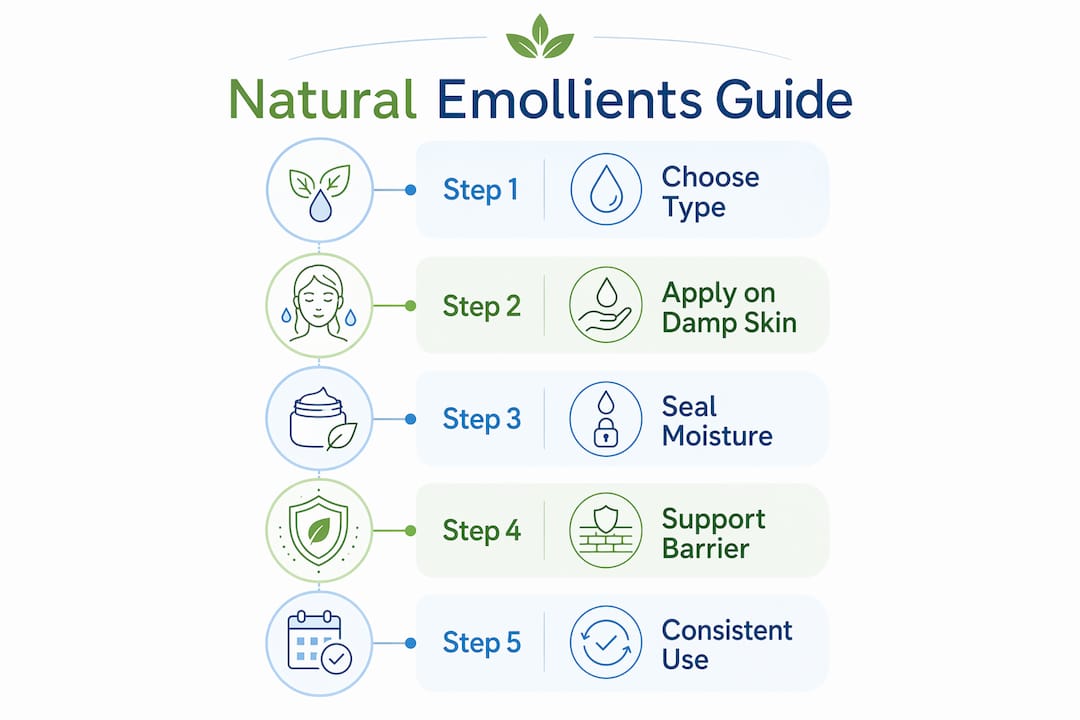
Pro Tip: Apply your natural emollient within two to three minutes of washing your face or body, while skin is still slightly damp. That brief window is when you can trap the most moisture.
Common types of natural emollients and what makes each one different
Not all natural emollients behave the same way on skin. Texture, molecular weight, and fatty acid composition determine how quickly something absorbs, how occlusive it feels, and which skin types it suits best.
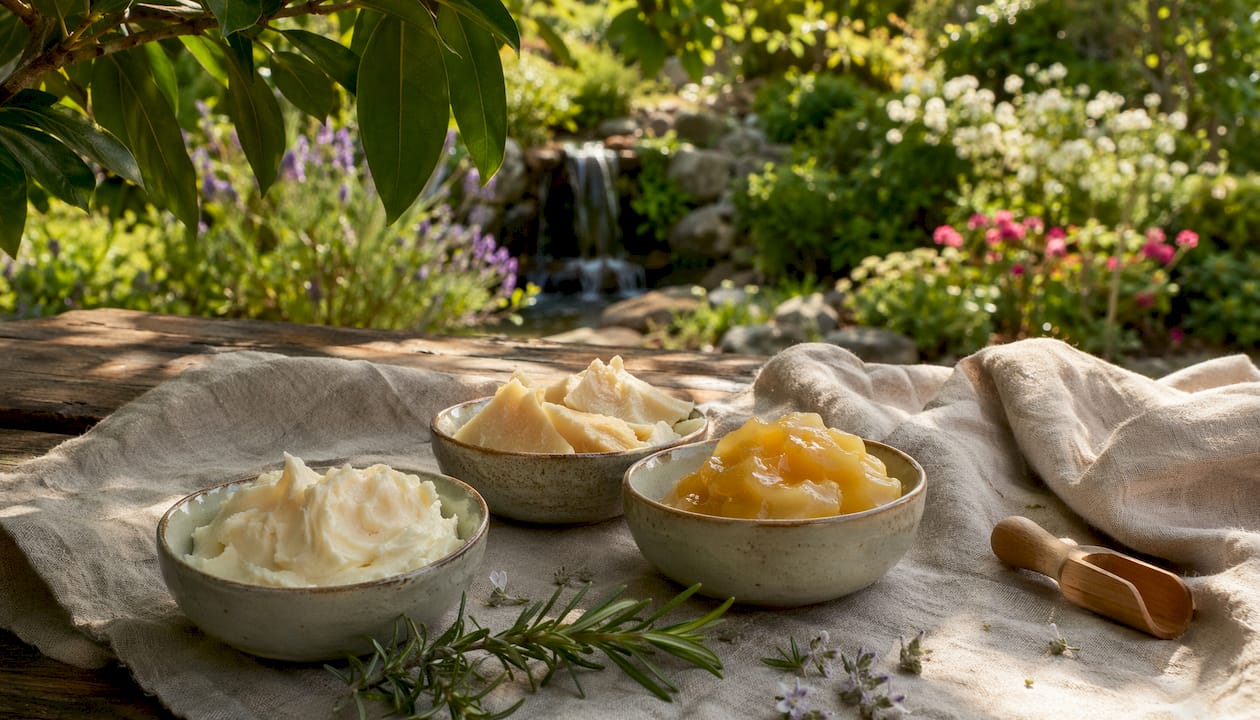
Plant-based butters like shea and cocoa butter are the richest options. They’re semi-solid at room temperature, slow to absorb, and best for very dry or mature skin. Shea butter’s high oleic acid content makes it particularly good at softening rough patches. Cocoa butter is denser and works well on the body, though it can feel heavy on the face for oilier skin types. For those who love the texture of whipped formulas, whipped body butters deliver that same nourishing richness in a lighter, more spreadable form.
Plant-based oils vary widely. Jojoba oil is technically a liquid wax, not a true oil, and its structure is closer to human sebum than almost any other plant-derived ingredient. That’s why it tends to work across skin types without clogging pores. Coconut oil is more occlusive and suits drier skin, though people prone to breakouts often find it too heavy for the face. Squalane, usually derived from olives or sugarcane, is the lightest of the group. It absorbs quickly, leaves no greasy residue, and suits oily or acne-prone skin well.
Waxes like beeswax sit at the most occlusive end of the spectrum. They don’t absorb into skin the way oils do. Instead, they sit on top and form a physical seal. You’ll find beeswax in lip balms, healing salves, and barrier creams where maximum protection is the goal.
Animal-derived options include lanolin, which comes from sheep’s wool grease. Lanolin is one of the most effective natural emollients for severely dry or cracked skin, and it’s a common ingredient in nipple creams and intensive hand treatments. Its fatty acid profile closely resembles human skin lipids, which explains its reputation for compatibility.
How natural emollients differ from humectants and synthetic alternatives
The terms “emollient” and “moisturizer” get used interchangeably, but they don’t mean the same thing. The British Association of Dermatologists draws a clear line: an emollient is a skin-softening ingredient, while a moisturizer is the finished product that typically contains emollients, humectants, and sometimes occlusives working together.
Humectants attract water. Emollients seal it. Occlusives (like petroleum jelly) form an even more impermeable barrier than most emollients. A good moisturizer usually combines all three, but the emollient is what gives skin that smooth, supple feel.
Where natural emollients differ from synthetic alternatives comes down to fatty acid profile and skin compatibility. Plant-derived emollients like olive-derived squalane often have fatty acid compositions that closely mirror the skin’s own sebum, which tends to improve how well the skin accepts and uses them. Synthetic occlusives like dimethicone or mineral oil form effective barriers but don’t contribute the same biologically relevant lipids.
- Emollients soften and smooth by filling intercellular gaps with lipids
- Humectants draw water into the skin from the environment or deeper layers
- Occlusives form a physical barrier to prevent water from escaping
- Natural vs. synthetic — natural sources often provide fatty acids that align with skin’s own chemistry; synthetics prioritize consistency and shelf stability
Are natural emollients safe? What to know about allergens and sensitivities
Natural doesn’t automatically mean safe for every skin type. Some of the most widely used natural emollients carry real allergy risk for certain people.
Lanolin is the most commonly cited example. While it’s highly effective, lanolin allergy affects a subset of people, particularly those with eczema who have had prolonged exposure. Patch testing before widespread use is a reasonable precaution. Coconut oil, despite its popularity, can trigger breakouts in acne-prone skin due to its comedogenic potential. Shea butter contains a small amount of latex-like proteins, so people with latex sensitivity should approach it carefully.
Tree nut allergies are another consideration. Shea, cocoa butter, and many plant oils come from tree nuts or seeds, and while refined versions typically remove the proteins that trigger reactions, cold-pressed or unrefined versions may retain them. If you have known food allergies to tree nuts, checking with a dermatologist before using unrefined versions of these ingredients makes sense. For those with sensitive skin, choosing gentle moisturizers with well-tolerated emollient profiles is a practical starting point.
How do natural and synthetic emollients compare in effectiveness?
Both work. The honest answer is that the right emollient depends on what your skin needs, not whether it came from a plant or a lab.
Synthetic emollients like dimethicone are highly consistent, non-allergenic for most people, and extremely stable in formulas. They create smooth, non-greasy textures and rarely cause reactions. For people with multiple sensitivities, a well-formulated synthetic emollient can actually be the safer choice.
Natural emollients bring something different to the table. Their fatty acid profiles often mirror the skin’s own lipid composition more closely than synthetic alternatives, which may explain why many people find them more comfortable over time. Squalane is a good example: it’s structurally similar to the squalene naturally produced by human sebaceous glands, and it absorbs without the occlusive heaviness of petroleum-based ingredients.
The practical difference shows up most clearly in long-term skin barrier support. Natural emollients, particularly those rich in linoleic acid like rosehip or evening primrose oil, contribute lipids that the skin can actually incorporate into its barrier structure. Synthetic emollients sit on top and do their job well, but they don’t add to the skin’s own lipid reserves the way plant-derived options can.
Expert tips for getting the most from natural emollients
Application technique matters more than most people realize. Emollients are safe to use generously, and the most common mistake isn’t overuse. It’s applying too little, too infrequently, or at the wrong moment.
Apply on damp skin, ideally within minutes of cleansing, to trap moisture before it evaporates. When applying thicker, oil-based emollients to the body, smooth them in the direction of hair growth to reduce the risk of folliculitis, a condition where hair follicles become irritated or infected. This is especially relevant with dense ointments or balms used on the legs or arms.
Emollients also work as soap substitutes for people with very dry or sensitive skin. Traditional soap strips the skin’s natural lipid layer. Using a cream or oil cleanser instead preserves those oils and keeps the barrier intact from the first step of your routine.
Consistent daily use is what delivers results over time. Emollients maintain the skin barrier rather than repair it overnight. Think of them as foundational maintenance, the way brushing teeth prevents decay rather than reversing it. For anyone managing a chronic condition like eczema, multiple applications per day are often necessary to keep the barrier stable.
Pro Tip: If a natural emollient feels too heavy for daytime wear, use a lighter oil like squalane in the morning and reserve richer butters or waxes for your nighttime routine when skin does most of its repair work.
Miraclegelnaturalskincare formulates with these principles in mind, combining plant-derived anti-aging ingredients with clinically informed delivery systems for skin that’s 40 and beyond. If you’re ready to build a routine around ingredients that actually support your skin barrier, explore the natural skincare collection designed for radiant, age-defying results.

Key Takeaways
Natural emollients are plant- or animal-derived lipids that seal moisture into skin, support the barrier, and outperform synthetic alternatives in long-term compatibility when matched to the right skin type.
| Point | Details |
|---|---|
| What they do | Natural emollients fill gaps between skin cells with lipids, reducing water loss and smoothing texture. |
| Best application timing | Apply on damp skin within minutes of cleansing to maximize moisture retention. |
| Natural vs. synthetic | Plant-derived emollients often mirror skin’s own fatty acid profile, improving long-term compatibility. |
| Allergy awareness | Lanolin, coconut oil, and unrefined tree nut butters can trigger reactions in sensitive individuals. |
| Consistency is key | Daily use maintains the skin barrier over time; emollients are maintenance, not a one-time fix. |