

What defines a founder-led skincare brand?
A founder-led skincare brand is one where the person who created it remains personally in control of the product philosophy, formulation decisions, and overall brand direction. The founder’s name, reputation, and expertise are not just marketing assets. They are the structural backbone of how the brand operates and how consumers experience it.

This is fundamentally different from a corporate skincare label, where product decisions pass through layers of committees, trend forecasters, and margin analysts. It is also distinct from influencer-led brands, where a celebrity licenses their name to a white-label manufacturer and collects royalties without meaningful involvement in what goes into the formula. Founder-led brands rely on lived experience or clinical expertise rather than influencer template models to build lasting credibility.
The defining traits of a founder-led skincare brand:
- Direct formulation accountability: The founder is personally answerable for what goes into every product.
- Authentic brand narrative: The story behind the brand comes from real experience, not a marketing brief.
- Transparent ingredient philosophy: Consumers can trace sourcing and formulation choices back to a named person.
- Consistent brand identity: The founder’s values shape every product launch, not quarterly revenue targets.
- Community-first thinking: Many founder-led brands build their audience before they build their product line.
- Ethical sourcing standards: Personal reputation creates a structural incentive to avoid shortcuts.
- Resistance to formula drift: Founder reputation and accountability structurally reduce the risk of covert formula changes after launch.
When a conglomerate acquires a brand, that direct accountability often disappears. The founder’s original philosophy gets diluted by cost optimization and portfolio management. That is the clearest way to understand what founder-led actually means: the founder’s continued presence is what keeps the brand honest.
Table of Contents
- How founder-driven brands are reshaping the skincare market
- What consumers actually expect from founder-led skincare brands
- The real challenges founder-led skincare brands face at scale
- Miraclegelnaturalskincare: a founder-led brand in practice
- Miraclegelnaturalskincare brings founder-led skincare to you
- Key Takeaways
How founder-driven brands are reshaping the skincare market
The rise of founder-driven skincare brands is not a niche trend. It reflects a broader shift in how consumers decide who to trust with their skin.
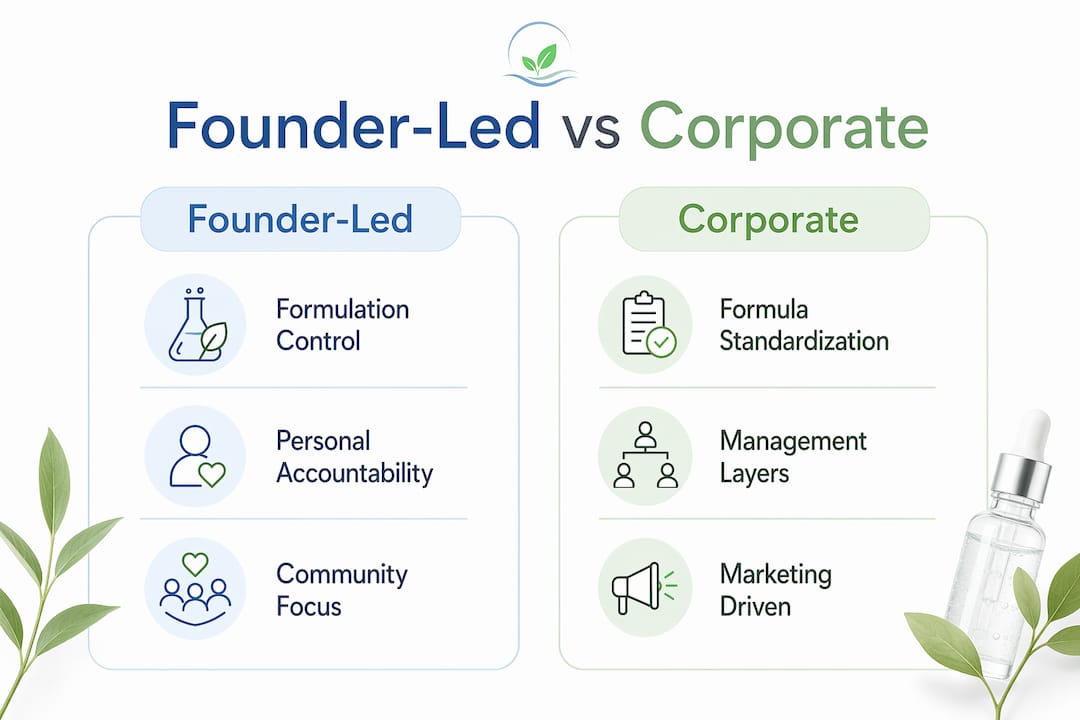
Founder-led companies outperformed non-founder-led ones by 2.1 times in total shareholder returns since 2015, according to Bain & Company’s analysis of S&P 500 and global markets. That gap exists because founders tend to operate with what Bain describes as an insurgent spirit, frontline obsession, and owner’s mindset — three qualities that drive both product quality and long-term growth.
| Factor | Founder-Led Brands | Corporate-Led Brands |
|---|---|---|
| Formulation control | Founder-directed, personal accountability | Committee-driven, margin-optimized |
| Brand narrative | Authentic personal story | Agency-crafted messaging |
| Innovation speed | Faster, driven by founder conviction | Slower, filtered through approval layers |
| Consumer trust | Built on founder reputation | Built on advertising spend |
| Post-acquisition risk | High: founder vision often diluted | Lower: already operating at scale |
| Ingredient transparency | High: founder’s name is on the line | Variable: often limited disclosure |
The skincare category specifically has seen an explosion of founder-driven labels over the past decade, as the BoF State of Fashion: Beauty report noted. Consumers are no longer satisfied with a brand that simply performs. They want to know who made it, why, and what that person stands for. KORA Organics is a useful reference point: Miranda Kerr spent three years formulating before launching a single product, self-funded the entire operation from her modeling income, and retains majority ownership of the company. That level of founder commitment is rare, but it illustrates exactly what the model looks like at its most disciplined.
Founder-led brands also tend to build community before they build product lines. An audience-first launch strategy lowers customer acquisition costs and generates market validation before a single unit ships. That approach is harder for a corporate brand to replicate because it requires a real person with a real point of view, not a brand brief.

What consumers actually expect from founder-led skincare brands
Transparency is now a baseline consumer expectation, and founder-led brands are structurally better positioned to deliver it. A large corporate cannot easily explain why a formula changed between batches. A founder can, and consumers know it.
The trust economy favors brands where a real person is visible and accountable. When founders communicate directly with their audience through social media, educational content, or behind-the-scenes product development updates, they compress multiple brand functions into a single credible voice. That visibility accelerates trust in a way that polished corporate advertising rarely achieves.
What consumers prioritize when evaluating founder-led skincare brands:
- Named formulator accountability: Knowing a specific person is responsible for ingredient choices.
- Consistent ingredient philosophy: No unexplained formula changes or sudden “new and improved” pivots.
- Ethical sourcing with traceable supply chains: Especially relevant for natural and organic claims.
- Direct communication channels: Founders who answer questions, address concerns, and share their reasoning publicly.
- Clinical or experiential credibility: The founder’s background in skincare, dermatology, or personal skin journey matters.
- Honest marketing: Claims that match what the product actually does, not what a focus group said would sell.
The architecture of trust shifts consumer attention toward accountability and formulation integrity, both of which are linked directly to founder involvement. When a founder’s personal reputation is tied to every product, there is a genuine incentive to get the formula right.
Pro Tip: If you want to build or identify a genuinely founder-led brand, look for a founder who discusses ingredient trade-offs publicly, not just benefits. A founder willing to say “we chose this over that because…” is demonstrating the kind of transparency that builds lasting loyalty. You can learn more about natural ingredient transparency and what it looks like in practice.
The real challenges founder-led skincare brands face at scale
Scaling a founder-led brand without losing what made it worth following is genuinely hard. The qualities that make these brands compelling — personal accountability, direct founder involvement, authentic storytelling — are also the qualities most at risk when a brand grows fast.
Only 2% of beauty brands founded since 2005 reach $1 billion in revenue. That figure reflects how difficult it is to build the operational infrastructure required for scale while maintaining the founder’s mentality that drove early growth. Brand hype from an influencer-led launch is not the same as sustainable infrastructure, and many founder-led brands discover that gap the hard way.
Common hurdles and how founder-led brands navigate them:
- Operational bottlenecks: Founders who control every decision become the constraint. Delegating without losing brand integrity requires building a team that genuinely shares the founder’s values.
- Maintaining formulation standards under cost pressure: Growth often brings pressure to reduce ingredient costs. Founders who have publicly committed to specific standards face reputational consequences if they compromise.
- Succession and brand equity concentration: If the brand’s trust is entirely tied to one person, what happens when that person steps back? Building a team-led content layer alongside founder visibility creates resilience.
- Competition from well-funded corporate brands: Corporate labels can outspend founder-led brands on retail placement and advertising. The counter-strategy is depth of community and loyalty that money cannot easily buy.
- Consumer expectation management at scale: Early customers expect the same level of personal attention they got when the brand had 500 followers. Systems and processes need to preserve that feeling without requiring the founder to personally respond to every message.
- Retail and distribution complexity: Moving from direct-to-consumer to multi-channel retail introduces intermediaries who may not share the founder’s standards for how the brand is presented.
The BoF State of Fashion: Beauty report noted that founder-led brands need more differentiation than ever to stand out, and their path to scaling tends to be slower than venture-backed corporate launches. That slower pace is not necessarily a weakness. It often produces more durable brands because growth is tied to real consumer loyalty rather than marketing spend.
Miraclegelnaturalskincare: a founder-led brand in practice
Miraclegelnaturalskincare is a direct example of what a founder-led skincare brand looks like when the model is applied with discipline. Founder Shelly Maguire’s skincare industry expertise is foundational to the brand’s product credibility, not a marketing afterthought. Her involvement shapes formulation decisions, ingredient selection, and the brand’s commitment to natural efficacy over harsh chemical shortcuts.
The flagship product, the 2 Minute Miracle Gel, was developed around the Tri-Moisture Cryo Complex™, a proprietary formulation designed to deliver visible results within minutes. The brand’s clinical results are central to how it communicates with consumers, reflecting the founder’s belief that efficacy claims need to be backed by evidence, not just aspiration.
| Product Feature | Miraclegelnaturalskincare Approach |
|---|---|
| Formulation philosophy | Natural and organic ingredients, no harsh chemicals |
| Key complex | Tri-Moisture Cryo Complex™ |
| Clinical backing | Clinically proven results, visible within minutes |
| Founder involvement | Shelly Maguire personally drives product development |
| Target consumer | Health-conscious, anti-aging, skin-brightening focus |
| Distribution model | Direct-to-consumer, e-commerce primary |
The brand’s positioning reflects what beauty strategy analysis consistently identifies as the winning formula for founder-led skincare: a named expert behind the product, transparent ingredient sourcing, and clinical evidence that supports the claims being made. Consumers evaluating trust factors in skincare purchases will find that Miraclegelnaturalskincare’s approach aligns directly with what the research says drives long-term loyalty.
The personal accountability that founder-led brands offer is precisely what consumers are seeking as trust in institutional messaging continues to erode. Shelly Maguire’s name and reputation are on every product, which creates the kind of structural incentive for quality that no corporate brand can replicate through advertising alone.
Miraclegelnaturalskincare brings founder-led skincare to you
Most natural skincare brands ask you to take their word for it. Miraclegelnaturalskincare is built differently. Founder Shelly Maguire’s direct involvement in every formulation decision means the products you receive reflect genuine expertise, not a white-label formula with a premium price tag attached.
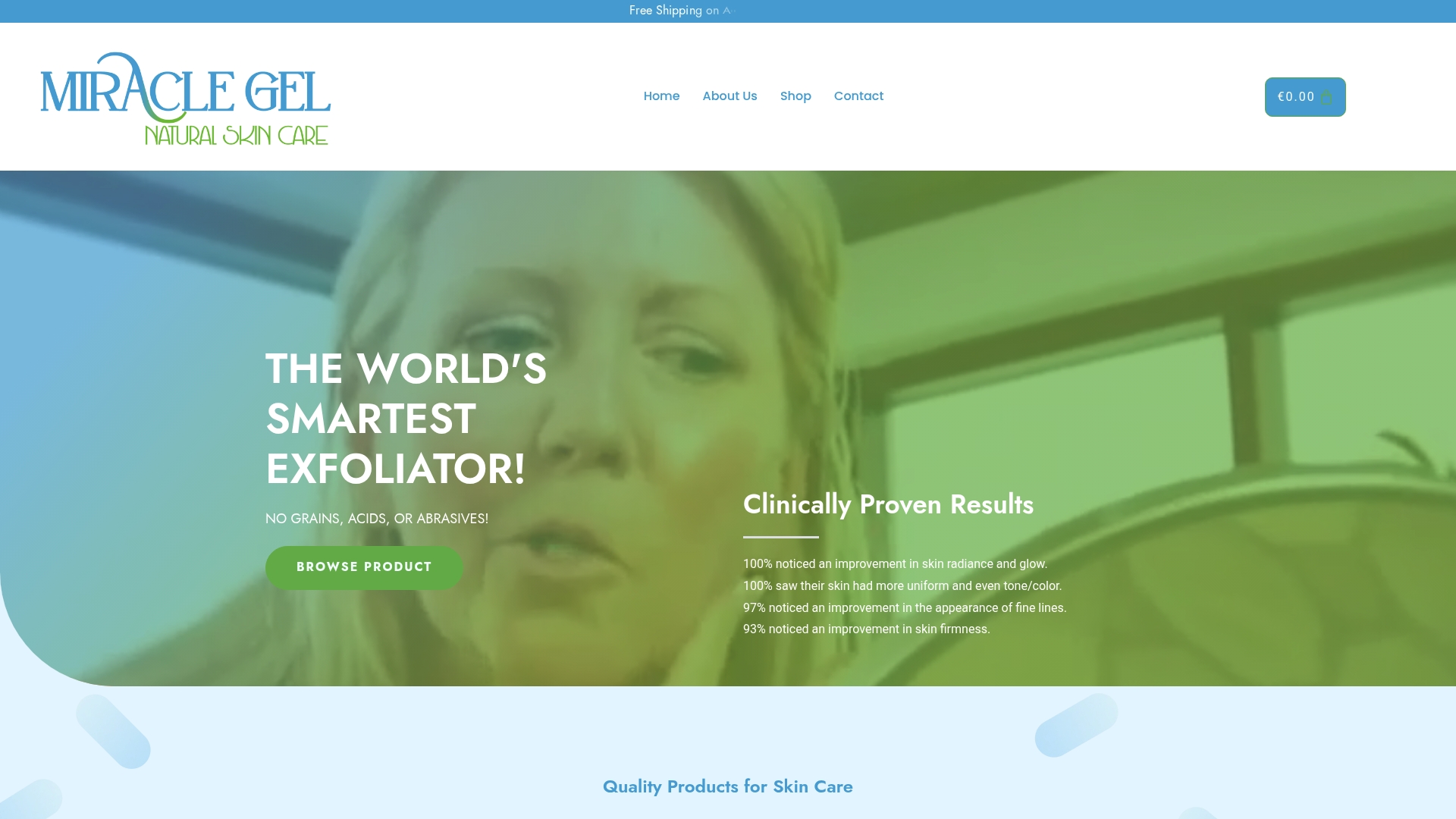
The 2 Minute Miracle Gel and the broader range of natural anti-aging skincare products are formulated specifically for consumers who want visible results without compromising on ingredient integrity. No harsh chemicals. No vague efficacy claims. Clinical results that are documented and transparent, because a founder’s reputation depends on them being real.
If you have been reading about what separates founder-led brands from the corporate alternatives, Miraclegelnaturalskincare is the practical answer to that question. Browse the full range and see the clinical results for yourself.
Key Takeaways
Founder-led skincare brands outperform corporate alternatives on trust, transparency, and long-term consumer loyalty because a named founder’s personal reputation is structurally tied to every product decision.
| Point | Details |
|---|---|
| Founder control is the defining factor | Direct formulation accountability separates founder-led brands from corporate or influencer-led alternatives. |
| Performance advantage is documented | Founder-led companies outperformed non-founder-led ones by 2.1 times in total shareholder returns since 2015. |
| Scale is the hardest challenge | Only 2% of beauty brands founded since 2005 reach $1 billion in revenue, reflecting the difficulty of scaling without losing founder integrity. |
| Consumer trust drives the model | Transparency and named accountability are now baseline expectations; founder visibility accelerates trust formation faster than advertising. |
| Miraclegelnaturalskincare exemplifies the model | Founder Shelly Maguire’s direct involvement in formulation and brand identity defines the brand’s clinical credibility and consumer trust. |