
TL;DR:
- Skin bioremodeling uses high-concentration hyaluronic acid injections to stimulate collagen and elastin, improving skin quality naturally.
- Results are gradual and last about six months, making it suitable for those seeking subtle, long-term enhancement.
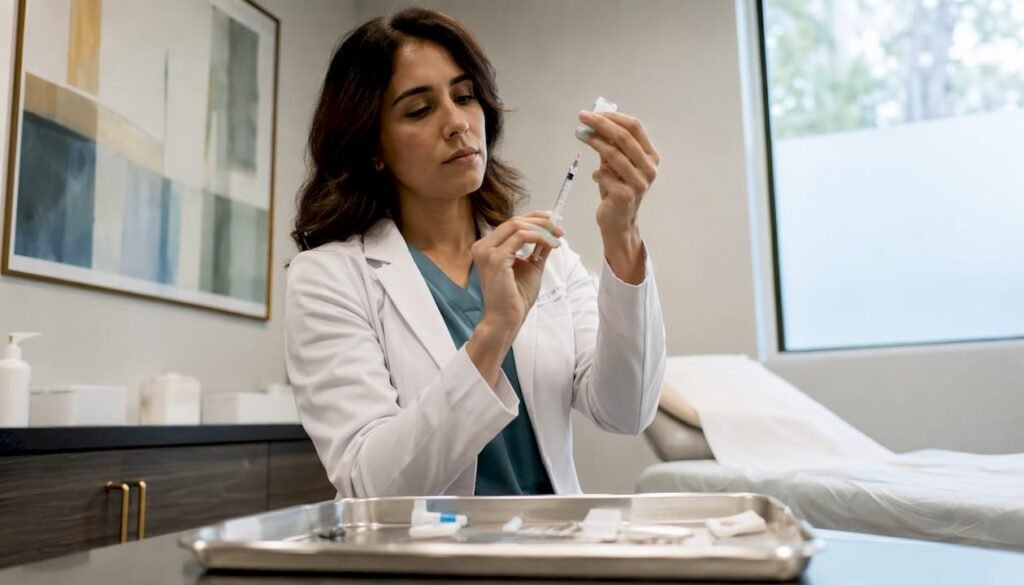
Skin bioremodeling is a non-surgical injectable treatment that uses high-concentration purified hyaluronic acid to stimulate your skin’s own collagen and elastin production, improving texture, firmness, and hydration without changing your facial shape. If you want gradual, natural-looking skin-quality improvement rather than immediate volume or sculpting, this treatment is worth understanding. A 2026 randomized controlled trial found visual improvements in wrinkles and pores, though results varied considerably between patients. The standard protocol is two sessions spaced four weeks apart, and for those who prefer to start at home, topical options from Miraclegelnaturalskincare offer a non-invasive first step.
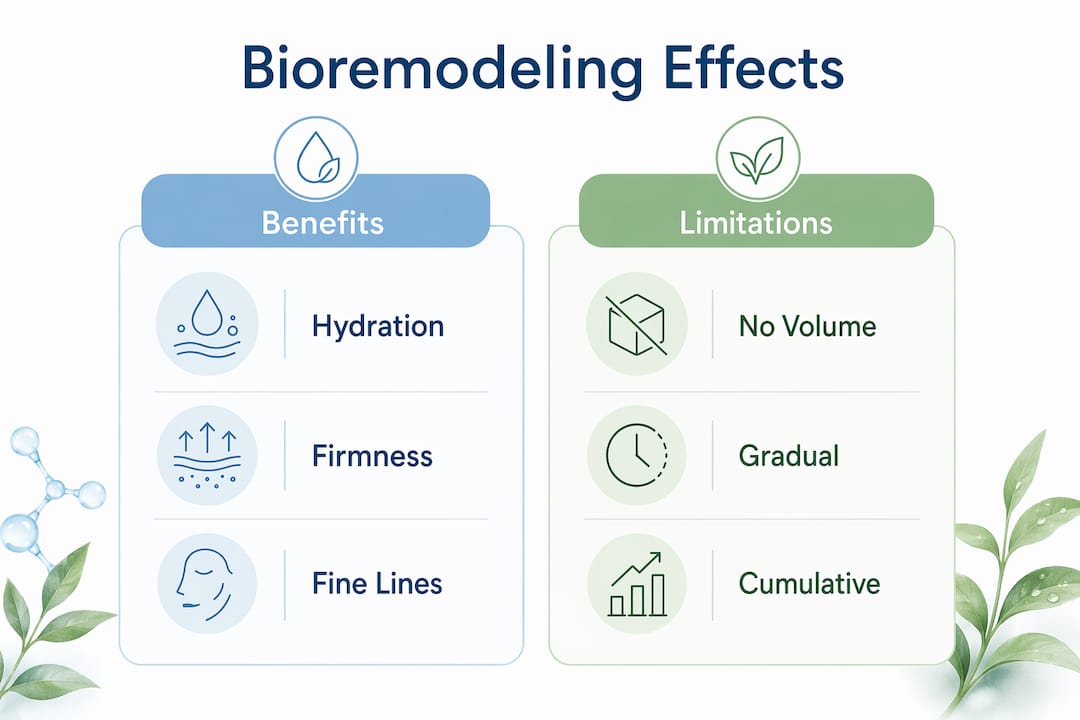
Table of Contents
- What is skin bioremodeling and how does it work?
- What bioremodeling can and cannot do for your skin
- What to expect during treatment and recovery
- Safety, side effects, and what the clinical evidence actually shows
- Who should consider bioremodeling versus fillers or topical care?
- What topical products can realistically do compared to bioremodeling
- Key Takeaways
- The gap between what bioremodeling promises and what actually matters
- Start improving skin quality at home with Miraclegelnaturalskincare
- Useful sources
What is skin bioremodeling and how does it work?
The short answer: high-concentration purified hyaluronic acid is injected into the dermis, where it disperses through the tissue rather than sitting in one spot like a volumizing filler. That diffusion is the key difference.
Here is what happens biologically, step by step:
- HA hydration: Injected HA draws water into the dermal matrix, plumping the tissue from within.
- Fibroblast activation: The presence of HA signals fibroblasts, the cells responsible for building your skin’s structural proteins, to ramp up activity.
- Collagen and elastin synthesis: Activated fibroblasts produce new collagen and elastin, gradually rebuilding the skin’s internal framework.
- Ongoing remodeling: Because the biological cascade continues after the injected HA is metabolized, improvements keep developing for weeks after treatment ends.
Most formulations combine high-molecular-weight HA, which stabilizes dermal structure, with low-molecular-weight HA, which penetrates surface layers for hydration. Together, they spread evenly through tissue rather than creating a localized deposit.
Pro Tip: Ask your practitioner specifically about Bio-Aesthetic Points (BAPs). The standard technique uses ten defined injection points across the face to maximize even diffusion. If a clinician is vague about injection mapping, that is worth pressing on before you commit.

What bioremodeling can and cannot do for your skin
The primary benefits are real and well-documented: deep dermal hydration, improved firmness, refined fine lines, smaller-looking pores, and an overall improvement in skin texture and glow. These are the skin bioremodeling benefits most consistently reported across clinical settings.
What it cannot do matters just as much. Bioremodeling is not a volumizing filler. It will not restore cheek projection, soften deep nasolabial folds, or lift sagging tissue caused by structural fat loss. Clinicians describe it as a “skin-quality” foundational treatment, not a contouring one. Think of it as improving the canvas rather than reshaping the painting.
Results are gradual and cumulative. Most people notice a subtle glow and improved texture within a few weeks, with optimal improvement appearing 4–6 weeks after the second session. That timeline suits people who want changes that look like their own skin getting healthier, not like a procedure. If you are expecting an immediate visible transformation, this treatment will likely disappoint. Results commonly last up to about six months before maintenance is recommended.
What to expect during treatment and recovery
The typical protocol is two sessions spaced four weeks apart, each lasting approximately 15–30 minutes with minimal downtime. Here is how the timeline usually unfolds:
- Pre-consult: Discuss goals, medical history, and whether bioremodeling suits your skin concerns.
- First session: Ten injection points placed across the face using the BAP technique; mild swelling or tenderness is normal immediately after.
- Weeks 1–3: Subtle improvements in hydration and texture begin; any swelling resolves within a few days.
- Second session (week 4): Reinforces the biological stimulus and deepens the remodeling effect.
- Weeks 6–8: Optimal results typically visible; collagen synthesis continues even as HA metabolizes.
Aftercare is straightforward:
- Apply a cold compress if swelling is uncomfortable in the first 24 hours.
- Skip strenuous exercise for 24–48 hours post-treatment.
- Layer your topical skincare as usual, but avoid active exfoliants on the day of treatment.
Results commonly last up to about six months before maintenance is recommended. Many practitioners schedule twice-yearly sessions to sustain the fibroblast-stimulating effect.
Safety, side effects, and what the clinical evidence actually shows
Treatment is minimally invasive. Most people experience only mild, short-lived swelling or tenderness at injection sites, and a small minority report more prolonged discomfort. Serious adverse events are rare given the product’s diffusion-based design, which reduces the risk of visible lumps compared with structural fillers.
| Metric | Detail |
|---|---|
| Session length | ~15–30 minutes |
| Sessions in initial course | 2 (four weeks apart) |
| Common side effects | Mild swelling, tenderness, brief redness |
| Duration of visible results | Commonly up to about six months |
| Patient dissatisfaction in a 2026 trial was notable, with a substantial minority expressing dissatisfaction with their decision to undergo treatment and with the outcomes. |
The 2026 randomized controlled trial found that dermal thickness increased on both treated and placebo sides, meaning the increase did not consistently exceed placebo. A significant portion of participants were dissatisfied with their decision to undergo treatment, and many participants were dissatisfied with their outcomes. That is a meaningful finding that most clinic marketing glosses over.
Before proceeding, a practitioner should screen for: active skin infection at the treatment site, pregnancy or breastfeeding, autoimmune conditions affecting connective tissue, and a history of severe allergic reactions to HA products. If any of these apply, delay or avoid treatment until cleared by a physician.
Who should consider bioremodeling versus fillers or topical care?
Bioremodeling suits people with overall skin-quality concerns: uneven texture, loss of radiance, mild laxity, and dehydration. It is not the right tool for significant structural volume loss or deep folds.
Questions worth asking at a consult:
- What specific outcome am I hoping for, and is it realistic with this treatment?
- Have I had injectables before, and how did my skin respond?
- How much downtime can I tolerate?
- Am I willing to wait 2–3 months to see the full result?
Red flags that suggest pausing or choosing a different path:
- Expecting immediate, dramatic change
- History of severe allergic reactions to HA-based products
- Active skin infection or inflammatory skin condition in the treatment area
- Significant volume loss that requires structural correction
When to choose topical care first: If your concerns are primarily surface hydration, mild dullness, or early fine lines, a consistent topical regimen with retinoids and HA serums can deliver meaningful improvement without any needles. Reassess after 90 days.
When to add bioremodeling: Once topical care has stabilized your barrier and you want deeper dermal improvement in firmness and texture, a bioremodeling course makes sense as the next layer.
When to discuss fillers instead: Deep volume loss, significant structural sagging, or contour correction requires a volumizing filler or stimulator, not bioremodeling. The two can be combined, but they address different problems.
Pro Tip: If you are combining treatments, sequence matters. Do bioremodeling first to improve overall skin quality, then add structural fillers at a separate appointment. Mixing them in one session makes it harder to assess what is working.
What topical products can realistically do compared to bioremodeling
Topical skincare improves surface hydration, barrier function, cell turnover, and some collagen support, but it cannot replicate the deep dermal remodeling that injectables trigger. The depth of effect is the fundamental difference.
| Criterion | Clinic bioremodeling | Topical medical-grade regimen |
|---|---|---|
| Depth of effect | Deep dermis | Surface and upper epidermis |
| Onset speed | Gradual (weeks) | Gradual (weeks to months) |
| Durability | Up to ~6 months | Ongoing with daily use |
| Invasiveness | Minimally invasive (injectable) | Non-invasive |
| Cost range | Higher, per-course clinic fee | Lower, ongoing product cost |
At home, the most effective ingredient categories for bioremodeling for skin elasticity support are retinoids for collagen stimulation, vitamin C for brightness and antioxidant protection, and HA serums for surface hydration and barrier support. These do not replace in-clinic treatment, but they maintain and extend its benefits between sessions.
Pro Tip: Run a 90-day topical trial before booking a bioremodeling consult. Use a retinoid three nights per week, a vitamin C serum in the morning, and an HA serum under moisturizer daily. If texture and hydration improve but firmness and laxity remain concerns, that is your signal that an in-clinic option could add real value.
Key Takeaways
Skin bioremodeling delivers gradual, natural-looking skin-quality improvement by stimulating collagen and elastin from within the dermis, but clinical evidence shows variable patient satisfaction and results that do not always exceed placebo on objective measures.
| Point | Details |
|---|---|
| What it is | A non-surgical injectable using purified HA to stimulate collagen and elastin, not a volumizing filler. |
| Realistic benefits | Deep hydration, improved firmness, refined fine lines, and better texture over 4–6 weeks post-treatment. |
| Evidence caveat | A 2026 RCT found 54.5% of participants dissatisfied with outcomes; set expectations carefully before booking. |
| Typical timeline | Two sessions four weeks apart; results last up to ~6 months with maintenance twice yearly. |
| Topical-first option | Miraclegelnaturalskincare offers HA serums and plant-derived actives as a non-invasive starting point for skin-quality improvement. |
The gap between what bioremodeling promises and what actually matters
The treatment category is genuinely interesting, and the biology behind it is sound. Fibroblast stimulation via high-concentration HA is a real mechanism, not marketing language. But the 2026 randomized trial is a useful reality check: when you control for placebo, the objective dermal thickness gains are less convincing than the before-and-after photos clinics publish. That does not make the treatment useless. It means the people who benefit most are those who go in with calibrated expectations: subtle, gradual improvement in skin quality, not a structural overhaul.
The satisfaction data is the part worth sitting with. Over half of trial participants were dissatisfied with their outcomes. That is not a fringe result. It likely reflects a mismatch between what patients hoped for and what the treatment can actually deliver. The fix is not avoiding the treatment; it is honest pre-treatment counseling and a clear-eyed sense of your own goals. If you want your skin to look healthier and more hydrated over three months, bioremodeling can do that. If you want to look noticeably different, it probably will not get you there.
For many readers, a well-built topical regimen with plant-derived anti-aging ingredients is the smarter first move. It costs less, carries no recovery, and gives you a clear baseline to judge whether an in-clinic step is actually adding value.
Start improving skin quality at home with Miraclegelnaturalskincare
If you are not ready for needles, or you want to build a strong topical foundation before considering any in-clinic option, Miraclegelnaturalskincare gives you a practical place to start. The brand’s age-defying topical collection is built around the same priorities as bioremodeling: deep hydration, collagen support, and gradual skin-quality improvement, without the clinic visit or recovery time.
The anti-aging serums include HA-based humectants for surface hydration and plant-derived actives that support barrier repair and cell turnover. These are the ingredient categories that complement in-clinic treatments when you are ready for them, and they stand on their own when you are not. Browse the full collection and find the right starting point for your skin.
Useful sources
- 2026 Randomized Controlled Trial (primary evidence source): Effects of Profhilo® Tissue Bioremodeling on Skin Texture and Perioral Wrinkles — supports mechanism, safety, mixed clinical outcomes, and patient satisfaction data throughout this article.
- HA chemistry and diffusion behavior: The Science Behind Bio-Remodelling: How It Stimulates Collagen for Youthful Skin — supports the how-it-works section on high/low molecular-weight HA.
- Cumulative mechanism and fibroblast cascade: Understanding Bioremodelling Cosmetics: A Guide to Skin Rejuvenation — supports the explanation of delayed, ongoing collagen remodeling after HA metabolizes.
- BAP injection technique: How Bioremodelling Can Improve Skin Quality and Firmness — supports procedural detail on standardized injection points and even diffusion.
- Topical vs. clinic depth of effect: 7 Transformative Benefits of Bio-Remodelling Skin Treatment in 2026 — supports the topical alternatives comparison table.