

Winter skincare over 40 comes down to one shift: swap surface hydration for barrier repair. That means a gentle cleanser, a humectant serum applied to damp skin, a ceramide-rich moisturizer, an occlusive at night, and sunscreen every morning, no exceptions. Keep your retinol or acids in rotation, just buffer them and cut frequency if your skin starts protesting. Miraclegelnaturalskincare builds its formulas exactly around this kind of layered, barrier-first approach.
TL;DR:
- Using a hydrating serum like hyaluronic acid or glycerin on damp skin boosts moisture but must be followed by an emollient and occlusive to lock in hydration.
- Retinol and acids should be buffered with moisturizer and used less frequently in winter to avoid irritation and ensure skin barrier recovery.
- Key ingredients for winter skincare include ceramides, glycerin, niacinamide, squalane, and petrolatum, which help restore barrier function and prevent water loss.
- Environmental factors such as dry indoor air and cold wind accelerate water loss, making barrier repair crucial for reducing deeper fine lines and dryness.
- Small lifestyle adaptations like using a humidifier, limiting hot showers, and applying moisturizer immediately after water exposure significantly improve winter skin health.
Table of Contents
- Winter Skincare Routine for Mature Skin: Morning and Evening Checklist
- Why Does Mature Skin Struggle More in Winter?
- How Should You Layer Products for Maximum Hydration?
- Can You Still Use Retinol and Acids in Winter?
- What Ingredients Should Be on Your Winter Shopping List?
- Small Lifestyle Changes That Make a Real Difference
- Why Trust This Winter Skincare Guidance?
- A Note From Barbara
- Ready to Build Your Winter Routine?
- Sources
Winter Skincare Routine for Mature Skin: Morning and Evening Checklist
Here’s the whole thing broken into two lists you can screenshot and follow tomorrow morning.
Morning:
- Rinse with a cream or gel cleanser, never a foaming one that strips lipids.
- Apply a hyaluronic acid or glycerin serum while skin is still damp.
- Seal with a ceramide-rich moisturizer.
- Finish with a hydrating sunscreen, SPF 30 or higher.
Evening:
- If you wore makeup or sunscreen, do a quick oil or balm cleanse first.
- Follow with a gentle hydrating cleanser.
- Apply your treatment step: buffered retinol or a peptide serum.
- Layer a richer night moisturizer.
- Add an occlusive (think petrolatum-based balm) over dry patches or your whole face if needed.
Exfoliation generally reduces in winter for most women over 40, and actives like retinol may need to shift from nightly to three times a week. This isn’t about doing less. It’s about doing the right things in the right order without triggering a flare of redness or flaking that undoes the whole routine.
Why Does Mature Skin Struggle More in Winter?
Skin loses water through its outer layer constantly, a process dermatologists call transepidermal water loss, and cold air combined with indoor heating accelerates it dramatically. Central heating can drop indoor humidity to levels as dry as a desert, and that dryness pulls moisture out of skin faster than it can replace it, according to consultant dermatologists cited by Good Housekeeping.
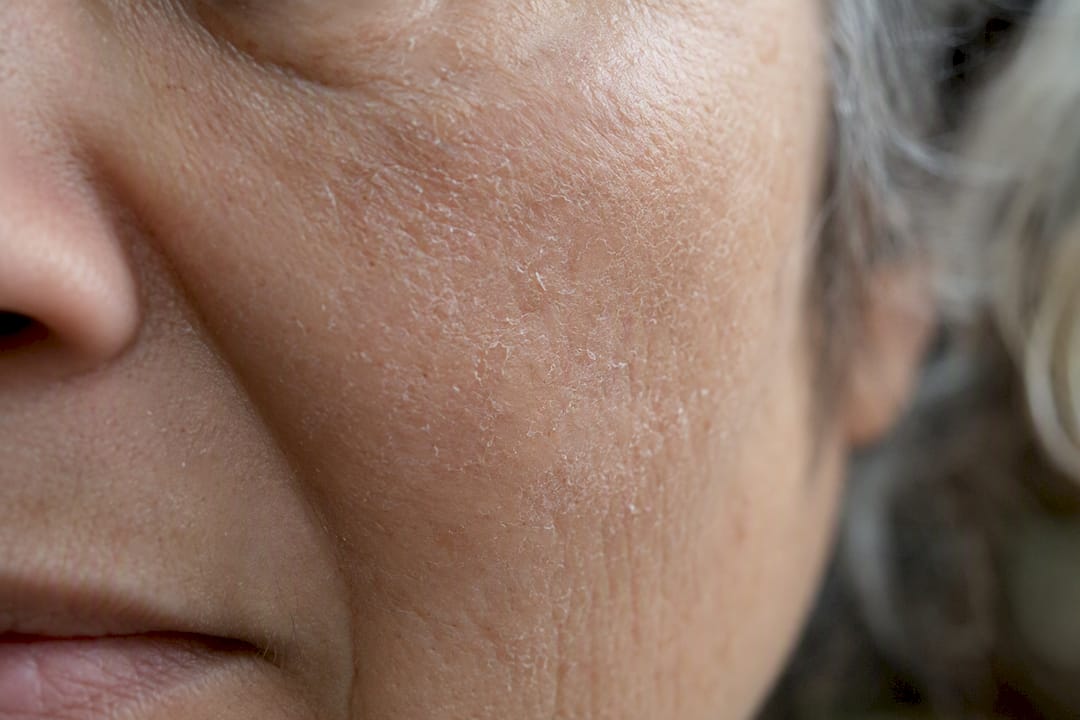
Skin over 40 already produces less ceramide and sebum than it did a decade earlier, so the natural lipid barrier that normally holds moisture in is thinner to begin with. That combination, less oil production plus more environmental water loss, is why fine lines look deeper in January than in July, and why a lightweight summer lotion suddenly feels useless. Mature skin responds better to lipid-replacing ingredients like ceramides and fatty acids than to surface-level hydrators alone, per Harper’s Bazaar’s dermatologist interviews.
How Should You Layer Products for Maximum Hydration?
Order matters more than most people realize. Water-based products go on first, oil-based products go on last, and skipping that sequence wastes half of what you just applied.
- Apply humectants like hyaluronic acid to skin that’s still damp from cleansing or misting, since they work by drawing water into the skin and need moisture nearby to pull from.
- Follow immediately with an emollient cream to smooth and reinforce the lipid layer.
- Cap the routine with an occlusive, a thicker balm or petrolatum-based product, to physically block water from escaping overnight.
- This “sandwich” method beats piling on one heavy cream, according to layering guidance from dermatology sources.
Swap your foaming morning cleanser for a cream or milk formula, and if your skin feels tight rather than clean after washing, that’s your sign the cleanser is too harsh for winter air. Some mornings, if you used a rich occlusive the night before and skin still feels comfortable, a splash of water is enough. Don’t forget your neck and the backs of your hands. Both areas have thinner skin than your face, age faster, and rarely get any product at all.
Pro Tip: Keep a travel-size hand cream at every sink in your house. You’ll actually use it if you don’t have to go looking for it.
Can You Still Use Retinol and Acids in Winter?
Yes, and you should, but the approach needs adjusting. Winter air punishes actives that were perfectly tolerable in summer humidity.
- Buffer retinol by applying moisturizer first, or mix a small amount directly into your night cream, a technique Harper’s Bazaar notes reduces irritation without sacrificing results.
- Drop retinol frequency if you notice flaking or tightness.
- Swap strong glycolic or salicylic acids for gentler lactic acid or PHAs, and limit exfoliation during winter.
- Vitamin C and peptides generally stay safe through winter as long as you’re pairing them with real hydration underneath.
- If skin stings, turns red, or flakes for more than a few days, pause actives entirely and give your barrier two to six weeks to recover before reintroducing them gradually.
What Ingredients Should Be on Your Winter Shopping List?
A handful of ingredients do most of the heavy lifting once temperatures drop, and knowing what each one does helps you shop smarter instead of buying whatever’s marketed as “hydrating.”
- Ceramides rebuild the lipid barrier that keeps moisture locked in.
- Glycerin and hyaluronic acid pull water into the skin’s surface layers.
- Niacinamide calms redness and supports barrier function at the same time.
- Squalane and shea butter smooth and soften without feeling greasy.
- Petrolatum-based occlusives physically block water loss, especially useful overnight.
Practical swap: trade your foaming cleanser for a cream formula, and your summer lotion for a ceramide-based cream. Prioritize serums in hydrating gel or cream bases rather than watery, alcohol-heavy formulas that evaporate fast, along with a proper balm for overnight sealing.
Small Lifestyle Changes That Make a Real Difference
A humidifier running overnight, kept clean to avoid mold buildup, does more for winter skin than most people expect. Keep showers under 10 minutes, water warm rather than hot, and moisturize the moment you step out while skin is still damp, guidance the American Academy of Dermatology has repeated for years because it consistently works.
- Layer clothing over damp skin, never bare skin, when heading outside in cold wind.
- Treat lips with a balm containing beeswax or shea, reapplied often, not just once in the morning.
- If skin cracks or stings persistently, drop back to a bland, fragrance-free barrier cream and pause every active until it calms. See a dermatologist if it doesn’t improve within a week or two.
Why Trust This Winter Skincare Guidance?
Miraclegelnaturalskincare built its 2 Minute Miracle Gel around barrier-focused ingredients, including its Tri-Moisture Cryo Complex™, designed to address exactly the lipid loss and dehydration described above… Founder Shelly Maguire’s formulation background, paired with customer results shared across the brand’s site, shapes the practical advice here… For a fuller routine beyond winter, see our complete mature skin care guide.

A Note From Barbara
Winter skin doesn’t fix itself overnight, and it shouldn’t. Give any change two to four weeks before judging it. If you try nothing else this week, swap your cleanser for a cream formula and add a real occlusive at bedtime. Check back in a month and see how your skin actually feels.
— Barbara
Ready to Build Your Winter Routine?
Most winter skin advice tells you to buy five new products and hope one works. Miraclegelnaturalskincare takes a narrower approach: a hydrating serum, a ceramide-rich moisturizer, a night occlusive, and a gentle cleanser, the exact four steps this guide just walked through, formulated to work together instead of competing for space on your shelf.

If your current moisturizer isn’t cutting it once the heat comes on, start with the brand’s natural anti-aging skincare collection and build from there, adding a night balm as your skin tells you it needs one. Orders over €85 ship free, so pairing a serum with a heavier cream in one order makes practical sense for anyone rebuilding their routine for the season. Browse the collection and pick your starting two products today.
Sources
- How to Soothe Dry, Mature Skin in the Winter, According to Experts — Harper’s Bazaar
- Dermatologists’ top tips for relieving dry skin — American Academy of Dermatology (AAD)