

The safest way to start skincare is small: a barrier-first, three-step AM and PM routine, plus a handful of gentle product swaps in categories where irritation actually happens. You don’t need ten products. You need a fragrance-free cleanser, a ceramide moisturizer, a daily sunscreen you’ll actually reapply, and the patience to change one thing at a time.
That’s the whole strategy. Everything else, exfoliants, serums, toners, is optional until your skin proves it can handle more.
Start today with this:
- Morning: gentle cleanser (or just a lukewarm water rinse if your skin is very dry), moisturizer, sunscreen.
- Night: remove makeup if you wore any, cleanse, moisturize.
- First swap to make: replace whatever cleanser is currently foaming, tightening, or stinging with a fragrance-free, ceramide-based one. It’s the single highest-impact change most beginners can make, because a stripped barrier undermines everything else you put on afterward.
Once that base routine feels boring and uneventful for a couple of weeks, you’re ready to add one extra step at a time.
Table of Contents
- The Simple Beginner Routine: 3 Steps, Morning and Night
- Gentle Swaps by Category: What to Replace and Why
- How to Introduce New Products Without Triggering a Reaction
- Ingredients to Seek Out and Ingredients to Avoid
- Gentle Alternatives to Retinol Worth Knowing About
- How Miraclegelnaturalskincare Fits Into Your Swap Plan
- Sources
The Simple Beginner Routine: 3 Steps, Morning and Night
Dermatologist guidance from the Cleveland Clinic backs a minimal three-step structure: cleanser, optional antioxidant, and sunscreen in the morning, with cleansing and repair at night. That’s not a simplified version of a “real” routine. For most people, it is the real routine.
AM: cleanse, moisturize, protect.
Cleansing in the morning removes overnight oil buildup without needing anything aggressive. If your skin runs dry or tight, a plain lukewarm water splash is often enough, save the cleanser for the evening. Moisturizer goes on next to seal in hydration before sunscreen creates a barrier against UV damage. Skipping sunscreen is the most common beginner mistake, and it’s the step Good Housekeeping’s dermatology-sourced advice flags as the single most important daytime habit you can build.
PM: remove, cleanse, moisturize.
If you wore makeup or sunscreen, take it off first with a dedicated remover before cleansing. Otherwise, one gentle cleanse is enough. Double cleansing, an oil-based first cleanse followed by a water-based second, only really earns its extra step on days you’re wearing heavy makeup or sunscreen. Skip it on bare-skin days. It’s an extra step, not a mandatory ritual.
When to add extras. Once your skin tolerates the base routine for two to three weeks with zero redness, stinging, or breakouts, you can layer in one additional product: an antioxidant serum in the morning (think vitamin C or niacinamide) or a targeted active at night. Add one thing, wait, watch. Two new products at once means you won’t know which one caused a reaction if something goes wrong.
Gentle Swaps by Category: What to Replace and Why
Most beginner skin problems trace back to a handful of categories where harsh formulas hide behind confident marketing. Here’s what to swap, category by category.
Cleansers. Foaming cleansers that leave your face feeling “squeaky clean” are often stripping away the lipids that keep your barrier intact. Swap to a cream, oil, or hydrating gel cleanser instead. Look for ceramides, glycerin, or a gentle surfactant like sodium cocoyl isethionate on the label, these clean without the tight, dehydrated aftermath. Our gentle face cleansing workflow walks through exactly what that looks like in practice.
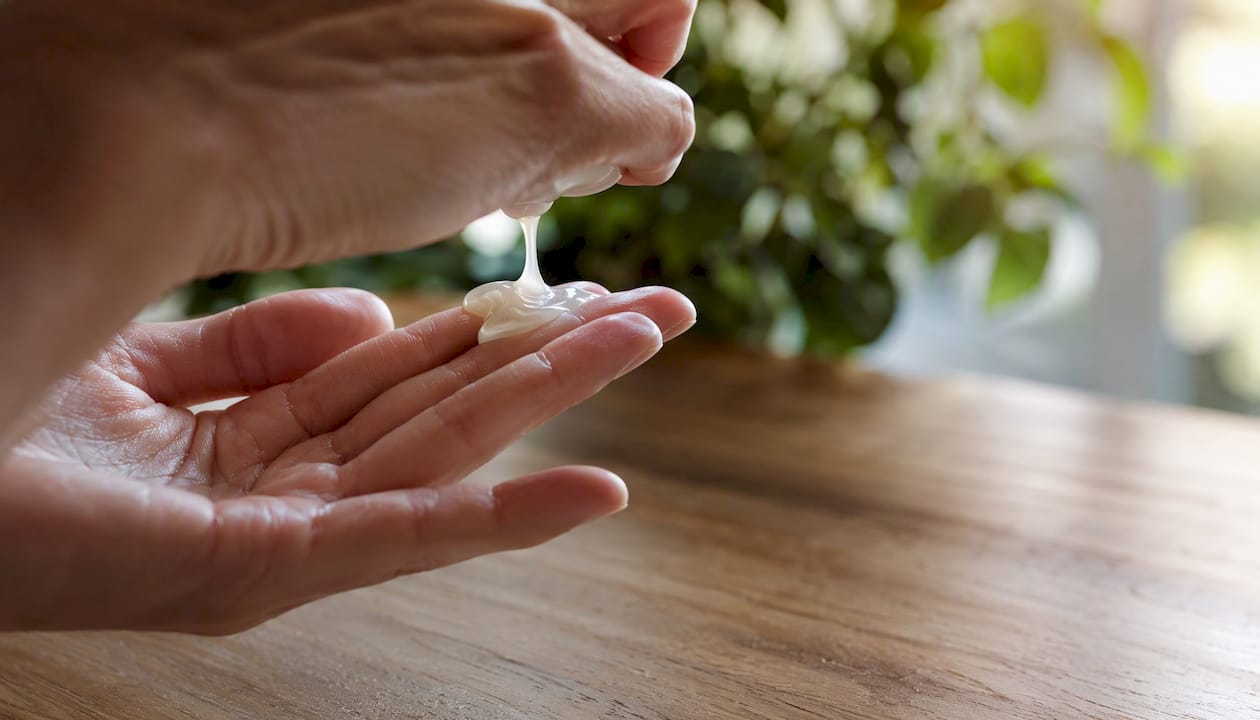
Makeup removers. Wipes loaded with fragrance and alcohol are convenient and rough on delicate skin. Micellar water, cleansing balms, or oil cleansers do the same job with far less friction, provided they’re free of added fragrance and essential oils, which are common hidden irritants even in products marketed as gentle.
Exfoliants. This is where beginners get into trouble fastest. Walnut scrubs and gritty physical exfoliants create microtears you can’t see but definitely feel later. High-strength AHAs used daily aren’t much better. Swap to a low-frequency PHA (polyhydroxy acid) exfoliant used once or twice a week, or skip exfoliation entirely for your first month. Our guide to gentle exfoliant alternatives covers this in more depth.
Toners and essences. Most beginners don’t need this step at all. If you want one, pick an alcohol-free, hydrating formula, never anything that stings on contact. A sting is not “working.” It’s damage.
Niacinamide, hyaluronic acid, and vitamin C under 10% concentrations give you real benefits (less redness, better hydration, a bit of brightening) without the irritation risk of stronger actives.
Moisturizers. Fragrance-free formulas with ceramides and glycerin are the backbone of a barrier-first routine. This is genuinely the category where “boring” ingredients win. Check our guide to choosing gentle moisturizers if you’re unsure what to look for.
Sunscreen. Mineral filters like zinc oxide and titanium dioxide sit on top of skin and tend to cause less stinging on reactive skin, though some people find the texture heavier or find they leave a slight cast. Chemical sunscreens absorb faster and feel lighter, but a subset of sensitive-skin users react to specific filters. The honest answer: the best sunscreen is the one you’ll actually wear every single day, so try a couple of formulas before settling.
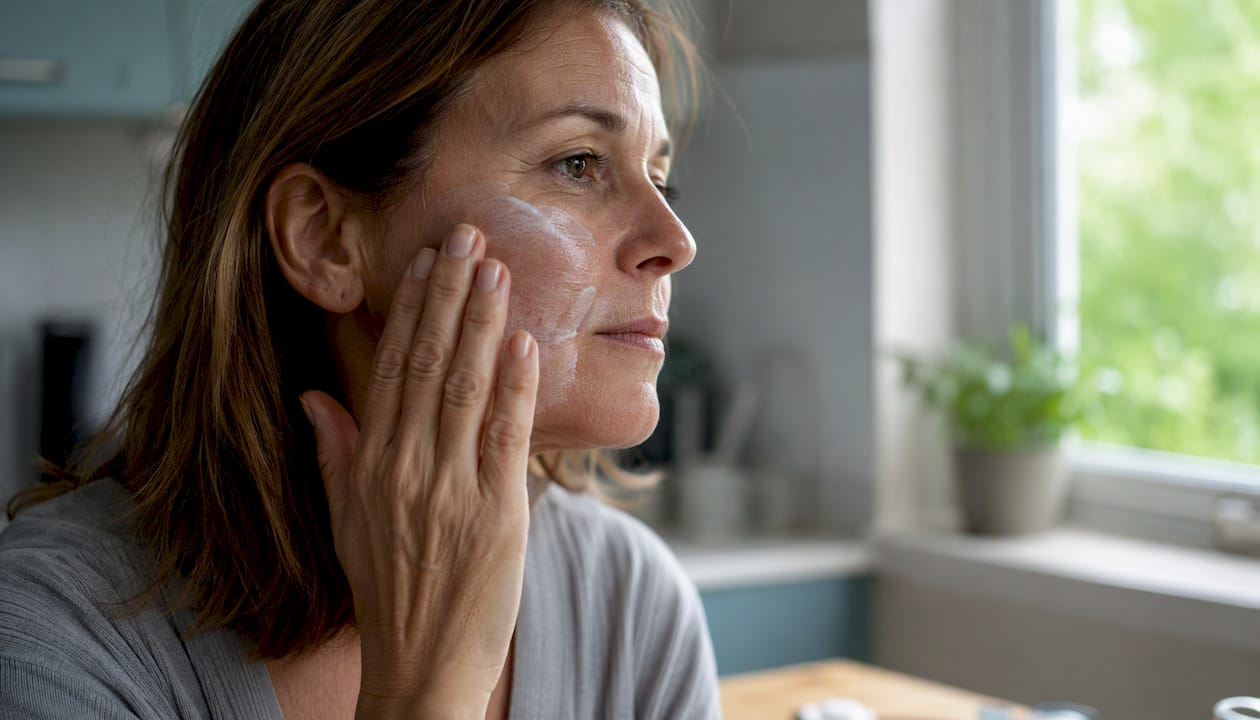
Pro Tip: Read ingredient lists from the bottom up occasionally. Preservatives, fragrance, and dyes tend to cluster near the end, and that’s exactly where irritation risk hides in an otherwise gentle-looking product.
How to Introduce New Products Without Triggering a Reaction
Switching products all at once is the fastest way to end up confused about what caused a breakout, a rash, or that tight, angry feeling three days later. A slower, more deliberate approach avoids that entirely.
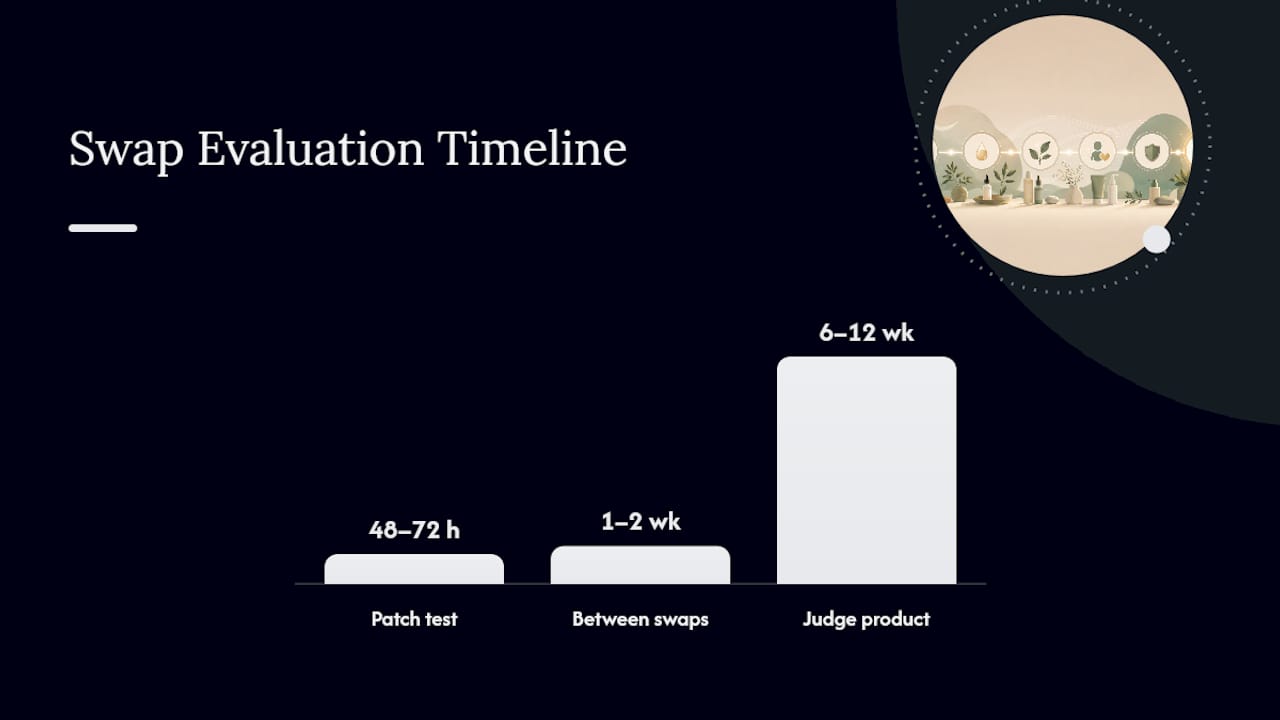
Patch test first. Apply a small amount of the new product to your inner forearm or just behind your ear, then wait 48 to 72 hours before using it on your face. If nothing happens there, your face is a reasonably safe bet.
Follow the rule of one. Change a single product at a time. Wait at least a week, ideally two, before adding or swapping anything else. This isn’t about being cautious for its own sake. It’s the only way to know which product is responsible if your skin reacts.
Set realistic timeline expectations. Skincare isn’t instant. Barrier repair and visible improvements from a new routine typically take 6 to 12 weeks of consistent use before you’ll notice a real difference. If you switch products every two weeks because you “don’t see results,” you’re resetting the clock every time and never actually finding out what works.
If a product causes ongoing redness, burning, or breakouts that don’t settle within a few days of stopping it, that’s a signal to talk to a dermatologist rather than keep experimenting solo.
Pro Tip: Keep a simple note on your phone listing what you introduced and when. Three weeks from now, you won’t remember whether the new moisturizer or the new serum came first, but that log will.
Ingredients to Seek Out and Ingredients to Avoid
Reading a label is a skill, and it’s one most beginners never get taught directly. Some ingredients consistently show up as barrier-friendly. Others consistently show up as trigger.
| Look For | Steer Clear Of |
|---|---|
| Ceramides (barrier repair, holds moisture in) | Synthetic fragrance/parfum (top sensitizer for reactive skin) |
| Glycerin (humectant, draws water into skin) | Essential oils (natural, but still a common irritant) |
| Hyaluronic acid (hydration without heaviness) | Denatured alcohol (dries and disrupts the barrier) |
| Niacinamide (calms redness, supports barrier) | Harsh physical scrubs (walnut shells, apricot pits) |
| Gentle surfactants (sodium cocoyl isethionate) | High-strength AHAs used daily (over-exfoliation risk) |
| Mineral filters (zinc oxide, titanium dioxide) | Vague “clean” claims with no ingredient specifics |
A quick note on that last row: “clean beauty” isn’t a regulated term, so a product can call itself clean while still containing fragrance or alcohol. Judge the ingredient list, not the marketing copy on the front of the bottle.
A few more label habits worth building early:
- Fewer ingredients you can’t pronounce isn’t automatically better, but a long list of fragrance components and dyes is a real red flag for sensitive skin.
- “Fragrance-free” and “unscented” aren’t the same thing, unscented products sometimes use masking fragrance to hide raw material smell.
- If a product tingles or stings the moment you apply it, that’s not it “working.” That’s irritation, and it compounds over repeated use.
Our clean beauty explainer breaks down more of these label distinctions if you want a deeper read.
Gentle Alternatives to Retinol Worth Knowing About
Retinol gets recommended constantly, but plenty of beginners find it too irritating too fast, especially on already-reactive skin. A handful of gentler actives cover similar ground with far less drama.
Bakuchiol functions as a retinol-like alternative with a noticeably lower irritation profile. Use it once daily, ideally at night, and pair it with a solid moisturizer since it can still cause mild dryness in the first couple of weeks.
Azelaic acid is often the better first choice if your main concerns are redness, uneven tone, or post-breakout dark marks rather than fine lines. It calms inflammation while gently addressing pigmentation, a combination that makes it particularly useful for beginners with rosacea-prone or reactive skin.
Peptides support collagen signaling without the peeling or sensitivity that comes with retinoids. They’re a good entry point for anyone who wants to address early signs of aging but has already had a bad experience with a stronger active.
Lower-strength AHAs, PHAs, and niacinamide round out the gentler end of the spectrum. PHAs exfoliate with larger molecules that penetrate less deeply than glycolic or lactic acid, which means less irritation for a similar smoothing effect. Dermatology guidance on retinol alternatives consistently points to this group as the practical starting point for sensitive or reactive skin before considering retinoids at all.
Layer only one of these at a time with your base routine, and give each one its own two-to-three-week trial before judging results.
Why Water Temperature Quietly Wrecks Beginner Routines
Nobody warns beginners about this, but the temperature of your water matters almost as much as the products you’re using. Hot water feels great in the shower and terrible for your skin barrier. It breaks down the lipids holding moisture in, and that damage increases transepidermal water loss, meaning your skin loses hydration faster than it can replace it, even hours after you’ve toweled off.
Practitioner guidance from Meaghers Pharmacy identifies lukewarm water as a simple, underrated factor in barrier protection, one that a gentle cleanser alone can’t fully offset if the water itself is too hot.
Pro Tip: Wash your face with water cool enough that you could comfortably hold your hand under it. Pat your skin dry with a towel instead of rubbing, then apply moisturizer within a minute or two while skin is still slightly damp, it locks in more hydration than applying to fully dry skin.
Why We Build Around the Barrier, Not the Active
Most skincare advice online starts with the active ingredient: what serum, what percentage, what breakthrough compound. That’s backward for anyone new to this. A compromised barrier can’t tolerate actives well regardless of how good the formula is, and pushing actives onto irritated skin usually just creates a longer, more frustrating cycle of reaction and recovery. Barrier-first isn’t a slower path. It’s the path that actually holds up.
Miraclegelnaturalskincare’s approach reflects that priority. A few principles guide what makes it into a routine:
- Fragrance-free formulations as the default, not an afterthought
- Ceramide and glycerin-based hydration before anything more aggressive
- Ingredient choices grounded in what’s shown to support the barrier, not what trends on social media
- Fast, low-effort application, because a routine you’ll actually stick with beats a perfect one you abandon in week two
The 2 Minute Miracle Gel exists for exactly that last point: a gentle, quick-use option that fits into a barrier-first routine without adding another five-minute step to your night.
How Miraclegelnaturalskincare Fits Into Your Swap Plan
Once you’ve settled into the cleanse, moisturize, protect rhythm, the products you choose for each step matter more than any single “hero” ingredient. Miraclegelnaturalskincare builds its line around that exact sequence, cleansers, moisturizers, and gentle serums formulated without the fragrance and harsh surfactants this article has flagged as common triggers.

The 2 Minute Miracle Gel is the brand’s fastest option for anyone who wants visible skin benefits without adding a complicated new step to an already-simple routine, formulated around the Tri-Moisture Cryo Complex™ for hydration and barrier support in a quick daily application. It fits naturally into the moisturizer or serum slot of the AM/PM routine outlined above, no extra products, no extra time.
If you’re specifically shopping for items flagged as safe for reactive skin, browse the sensitive skin safe collection to see which formulas match the barrier-first swaps covered here, or start with the natural anti-aging skincare landing page for a fuller look at the range.
Quick Recap: Your Beginner Swap Checklist
The core rule: build a fragrance-free, ceramide-forward, three-step AM/PM routine first, then swap one category at a time and give each change 6 to 12 weeks before judging it.
| Point | Details |
|---|---|
| Start with three steps | Cleanse, moisturize, protect each morning; remove, cleanse, moisturize each night. |
| Fix the cleanser first | Swap stripping foams for a fragrance-free, ceramide-based cream or gel cleanser. |
| Change one product at a time | Patch test 48 to 72 hours, then wait a week or two before your next swap. |
| Set a realistic timeline | Give any new product 6 to 12 weeks before deciding whether it’s working. |
| Choose barrier-first formulas | Miraclegelnaturalskincare’s 2 Minute Miracle Gel fits the moisturizer step with fragrance-free, ceramide-forward ingredients. |
Where to Learn More
A handful of sources are worth bookmarking if you want to go deeper than this guide:
- Cleveland Clinic’s guide to everyday skincare products lays out the dermatologist-recommended baseline routine in more clinical detail.
- Geisinger’s beginner routine guide covers layering order and realistic timelines for seeing results.
- Westlake Dermatology’s retinol alternatives breakdown is useful if bakuchiol, azelaic acid, or peptides interest you as a next step.
- Hale & Belle’s guide to gentle swaps for sensitive skin expands on fragrance-free and ceramide-forward product categories.
- Our own best gentle skincare routines guide rounds out the beginner-friendly, barrier-first approach with more product-level detail.
This article offers general skincare information, not medical advice. If you have persistent redness, breakouts, or a suspected allergic reaction, check with a dermatologist rather than continuing to self-treat.
Sources
- What products do I actually need for a simple everyday skin care routine
- Build a skincare routine — beginners
- Healthy skincare — Meaghers Pharmacy
- Gentle Skincare Alternatives for Sensitive Skin — Hale & Belle
- Retinol alternatives — Westlake Dermatology